

P0128 on 2016-2018 Hyundai Tucson: Software Update, Thermostat, and Sensor Fixes
On a 2016-2018 Hyundai Tucson, code P0128 is often caused by a software glitch that requires an ECM update from a dealer. This is a known issue addressed by Hyundai TSBs. If the software is current, the next most likely cause is a stuck-open thermostat, which is an affordable part to replace.
- First, verify if your Tucson needs a software update from a Hyundai dealer, as this is a known issue that can falsely trigger code P0128.
- If the software is up to date, the most likely culprit is a thermostat that is stuck open.
- Other potential but less common causes include a bad coolant temperature sensor or low coolant.
- This is a minor issue that you can continue to drive with in the short term, but it will negatively affect fuel economy and heater performance.
- Replacing the thermostat is a DIY-friendly job, but you must properly bleed the air from the cooling system afterward to prevent overheating.
What's Unique About the 2016-2018 Hyundai TUCSON

Unlike many vehicles where P0128 almost always points to a mechanical failure like a thermostat, the 2016-2018 Tucson has a well-documented history of this code being triggered by overly sensitive software logic in the Engine Control Module (ECM). Hyundai has issued multiple Technical Service Bulletins (TSBs) and a recall campaign specifically to address this false trigger. TSB 19-FL-004H targets the 2018 model, while campaign 149 (related to TSB 17-01-023) addresses the 2016 1.6T model. Therefore, the first and most critical diagnostic step for a Tucson owner is to verify if the vehicle's software has been updated before replacing any parts.
Diagnostic Flowchart
Tap your situation to follow the diagnostic path that matches what you're seeing on this vehicle.
Symptoms You May Notice
- Check Engine Light is on
- Engine temperature gauge reads lower than normal or takes a very long time to reach the middle
- Heater blows lukewarm or cool air, especially on the highway
- Noticeable decrease in fuel economy
- Temperature gauge dropping at highway speeds
- Immediately replacing the thermostat without first checking if the required ECM software update has been performed. This is a very common mistake on this specific vehicle and can lead to unnecessary expense as the code may return if the root cause is software-related.
- Replacing the ECT sensor when the thermostat is the actual problem. A stuck-open thermostat is a far more common failure point than the sensor itself.
Most Likely Causes

- Incorrect ECM Software Logic 🔴 High Probability Hyundai issued TSB #19-FL-004H for the 2018 model and Recall Campaign 149 (related to TSB 17-01-023) for the 2016 1.6L Turbo engine to correct a software logic flaw that could erroneously trigger P0128. An owner complaint for a 2016 model specifically references having the 'P0128 DTC LOGIC UPDATE (RECALL 149)' performed to fix the issue.
How to confirm: A Hyundai dealership or a qualified shop with a GDS (Global Diagnostic System) tool can check the vehicle's software ROM ID against the latest versions listed in the TSBs. The owner can also contact a dealer with their VIN to see if any open campaigns apply.
Typical fix: The Engine Control Module (ECM) needs to be reprogrammed (flashed) with the updated software. This must be done by a dealership or a properly equipped independent shop. The update is often performed free of charge under the campaign.
Est. part cost: $0-$200 - Thermostat Stuck Open 🟡 Medium Probability This is the most common mechanical failure for P0128 on any vehicle. Thermostats are designed to fail in the open position as a failsafe to prevent overheating. This allows coolant to circulate constantly through the radiator, preventing the engine from warming up properly.
How to confirm: After starting a cold engine, feel the upper radiator hose. It should remain cool for several minutes. If it starts to warm up almost immediately, the thermostat is likely stuck open, allowing coolant to flow prematurely. Another test is to monitor live data on a scan tool; if the coolant temperature drops significantly when driving at highway speeds, it points to a stuck-open thermostat.
Typical fix: Replace the engine coolant thermostat and its gasket/seal. It is critical to properly bleed the cooling system of air after the replacement to prevent overheating. Many owners and mechanics recommend using a genuine OEM thermostat, as some aftermarket versions can have slight differences in construction or lack a jiggle pin (air bleed valve), potentially causing issues.
Est. part cost: $20-$50 - Faulty Engine Coolant Temperature (ECT) Sensor ⚪ Low Probability While less common than a thermostat failure, the ECT sensor can fail and send inaccurate (reading colder than actual) data to the ECM, tricking it into setting a P0128 code.
How to confirm: Use an OBD-II scanner to monitor the live coolant temperature data. On a cold engine, the ECT reading should be very close to the Intake Air Temperature (IAT) sensor reading. If there's a large discrepancy, or if the reading is erratic or illogical (e.g., reads -40°F), the sensor is likely faulty. The sensor's resistance can also be tested with a multimeter; for example, at 68°F (20°C), the resistance should be between 2,000 and 3,000 ohms.
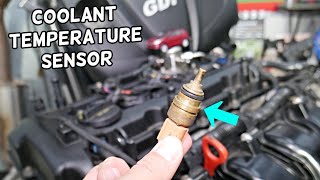
Typical fix: Replace the engine coolant temperature sensor. It is often located on or near the thermostat housing. 🎬 See this video for help removing the coolant temperature sensor.
Est. part cost: $15-$40 - Low Engine Coolant Level ⚪ Low Probability If the coolant level is low enough to create an air pocket around the ECT sensor, it can't get an accurate reading of the liquid coolant's temperature, leading to a P0128 code.
How to confirm: Visually inspect the coolant reservoir and the radiator (when the engine is completely cold) to ensure the coolant is at the 'F' or 'MAX' line.
Typical fix: Top off the coolant with the correct type (Hyundai specifies a phosphate-based P-OAT coolant, typically green or green-blue) and inspect the system for leaks, as the level shouldn't drop on its own.
Est. part cost: $20-$30
Rare But Worth Checking
- Cooling Fan Stuck On:
Diagnosis Steps

- Check for TSBs & Campaigns: Using your VIN, contact a Hyundai dealer or use an online VIN checker to determine if TSB #19-FL-004H (for 2018 2.0L) or Campaign 149/TSB 17-01-023 (for 2016 1.6T) applies to your vehicle and has been completed. If not, this is the primary suspect and should be addressed first.
- Inspect Coolant Level and Condition: With the engine cold, check the coolant level in the overflow reservoir and radiator. Ensure it's full and the coolant is clean and of the correct type.
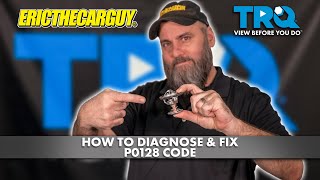
- Monitor Live Data with a Scanner: 🎬 Watch: EricTheCarGuy explains how to diagnose P0128 using live data. Connect an OBD-II scanner. Before starting the cold engine, compare the Engine Coolant Temperature (ECT) and Intake Air Temperature (IAT) readings. They should be within a few degrees of each other. Start the engine and watch the ECT rise. It should climb steadily to around 180-200°F and stabilize.
- Test the Thermostat Mechanically: Start the engine from cold. Feel the upper radiator hose. It should remain cool for 5-10 minutes of idling. If it gets warm almost immediately, the thermostat is stuck open. If the live data from step 3 showed the temperature dropping at highway speeds, this also strongly indicates a stuck-open thermostat.
- Test the ECT Sensor: If the thermostat seems to be working (hose stays cool initially) but the temperature readings on your scanner are illogical, jump around, or never rise despite the engine feeling hot, the ECT sensor is the likely culprit.
- Check Cooling Fan Operation: Ensure the radiator cooling fan is not stuck on and running constantly from a cold start, as this would over-cool the engine and prolong warm-up.
Parts You'll Likely Need

- Engine Coolant Thermostat
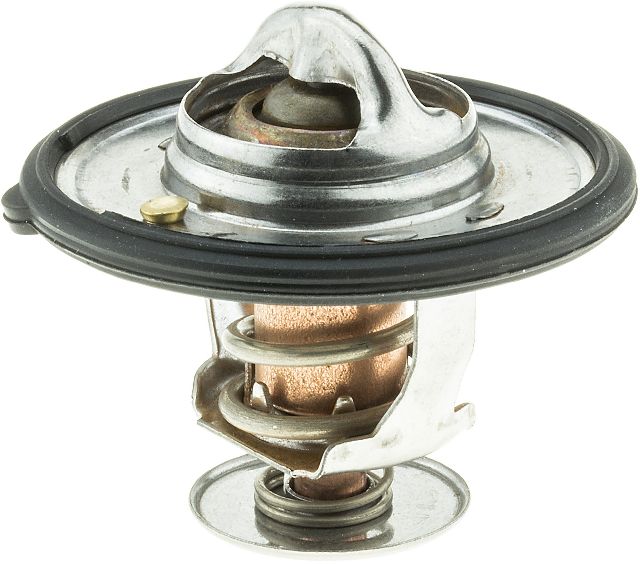
(OEM #25500-2E000)— This is the most common mechanical part to fail, causing the engine to run too cool. It gets stuck in the open position. This part number is applicable to the 2.0L engine.
Trusted brands: Genuine Hyundai, Mahle, Gates, Motorad
OEM price range: $25-$40
Aftermarket price range: $15-$30 - Engine Coolant Temperature Sensor
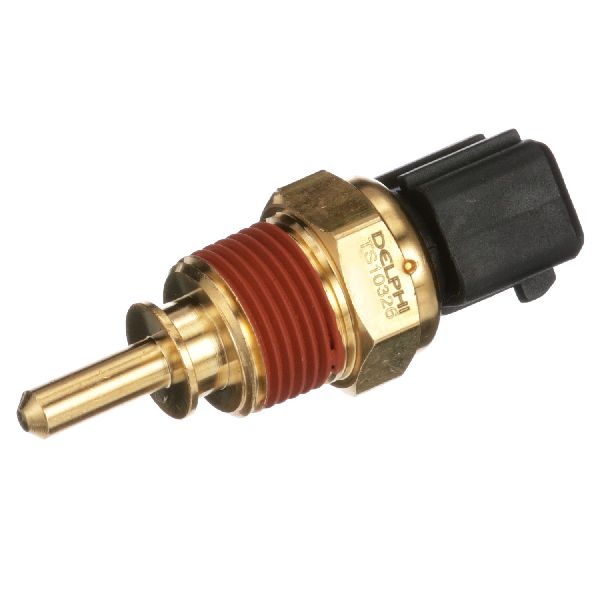
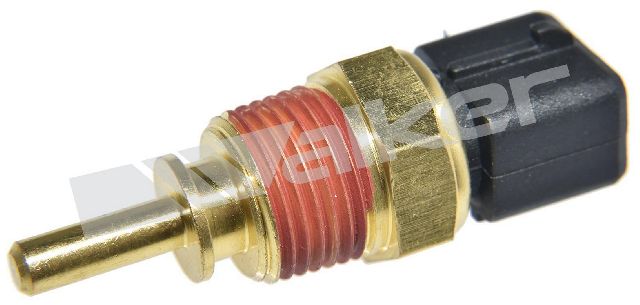
(OEM #39220-38030)— A less common but possible cause, this sensor can fail and send incorrect temperature data to the engine's computer. This part number is widely listed for this application.
Trusted brands: Genuine Hyundai, NTK, Standard Motor Products (SMP), Delphi
OEM price range: $30-$50
Aftermarket price range: $15-$40 - Thermostat Housing Assembly — Sometimes the thermostat is sold as an assembly with the housing. On the 2.0L engine, the thermostat is located under the alternator and can be replaced separately from the housing. However, replacing the full assembly can be easier and ensures a good seal.
Trusted brands: Genuine Hyundai, Dorman, TRQ
OEM price range: $60-$90
Aftermarket price range: $40-$70
Technical Service Bulletins (TSBs) & Recalls
- 19-FL-004H: Provides an ECM software logic update for DTC P0128 on 2018 Tucson models with the 2.0L GDI engine.
- 17-01-023 (Recall Campaign 149): An update to improve DCT control logic on 2016 Tucson 1.6T models that also explicitly includes a fix for DTC P0128.
- 18-01-012: While for a 2017 Elantra with the same 2.0L Nu engine, this campaign shows Hyundai's history of addressing faulty thermostats that can cause P0128, requiring replacement even without a code present.
Platform-Specific Known Issues
- A software logic issue in the ECM is a known cause for P0128 on 2016-2018 models, as documented in Hyundai TSB #19-FL-004H for the 2018 2.0L and Campaign 149 (TSB 17-01-023) for 2016 1.6T models. An owner of a 2016 model also reported having a 'P0128 DTC LOGIC UPDATE' performed under a recall.
Mechanic-Grade Diagnostic Values
- Engine Coolant Temperature (ECT) Sensor Resistance — expected: Approx. 2000-3000 Ω at 20°C (68°F); Approx. 200-300 Ω at 90°C (194°F).. Failure: Readings significantly outside the expected range for a given temperature, or an open/infinite resistance reading.
- Engine Coolant Temperature (ECT) Sensor Signal Voltage (Key On, Engine Off) — expected: Approx. 2.0V - 3.0V on a cold engine.. Failure: A reading of 0V may indicate a short to ground in the circuit. A reading of 5.0V indicates an open circuit (bad sensor or wiring).
- Engine Coolant Temperature (ECT) Sensor Signal Voltage (Engine at Operating Temp) — expected: Approx. 0.5V when the engine is fully warmed up.. Failure: Voltage that remains high (e.g., over 1.0V) even when the engine is hot suggests the system is not reaching temperature or the sensor is faulty.
Scan Tool Commands That Help
- Hyundai GDS (Global Diagnostic System): ECU Update - Auto Mode (Events #413, #414 for 1.6T) — This is the primary function used by dealers to perform the logic update for the ECM and TCM as specified in Recall 149, which directly addresses erroneous P0128 codes on the 2016 1.6T model.
- Hyundai GDS (Global Diagnostic System): Engine coolant filling mode — This service function is used during the coolant refilling and air bleeding process after replacing a thermostat to ensure no air pockets remain, which could cause cooling issues or trigger false codes.
Wiring & Ground Locations
- ECT Sensor Connector — On the thermostat housing. On the 2.0L engine, this is typically located under the alternator.. This is the primary connection point to test the ECT sensor's voltage and resistance. A corroded or damaged connector here can cause incorrect readings, mimicking a failed sensor and triggering P0128.
Real Owner Repair Stories
- NHTSA ODI #11682228 (2016 Hyundai Tucson, Power Train) — Check Engine Light on with code P0128.
❌ Tried (didn't work) Not specified in the complaint, but the owner notes the issue was present since they acquired the vehicle.
✅ What actually fixed it The dealership performed the 'DCT CONTROL LOGIC UPDATE & P0128 DTC LOGIC UPDATE (RECALL 149)' service campaign (#17-01-023), which resolved the issue.
"I Checked Everything" — The Actual Cause
- For code P0128, the equivalent of a 'smoke test clean' scenario is when both the thermostat and ECT sensor are tested and found to be working correctly, yet the code persists. On the 2016-2018 Tucson, the most common cause in this situation is the ECM software logic being too sensitive. The fix is not a mechanical part, but a software update from a Hyundai dealer as outlined in TSBs #19-FL-004H or #17-01-023.
Model Year Variations Within This Range
- 2016 (1.6T Engine): Subject to Recall Campaign 149 (TSB 17-01-023) which bundles a DCT logic update with the specific P0128 DTC logic update. This is a critical software fix.
- 2018 (2.0L Engine): Subject to TSB #19-FL-004H, which provides an ECM software update specifically to address the P0128 code. This indicates the software issue was present on later models with the other primary engine option.
Helpful Videos
Used OEM Parts in Stock

New Aftermarket Parts Available


The information in this article is provided for general reference and educational purposes only. Vehicle specifications, procedures, and part compatibility can vary by production date, trim level, and region. Always consult your vehicle's factory service manual and verify part numbers before purchasing or performing repairs. Safety-critical components such as airbags, seat belts, and braking systems should be installed by a qualified professional.
- Hyundai TUCSON:
- 🎬 Helpful Videos
- 🛍️ Shop This Part
- What's Unique About the 2016-2018 Hyundai TUCSON
- Diagnostic Flowchart
- Symptoms You May Notice
- Most Likely Causes
- Rare But Worth Checking
- Diagnosis Steps
- Parts You'll Likely Need
- Technical Service Bulletins (TSBs) & Recalls
- Platform-Specific Known Issues
- Mechanic-Grade Diagnostic Values
- Scan Tool Commands That Help
- Wiring & Ground Locations
- Real Owner Repair Stories
- "I Checked Everything" — The Actual Cause
- Model Year Variations Within This Range
- 🎟️ Get 5% Off