

P0128 on 2004-2008 Chrysler PT Cruiser: Causes and Fixes for Coolant Temperature Issues
For a 2004-2008 PT Cruiser, code P0128 almost always means the thermostat is stuck open and needs replacement. It is critical to use a 195°F OEM-spec thermostat; aftermarket or lower-temp units often cause the code to return. It's a common DIY job costing $20-$60 for the part. In some cases, particularly in cold weather, a PCM software update from the dealer (TSB #18-016-13) may be required for 2004-2010 models.
- P0128 on a PT Cruiser means the engine is running too cool, most often due to a thermostat that is stuck open.
- Before buying parts, check if your vehicle is affected by TSB #18-016-13, as a software update might be the only fix needed.
- Replacing the thermostat is a manageable DIY job for many home mechanics and typically costs under $60 in parts.
- Always check your coolant level first, as a low level can also cause this code.
- Ignoring this code will lead to poor fuel mileage and can cause long-term engine wear.
What's Unique About the 2004-2008 Chrysler PT CRUISER
While a faulty thermostat is the most common culprit for a P0128 code on most vehicles, the PT Cruiser has a specific, documented issue where the PCM's software logic can be too sensitive. Chrysler issued Technical Service Bulletin (TSB) #18-016-13 for 2004-2010 models with automatic transmissions. It states that in ambient temperatures below 50°F (10°C), normal airflow can cool the ECT sensor enough to make the PCM believe the engine isn't warming up correctly, falsely triggering the code. In these cases, a software reflash at a dealership resolves the issue without replacing any parts.
Diagnostic Flowchart
Tap your situation to follow the diagnostic path that matches what you're seeing on this vehicle.
Symptoms You May Notice
- Check Engine Light is on
- Engine temperature gauge reads lower than normal, often staying on the first mark
- Engine takes a very long time to warm up
- Heater performance is poor or blows lukewarm air
- Noticeable decrease in fuel economy
- Temperature gauge may drop towards cold when driving at highway speeds
- Replacing the Engine Coolant Temperature (ECT) sensor when the thermostat is actually the problem. The ECT sensor is often suspected, but a stuck-open thermostat is far more common for this specific code.
- Repeatedly replacing the thermostat with aftermarket parts. Some aftermarket thermostats have high failure rates or use the wrong temperature rating, causing the code to return.
- Ignoring the possibility of a required PCM software update, leading to unnecessary parts replacement.
Most Likely Causes
- Stuck-Open Thermostat 🔴 High Probability Thermostats are wear-and-tear items. Aftermarket thermostats for this vehicle are noted by mechanics to be of inconsistent quality, leading to repeat failures. Using the wrong temperature (e.g., 180°F instead of the specified 195°F) will also trigger this code.
How to confirm: Monitor the coolant temperature with a scan tool. If the temperature rises very slowly, struggles to reach ~195°F (90°C), or drops significantly at highway speeds, the thermostat is almost certainly stuck open. Visually, a removed thermostat will be physically stuck in the open position.
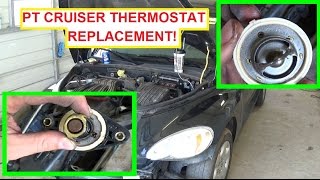
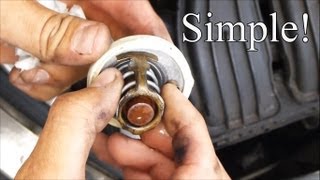
Typical fix: Replace the thermostat and gasket. Strongly recommend using an OEM Mopar part. The thermostat is located in a housing under the upper intake plenum. 🎬 See this step-by-step walkthrough for removing and replacing the thermostat.
Est. part cost: $20-$70 - Powertrain Control Module (PCM) Software 🟡 Medium Probability As per TSB #18-016-13, the factory software parameters for monitoring thermostat performance can be too stringent, causing the code to set in cold weather (below 50°F/10°C) even with a functional thermostat.
How to confirm: If a new, correct-temperature OEM thermostat does not fix the code (especially if the issue occurs in winter), contact a Chrysler dealer to check if your vehicle's VIN requires the software update mentioned in the TSB.
Typical fix: Reprogramming the Powertrain Control Module with updated software at a dealership or qualified repair shop with access to Chrysler's flash tools (wiTECH or DRBIII).
Est. part cost: $150-$300 (Labor for reflash) - Low Engine Coolant Level ⚪ Low Probability Cooling systems can develop small leaks over time from hoses, the radiator, or the water pump. An air pocket in the system from a previous repair can also cause this issue.
How to confirm: Visually inspect the coolant reservoir and the radiator (when the engine is cold). If the level is below the 'MIN' line, it needs to be topped off. Check for visible signs of green or pink/orange crusty residue indicating a leak.
Typical fix: Top off the coolant with the correct type (Mopar HOAT for this vehicle) and inspect the system for leaks. Bleed any air out of the system using the bleeder screw on the thermostat housing.
Est. part cost: $15-$30 (for coolant) - Faulty Engine Coolant Temperature (ECT) Sensor ⚪ Low Probability While not a high-failure part, the ECT sensor can degrade over time and send inaccurate (typically colder) readings to the PCM.
How to confirm: Use a scan tool to compare the ECT sensor reading to the intake air temperature (IAT) sensor reading on a cold engine; they should be within a few degrees of each other. If the ECT reading is erratic or illogical (e.g., -40°F), the sensor is likely faulty.
Typical fix: Replace the engine coolant temperature sensor.
Est. part cost: $15-$40
Rare But Worth Checking
- Cooling Fan Stuck On: If the electric cooling fan runs constantly, even when the engine is cold, it can prevent the engine from warming up properly. This is usually caused by a failed fan relay, a short in the wiring, or a faulty fan control module.
Diagnosis Steps
- Check for TSBs: First, especially if the problem occurs in cold weather, check with a Chrysler dealer if your vehicle's VIN is covered by TSB #18-016-13 for a PCM software update.
- Inspect Coolant Level and Condition: Ensure the engine is cold. Check the coolant level in the reservoir. It should be between the 'MIN' and 'MAX' marks. The coolant should be clean and of the proper color (typically pink/orange for Mopar HOAT).
- Verify Symptoms: Start the engine and monitor the temperature gauge. Note if it takes an unusually long time to reach the middle of the gauge or if it never gets there.
- Scan Tool Data: Connect an OBD-II scanner and monitor the live data for the Engine Coolant Temperature (ECT). Watch the temperature as the engine warms up. It should climb steadily to around 195-210°F and stabilize. If it drops at highway speed, the thermostat is bad.
- Test the Thermostat: If the temperature climbs very slowly, never reaches ~195°F, or drops significantly when driving at speed, the thermostat is almost certainly stuck open and needs to be replaced. If it was recently replaced, verify a 195°F (90-91°C) part was used.
- Test the ECT Sensor: If the thermostat seems to be working, check the ECT sensor. With a cold engine, the ECT reading should be within a few degrees of the Intake Air Temperature (IAT) sensor reading. If it's not, the sensor may be faulty.
- Inspect Cooling Fan: Start the cold engine and check if the cooling fan immediately turns on and stays on. It should not. If it does, diagnose the fan control circuit (relay, wiring).
- Bleed the System: If any coolant service was recently performed, ensure all air is bled from the system using the bleeder valve on the thermostat housing.
Parts You'll Likely Need
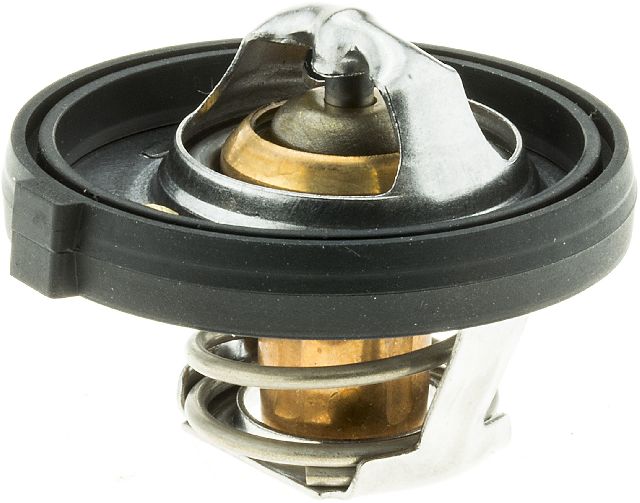
- Engine Coolant Thermostat (195°F)
(OEM #55111016AE, superseding P/N 68676480AA)— This is the most frequent cause of P0128. The thermostat fails in the open position, over-cooling the engine. Using an OEM part is highly recommended for reliability.
Trusted brands: Mopar (OEM), Stant, Motorad, Gates
OEM price range: $40-$70
Aftermarket price range: $20-$40 - Engine Coolant Temperature Sensor
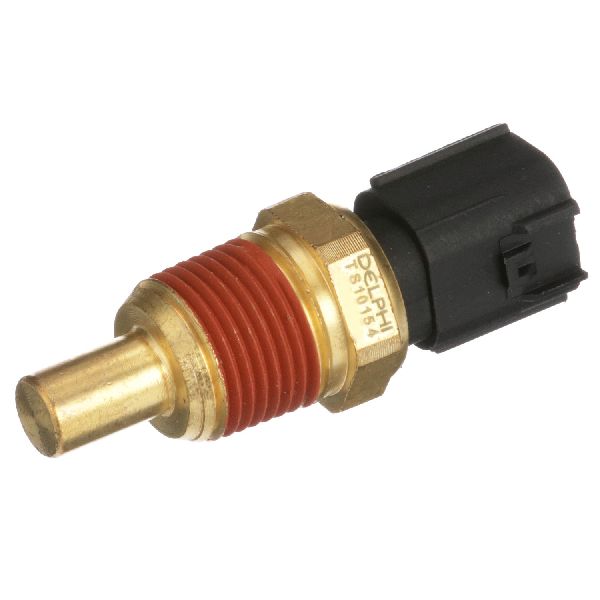
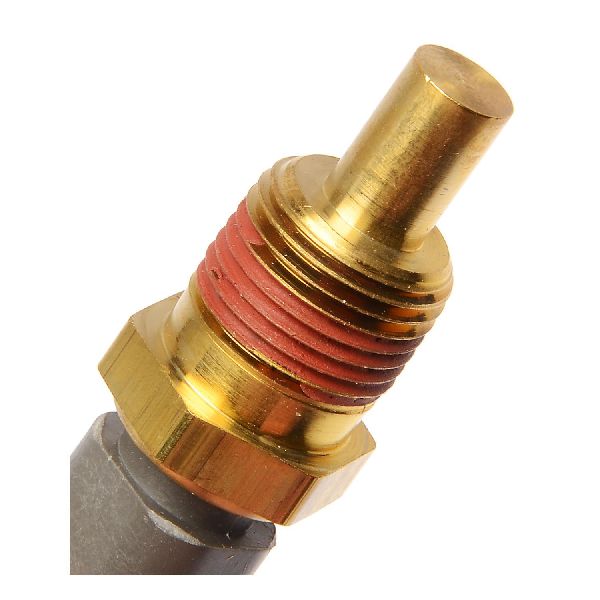
(OEM #5269870AB or 5149077AB)— A less common but possible cause. It can send incorrect temperature readings to the computer.
Trusted brands: Mopar (OEM), NTK, Bosch, Standard Motor Products
OEM price range: $25-$50
Aftermarket price range: $15-$30
Technical Service Bulletins (TSBs) & Recalls
- 18-016-13: Addresses a P0128 code that may be resolved by reprogramming the Powertrain Control Module with new software. Applies to 2004-2010 PT Cruisers with 2.4L engines and automatic transmissions.
Platform-Specific Known Issues
- TSB #18-016-13 notes that for 2004-2010 models with automatic transmissions, the P0128 code can be triggered by overly sensitive PCM software in ambient temperatures below 50°F (10°C). The fix is a software reflash, not a hardware replacement.
Mechanic-Grade Diagnostic Values
- Engine Coolant Temperature (ECT) Sensor Resistance — expected: Approximately 9,420 Ohms at 32°F (0°C), 2,800 Ohms at 77°F (25°C), and 241 Ohms at 194°F (90°C).. Failure: Readings that are infinite (open circuit), near zero (short circuit), or significantly deviate from the expected resistance at a known temperature.
- ECT Sensor Connector Voltage (Key On, Engine Off) — expected: One pin should have a 5-volt reference from the PCM, and the other should be the sensor ground (near 0 volts).. Failure: Absence of the 5V reference or high voltage on the ground pin indicates a wiring or PCM issue, not a sensor failure.
Scan Tool Commands That Help
- DRBIII (2004-05) / wiTECH (2006-08): Vehicle Flash — This function is used to perform the software update as specified in TSB #18-016-13. It should only be used after confirming the thermostat is functional and the vehicle's VIN applies to the bulletin.
- DRBIII (2004-05) / wiTECH (2006-08): Quick Learn Procedure — This transmission adaptation procedure is required after reprogramming the PCM to ensure proper transmission operation.
Wiring & Ground Locations
- ECT Sensor Connector — On the cylinder head, below the intake plenum, near the thermostat housing. Location differs slightly between turbo and non-turbo models.. This 2-pin connector provides the signal from the sensor to the PCM. Corrosion or damage here will cause incorrect readings, potentially triggering P0128. The wires are typically (Pin 1) Sensor Ground and (Pin 2) ECT Signal.
- PCM Connector C2, Pin 20 — At the Powertrain Control Module (PCM), which is located in the engine bay on the driver's side firewall.. This specific pin (K2 circuit, often a Violet/Orange wire) is the ECT Sensor Signal input to the PCM. A voltage/resistance test at this pin can confirm if the signal from the sensor is reaching the computer correctly.
- PCM Connector C2, Pin 27 — At the Powertrain Control Module (PCM).. This pin (K4 circuit, often a Black/Light Blue wire) is the shared Sensor Ground for the ECT, MAP, and other sensors. A poor connection here can affect multiple sensor readings.
- G102 — On the driver's side inner fender/strut tower area in the engine bay.. This is a primary chassis ground point for multiple engine bay components and harnesses. Corrosion or looseness here can cause erratic sensor behavior and phantom electrical issues.
Real Owner Repair Stories
- Chrysler Forum user 'Abnorml' (2007 PT Cruiser, 2.4L non-turbo, automatic) — Multiple electrical failures including passenger side lights, turn signals, and horn. While not directly reporting P0128, the underlying cause is highly relevant to sensor-related codes.
❌ Tried (didn't work) Cleaning all visible ground connections did not resolve the issues.
✅ What actually fixed it The user had to add new, separate ground wires for the affected components. Another user confirmed that the ground point on the passenger inner fender, which serves multiple components, is a common failure point due to corrosion inside the wire loom, and remaking the ground connection is the proper fix.
OEM Part Supersession History
68676480AA→55111016AE— Standard part number update/consolidation by Mopar.
Heads up: One vendor (Summit Racing) incorrectly lists part 55111016AE as a 170°F thermostat, which would cause a P0128 code. This appears to be a data entry error on their site, as Mopar sources confirm it is the correct 195°F part. Buyers should verify the temperature rating.
Model Year Variations Within This Range
- 2006-2010: A facelift for the 2006 model year introduced revised scalloped headlights, a new grille, and updated interior trim. However, the 2.4L engine, cooling system components, and the P0128 diagnosis procedure remained fundamentally the same as the 2004-2005 models.
- 2004-2005 vs 2006-2010: The diagnostic tool required for the PCM reflash in TSB #18-016-13 is different. 2004-2005 models require the older DRBIII tool, while 2006-2010 models use the more modern wiTECH diagnostic application.
Helpful Videos

We Have This Part in Stock


The information in this article is provided for general reference and educational purposes only. Vehicle specifications, procedures, and part compatibility can vary by production date, trim level, and region. Always consult your vehicle's factory service manual and verify part numbers before purchasing or performing repairs. Safety-critical components such as airbags, seat belts, and braking systems should be installed by a qualified professional.
- Chrysler PT CRUISER:
- 🎬 Helpful Videos
- 🛍️ Shop This Part
- What's Unique About the 2004-2008 Chrysler PT CRUISER
- Diagnostic Flowchart
- Symptoms You May Notice
- Most Likely Causes
- Rare But Worth Checking
- Diagnosis Steps
- Parts You'll Likely Need
- Technical Service Bulletins (TSBs) & Recalls
- Platform-Specific Known Issues
- Mechanic-Grade Diagnostic Values
- Scan Tool Commands That Help
- Wiring & Ground Locations
- Real Owner Repair Stories
- OEM Part Supersession History
- Model Year Variations Within This Range
- 🎟️ Get 5% Off