

P0128 on 2015-2017 Chrysler 200 3.6L: Coolant Temperature Causes and Fixes
On a 2015-2017 Chrysler 200 with the 3.6L V6, code P0128 almost always means the engine thermostat is stuck open. This is a chronic issue for the Pentastar engine family. The most reliable fix is to replace the entire thermostat and housing assembly with an OEM Mopar part. Expect to pay around $60-$90 for the part for a DIY repair.
- P0128 on your Chrysler 200 3.6L almost certainly means you need a new thermostat.
- For a reliable, long-lasting repair, replace the entire thermostat and housing assembly, not just the sensor or thermostat element.
- Using an OEM Mopar part (like #5184977AJ) is highly recommended by mechanics for this speci
What's Unique About the 2015-2017 Chrysler 200
The 3.6L Pentastar V6 engine is widely known for having issues with its factory thermostat across numerous Chrysler, Dodge, and Jeep models. It is an extremely common and well-documented failure for the thermostat to get stuck in the open position, which directly causes the P0128 code. The plastic thermostat housing is also a known weak point, prone to warping or cracking over time. Because of this high failure rate, mechanics report the thermostat assembly is the cause over 95% of the time a P0128 code appears on this engine.
Symptoms You May Notice
- Check Engine Light is on
- Engine takes much longer than usual to warm up
- Temperature gauge on the dashboard reads lower than normal, often staying around the 1/4 mark
- Cabin heater blows lukewarm air or doesn't get hot
- Decreased fuel economy, often by 2-4 MPG
- Remote start feature may be disabled
- Replacing only the Engine Coolant Temperature (ECT) sensor. Many owners replace the sensor first because it is small and inexpensive, only to find the P0128 code returns. The root cause is almost always the mechanical thermostat itself.
Most Likely Causes
- Engine Thermostat Stuck Open 🔴 High Probability The 3.6L Pentastar engine has a very high rate of thermostat failure, where the internal valve fails and remains in the open position. Mechanics report this is the cause in over 95% of P0128 cases on this engine. The plastic housing is also prone to failure.
How to confirm: Monitor the live engine coolant temperature data with an OBD-II scanner from a cold start. If the car takes more than 10-15 minutes of driving to reach operating temperature (approx. 195-205°F), or if the temperature drops significantly at highway speeds, the thermostat is almost certainly stuck open.
Typical fix: Replace the entire thermostat and housing assembly. It is strongly recommended to use an OEM Mopar part for this repair, as many aftermarket units are known to fail prematurely, sometimes in the more dangerous 'stuck-closed' position.
Est. part cost: $60-$120
Rare But Worth Checking
- Low Engine Coolant Level: If the coolant level is low, air pockets can form in the system, potentially causing the coolant temperature sensor to send an inaccurate reading to the PCM. Always check the coolant level in the reservoir and radiator (when the engine is cold) before replacing parts.
- Faulty Engine Coolant Temperature (ECT) Sensor: While possible, a faulty ECT sensor is a much less common cause for P0128 on this engine than a failed thermostat. This is often misdiagnosed. If the sensor were the primary issue, other codes like P0116 (range/performance), P0117 (circuit low), or P0118 (circuit high) would likely be present.
- Cooling Fan Stuck On: If the electric cooling fan runs constantly, even when the engine is cold, it can prevent the engine from warming up properly. This is usually caused by a failed fan relay, a wiring issue, or a fail-safe mode triggered by another fault.
- PCM Software Issue: Chrysler issued TSB 18-022-17 REV. A, which notes that in some cases, a PCM software update can resolve a P0128 code. This TSB addresses a wide variety of codes, and this fix should only be considered after verifying the mechanical parts (especially the thermostat) are working correctly.
Diagnosis Steps
- Check for other Diagnostic Trouble Codes (DTCs) to see if other issues are present.
- Inspect the engine coolant level in the overflow reservoir and radiator (only when the engine is completely cool). Top off with the correct type of coolant if low.
- Start the engine from cold and monitor the temperature gauge or live ECT data on a scanner. Observe how long it takes to warm up. If it takes longer than 15 minutes of normal driving or the temperature drops at highway speeds, the thermostat is the likely culprit.
- Listen for the electric cooling fans when the engine is first started and still cold. They should not be running. If they are, diagnose the fan control circuit.
- If the above steps do not identify the issue, test the Engine Coolant Temperature (ECT) sensor and its wiring for proper resistance and voltage.
- Based on the extremely high probability for this vehicle, if symptoms point to a slow warm-up, the most effective step is to replace the thermostat and housing assembly.
Parts You'll Likely Need
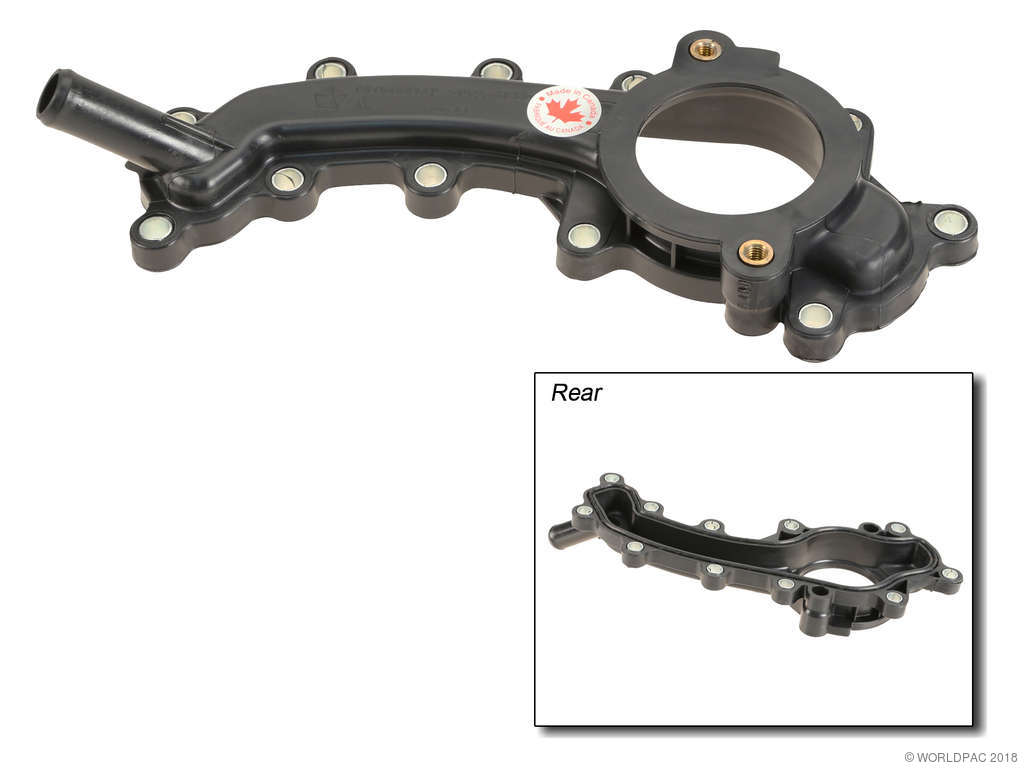
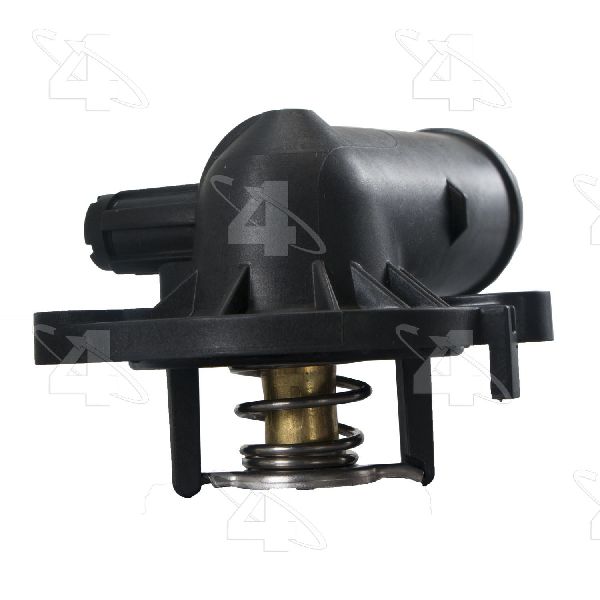
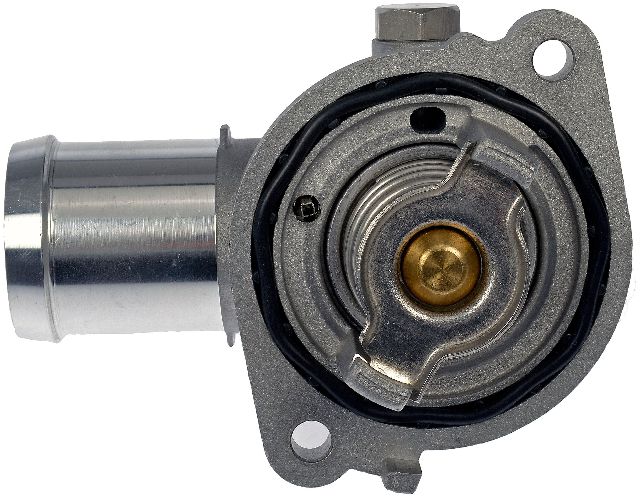
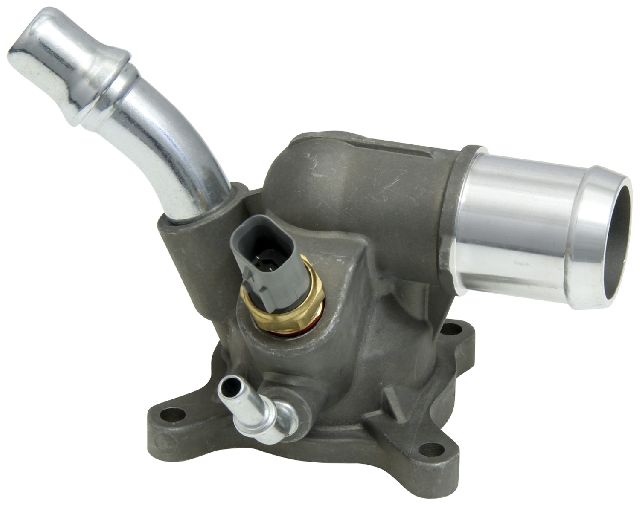
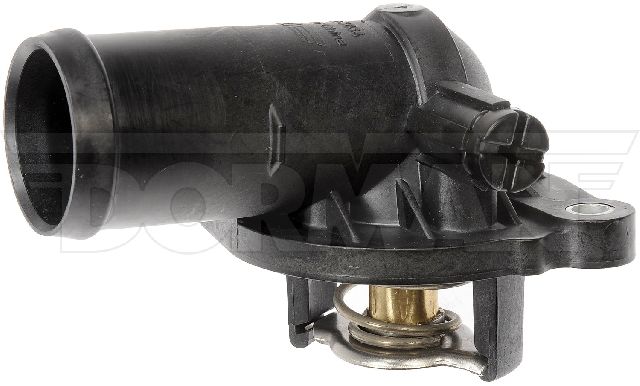
- Engine Coolant Thermostat and Housing Assembly
(OEM #5184977AJ (supersedes 5184977AE, 5184977AG, etc.))— This is the single most common cause of code P0128 on the 3.6L Pentastar engine. The original part is prone to sticking open. Replacing the complete assembly with an OEM part is the most reliable fix, as aftermarket versions have a high failure rate.
Trusted brands: Mopar
OEM price range: $60-$90
Aftermarket price range: $40-$80 - Engine Coolant / Antifreeze
(OEM #68163849AB (50/50 Premixed))— You will lose coolant when replacing the thermostat housing. The system must be refilled with the correct Mopar OAT (Organic Acid Technology) coolant meeting specification MS-12106 to prevent corrosion and damage.
Trusted brands: Mopar, PEAK
OEM price range: $25-$40 per gallon
Aftermarket price range: $20-$30 per gallon
Related Codes That Often Appear With This One
- P2181 — P2181 ('Cooling System Performance') is another code that indicates a problem with the engine reaching or maintaining operating temperature. They often appear together because they are both triggered by similar thermostat-related faults.
Technical Service Bulletins (TSBs) & Recalls
- 18-022-17 REV. A: Mentions that a PCM software update may resolve P0128 among a long list of other unrelated codes. This is considered a rare fix and should only be investigated after confirming the thermostat is functioning correctly.
Platform-Specific Known Issues
- The 3.6L Pentastar engine has a well-documented, chronic history of thermostat failures leading to code P0128 across all vehicle platforms it is used in.
- The original plastic thermostat housing can become brittle and crack or warp from heat cycles, making replacement of the whole assembly the best practice.
- Technicians strongly advise against using aftermarket thermostats for this engine, as many are reported to fail quickly and can sometimes fail in the 'stuck-closed' position, leading to engine overheating.
Mechanic-Grade Diagnostic Values
- Engine Coolant Temperature (ECT) Sensor Resistance — expected: 2,000 - 3,000 Ω at 20°C (68°F). Failure: Resistance is infinite (open circuit), near-zero (short circuit), or significantly outside the expected range for the ambient temperature.
- Engine Coolant Temperature (ECT) Sensor Resistance (Hot) — expected: 200 - 400 Ω at 90-100°C (194-212°F). Failure: Resistance does not decrease smoothly as the engine warms up.
- ECT Sensor Signal Voltage (Key On, Engine Off, Cold) — expected: ~2.0V to 3.5V, depending on ambient temperature.. Failure: A voltage reading near 5.0V suggests an open circuit in the wiring or sensor. A reading near 0V suggests a short to ground.
- ECT vs. IAT Sensor Correlation (Cold Soak) — expected: With the engine cold for several hours, the Engine Coolant Temperature (ECT) and Intake Air Temperature (IAT) readings on a scan tool should be within 5°F (3°C) of each other.. Failure: A significant difference between the two readings points to a faulty ECT sensor or wiring, as they should both read ambient temperature.
Scan Tool Commands That Help
- wiTECH (Chrysler Dealer Tool) or equivalent: Thermostat Rationality Test — This is the specific internal logic test the PCM runs to determine if the P0128 code should be set. While not a user-commanded test, understanding its parameters (e.g., expecting coolant to reach ~167°F within a set time) helps in diagnosis by monitoring live data against this threshold.
Wiring & Ground Locations
- Engine Coolant Temperature (ECT) Sensor — On the 3.6L Pentastar V6, the ECT sensor is threaded into the left (driver's side) front of the cylinder head, near the thermostat housing assembly.. This sensor provides the primary data for the P0128 calculation. While the sensor itself is less likely to fail than the thermostat, its wiring connector is a potential point of failure. A bad connection here can cause erratic or incorrect readings, mimicking other faults.
- ECT Sensor Connector — Plugs directly into the ECT sensor on the driver's side cylinder head.. This 2-pin connector and its wiring are exposed to engine heat and vibration. Corrosion (green crust) or damage to the terminals can cause a high-resistance or open circuit, leading to a 5V signal reading and potentially a P0118 code, or a short leading to a 0V signal and a P0117 code. A poor connection can also cause intermittent issues that are hard to diagnose.
Real Owner Repair Stories
- Reddit user /u/Big-Comment458 (2014 Dodge Journey SXT 3.6L V6) — P0128 code keeps returning after driving for a while, along with P050B and P0175.
❌ Tried (didn't work) Replaced all 4 O2 sensors, Replaced MAF sensor, Replaced air intake sensor, Replaced the thermostat and thermostat housing
✅ What actually fixed it The user's issue was unresolved in the thread, highlighting a scenario where replacing the most common part (thermostat) did not fix the code, suggesting a more complex underlying issue like a wiring fault, PCM problem, or an unaddressed coolant leak causing air pockets.
OEM Part Supersession History
5184977AD, 5184977AE, 5184977AG, 5184977AH, 5184977AI→5184977AJ— Progressive design improvements by Mopar to address the chronic failure (sticking open) of the thermostat mechanism. Each revision aimed to improve reliability and longevity.
Heads up: All previous versions are superseded by 5184977AJ. While an older version might fit, installing anything other than the latest revision (AJ) is not recommended as it uses an outdated and less reliable design.
Diagnostic Flowchart
Other Known Issues on This Vehicle
Issues unrelated to this code that are worth knowing about as an owner of this generation:
- Cracked Oil Filter / Cooler Housing 🔴 High — Very common failure. The original plastic housing becomes brittle from heat cycles and can crack, leading to a major oil leak into the engine valley. Often discovered during an oil change.
- Rocker Arm / Lifter Failure ('Pentastar Tick') 🔴 High — Widespread issue across the Pentastar engine family. A distinct ticking noise develops due to premature wear of the rocker arm roller bearings. If ignored, it can lead to camshaft damage and misfires. (Ref: Subject of a class-action lawsuit.)
- 9-Speed Automatic Transmission Faults 🔴 High — Especially common on 2015 models. Symptoms include rough/hard shifting, lurching, and unexpectedly shifting into neutral while driving. (Ref: Multiple software updates and recall S55 / NHTSA 16V-529 were issued to address these problems.)
Used vs. New Parts: Buying Guide for This Vehicle
When a used part is the smart pick: For this specific repair, a used part from a salvage yard is NEVER a smart choice. The thermostat is a known high-failure wear item. The risk of getting a part that is already failing or will fail shortly is extremely high, making the labor of installation a waste of time.
What to inspect on the donor part:
- Not applicable; do not buy this part used.
OEM-only on this vehicle (don't cheap out):
- Engine Coolant Thermostat and Housing Assembly
Brands owners have reported issues with on this vehicle:
- All non-OEM/unbranded thermostats. Multiple sources, including dealership technicians and forum users, strongly advise against using aftermarket thermostat assemblies for the 3.6L Pentastar. They are known to have a very high rate of premature failure, sometimes failing in the more dangerous 'stuck-closed' position which can lead to severe engine overheating.
Real Owner Stories
Aggregated from forums and TSBs cited above. Mileages and costs reflect what owners reported in those sources.
2013 Chrysler 200 3.6L Pentastar V6
Symptoms: Check engine light for P0128, remote start won't work, and the cabin heater was not working well during winter.
What fixed it: Replacement of the thermostat. The owner noted that a previous aftermarket replacement had failed, suggesting the need for an OEM or STANT part.
Source hint: Reddit r/MechanicAdvice: 2013 Chrysler 200 pentastar V6 P0128
2015 Chrysler 200
Symptoms: Check engine light came on with code P0128 (Thermostat Rationality). The light eventually turned off on its own after a few drive cycles.
What fixed it: The check engine light went out on its own, though the owner was quoted $70 for a potential repair.
Source hint: Reddit r/MechanicAdvice: 2015 Chrysler 200
2015 Jeep Grand Cherokee 3.6L — 104000 miles
Symptoms: P0128 code appeared at approximately 104,000 miles.
What fixed it: Replacing the thermostat housing assembly.
Source hint: YouTube - '2015 Jeep Grand Cherokee P0128 How To Replace Thermostat'
Related OBD-II Codes
Frequently Asked Questions
Can a software update fix the P0128 code on my 2015-2017 Chrysler 200 3.6L?
Why is my Chrysler 200's remote start feature disabled when the check engine light is on?
Should I use an aftermarket thermostat to save money on my 3.6L Pentastar engine?
My temperature gauge is staying at the 1/4 mark; is this normal for the 3.6L V6?
Is it necessary to replace the whole housing, or just the thermostat valve?
How long should it take for my Chrysler 200 3.6L to reach operating temperature?
Helpful Videos
Used OEM Parts in Stock

New Aftermarket Parts Available


The information in this article is provided for general reference and educational purposes only. Vehicle specifications, procedures, and part compatibility can vary by production date, trim level, and region. Always consult your vehicle's factory service manual and verify part numbers before purchasing or performing repairs. Safety-critical components such as airbags, seat belts, and braking systems should be installed by a qualified professional.
- Chrysler 200:
- 🎬 Helpful Videos
- 🛍️ Shop This Part
- What's Unique About the 2015-2017 Chrysler 200
- Symptoms You May Notice
- Most Likely Causes
- Rare But Worth Checking
- Diagnosis Steps
- Parts You'll Likely Need
- Related Codes That Often Appear With This One
- Technical Service Bulletins (TSBs) & Recalls
- Platform-Specific Known Issues
- Mechanic-Grade Diagnostic Values
- Scan Tool Commands That Help
- Wiring & Ground Locations
- Real Owner Repair Stories
- OEM Part Supersession History
- Diagnostic Flowchart
- Other Known Issues on This Vehicle
- Used vs. New Parts: Buying Guide for This Vehicle
- Real Owner Stories
- 2013 Chrysler 200 3.6L Pentastar V6
- 2015 Chrysler 200
- 2015 Jeep Grand Cherokee 3.6L — 104000 miles
- Related OBD-II Codes
- Frequently Asked Questions
- 🎟️ Get 5% Off