

P0126 on 2019-2025 Mazda MAZDA3: Causes, Fixes, and Warranty Info
P0126 on a 2019-2025 Mazda3 almost always means the failsafe thermostat inside the electronically-controlled Coolant Control Valve (CCV) has failed, causing the engine to warm up too slowly. This is a widespread, known issue. Mazda issued Special Service Program (SSP) D8, which extends the warranty for this specific repair to 15 years or 150,000 miles. The latest official fix involves removing the faulty thermostat, installing a 'dummy plug' (part #PYY3-15-SA1), and updating the PCM software.
- If you have a 2019-2023 Mazda3 with code P0126, the first step is to contact a Mazda dealer and check if your vehicle is covered by the SSPD8 warranty extension. The repair should be free.
- The problem is almost certainly a failed failsafe thermostat inside the Coolant Control Valve (CCV), a known issue for this engine.
- Symptoms include a slow-to-warm-up engine, fluctuating temperature gauge, and poor cabin heat.
- Driving with this issue is possible but not recommended long-term, as it negatively affects fuel economy and engine health.
- Do not simply replace the coolant temperature sensor; it is rarely the cause of this specific code on this car.
What's Unique About the 2019-2025 Mazda MAZDA3

On many modern non-turbo Mazda vehicles, including the 2019-2025 Mazda3, this code is extremely common due to a specific design issue. The engine uses an electronically controlled Coolant Control Valve (CCV) which contains a small, secondary failsafe thermostat. This failsafe thermostat, whose diaphragm can deform, has a high failure rate, tending to stick open at normal operating temperatures. This allows coolant to circulate to the radiator constantly and prevents the engine from warming up properly. The problem is so widespread that Mazda issued multiple Technical Service Bulletins (TSBs) and a warranty extension program (SSPD8) to address it. The current, permanent fix is to remove the failsafe thermostat entirely and replace it with a 'dummy plug' and perform a PCM software update.
Diagnostic Flowchart

Tap your situation to follow the diagnostic path that matches what you're seeing on this vehicle.
Symptoms You May Notice

- Check Engine Light is on
- Engine takes a very long time to warm up.
- Blue low coolant temperature light stays on longer than usual or reappears while driving. 🎬 See this walkthrough of the symptoms and repair costs.
- Engine temperature gauge fluctuates instead of staying steady.
- Poor or inconsistent heater performance, especially at idle.
- Reduced fuel economy.
- Replacing only the Engine Coolant Temperature (ECT) sensor. While a plausible cause on other vehicles, on this Mazda platform, the issue is almost always the failsafe thermostat within the CCV assembly.
Most Likely Causes

- Faulty Coolant Control Valve (CCV) / Failsafe Thermostat 🔴 High Probability This is a well-documented, widespread issue. A small failsafe thermostat within the main CCV assembly prematurely fails and sticks open, bypassing the primary electronic control. Mazda has updated the repair procedure multiple times, with the latest fix (per TSB 01-001/26 and 01-003/25) involving the removal of the failsafe thermostat, installing a 'dummy plug' (part #PYY3-15-SA1), and updating the PCM software.
How to confirm: A technician can confirm by checking the freeze-frame data stored with the P0126 code. If the coolant temperature is between 104°F and 176°F (40°C - 80°C) when the fault was logged, Mazda's TSB directs replacement. Visually, the engine will take an abnormally long time to reach operating temperature (typically ~195-220°F) when monitored with a scan tool.
Typical fix: The repair is covered under Mazda's Special Service Program (SSP) D8, which extends the warranty to 15 years/150,000 miles. The dealer will perform the latest TSB repair, which involves installing a dummy plug set and updating the PCM software. If outside of warranty, the CCV assembly is repaired with the dummy plug kit.
Est. part cost: $0 (under warranty) | $50-$100 (dummy plug kit) | $150-$250 (full CCV assembly) - Low Engine Coolant Level ⚪ Low Probability
How to confirm: Visually inspect the coolant reservoir when the engine is cold. The level should be between the 'F' (Full) and 'L' (Low) marks. If it's low, there may be a leak in the system that needs to be addressed.
Typical fix: Top off the coolant with the correct type (Mazda FL22) and inspect the system for leaks.
Est. part cost: $20-$30
Rare But Worth Checking
- Faulty Engine Coolant Temperature (ECT) Sensor: While possible, this is very uncommon for this code on this platform. The CCV/thermostat assembly is the culprit in the vast majority of cases. A faulty ECT sensor would likely show erratic or illogical temperature readings on a scan tool, and might be accompanied by other codes.
Diagnosis Steps
- Check your vehicle's VIN against Mazda's Special Service Program (SSP) D8. You can do this by calling a dealer or using Mazda's recall website. If covered, schedule an appointment for a warranty repair.
- If the Check Engine Light is not on but you have symptoms (slow warmup, poor heat), mention TSB 01-001/26 (updated Jan 2026), which states a DTC is not required for the repair.
- If not covered by warranty, start by checking the engine coolant level in the reservoir (when the engine is cold). Top off if low.
- Use an OBD-II scanner to confirm the P0126 code is present and check the freeze-frame data. If the coolant temp is between 104-176°F, it strongly indicates the known CCV failure.
- Observe the warm-up time via live data on a scan tool during a cold start. The temperature should rise steadily to around 195-220°F. If it rises very slowly, stalls, or drops when driving at speed, it confirms the thermostat is likely stuck open.
- If the warm-up rate is slow, the cause is the failsafe thermostat within the Coolant Control Valve, per Mazda TSBs.
- Proceed with the repair using the latest 'dummy plug' repair kit (PYY3-15-SA1) and perform the required PCM software update. 🎬 Watch: A mechanic explains the new dummy plug warranty fix.
Parts You'll Likely Need
- Coolant Control Valve Dummy Plug Set
(OEM #PYY3-15-SA1)— This is the latest official and permanent repair from Mazda to fix the failsafe thermostat sticking open. It removes the problematic part entirely and requires a PCM update.
Trusted brands: Mazda (OEM)
OEM price range: $50-$100
Aftermarket price range: N/A - Thermostat Parts Kit (Gaskets)
(OEM #PYY2-15-SAY)— This is a required companion kit containing necessary gaskets for the dummy plug installation, per the latest TSBs.
Trusted brands: Mazda (OEM)
OEM price range: $20-$40
Aftermarket price range: N/A - Coolant Control Valve Assembly
(OEM #PFD1-15-16ZA)— This was the original fix before the dummy plug kit was introduced. It replaces the entire unit, including the faulty internal thermostat. It is still a valid, though more expensive and arguably less permanent, repair.
Trusted brands: Mazda (OEM)
OEM price range: $150-$250
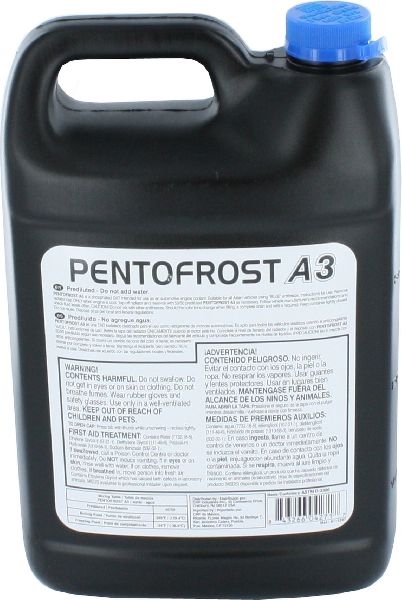
Aftermarket price range: $100-$180 - Mazda Long Life Coolant FL22
(OEM #0000-77-508F-20)— The cooling system must be drained to perform the repair and refilled with the correct type of coolant.
Trusted brands: Mazda (OEM)
OEM price range: $25-$35 per gallon
Aftermarket price range: $20-$30 per gallon
Technical Service Bulletins (TSBs) & Recalls

- SSPD8: Details the Special Service Program / Warranty Extension for the P0126:00 code, covering many Mazda models including the 2019-2023 Mazda3. It extends coverage to 15 years/150,000 miles.
- 01-001/26b (and later revisions): Confirms P0126:00 as 'Thermostat stuck open' and lists symptoms. An update in Jan 2026 clarifies that the DTC does not need to be present for the warranty repair.
- 01-003/25: A key TSB outlining the repair procedure, including the transition to the 'dummy plug' fix and the required PCM software update.
Platform-Specific Known Issues
- Mazda has issued Special Service Program (SSP) D8, which extends the warranty for the failsafe thermostat repair to 15 years or 150,000 miles for affected vehicles, including the 2019-2023 Mazda3.
- The official repair procedure has been updated via TSBs (e.g., 01-001/26, 01-003/25). The latest fix involves removing the original failsafe thermostat, installing a 'dummy plug' kit (part #PYY3-15-SA1), and performing a PCM software update.
- Some owners have reported that dealers may be hesitant to perform the warranty repair if the Check Engine Light is not currently on. However, a TSB update from January 2026 (part of 01-001/26) clarifies that DTC P0126:00 is not required to be present to perform the repair if other symptoms exist.
Mechanic-Grade Diagnostic Values
- Freeze Frame Data - Engine Coolant Temperature (ECT) — expected: Outside the failure range.. Failure: If the ECT is between 104°F and 176°F (40°C - 80°C) when the P0126 code was triggered, Mazda's TSB considers this confirmation of the failsafe thermostat failure.
Hidden / Shadow Codes Worth Checking
- P2B61:00: Coolant Control Valve Circuit Range/Performance. This is not a shadow code, but a distinct electrical fault code. If present alongside P0126, it points towards a wiring or electrical issue with the CCV's control circuit rather than the mechanical thermostat failure. (see via Standard OBD-II scanner. Its presence requires a different diagnostic path focusing on wiring, connectors, and PCM signals instead of immediate part replacement.)
Scan Tool Commands That Help
- Mazda Modular Diagnostic System (M-MDS) or equivalent J2534 Pass-Thru device: PCM Software Update / Reprogramming — This is a mandatory step after installing the 'dummy plug' (PYY3-15-SA1). The PCM software must be updated to a new version that accounts for the removal of the failsafe thermostat. Failure to perform the update can result in drivability issues or other DTCs.
Real Owner Repair Stories
- Reddit user on r/CX5 (2019 Mazda CX-5 (shares same engine and CCV issue)) — Engine would not warm up properly for 1-2 years, with coolant temps typically staying around 120-130°F instead of the normal ~210°F. Weak heater performance. No Check Engine Light was present.
❌ Tried (didn't work) Initially, the owner just lived with the issue, but it became more frustrating over time.
✅ What actually fixed it The dealer performed the latest TSB repair under the SSPD8 warranty extension. The service receipt confirmed they installed the 'dummy plug', used updated part numbers, and performed the mandatory PCM software update. The owner reported the improvement was 'night and day'.
OEM Part Supersession History
PYFD-15-16Z→PYFD-15-16ZA— An internal production process for the valve was modified to address the failsafe thermostat failure.
Heads up: Older PYFD-15-16Z parts without a specific production date code are prone to failure.PYFD-15-16ZA→PW5S-15-16Z— The new part number (PW5S-15-16Z) is an assembly that comes with the 'dummy plug' pre-installed, making the separate dummy plug kit obsolete for new full-assembly replacements.
Heads up: When installing the newest part number PW5S-15-16Z, a PCM software update is mandatory. Failure to update the software may cause drivability problems or new trouble codes.
Helpful Videos
We Have This Part in Stock

The information in this article is provided for general reference and educational purposes only. Vehicle specifications, procedures, and part compatibility can vary by production date, trim level, and region. Always consult your vehicle's factory service manual and verify part numbers before purchasing or performing repairs. Safety-critical components such as airbags, seat belts, and braking systems should be installed by a qualified professional.
- Mazda MAZDA3:
- 🎬 Helpful Videos
- 🛍️ Shop This Part
- What's Unique About the 2019-2025 Mazda MAZDA3
- Diagnostic Flowchart
- Symptoms You May Notice
- Most Likely Causes
- Rare But Worth Checking
- Diagnosis Steps
- Parts You'll Likely Need
- Technical Service Bulletins (TSBs) & Recalls
- Platform-Specific Known Issues
- Mechanic-Grade Diagnostic Values
- Hidden / Shadow Codes Worth Checking
- Scan Tool Commands That Help
- Real Owner Repair Stories
- OEM Part Supersession History
- 🎟️ Get 5% Off