

P0123 on 2013-2016 Jeep Grand Cherokee: Causes, Fixes, and Throttle Body Issues
This code means the throttle position sensor is sending an abnormally high voltage signal to the engine computer. The most common fix is replacing the entire throttle body assembly, as the sensor is integrated. Expect to pay between $150-$350 for the part. Before replacement, check for PCM software updates and inspect the wiring harness for damage, especially shared sensor circuits.
- P0123 on your Grand Cherokee means the throttle position sensor is reporting a voltage that is too high.
- This will likely cause serious drivability issues, including 'limp mode', stalling, and poor acceleration.
- The most common fix is to replace the entire throttle body assembly, as the sensor is built into it.
- Before replacing parts, check the wiring harness to the throttle body for any visible damage, as this can also cause the code.
- Check for any available PCM software updates with your dealer, as some TSBs indicate this can resolve a group of related codes.
What's Unique About the 2013-2016 Jeep GRAND CHEROKEE

For the 2013-2016 (WK2) Grand Cherokee, the throttle position sensor is integrated into the throttle body assembly and not sold as a separate component. This means a sensor failure often requires replacing the entire throttle body. Additionally, manufacturer Technical Service Bulletins (TSBs) show that P0123 can appear alongside other throttle and sensor codes, sometimes pointing to a broader electrical issue or an overly sensitive PCM logic rather than just a single failed part. TSBs #18-090-16 REV. A and #18-046-17 involve reprogramming the PCM with updated software to prevent false triggers for this and other codes on the 6.4L engine. TSB #18-113-15 also specifically calls out this code for the 6.4L engine, indicating potential unique software calibration issues for that powertrain.
Diagnostic Flowchart

Tap your situation to follow the diagnostic path that matches what you're seeing on this vehicle.
Symptoms You May Notice

- Check Engine Light is on
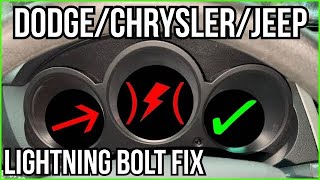
- Electronic Throttle Control (ETC) or 'red lightning bolt' warning light
- Vehicle enters 'limp mode' with severely limited power
- Hesitation or stumbling during acceleration
- Rough or high idle
- Poor engine performance and fuel economy
- Engine may stall or be hard to start
- Unintended or sudden acceleration
- Replacing the accelerator pedal. The accelerator pedal has its own position sensor (APP sensor) and will typically set different codes (like P2123, P2299). While related, it is a separate component from the throttle body sensor.
Most Likely Causes

- Failed Throttle Body Assembly 🔴 High Probability The Throttle Position Sensor (TPS) is integrated into the throttle body. Wear and tear or internal electronic failure of the sensor requires the replacement of the entire assembly. This is the most common hardware failure for this code.
How to confirm: Use a scan tool to monitor TPS voltage with the key on, engine off. The voltage will likely read high (close to 5V) even with the throttle closed. A diagnostic test outlined in service manuals involves checking for a voltage change when jumping specific pins on the connector.
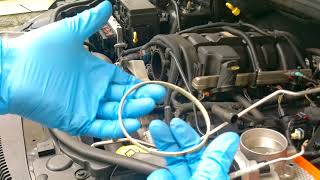
Typical fix: Replace the entire throttle body assembly. 🎬 See this replacement walkthrough for the 3.6L V6 engine An ETC Relearn procedure is required after replacement.
Est. part cost: $150-$350 - Wiring Harness Issue 🟡 Medium Probability Engine vibrations and heat can cause wires to chafe, break, or short-circuit over time, particularly in the harness leading to the throttle body. A short to the 5V reference wire will cause this code.
How to confirm: Visually inspect the wiring harness between the PCM and the throttle body for any signs of damage, melting, or corrosion. Check for a stable 5-volt reference and good ground at the connector with a multimeter. Ensure the connector is fully seated and the red locking tab is engaged.
Typical fix: Repair or replace the damaged section of the wiring harness. Ensure the connector is securely fastened.
Est. part cost: $10-$100 - PCM Software Requires Update 🟡 Medium Probability FCA has issued multiple TSBs (e.g., 18-090-16 REV. A) that address this code via a PCM software update. The original software may be too sensitive and can set the code erroneously.
How to confirm: A dealership or a well-equipped independent shop can check the current PCM software version against the latest available version from FCA using a wiTECH scan tool. If other throttle codes are present (P0122, P0222, P0223), a software update is a likely first step.
Typical fix: Reprogram the PCM with the latest available software using a wiTECH scan tool.
Est. part cost: $0-$200 - Dirty Throttle Body ⚪ Low Probability Carbon and gunk can build up inside the throttle body, preventing the throttle plate from closing properly. This can cause the sensor to report a position that is slightly open when it should be closed, though this more commonly causes other codes.
How to confirm: Remove the air intake tube and visually inspect the throttle plate and bore for carbon buildup.
Typical fix: Clean the throttle body thoroughly with a dedicated throttle body cleaner and a soft brush. An ETC relearn is required after cleaning. 🎬 Watch: How to perform the electronic throttle relearn process
Est. part cost: $10-$20
Rare But Worth Checking
- Faulty Powertrain Control Module (PCM): This is rare. The PCM should only be considered after all other possibilities, including the throttle body, wiring, and software updates, have been exhaustively tested and ruled out.
- Low or Unstable Battery Voltage: A weak or failing battery can cause a variety of erroneous electronic codes to appear, including throttle body codes. Before diagnosing complex wiring issues, ensure the battery is fully charged and load-tested.
Diagnosis Steps
- Connect an OBD-II scanner and confirm P0123 is present, noting any other codes (especially P0122, P0222, P0223, P0642).
- Check with a dealer or service database for any open TSBs related to PCM software updates for your VIN (e.g., TSB 18-090-16 REV. A). If applicable, perform this first.
- With the scanner, view the live data for 'TPS1 Voltage'. With the key on and engine off, the voltage should be high (near 5V) if the fault is active.
- Turn the ignition off and disconnect the electrical connector at the throttle body. Inspect the connector and pins for corrosion, damage, or pushed-out pins. Ensure the red locking tab is not broken.
- Turn the key on (engine off) and check the wiring harness connector for a 5-volt reference signal and a good ground using a multimeter.
- If power and ground are good, and a PCM update did not fix the issue, the throttle body assembly itself is the most likely culprit.
- If power or ground is missing, inspect the wiring harness back to the PCM for breaks, shorts, or corrosion. Pay special attention to other sensors that share the 5V reference circuit, such as the oil pressure sensor, as a short in their wiring can cause P0123.
- If the throttle body is cleaned or replaced, perform the ETC Relearn procedure.
Parts You'll Likely Need
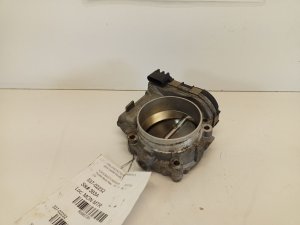
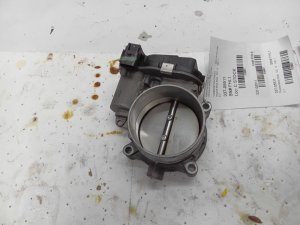
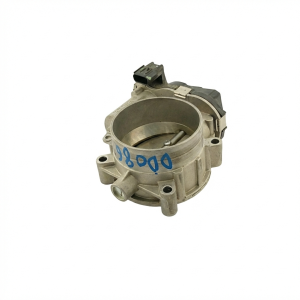
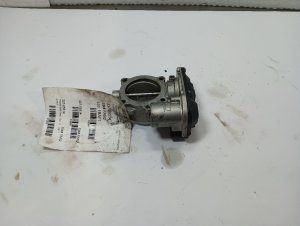
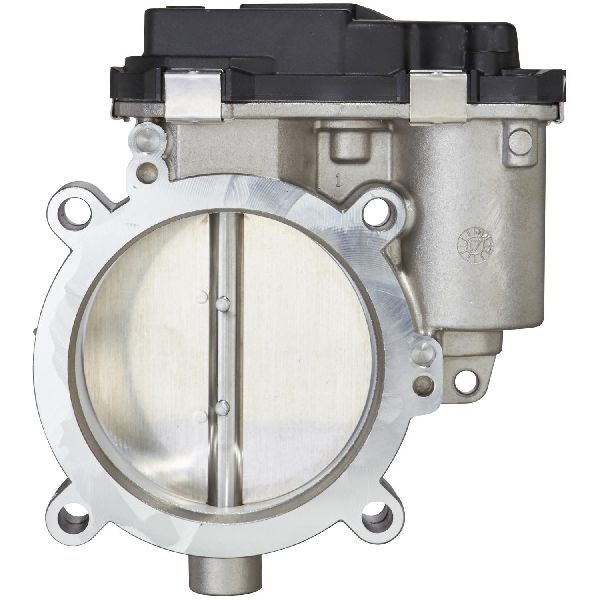
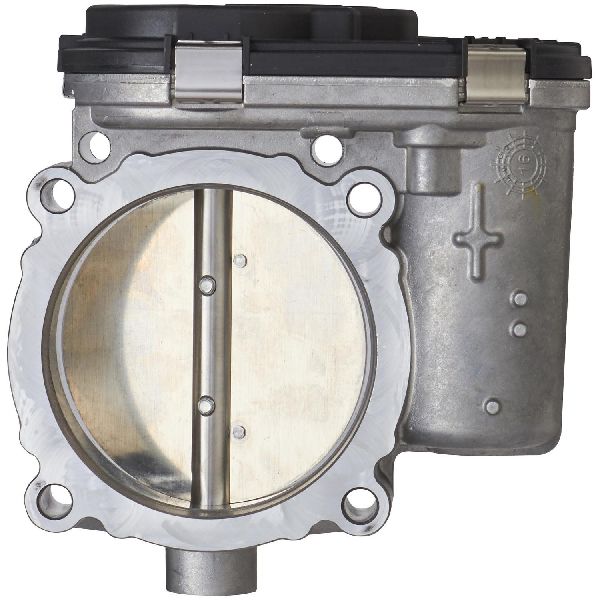
- Throttle Body Assembly
(OEM #For 3.6L V6: 5184349AF (supersedes 5184349AC, 5184349AD, 5184349AE). For 5.7L & 6.4L V8: 53034251AD (supersedes 53034251AB).)— The throttle position sensor (TPS) that causes code P0123 is integrated into the throttle body on this vehicle. It cannot be replaced separately, so the entire assembly is the most common fix.
Trusted brands: Mopar, Hitachi, Bosch
OEM price range: $250-$450
Aftermarket price range: $150-$250
Related Codes That Often Appear With This One
- P0122 — This is for 'Throttle Position Sensor 1 Circuit Low'. Seeing both high and low codes can indicate an intermittent wiring problem or a failing sensor that the PCM software update TSB #18-090-16 REV. A is designed to address.
- P0222 / P0223 — These codes relate to the 'Throttle Position Sensor 2' circuit. Modern electronic throttles use two sensors for redundancy. A fault in one often triggers codes for the other, and they are often listed together in TSBs.
- P2135 — This code indicates a correlation problem between TPS 1 and TPS 2, meaning the PCM is receiving conflicting information from the two sensors, which can happen when one sensor's voltage is stuck high.
- P0642 — This code for 'Sensor Reference Voltage 'A' Circuit Low' can be a critical clue. The throttle body shares its 5-volt reference circuit with other sensors, like the oil pressure switch. A short in another sensor's wiring can drag down the voltage for the entire circuit, causing throttle-related codes even if the throttle body is good.
Technical Service Bulletins (TSBs) & Recalls
- 18-090-16 REV. A - Flash: Powertrain Diagnostic And System Enhancements for 6.4L, lists P0123 as a code addressed by a PCM software update.
- 18-046-17 - Supersedes a previous TSB and also involves a PCM flash for the 6.4L to address P0123 among other codes.
- 18-113-15 - Specifically calls out P0123 for the 6.4L engine, reinforcing that it's a known issue for this powertrain.
- 18-098-16 - Mentions P0123 in a list of potential DTCs related to electrical system diagnostics.
Platform-Specific Known Issues
- PCM Software Updates (TSBs): TSB #18-090-16 REV. A and #18-046-17 specifically note that P0123 (and related TPS codes) can occur on the 6.4L engine and may be resolved by a PCM software update rather than hardware replacement. This indicates the original calibration was too sensitive.
- ETC Relearn Procedure: After disconnecting the battery or replacing/cleaning the throttle body, an Electronic Throttle Control (ETC) relearn procedure is necessary. While a scan tool is best, a manual procedure exists: Turn ignition to 'ON' (engine off), slowly press the accelerator pedal to the floor and slowly release it. Turn ignition 'OFF', then start the engine and let it idle to recalibrate.
Mechanic-Grade Diagnostic Values
- TPS1 Signal Voltage (Key On, Engine Off) — expected: Approx. 0.5V at closed throttle, sweeping smoothly up to approx. 4.5V at wide-open throttle.. Failure: Voltage is stuck high (near 5.0V) regardless of throttle position, or has dead spots/jumps during the sweep.
- 5-Volt Reference at Throttle Body Connector — expected: Stable 5.0 volts with key on, engine off.. Failure: Voltage is low or missing, which could indicate a short on the shared reference circuit (e.g., from an oil pressure sensor) or a PCM fault.
- Ground Circuit Resistance at Throttle Body Connector — expected: Less than 5.0 ohms to a known good ground.. Failure: High resistance (open circuit) will cause the signal voltage to be skewed high.
- TPS Sensor Resistance Sweep — expected: While no specific ohm values are published for this part, testing between the correct pins with a multimeter should show a smooth, linear change in resistance as the throttle plate is moved.. Failure: The reading jumps, drops out, or shows an open circuit (OL) at any point in the throttle's travel, indicating a worn spot in the sensor's internal potentiometer.
Scan Tool Commands That Help
- wiTECH or equivalent professional scan tool: ETC Relearn (Electronic Throttle Control Relearn) — This function is required after cleaning or replacing the throttle body assembly. It allows the PCM to learn the new closed, open, and partial throttle positions to ensure accurate idle and throttle response.
- wiTECH: PCM Flash/Reprogramming — Used to update the PCM software to the latest calibration. This is a primary diagnostic step if a relevant TSB exists (like 18-090-16 REV. A), as the original software logic may be too sensitive and cause false P0123 codes.
Wiring & Ground Locations
- Throttle Body Connector (6-pin) — Connected to the side of the throttle body, accessible after removing the main engine cover and air intake tube.. This is the primary connection point for testing. For TPS 'A' (TPS1), the key pins are the 5V reference, signal return, and sensor ground. A short between the signal and 5V reference wire will cause a P0123.
- Engine Ground Strap (P/N 05064962AA) — A braided strap located on the passenger side of the engine. One end connects to a stud on the motor mount, behind the alternator, and the other to the chassis.. This strap is known to corrode and break. While not the direct ground for the TPS sensor itself, a poor engine-to-chassis ground can cause a host of unpredictable electrical issues and floating voltages, potentially contributing to sensor codes like P0123.
- Shared 5V Reference Circuit — This is a circuit, not a single point. It originates at the PCM and provides power to multiple sensors, including the throttle body and, critically, the oil pressure sensor located on the oil filter housing.. A short-to-ground in the wiring for any sensor on this shared circuit can pull the voltage down for all sensors, or in some cases, cause erratic high voltage readings on other sensors. A damaged oil pressure sensor connector is a known cause of throttle-related codes on this platform.
Real Owner Repair Stories
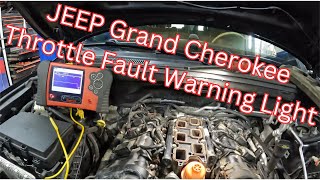
- YouTube Channel 'OverWheels' (2014 Jeep Grand Cherokee 3.6L) — Throttle fault warning light (red lightning bolt), vehicle in limp mode, multiple codes including P0642 (Sensor Reference Voltage Low) and P2122 (APP Sensor Low), but the principle applies to P0123 (High) as well.
❌ Tried (didn't work) Initial diagnosis pointed towards the throttle body or accelerator pedal.
✅ What actually fixed it The 5-volt reference circuit was being shorted to ground by the oil pressure switch connector. The insulation on the wires at the back of the connector had cracked and was making contact with the foil loom. Replacing the oil pressure switch connector (P/N S738) resolved the short and cleared all throttle-related faults. - JK-Forum.com user 'Patriot' (Jeep Wrangler JK (uses similar engine controls and logic)) — Check engine light with codes P0123 and C121C.
❌ Tried (didn't work) The user questioned if the throttle body was the issue.
✅ What actually fixed it The dealership performed a PCM Flash. The user noted, "Isn't this what the PCM Flash recall was supposed to fix?" after the service was completed and the issue was resolved, confirming that a software update was the correct fix.
"I Checked Everything" — The Actual Cause
- A common scenario for P0123 on this platform is when all standard electrical tests on the throttle body and its direct wiring check out fine. The root cause is often external to the throttle circuit itself. A known example is a short circuit in the wiring for the oil pressure sensor, which shares the same 5-volt reference line from the PCM. The short drags down or destabilizes the entire circuit, causing the PCM to see an invalid (high or low) voltage from the throttle position sensor, even though the throttle body is functioning perfectly.
When the Usual Fixes Don't Work
- While replacing the throttle body is the most common fix, it is not always the solution. In a documented case involving a 2014 Grand Cherokee, the throttle body was not at fault. The actual cause was a short in the wiring of the oil pressure sensor, which shares the same 5V reference circuit. This highlights the importance of diagnosing the entire circuit rather than just the component indicated by the DTC. Furthermore, forum records show instances where a dealer replaced the throttle body, but the code persisted until a PCM software update (TSB) was performed, confirming that faulty software logic can be the true root cause.
OEM Part Supersession History
5184349AC, 5184349AD, 5184349AE→5184349AF— Standard part revision and improvement by the manufacturer.
Model Year Variations Within This Range
- 2014+: The 2014 model year marked a significant refresh for the WK2, including a new 8-speed transmission and updated electrical architecture. A documented case of a shorted oil pressure sensor connector causing throttle codes occurred on a 2014 model, highlighting a potential failure point in the wiring harness routing for these updated vehicles.
Helpful Videos

Used OEM Parts in Stock
New Aftermarket Parts Available



The information in this article is provided for general reference and educational purposes only. Vehicle specifications, procedures, and part compatibility can vary by production date, trim level, and region. Always consult your vehicle's factory service manual and verify part numbers before purchasing or performing repairs. Safety-critical components such as airbags, seat belts, and braking systems should be installed by a qualified professional.
- Jeep GRAND CHEROKEE:
- 🎬 Helpful Videos
- 🛍️ Shop This Part
- What's Unique About the 2013-2016 Jeep GRAND CHEROKEE
- Diagnostic Flowchart
- Symptoms You May Notice
- Most Likely Causes
- Rare But Worth Checking
- Diagnosis Steps
- Parts You'll Likely Need
- Related Codes That Often Appear With This One
- Technical Service Bulletins (TSBs) & Recalls
- Platform-Specific Known Issues
- Mechanic-Grade Diagnostic Values
- Scan Tool Commands That Help
- Wiring & Ground Locations
- Real Owner Repair Stories
- "I Checked Everything" — The Actual Cause
- When the Usual Fixes Don't Work
- OEM Part Supersession History
- Model Year Variations Within This Range
- 🎟️ Get 5% Off