

P0123 on 2013-2016 Dodge Charger: Throttle Position Sensor Circuit High Causes and Fixes
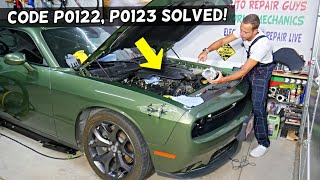
On a 2013-2016 Dodge Charger, code P0123 usually points to a failing throttle body assembly, which contains the integrated throttle position sensor. Before replacing it, check for crucial PCM software updates, as multiple Technical Service Bulletins (TSBs) address this exact code with a reflash. If replacement is needed, common Mopar part numbers are 04891735AC/AF for the 3.6L V6 and 53034251AD for the 5.7L/6.4L V8s. A new throttle body costs between $150 and $350.
- Always check for a PCM software update first; it's a very common fix for P0123 on these Chargers and can save you hundreds of dollars.
- The most likely failed part is the entire electronic throttle body assembly, as the sensor itself is not sold separately.
- Symptoms are serious and include the car going into a low-power 'limp mode,' making it unsafe for normal driving.
- If you replace the throttle body yourself, a 'relearn' procedure using a scan tool is necessary for the car to run correctly afterward.
- This code is often accompanied by other TPS codes (P0122, P0222, P0223), which reinforces the likelihood of a single point of failure like the throttle body or PCM software.
What's Unique About the 2013-2016 Dodge CHARGER

For the 2013-2016 Dodge Charger and its platform-mates (Chrysler 300, Dodge Challenger), the appearance of P0123, especially alongside other TPS codes like P0122, P0222, and P0223, is a well-documented issue. Chrysler issued several Technical Service Bulletins (TSBs) indicating that these codes can be triggered erroneously due to overly sensitive diagnostic software. In many cases, the actual fix is not a hardware replacement but a simple PCM software update performed by a dealer, which corrects the sensitivity of the diagnostic monitors. Ignoring this step can lead to unnecessary replacement of the throttle body.
Diagnostic Flowchart
Tap your situation to follow the diagnostic path that matches what you're seeing on this vehicle.
Symptoms You May Notice

- Check Engine Light is on
- Electronic Throttle Control (ETC) warning light (a red lightning bolt) is illuminated
- Vehicle enters 'limp mode' with severely limited power and acceleration
- Rough or high idle
- Hesitation, bucking, or surging during acceleration
- Engine may stall unexpectedly
- Unpredictable or unresponsive throttle pedal
- Replacing the accelerator pedal position sensor. While it is part of the throttle control system, P0123 specifically points to the sensor at the throttle body ('A' circuit), not the pedal sensor.
- Replacing the throttle body without first checking for required PCM software updates. Many owners have replaced the part only to have the code return, when a simple reflash was the correct fix.
Most Likely Causes

- Outdated Powertrain Control Module (PCM) Software 🔴 High Probability Multiple TSBs (#18-062-17, #18-045-16 REV. A, #1809416, #18-074-15 REV A) were issued by the manufacturer specifically to address this code and others related to it with a software update. This is the most common first step recommended by the manufacturer.
How to confirm: A Dodge dealership or a well-equipped independent shop with access to OEM service information can check the current PCM software version against the latest available version for your vehicle's VIN.
Typical fix: Update or 'reflash' the PCM with the latest manufacturer software. This is a dealer or professional-level job requiring a tool like wiTECH.
Est. part cost: $0 (software only) - Faulty Throttle Body Assembly 🔴 High Probability On these models, the throttle position sensors are integrated into the electronic throttle body and are not sold separately. The entire assembly must be replaced if the sensor fails internally. This is a very common failure point after software issues are ruled out.
How to confirm: After confirming the PCM software is up to date and wiring is intact, testing the sensor's voltage output with a scan tool can confirm erratic or out-of-spec readings. If voltage is stuck high (near 5V) regardless of pedal position, the sensor has failed.
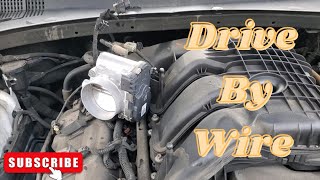
Typical fix: Replace the entire throttle body assembly. A relearn procedure is required after installation. OEM Part Numbers: 3.6L V6 (Mopar #04891735AC, 5184349AF), 🎬 See this step-by-step throttle body replacement walkthrough. 5.7L/6.4L V8 (Mopar #53034251AD).
Est. part cost: $150-$350 - Wiring Harness or Connector Issue 🟡 Medium Probability The harness leading to the throttle body can chafe against engine components or brackets, especially near the back of the engine. The connector pins can also corrode or back out, causing a short to power or a poor connection.
How to confirm: Visually inspect the wiring harness leading to the throttle body for any signs of damage, melting, or abrasion. Unplug the connector and check for bent, corroded, or loose pins. Use a multimeter to check for a short to voltage on the signal wire.
Typical fix: Repair the damaged section of the wire or replace the connector pigtail.
Est. part cost: $10-$50
Rare But Worth Checking
- Faulty Powertrain Control Module (PCM): This is very rare, but if software, wiring, and the throttle body have all been ruled out, the PCM's internal driver for the TPS circuit may have failed. This should be the absolute last consideration.
Diagnosis Steps
- Check for TSBs: First, use the vehicle's VIN to check with a dealer or professional database (like ALLDATA) for any applicable PCM software updates related to P0123. This is the most likely and cheapest fix.
- Inspect Wiring: Carefully inspect the entire wiring harness and connector going to the electronic throttle body. Look for any signs of chafing, melting, or corrosion. Pay close attention to where the harness may rub against brackets. Wiggle the connector and harness with the engine running to see if it triggers the fault.
- Check for Short to Voltage: Using a multimeter and a wiring diagram, disconnect the TPS connector. With the key on, engine off, probe the signal wire in the harness. There should be no voltage. If voltage is present (especially 5V or 12V), there is a short to power in the harness that must be traced and repaired.
- Test Sensor with Scan Tool: Connect a scan tool and monitor the live data for TPS1 Voltage. The voltage should be around 0.5V-1.0V at closed throttle and sweep smoothly up to ~4.5V at wide-open throttle. If the voltage is stuck high (e.g., 4.9V) or does not move with the throttle plate, the sensor is bad.
- Replace Throttle Body: If the software is up-to-date, the wiring is good, and the sensor test fails, replace the entire throttle body assembly.
- Perform Relearn Procedure: After installing a new throttle body, a 'Throttle Body Relearn' or 'Reset ETC Learned Values' procedure must be performed. This can be done with a bidirectional scan tool (most reliable method) or sometimes with a manual 'pedal dance' procedure. A common manual method involves turning the key to 'ON' (engine off), waiting 10 seconds, slowly pressing the gas pedal to the floor, slowly releasing it, then turning the key 'OFF' for 10 seconds before starting the engine. However, success with manual methods varies, 🎬 Watch: How to perform the easy throttle relearn procedure. and a scan tool is preferred.
Parts You'll Likely Need

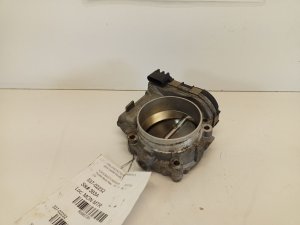
- Electronic Throttle Body Assembly
(OEM #3.6L V6: 04891735AC / 5184349AF | 5.7L/6.4L V8: 53034251AD)— The throttle position sensor (TPS) is integrated into the throttle body. If the sensor fails, the entire assembly must be replaced. This is the most common hardware failure for code P0123 after ruling out software issues.
Trusted brands: Mopar, Bosch, Hitachi, Cardone
OEM price range: $250-$350
Aftermarket price range: $150-$250
Related Codes That Often Appear With This One
- P0122 — This is for 'Throttle Position Sensor 1 Circuit Low.' Seeing both high and low codes can indicate an intermittent connection or a failing sensor.
- P0222 — This is for 'Throttle Position Sensor 2 Circuit Low.' Modern throttle bodies use two sensors for redundancy. A fault often triggers codes for both sensors.
- P0223 — This is for 'Throttle Position Sensor 2 Circuit High.' This code is frequently seen with P0123, as documented in multiple TSBs, pointing to a systemic issue.
- U1424 — This code for 'Implausible Engine Torque Signal Received' can appear when the PCM gets conflicting information from the throttle position sensors.
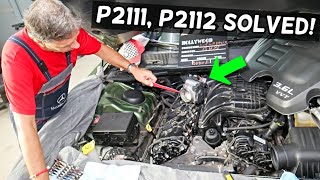
- P2111 — This code indicates the 'Throttle Actuator Control System is Stuck Open' and often appears with TPS circuit codes when the PCM loses confidence in the throttle plate's position.
Technical Service Bulletins (TSBs) & Recalls
- 18-062-17: Addresses P0123 and other TPS codes, likely resolved with a PCM update.
- 18-045-16 REV. A: Lists P0123 among DTCs that may be set, pointing towards a potential software fix.
- 1809416: Includes P0123 in a list of potential diagnostic trouble codes.
- 18-074-15 REV A: Mentions P0123 as a DTC that may be found in the PCM memory.
Platform-Specific Known Issues
- A primary issue for this platform is the need for PCM software updates to resolve erroneously set TPS-related fault codes, as documented in TSBs #18-062-17, #18-045-16 REV. A, #1809416, and #18-074-15 REV A.
- Owner experiences confirm that simply cleaning the throttle body rarely fixes a P0123 code, as it's an electrical failure, not a mechanical blockage issue.
- Some owners have successfully performed a temporary fix by disconnecting the battery for 30 minutes to reset the PCM, but the issue almost always returns until the root cause (software or hardware) is addressed.
Mechanic-Grade Diagnostic Values
- TPS 'A' Signal Voltage (Key On, Engine Off, Throttle Closed) — expected: ~0.5V to 1.0V. Failure: Voltage is stuck high near 4.5V or 5.0V
- TPS 'A' Signal Voltage (Key On, Engine Off, Wide Open Throttle) — expected: ~4.5V to 4.7V. Failure: Voltage does not change or is already at maximum when throttle is closed
- TPS 5V Reference Voltage at Connector — expected: 4.8V - 5.2V. Failure: Voltage is significantly higher or lower than 5V, indicating a wiring or PCM issue
- TPS Ground Circuit at Connector — expected: Near 0V. Failure: Voltage is present, indicating an open ground circuit
- PCM Fault Trigger Condition — expected: Voltage below 4.5V. Failure: PCM detects 4.5 volts or more for at least 1.3 seconds
Scan Tool Commands That Help
- wiTECH (OEM), Autel, Foxwell, etc.: Throttle Relearn / Reset ETC Learned Values / Throttle Matching — This function must be performed after replacing the throttle body to calibrate the new sensor's closed, open, and part-throttle positions with the PCM. Failure to do so can result in incorrect idle speed, poor throttle response, or the code returning.
Wiring & Ground Locations

- Throttle Body Connector — Connects directly to the electronic throttle body, located at the front of the intake manifold (5.7L) or right rear of the intake manifold (3.6L).. This 6-pin connector is the primary interface for all power, ground, and signal wires for both throttle position sensors and the throttle motor. Corrosion or backed-out pins are a common cause of circuit faults.
- G101 (Ground) — Right front of engine compartment.. This is a major engine bay ground point. While not the direct ground for the TPS (which is provided by the PCM), a poor main ground can cause floating voltages and erratic sensor behavior across the system.
- S104 (Splice) — On older but similar Dodge platforms, this ground splice is located near the breakout for the speed input sensor on the driver's side. Location may be similar on the Charger.. Water intrusion into a shared ground splice like this can cause an open ground circuit, leading to a high voltage reading on the signal wire as it seeks a path to ground.
Real Owner Repair Stories
- RamForum.com user (2018 Ram 1500 with 5.7L HEMI (shares powertrain and electronics with Charger)) — No start, faint click, red lightning bolt on dash, codes P0123 and P0222.
❌ Tried (didn't work) Jumping the vehicle, Pedal reset procedure, Dealer charged the battery, claimed it was fine, Replacing the throttle body assembly, Replacing the battery
✅ What actually fixed it The user's problem was not resolved in the thread after replacing the throttle body and battery, which strongly suggests the fault was in the wiring harness or the PCM itself, highlighting that part replacement is not always the fix.
When the Usual Fixes Don't Work
- While replacing the throttle body is a very common fix, there are documented cases where this does not resolve the issue. A user on RamForum.com with a 5.7L HEMI replaced both the throttle body and the battery for codes P0123 and P0222, but the no-start condition and codes persisted. This underscores the importance of verifying the wiring and PCM function before assuming the throttle body is the culprit, especially if the vehicle has a no-crank condition, which is not a typical symptom of a TPS failure alone and may point to a deeper electrical issue.
OEM Part Supersession History
53034251AB, 53034251AC→53034251AD— Standard part revision and improvement by the manufacturer.
Heads up: The newer 'AD' revision is backward compatible with vehicles that used the 'AB' and 'AC' versions.5184349AB, AC, AD, AE→5184349AF— Standard part revision for the 3.6L V6 engine.
Heads up: The 'AF' revision is the latest and is backward compatible for the specified applications.
Helpful Videos

Used OEM Parts in Stock
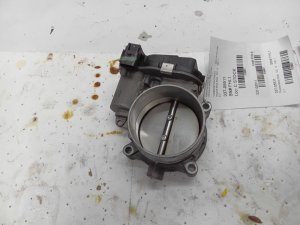
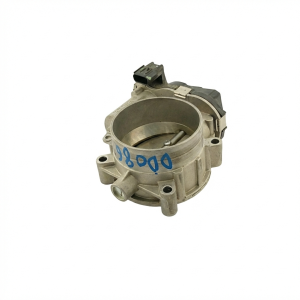
New Aftermarket Parts Available

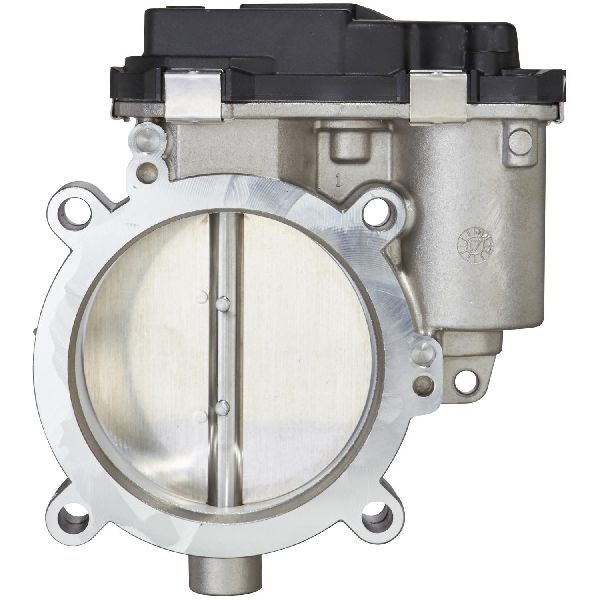

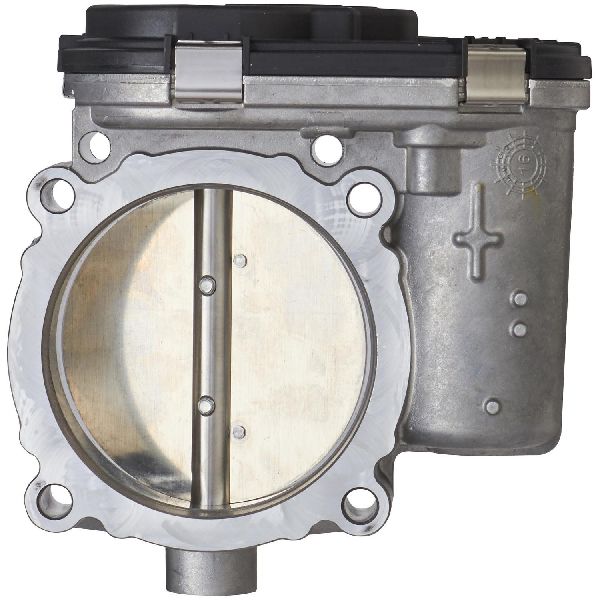

The information in this article is provided for general reference and educational purposes only. Vehicle specifications, procedures, and part compatibility can vary by production date, trim level, and region. Always consult your vehicle's factory service manual and verify part numbers before purchasing or performing repairs. Safety-critical components such as airbags, seat belts, and braking systems should be installed by a qualified professional.
- Dodge CHARGER:
- 🎬 Helpful Videos
- 🛍️ Shop This Part
- What's Unique About the 2013-2016 Dodge CHARGER
- Diagnostic Flowchart
- Symptoms You May Notice
- Most Likely Causes
- Rare But Worth Checking
- Diagnosis Steps
- Parts You'll Likely Need
- Related Codes That Often Appear With This One
- Technical Service Bulletins (TSBs) & Recalls
- Platform-Specific Known Issues
- Mechanic-Grade Diagnostic Values
- Scan Tool Commands That Help
- Wiring & Ground Locations
- Real Owner Repair Stories
- When the Usual Fixes Don't Work
- OEM Part Supersession History
- 🎟️ Get 5% Off