

P0123 on 2013-2015 Chrysler 300: Throttle Position Sensor Circuit High Causes and Fixes
This code usually indicates a faulty throttle body assembly, as the sensor is integrated. Before replacing it, check for PCM software updates with a dealer, as Chrysler has issued bulletins to fix erroneous codes. A new Mopar throttle body costs between $250 and $500, and the issue is common on platform mates like the Dodge Charger and Challenger.
- Always check for PCM software updates with a Chrysler dealer before replacing any parts, as a reflash is a common fix for this code.
- The Throttle Position Sensor (TPS) is built into the throttle body; if the sensor is bad, the entire assembly must be replaced.
- Symptoms are serious and include the vehicle entering a low-power 'limp mode', which requires immediate attention.
- Inspect the wiring and connector at the throttle body for damage before condemning the part.
- This code is often accompanied by other TPS-related codes (P0223, P0122, P0222), which strongly points to a fault within the throttle body assembly itself.
What's Unique About the 2013-2015 Chrysler 300
For the 2013-2015 Chrysler 300 and its platform mates (Dodge Charger, Challenger), the code P0123 is frequently mentioned in multiple Technical Service Bulletins (TSBs) issued by Chrysler. These bulletins often involve a PCM software update to correct logic that is overly sensitive or prone to falsely triggering this and other related throttle body codes. This suggests that the issue can be software-related and not always a hardware failure, making a trip to the dealer for a potential reflash a crucial first step before replacing parts. TSB 18-045-16 REV. A specifically lists P0123 as a code addressed by a software update for 2015 models with the 6.4L engine, but similar software fixes exist for other engines and years.
Diagnostic Flowchart
Tap your situation to follow the diagnostic path that matches what you're seeing on this vehicle.
Symptoms You May Notice
- Check Engine Light is on
- Electronic Throttle Control (ETC) or 'lightning bolt' light is on or flashing
- Vehicle enters 'limp mode' with severely limited power and acceleration
- Hesitation or stumbling during acceleration
- Rough or unstable idle
- Engine may be hard to start or may not start
- Inability to rev the engine or accelerate from a stop 🎬 See how to fix the blinking lightning bolt and limp mode
- Replacing the accelerator pedal position (APP) sensor. The P0123 code specifically refers to the sensor on the throttle body ('A' circuit), not the one connected to the gas pedal. While a faulty APP sensor can cause similar symptoms, it will set different codes (e.g., P0222, P2122, P2127).
Most Likely Causes
- Faulty Throttle Body Assembly 🔴 High Probability On modern Chrysler engines like the 3.6L and 5.7L, the two throttle position sensors (TPS) are integrated into the electronic throttle body and are not sold separately. The entire unit must be replaced if one of the internal sensors fails, which is a common point of failure.
How to confirm: Using a scan tool, monitor the live data for 'TPS 1 Voltage'. If the voltage is stuck high (e.g., near 5.0V) regardless of pedal position, and wiring is confirmed to be good, the throttle body is faulty. Disconnecting the throttle body connector should cause the voltage reading on the scan tool to drop; if it does, this further points to a failed throttle body.
Typical fix: Replace the entire throttle body assembly. After installation, a throttle relearn procedure is required to calibrate the new part with the PCM.
Est. part cost: $250-$500 - Outdated PCM Software 🟡 Medium Probability Chrysler has released multiple TSBs (#18-045-16 REV. A, #18-094-16, #18-074-15 REV A) that involve updating the PCM software to prevent falsely setting P0123 and related codes due to overly sensitive diagnostic logic.
How to confirm: A Chrysler dealership or a well-equipped independent shop with a subscription to FCA's TechCONNECT can check your vehicle's VIN against available TSBs and software updates. This is the most reliable way to confirm if a software fix is available.
Typical fix: Update the Powertrain Control Module (PCM) to the latest software version using a wiTECH scan tool. This is typically performed at a dealership.
Est. part cost: $100-$250 - Wiring Harness or Connector Issue ⚪ Low Probability Engine vibrations and heat can cause wires to chafe or connectors to become loose or corroded over time. The harness near the throttle body is susceptible. Pulling on wires instead of the connector body during service can also dislodge pins. 🎬 Watch: How a bent PCM pin can trigger code P0123
How to confirm: Visually inspect the wiring harness leading to the throttle body for any signs of damage, fraying, or melting. Check the connector for corrosion, moisture, or backed-out pins. Use a multimeter to check for a stable 5V reference and good ground at the connector. A short to power on the signal wire can also cause this code.
Typical fix: Repair the damaged section of the wiring harness or clean/replace the connector. Apply dielectric grease to the connector to prevent future moisture intrusion.
Est. part cost: $10-$100
Rare But Worth Checking
- Faulty Powertrain Control Module (PCM): This is rare, but if a new throttle body and confirmed good wiring do not resolve the code, the PCM's internal circuit for reading the TPS may have failed. This would typically be accompanied by other unrelated codes.
- High Voltage from Alternator: A failing alternator can sometimes produce excessive voltage, which can affect sensor readings throughout the vehicle. This would typically be accompanied by other electrical-related trouble codes and possibly a battery warning light.
Diagnosis Steps
- Scan for all stored DTCs. Note any other codes that appear with P0123, especially P0222, P0122, and P0223, as they strongly point to a throttle body issue.
- Check with a dealer if any PCM software updates related to TSBs #18-045-16, #18-094-16, or #18-074-15 are available for your vehicle's VIN. Perform this update before replacing parts, as it is a known fix.
- Visually inspect the throttle body electrical connector and wiring harness for damage, corrosion, or loose connections. Ensure the red locking tab on the connector is secure.
- With the key on and engine off, use a scan tool to observe the live data for 'TPS Sensor 1 Voltage'. It should be around 0.5V at idle and sweep smoothly up to ~4.5V at wide-open throttle. A reading stuck high (near 5V) points to a problem.
- If the reading is stuck high, disconnect the throttle body. If the voltage on the scan tool drops to 0V, the throttle body assembly is almost certainly faulty.
- If the voltage remains high even with the sensor disconnected, there is a short to power in the signal wire. Test the wiring between the PCM and the throttle body connector for continuity and shorts.
- If wiring and software are confirmed good, replace the throttle body assembly.
- After replacement, perform a throttle body relearn procedure. This can sometimes be done by disconnecting the battery for 15 minutes, or by following a specific sequence of turning the key on, pressing the accelerator pedal slowly, and letting the engine idle.
Parts You'll Likely Need
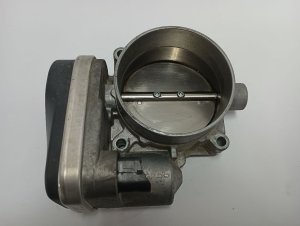
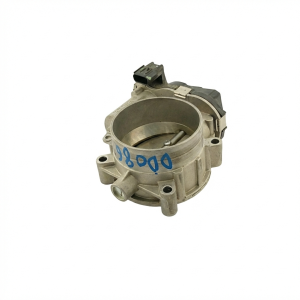
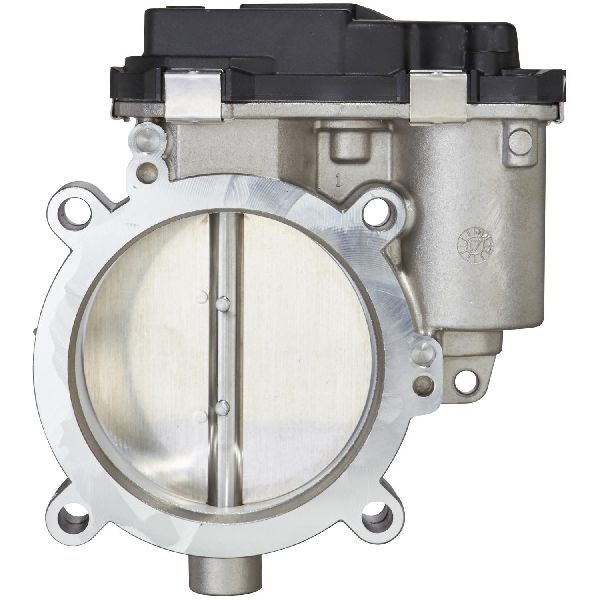
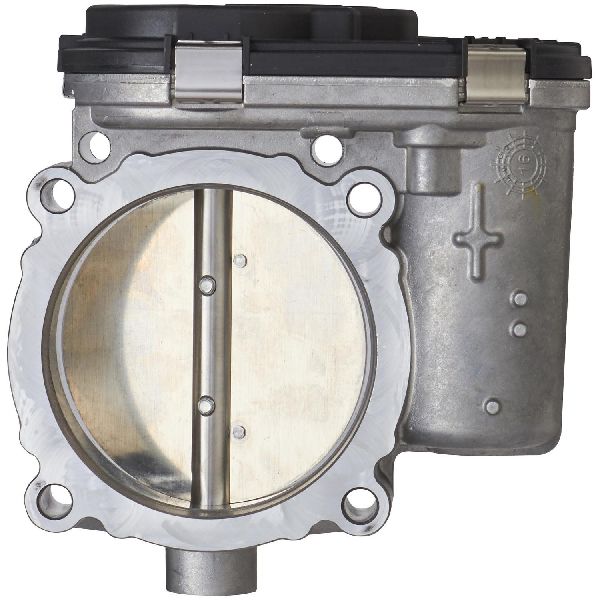
- Electronic Throttle Body Assembly
(OEM #5184349AF)— The throttle position sensor (TPS) is integrated into the throttle body. A failure of the sensor requires replacement of the entire assembly. Part number 5184349AF is a common replacement for the 3.6L V6 and has superseded previous versions like 5184349AE.
Trusted brands: Mopar, Dorman, Cardone, Hitachi
OEM price range: $400-$500
Aftermarket price range: $240-$350
Related Codes That Often Appear With This One
- P0223 — This is for 'Throttle Position Sensor 2 Circuit High'. Both sensors are in the throttle body, and a failure often affects both, as noted in TSBs #18-045-16 REV. A, #18-094-16, and #18-074-15 REV A.
- P0122 — This is for 'Throttle Position Sensor 1 Circuit Low'. It's common for a failing sensor to send erratic signals, sometimes high and sometimes low, triggering both codes. 🎬 Watch: Diagnosing P0123 and P2111 codes on a Challenger This is also mentioned in the same TSBs.
- P0222 — This is for 'Throttle Position Sensor 2 Circuit Low'. Like P0122, it indicates an erratic signal from the redundant sensor in the same throttle body assembly. It is cited alongside P0123 in TSBs #18-094-16 and #18-074-15 REV A.
- P2111 — This code indicates the Throttle Actuator Control System is stuck open. A faulty TPS can provide incorrect data to the PCM, leading it to believe the throttle plate is in a position it is not, which can trigger this code.
Technical Service Bulletins (TSBs) & Recalls
- 18-045-16 REV. A: Mentions P0123 in a list of DTCs that can be addressed with a PCM software update for 2015 models with 6.4L engines.
- 18-094-16: Lists P0123 as a potential DTC that can be resolved with a PCM software update for 2014 models.
- 18-074-15 REV A: Cites P0123 as a DTC that may be found and addressed by a PCM software update for 2013 models.
Platform-Specific Known Issues
- Chrysler issued TSB #18-045-16 REV. A, #18-094-16, and #18-074-15 REV A, which all indicate that a PCM software update may be required to fix the logic that leads to P0123 and other related throttle codes being set incorrectly. This should be the first check before replacing expensive parts.
- Owner experiences on forums frequently describe the sudden onset of limp mode with the ETC 'lightning bolt' light, which is resolved either by a PCM flash or a new throttle body.
Mechanic-Grade Diagnostic Values
- TPS 'A' (TPS1) Signal Voltage — expected: Approximately 0.5V - 0.9V with the throttle closed (idle), sweeping smoothly and linearly up to approximately 4.5V at wide-open throttle (WOT).. Failure: A voltage reading that is stuck high (above 4.5V) regardless of throttle plate angle, or readings that are erratic and do not change smoothly with pedal movement.
- TPS 5V Reference Voltage — expected: A steady 5.0 volts at the designated pin on the throttle body connector with the key on, engine off.. Failure: Voltage that is significantly lower or higher than 5.0V, or is unstable, indicates a problem with the PCM or the wiring.
- TPS Internal Resistance — expected: Using a multimeter, resistance between the signal and ground pins should change smoothly without dropouts as the throttle plate is manually moved from closed to open. A sample reading on a similar sensor showed a range starting around 5.6 kOhms.. Failure: An infinite resistance reading (open circuit), zero resistance (short circuit), or resistance values that jump erratically indicate a worn or failed sensor track.
Scan Tool Commands That Help
- wiTECH or equivalent professional scanner: ETC Relearn (Electronic Throttle Control Relearn) or Throttle Body Relearn — This function is required after replacing the throttle body assembly or sometimes after disconnecting the battery to recalibrate the new sensor's closed, open, and partial throttle positions with the PCM. Failure to perform this may result in an unstable idle, hesitation, or additional ETC-related fault codes.
Wiring & Ground Locations
- Throttle Body Connector — Directly on the electronic throttle body, located at the front of the engine where the air intake duct connects.. This is a 6-pin connector that provides power, ground, and signal lines for both the throttle position sensors and the throttle actuator motor. Corrosion or damage here is a direct cause of P0123.
- Main Engine Ground — Underneath the air intake box, there is a factory grounding point on the chassis.. A poor engine-to-chassis ground can create a floating ground, causing sensor readings, including the TPS, to be skewed high. Ensuring this connection is clean and tight is a critical step if electrical issues are suspected.
- Cylinder Head Grounds — The 3.6L/5.7L engines have grounding points on the cylinder heads. One is a threaded stud on the driver-side cylinder head that also holds a bracket for the intake manifold.. Sensors often use the engine block and cylinder heads as a ground path. A compromised ground at this location can lead to erratic sensor behavior and phantom voltage readings.
- Interior Ground Post — Underneath the carpet at the front passenger seat, there is a factory ground post with multiple wires connected.. This point grounds various interior electronic modules. While less likely to directly cause P0123, a fault here can contribute to widespread electrical issues that could potentially affect PCM operation and sensor readings.
OEM Part Supersession History
5184349AB, 5184349AC, 5184349AD, 5184349AE→5184349AF— Standard part evolution for improved reliability, material changes, or minor design updates by the manufacturer.
Helpful Videos
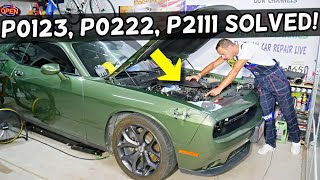


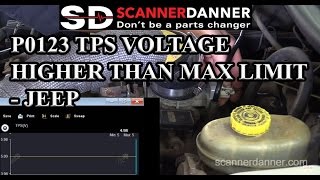
Used OEM Parts in Stock
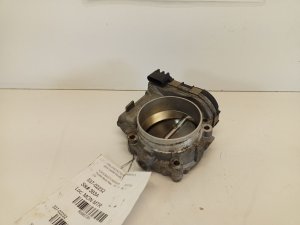
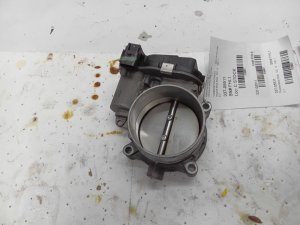
New Aftermarket Parts Available



The information in this article is provided for general reference and educational purposes only. Vehicle specifications, procedures, and part compatibility can vary by production date, trim level, and region. Always consult your vehicle's factory service manual and verify part numbers before purchasing or performing repairs. Safety-critical components such as airbags, seat belts, and braking systems should be installed by a qualified professional.
- Chrysler 300:
- 🎬 Helpful Videos
- 🛍️ Shop This Part
- What's Unique About the 2013-2015 Chrysler 300
- Diagnostic Flowchart
- Symptoms You May Notice
- Most Likely Causes
- Rare But Worth Checking
- Diagnosis Steps
- Parts You'll Likely Need
- Related Codes That Often Appear With This One
- Technical Service Bulletins (TSBs) & Recalls
- Platform-Specific Known Issues
- Mechanic-Grade Diagnostic Values
- Scan Tool Commands That Help
- Wiring & Ground Locations
- OEM Part Supersession History
- 🎟️ Get 5% Off