

P0122 on 2013-2016 Dodge Charger: Throttle Position Sensor Circuit Low Causes and Fixes
This code usually means the entire throttle body assembly has failed, as the sensor is integrated. Expect symptoms like limp mode and poor acceleration. Replacing the throttle body is the most common fix, costing around $150-$300 for the part. A throttle relearn procedure is required after replacement.
- P0122 on a 2013-2016 Charger almost always points to a faulty throttle body.
- Symptoms are serious and include limp mode, stalling, and poor acceleration.
- The sensor itself cannot be replaced; you must replace the entire throttle body assembly.
- Before replacing parts, check for damaged wiring at the throttle body connector.
- Ask a dealer if your vehicle has any pending PCM software updates, as this can sometimes be the root cause.
What's Unique About the 2013-2016 Dodge CHARGER
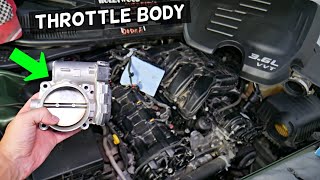
On this generation of Dodge Charger with electronic throttle control ("drive-by-wire"), the throttle position sensors are not sold as separate, replaceable components. Instead, they are integrated directly into the electronic throttle body assembly. This design means that a failure of one of the internal sensors, which is the most common cause for P0122, requires the replacement of the entire throttle body unit. 🎬 Watch: Step-by-step removal and replacement of the V6 throttle body. This differs from older vehicles where the TPS could often be unbolted and replaced independently for a lower cost.
Diagnostic Flowchart
Tap your situation to follow the diagnostic path that matches what you're seeing on this vehicle.
Symptoms You May Notice
- Check Engine Light is on
- Electronic Throttle Control (ETC) warning light (a red lightning bolt symbol) is illuminated
- Vehicle enters 'limp mode' with severely limited engine power and acceleration, sometimes stuck in first or second gear.
- Hesitation, stumbling, or surging during acceleration.
- Engine stalls, especially at idle or when coming to a stop.
- Rough or unusually high idle.
- Unresponsive or erratic throttle behavior.
- Replacing the accelerator pedal position (APP) sensor. The P0122 code specifically refers to the sensor on the throttle body ('A' circuit) at the engine, not the sensor assembly connected to the gas pedal inside the car.
Most Likely Causes
- Faulty Throttle Body Assembly 🔴 High Probability The integrated throttle position sensor (TPS) is the most common failure point. Due to its non-serviceable design, the entire throttle body must be replaced. This is a well-documented issue on forums for Chargers, Challengers, and other vehicles with the 3.6L and HEMI engines.
How to confirm: Using an OBD-II scanner with live data, monitor the voltage for 'TPS1'. It will likely be stuck at a very low value (e.g., under 0.2V) and won't change as you press the accelerator pedal. A healthy sensor should read around 0.5V at idle and sweep smoothly up to ~4.5V at wide-open throttle.
Typical fix: Replace the entire throttle body assembly. After replacement, a throttle relearn procedure must be performed.
Est. part cost: $150-$450 - Wiring Harness or Connector Issue 🟡 Medium Probability The wiring harness to the throttle body is exposed to engine heat and vibration. Wires can fray, short to ground, or the pins in the connector can become corroded or loose, causing a low voltage signal.
How to confirm: Visually inspect the wiring and the connector for any signs of damage, corrosion, or loose pins. Perform a 'wiggle test' on the harness while monitoring the TPS voltage on a scan tool to see if the reading fluctuates, which would indicate a wiring fault.
Typical fix: Repair the damaged section of wiring or replace the connector pigtail. Ensure the connector is fully seated and the red locking tab is engaged.
Est. part cost: $20-$60 - Outdated PCM Software ⚪ Low Probability Dodge has issued several Technical Service Bulletins (TSBs) for this platform that involve updating the PCM software. These updates can revise the diagnostic logic to prevent the PCM from falsely triggering throttle-related DTCs under certain conditions. [Bulletin #18-062-17, #18-032-16]
How to confirm: A dealership or a well-equipped independent shop can use a wiTECH scan tool to check the current software calibration of your PCM and compare it against the latest version available from the manufacturer.
Typical fix: Flash the Powertrain Control Module (PCM) with the updated software. This is often recommended before replacing hardware.
Est. part cost: $100-$250
Rare But Worth Checking
- Faulty Powertrain Control Module (PCM): This is the least likely cause and should only be considered after the throttle body and all wiring have been exhaustively tested and ruled out. A PCM failure is rare.
Diagnosis Steps
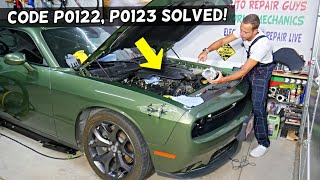
- Connect an OBD-II scanner and confirm P0122 is present. Note any other codes, especially P0222, P0123, P0223, or U1424, as they strongly point to a throttle body failure.
- With the key on and engine off, use the scanner's live data function to view the voltage of TPS1 (Sensor A). A reading below 0.2-0.3 volts that does not increase when the pedal is pressed confirms a fault in the circuit or sensor.
- Turn the vehicle off. Disconnect the electrical connector at the throttle body. Inspect the connector and harness for corrosion, bent pins, or damaged wires. Pay close attention to the area where wires enter the connector.
- If the wiring looks good, the most probable cause is a failed throttle body assembly.
- Before replacing parts, it is wise to check with a dealer if any PCM software updates (TSBs) are pending for your vehicle's VIN, as this is a less expensive potential fix.
- If the throttle body is replaced, clear the codes and perform a throttle relearn procedure. Test drive to confirm the fix.
- Throttle Relearn Procedure: Turn the ignition to 'ON' (do not start engine). Wait for dash lights to cycle. Slowly press the accelerator pedal all the way to the floor. Slowly release the pedal completely. Turn the ignition 'OFF' and wait 10 seconds. Start the engine and let it idle for a few minutes to complete the process.
Parts You'll Likely Need
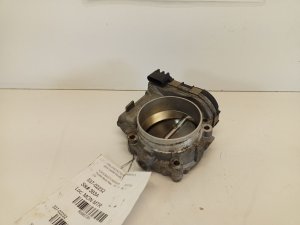
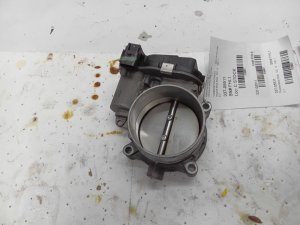
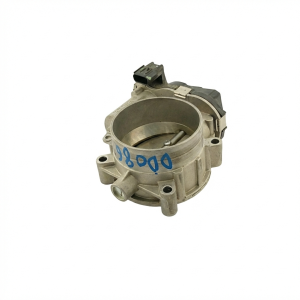
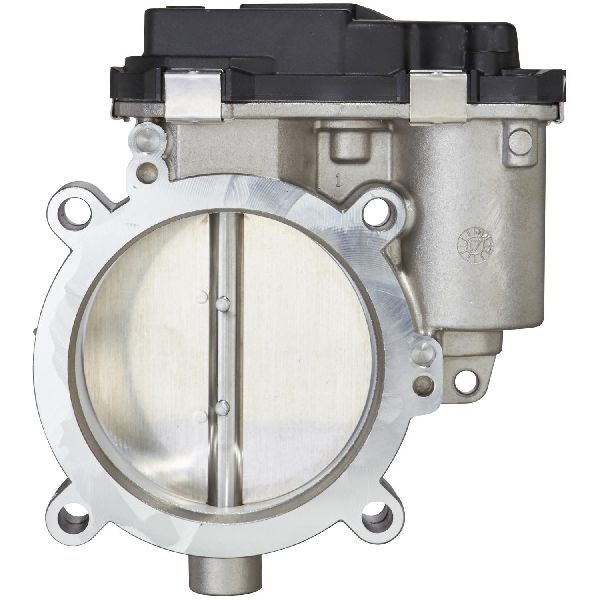
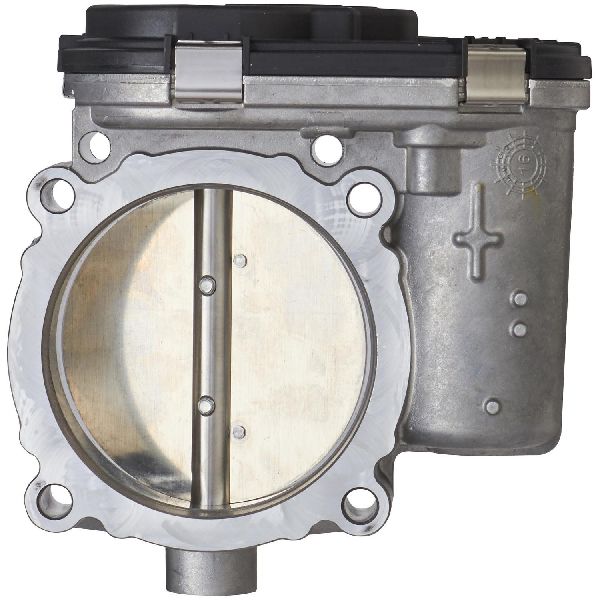
- Throttle Body Assembly
(OEM #05184349AE)— This is the most common failure. The internal, non-serviceable throttle position sensor fails, requiring the replacement of the entire unit. This part number has been superseded by newer versions like 05184349AF, but they are interchangeable.
Trusted brands: Mopar, Hitachi, Bosch, Dorman
OEM price range: $250-$450
Aftermarket price range: $150-$300
Related Codes That Often Appear With This One
- P0222 — This is the 'Circuit Low' code for the second, redundant throttle position sensor ('B' or '2'). Since both sensors are in the same throttle body housing, an internal failure often affects both, triggering both codes simultaneously. [Bulletin #18-062-17]
- P0123 — This is the 'Circuit High' code for the same sensor ('A' or '1'). It can appear alongside P0122 if the sensor's signal is erratic, shorting to power, or failing intermittently. [Bulletin #18-062-17]
- P0223 — This is the 'Circuit High' code for the second sensor ('B' or '2'). It often accompanies other throttle body codes when the entire unit is failing. [Bulletin #18-062-17]
- U1424 — This code for 'Implausible Engine Torque Signal Received' can be set when the PCM receives conflicting information from the two throttle position sensors, causing it to distrust the engine's torque calculations and trigger limp mode. [Bulletin #18-062-17, #18-032-16]
Technical Service Bulletins (TSBs) & Recalls
- 18-062-17: Addresses P0122 and other codes (P0123, P0222, P0223, U1424), often fixed with a PCM software update to improve diagnostic logic.
- 18-032-16 REV. A: Specifically for 2016 models, this TSB involves reprogramming the PCM for a MIL illumination where P0122 and U1424 may be set.
- 18-045-16 REV. A: Lists P0122 among other potential DTCs that can be addressed by a PCM software flash.
- 1809416: Includes P0122 in a list of codes that may appear with engine misfires, potentially addressed by a software update.
- 18-074-15 REV A: Notes P0122 as a code that may be found upon investigation of a MIL illumination, with the repair being a PCM re-flash.
Platform-Specific Known Issues
- Multiple Technical Service Bulletins (TSBs) have been issued by Dodge for the 2013-2016 Charger that list P0122 as a potential code. These bulletins often involve a PCM software update to correct logic errors that could lead to the code being set. [Bulletin #18-062-17, #18-045-16 REV. A, #1809416, #18-074-15 REV A, #18-032-16]
Mechanic-Grade Diagnostic Values
- TPS1 Signal Voltage (Live Data) — expected: Approx. 0.5V - 1.0V at closed throttle, sweeping smoothly to approx. 4.5V at wide-open throttle (Key On, Engine Off).. Failure: Voltage is stuck below 0.2V and does not change when the accelerator pedal is pressed.
- 5V Reference Voltage at Throttle Body Connector — expected: Approx. 5.0 Volts (Key On, Engine Off).. Failure: Voltage is significantly below 5.0V or is absent, indicating a wiring or PCM issue.
- Ground Circuit at Throttle Body Connector — expected: Near 0V, with good continuity to chassis ground.. Failure: Voltage is present on the ground wire, or there is high resistance to a known good ground, indicating a bad ground connection.
Scan Tool Commands That Help
- wiTECH or equivalent professional scanner: ETC RELEARN / Throttle Follower Test — This function must be performed after replacing the throttle body assembly to calibrate the new sensor's closed, open, and idle positions with the PCM. Failure to do this can result in a persistent P0122 code, rough idle, or incorrect throttle response.
Wiring & Ground Locations
- Throttle Body Connector (6-Pin) — Directly on the electronic throttle body, where the main air intake tube connects to the engine.. This is the primary connection point for all tests. A loose connection, corrosion on pins, or damaged wires here are common causes for the P0122 code. The pinout is: Pin 1: TP Signal 1 (Circuit K22), Pin 2: 5 Volt Supply (Circuit F855), Pin 3: ETC Motor (+), Pin 4: TP Signal 2, Pin 5: ETC Motor (-), Pin 6: TP Sensor Ground (Circuit K922).
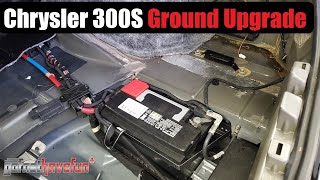
- Engine Block to Chassis Ground — A primary ground strap is typically located from the engine block (often near an accessory bracket or motor mount) to the vehicle's chassis/frame rail in the engine bay.. A corroded or loose main engine ground can cause a floating ground, leading to erratic voltage readings on various sensors, including the TPS, which can trigger a P0122 code.
Real Owner Repair Stories
- ChallengerTalk Forum (2013 Dodge Challenger (platform mate)) — Car went into limp mode with ETC light and Check Engine Light on. Codes P0122 and P0222 were present.
❌ Tried (didn't work) The owner first tried cleaning the throttle body, which did not resolve the issue.
✅ What actually fixed it Replacing the entire throttle body assembly and performing the throttle calibration procedure (key on, slow pedal press/release, key off) fixed the problem completely. The lights went off and the car drove normally.
OEM Part Supersession History
05184349AA, 05184349AB, 05184349AC, 05184349AD→05184349AE, which was then superseded by 05184349AF— Standard part revisions by the manufacturer, likely for improved reliability or minor internal design changes.
Heads up: All listed part numbers are considered interchangeable for the 3.6L V6 engine across this platform.
Model Year Variations Within This Range
- 2015-2016: The 2015 model year introduced a significant exterior and interior refresh, including a new front fascia, grille, and taillights. It also saw the wider adoption of the 8-speed automatic transmission. However, the 3.6L and 5.7L/6.4L engines and the electronic throttle body assembly (part #05184349AE/AF) remained consistent with the 2013-2014 models, so the diagnosis for P0122 is not affected.
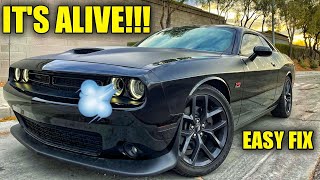
Helpful Videos

Used OEM Parts in Stock
New Aftermarket Parts Available



The information in this article is provided for general reference and educational purposes only. Vehicle specifications, procedures, and part compatibility can vary by production date, trim level, and region. Always consult your vehicle's factory service manual and verify part numbers before purchasing or performing repairs. Safety-critical components such as airbags, seat belts, and braking systems should be installed by a qualified professional.
- Dodge CHARGER:
- 🎬 Helpful Videos
- 🛍️ Shop This Part
- What's Unique About the 2013-2016 Dodge CHARGER
- Diagnostic Flowchart
- Symptoms You May Notice
- Most Likely Causes
- Rare But Worth Checking
- Diagnosis Steps
- Parts You'll Likely Need
- Related Codes That Often Appear With This One
- Technical Service Bulletins (TSBs) & Recalls
- Platform-Specific Known Issues
- Mechanic-Grade Diagnostic Values
- Scan Tool Commands That Help
- Wiring & Ground Locations
- Real Owner Repair Stories
- OEM Part Supersession History
- Model Year Variations Within This Range
- 🎟️ Get 5% Off