

P0122 on 2013-2016 Dodge Challenger: Throttle Position Sensor Circuit Low Causes & Fixes
P0122 on a 2013-2016 Challenger indicates a 'Throttle Position Sensor 1 Circuit Low' fault, almost always accompanied by the Electronic Throttle Control (ETC) 'lightning bolt' warning light. This typically means the entire electronic throttle body assembly has failed and needs replacement, as the sensors are integrated. Before replacing, check for PCM software updates. Expect to pay $250-$500 for the part and around one hour of labor.
- P0122 on a 2013-2016 Challenger means the primary throttle position sensor's voltage is too low.
- The most common fix is replacing the entire electronic throttle body assembly, as the sensors are built-in.
- Symptoms are serious and include stalling and entering a low-power 'limp mode'. Driving is not recommended.
- Check for other codes like P0123, P0222, and P0223. If they are present, it's almost certainly a failed throttle body.
- Before buying parts, inspect the throttle body's electrical connector and wiring for obvious damage, as this is a simpler fix.
What's Unique About the 2013-2016 Dodge CHALLENGER
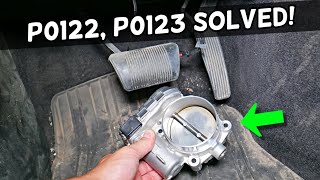
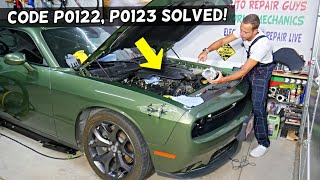
On this generation of Dodge Challenger, across all engine options (V6 and V8), the throttle position sensors are not sold as separate parts; they are integrated directly into the electronic throttle body assembly. Crucially, Dodge has issued multiple Technical Service Bulletins (TSBs) that address P0122 and other throttle codes. 🎬 Watch: Troubleshooting P0122 and P0123 codes on a Challenger Many of these TSBs recommend a PCM software update as the first step. [Bulletin #18-062-17, Bulletin #18-045-16 REV. A] This software update refines the diagnostic sensitivity to prevent false codes. Therefore, while throttle body failure is the ultimate common cause, the proper first diagnostic step on this platform is to check if a PCM flash is available before condemning the hardware.
Diagnostic Flowchart
Tap your situation to follow the diagnostic path that matches what you're seeing on this vehicle.
Generation note: This range covers the 2013-2014 models and the refreshed 2015-2016 models of the third-generation (LC) Challenger. While the core platform is the same, the 2015 refresh included interior and some powertrain updates. However, the P0122 code and its common causes appear consistent across these years, with the primary fix being throttle body replacement for all available engines after checking for any applicable PCM software updates.
Symptoms You May Notice
- Check Engine Light is on
- Electronic Throttle Control (ETC) or 'lightning bolt' warning light is on
- Vehicle enters 'limp mode' with severely reduced engine power
- Poor, delayed, or no acceleration
- Engine stalls, especially at idle or when coming to a stop
- Rough or unstable idle
- Hesitation or surging during acceleration.
- Replacing the accelerator pedal position (APP) sensor. While the APP sensor can cause similar symptoms, the P0122 code specifically points to the sensor circuit at the throttle body, not the pedal.
- Cleaning the throttle body. While a dirty throttle body can cause idle issues, it will not typically cause a low voltage circuit code like P0122, which indicates an electrical fault.
Most Likely Causes
- Failed Electronic Throttle Body Assembly 🔴 High Probability The throttle position sensors are integrated into the throttle body and are a known failure point, as documented in multiple manufacturer TSBs. The internal electronics of the sensors fail, causing the voltage signal to drop out. The sensors are not serviceable separately.
How to confirm: Use a scan tool to monitor live data for TPS1 Voltage. If the voltage is stuck low (e.g., under 0.2V) and does not increase smoothly from ~0.5V to ~4.5V as the accelerator is pressed, the throttle body is faulty.
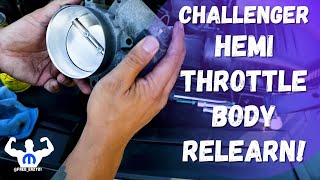
Typical fix: Replace the entire electronic throttle body assembly. After installation, a throttle relearn procedure is required, which can often be done manually without a scan tool.
Est. part cost: $250-$500 - Wiring Harness or Connector Issue 🟡 Medium Probability Engine vibration and heat can cause wires to fray or chafe. The connector pins can also suffer from fretting corrosion, leading to a poor connection and low voltage reading.
How to confirm: Visually inspect the wiring harness leading to the throttle body for any signs of damage, melting, or corrosion. Unplug the connector and check for bent, pushed-out, or corroded pins. Use a multimeter to check for a stable 5V reference and good ground at the connector.
Typical fix: Repair the damaged section of wiring or replace the connector pigtail if the pins or housing are damaged.
Est. part cost: $20-$100 - Outdated PCM Software 🟡 Medium Probability As evidenced by multiple TSBs, the original PCM software on these vehicles can be overly sensitive and may set a P0122 code erroneously. The manufacturer released updates to improve the diagnostic logic.
How to confirm: A Dodge dealership or a well-equipped independent shop can check the current software calibration number against the latest available version using a wiTECH scan tool. [Bulletin #18-062-17]
Typical fix: Reprogram or 'flash' the Powertrain Control Module (PCM) with the latest software version. This is a dealer-level or specialist repair.
Est. part cost: $0 (if under warranty) - $200
Rare But Worth Checking
- Faulty Powertrain Control Module (PCM):
Diagnosis Steps
- Check for applicable TSBs and PCM software updates. A dealer or qualified shop can verify if a software flash is available to correct over-sensitive diagnostic logic. This should be the first step for this platform. [Bulletin #18-062-17, Bulletin #18-045-16 REV. A]
- Connect an OBD-II scanner and confirm P0122 is present. Note any other codes, especially P0123, P0222, P0223, or U1424, as they strongly point to a throttle body failure.
- Visually inspect the throttle body electrical connector for a secure fit, corrosion, or pushed-out pins. Follow the wiring harness back as far as possible, looking for damage.
- Using the scanner's live data function, monitor the voltage for 'TPS1' or 'TP Sensor A'. The reading should be around 0.5V to 0.7V at idle and increase smoothly to over 4.0V at wide-open throttle.
- If the voltage is stuck low (e.g., below 0.2V) and does not change with pedal input, the throttle body assembly is the primary suspect.
- If you have a multimeter and wiring diagram, back-probe the connector to verify the 5-volt reference and ground signals from the PCM are present. If they are missing, the problem is in the wiring or PCM.
- If wiring, ground, and reference voltage are all good, but the signal voltage is still low, replace the throttle body assembly.
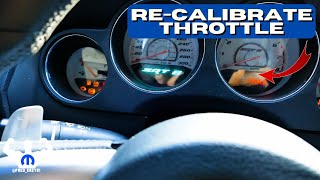
- After replacement, perform a throttle relearn procedure. This can often be done manually: Turn the key to the 'ON' position (don't start), wait for chimes to stop, slowly press the accelerator pedal to the floor, slowly release it, then turn the key 'OFF'.
Parts You'll Likely Need
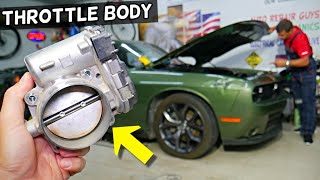
- Electronic Throttle Body Assembly
(OEM #5184349AF (for 3.6L V6, supersedes 5184349AC, AD, AE), 53034251AD (for 5.7L/6.4L V8, supersedes 53034251AB, AC))— This is the most common cause of P0122, as the non-serviceable throttle position sensors are integrated into this unit. Part numbers have been updated several times.
Trusted brands: Mopar, Bosch, Standard Motor Products, Cardone
OEM price range: $450-$600
Aftermarket price range: $200-$400 - Throttle Body Connector Pigtail — Needed if the original connector is damaged, corroded, or has loose pins, causing an intermittent or constant low voltage signal.
Trusted brands: Mopar, Dorman
OEM price range: $40-$80
Aftermarket price range: $20-$50
Related Codes That Often Appear With This One
- P0123 — This is the code for 'Throttle Position Sensor 1 Circuit High'. Seeing both high and low codes for the same sensor often indicates an erratic failure of the sensor within the throttle body. [Bulletin #18-062-17]
- P0222 — This is the code for 'Throttle Position Sensor 2 Circuit Low'. Modern throttle bodies use two sensors for redundancy. A failure in the throttle body assembly often affects both sensors, triggering codes for each. [Bulletin #18-062-17]
- P0223 — This is the code for 'Throttle Position Sensor 2 Circuit High'. Like P0222, its presence alongside P0122 strongly points to a complete throttle body failure. [Bulletin #18-062-17]
- U1424 — This code means 'Implausible Engine Torque Signal Received'. The PCM sets this when the throttle position data doesn't match other engine sensor data, a direct consequence of a bad TPS reading. [Bulletin #18-062-17]
Technical Service Bulletins (TSBs) & Recalls
- Bulletin #18-062-17: Recommends a PCM software update for 2016 models to improve diagnostic logic for P0122, P0123, P0222, P0223, and U1424 to prevent false MIL illumination.
- Bulletin #18-045-16 REV. A: Recommends a PCM software update for 2015 models to address several DTCs including P0122 and P0222, improving the diagnostic strategy.
- Bulletin #1809416: Notes P0122 in a list of codes for 2014 models that may be addressed by a PCM software update.
- Bulletin #18-074-15 REV A: Cites P0122 as a potential code for MIL illumination on 2013 models, with a PCM flash as the prescribed repair to improve system robustness.
Platform-Specific Known Issues
- Dodge has issued multiple Technical Service Bulletins (TSBs) for the 2013-2016 Challenger that involve P0122. Critically, many of these TSBs (like #18-062-17 and #18-045-16 REV. A) are to release updated PCM software. The goal is to refine the PCM's monitoring strategy to be less sensitive and avoid setting false throttle position codes. Therefore, a crucial first step in diagnosis is checking if the vehicle's PCM software is up-to-date before replacing the throttle body. [Bulletin #18-062-17, Bulletin #18-045-16 REV. A]
Mechanic-Grade Diagnostic Values
- TPS1 Signal Voltage at Closed Throttle (Idle) — expected: ~0.5V to 0.7V. Failure: Voltage is below ~0.2V, which triggers the P0122 code.
- TPS1 Signal Voltage at Wide-Open Throttle (WOT) — expected: ~4.3V to 4.7V. Failure: Voltage does not reach the expected level or has dead spots during the sweep.
- TPS2 Signal Voltage — expected: Mirrors TPS1, sweeping from high to low (e.g., ~4.3V at idle down to ~0.7V at WOT).. Failure: Voltage does not mirror TPS1 or is erratic. Often sets P0222/P0223.
- PCM 5-Volt Reference at Throttle Body Connector — expected: Stable 5 volts with key-on, engine-off.. Failure: Voltage is low (e.g., under 4.8V) or absent, indicating a wiring issue (short to ground) or a PCM fault.
- TPS Sensor Internal Resistance — expected: Typically 1 kΩ to 10 kΩ across the resistive strip.. Failure: Resistance is infinite (open) or zero (shorted), or does not change smoothly when the throttle is moved.
Scan Tool Commands That Help
- wiTECH (Dodge/Chrysler Dealer Tool): ETC Throttle Follower Test — This is a bidirectional test used to command the throttle plate to open and close while observing the TPS1 and TPS2 voltage readings on the scan tool. It is the most effective way to confirm if the sensors within the throttle body are tracking correctly and sweeping smoothly through their entire range without dropouts.
- Professional Scan Tool: Throttle Sweep Test / Live Data Graphing — If a dealer tool is unavailable, graphing the TPS1 and TPS2 PIDs while slowly pressing and releasing the accelerator pedal can reveal glitches, dropouts, or non-linear responses that indicate a failing sensor. The graph should show a smooth, consistent line up and down.
Wiring & Ground Locations
- Throttle Body Connector — On the electronic throttle body, top of the engine.. This 6-pin connector is the primary point of failure for wiring issues. Pins can become corroded or loose, and the harness can be damaged near the connector. Testing for 5V reference, ground, and signal voltage occurs here.
- Circuit K22 (V6) — Wire running from the throttle body connector to the PCM C2 connector.. This is the specific circuit designator for the Throttle Position Sensor No. 1 Signal on the 3.6L V6. A short or open on this wire is a direct cause of P0122.
- Circuit K922 (V6) — Wire running from the throttle body connector to the PCM C2 connector.. This is the circuit for the sensor return (ground) for the TPS on the 3.6L V6. High resistance or an open on this ground circuit can cause incorrect voltage readings.
- Engine Ground Strap — A braided metal strap connecting the engine block to the vehicle's chassis/frame, often near the starter or on the cylinder head.. A corroded, loose, or broken main engine ground strap creates an unstable ground reference for all engine sensors, including the TPS. This can cause erratic voltage readings and set false codes. The PCM relies on a solid ground to accurately interpret sensor data.
Real Owner Repair Stories
- YouTube channel 'Auto Repair Tips' (Chevrolet Cruze (demonstrates a universally applicable diagnostic process for P0122)) — Loss of power light, check engine light with codes P0122 (TPS1 low), P0123 (TPS2 high), and a correlation code.
❌ Tried (didn't work) The owner had an auto parts store diagnose the issue and they replaced the throttle body with an aftermarket unit. The problem returned a day or two later.
✅ What actually fixed it The technician suspected the aftermarket throttle body. After performing a detailed pin-out voltage test at the connector which confirmed the PCM and wiring were sending correct signals, he replaced the faulty aftermarket throttle body with a new, quality part. A post-install scan tool 'Throttle Sweep Test' confirmed both TPS sensors were now responding smoothly and in correlation, fixing the issue. This highlights the risk of low-quality aftermarket electronic parts.
OEM Part Supersession History
5184349AB, 5184349AC, 5184349AD, 5184349AE→5184349AF— Design revisions to improve reliability and performance. Mopar notes the new part has an 'updated design' and 'additional features for enhanced system performance'.
Heads up: While all are for the 3.6L V6, using the latest part number (5184349AF) is highly recommended as it contains all previous improvements.53034251AB, 53034251AC→53034251AD— Design revisions for the 5.7L and 6.4L V8 engines.
Heads up: Part 53034251AD is specified for 2013 and newer HEMI cars and SUVs.
Model Year Variations Within This Range
- 2015-2016: The 2015 model year marked a significant refresh for the Challenger, including new front and rear fascias and an updated interior. While the fundamental cause of P0122 (throttle body failure) remains the same, some aftermarket parts are listed specifically for 2013+ or 2015+ models, indicating potential minor changes in the throttle body or its calibration. Always verify the correct OEM part number for the specific vehicle's VIN.
Helpful Videos


Used OEM Parts in Stock
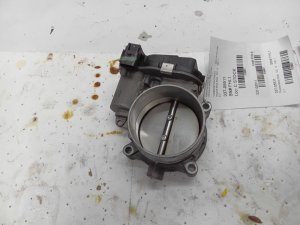
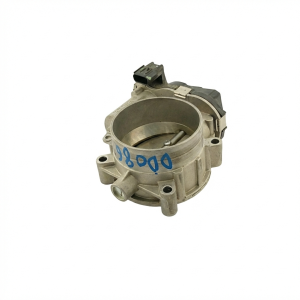
New Aftermarket Parts Available

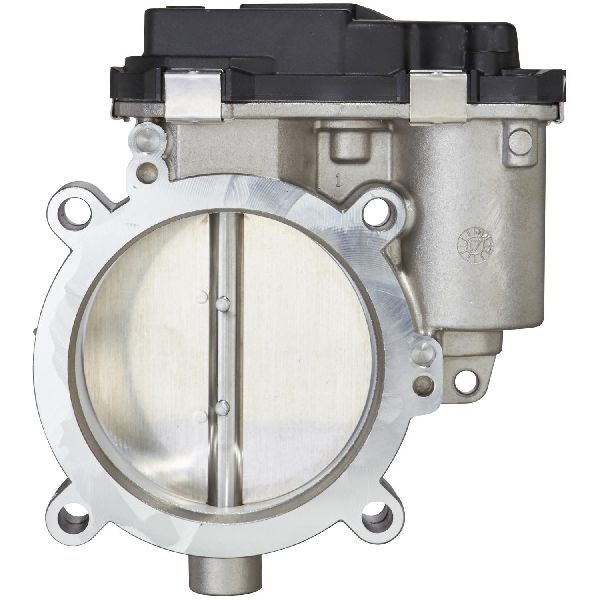

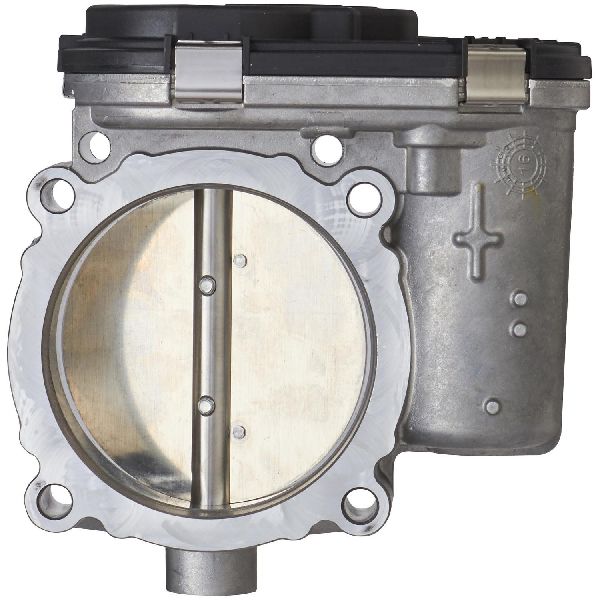

The information in this article is provided for general reference and educational purposes only. Vehicle specifications, procedures, and part compatibility can vary by production date, trim level, and region. Always consult your vehicle's factory service manual and verify part numbers before purchasing or performing repairs. Safety-critical components such as airbags, seat belts, and braking systems should be installed by a qualified professional.
- Dodge CHALLENGER:
- 🎬 Helpful Videos
- 🛍️ Shop This Part
- What's Unique About the 2013-2016 Dodge CHALLENGER
- Diagnostic Flowchart
- Symptoms You May Notice
- Most Likely Causes
- Rare But Worth Checking
- Diagnosis Steps
- Parts You'll Likely Need
- Related Codes That Often Appear With This One
- Technical Service Bulletins (TSBs) & Recalls
- Platform-Specific Known Issues
- Mechanic-Grade Diagnostic Values
- Scan Tool Commands That Help
- Wiring & Ground Locations
- Real Owner Repair Stories
- OEM Part Supersession History
- Model Year Variations Within This Range
- 🎟️ Get 5% Off