

P0121 on 2013-2018 Hyundai Santa Fe 2.4L: Throttle Position Sensor Causes and Fixes
On a 2013-2018 Santa Fe 2.4L, code P0121 is most often caused by a dirty and sticking electronic throttle body due to carbon buildup common in GDi engines. A thorough cleaning often resolves the issue. If cleaning fails, the entire throttle body assembly, which contains the non-serviceable sensor, must be replaced. This can cost between $700-$1200 at a repair shop.
- P0121 on your Santa Fe is most likely a mechanical problem (a dirty, sticking throttle) rather than an electrical one.
- Always start with the cheapest and easiest fix: a thorough cleaning of the throttle body.
- If cleaning doesn't work, you will likely need to replace the entire electronic throttle body assembly, as the sensor is built-in.
- Driving with this code can be unsafe due to the risk of sudden power loss or stalling.
What's Unique About the 2013-2018 Hyundai Santa Fe
The 2.4L GDi (Gasoline Direct Injection) engine in this generation of Santa Fe (often the 'Sport' model) is known for carbon buildup in the intake system. This buildup can make the throttle plate inside the throttle body sticky, causing it to open or close slower than the computer commands. This mechanical lag, rather than a purely electrical failure, is a very common trigger for the P0121 'performance' code on this specific vehicle.
Symptoms You May Notice
- Check Engine Light is on
- Vehicle enters 'limp mode' (reduced engine power)
- ESC (Electronic Stability Control) light may also be illuminated
- Hesitation or stumbling during acceleration
- Rough or unstable idle
- Engine stalling, especially at low speeds or when stopping
- Sudden surges in engine speed or unpredictable acceleration
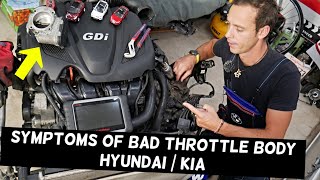
- Delayed throttle response 🎬 Watch: A breakdown of common bad throttle body symptoms.
- Replacing the accelerator pedal position (APP) sensor. While the APP sensor also relates to throttle control, P0121 specifically points to a problem with the sensor at the throttle body, not the pedal.
Most Likely Causes
- Dirty or Sticking Throttle Body 🔴 High Probability GDi engines, like the Theta II, are prone to higher rates of carbon buildup in the intake system because fuel is not sprayed over the intake valves to clean them. This grime accumulates in the throttle body, causing the plate to stick.
How to confirm: Remove the intake air duct from the throttle body and visually inspect for a thick layer of black carbon/grime around the throttle plate and bore. The plate should move smoothly by hand (with ignition off). A sticky or slow-to-return plate is a clear sign.
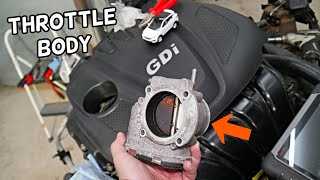
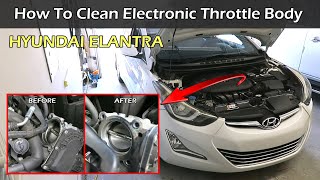
Typical fix: Clean the throttle body thoroughly with a dedicated throttle body cleaner and a soft brush or rag. This often restores normal function and is the recommended first step. 🎬 See this guide on how to clean your throttle body.
Est. part cost: $10-$20 - Failed Throttle Body Assembly 🟡 Medium Probability The Throttle Position Sensor (TPS) is integrated into the throttle body. If the sensor's internal electronics fail, or the throttle actuator motor fails, the entire assembly must be replaced as the sensor is not sold separately.
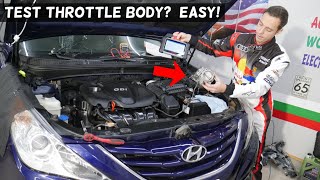
How to confirm: If a thorough cleaning does not resolve the code and symptoms, and wiring has been checked, the throttle body assembly is the likely culprit. A scan tool can monitor TPS voltage for erratic readings, jumps, or dead spots as the throttle is slowly opened and closed.
Typical fix: Replace the entire electronic throttle body assembly. A throttle relearn procedure is required after installation.
Est. part cost: $250-$450 - Wiring or Connector Issue ⚪ Low Probability While not specific to this vehicle, wiring harnesses can become brittle or damaged over time from engine heat and vibration. A TSB for newer Sonatas (23-EE-005H) points to a faulty connector design causing similar codes, suggesting wiring can be a weak point.
How to confirm: Visually inspect the wiring harness and connector at the throttle body for damage, corrosion, or loose pins. Use a multimeter to check for proper voltage (typically a 5V reference) and ground at the connector according to the service manual.
Typical fix: Repair the damaged section of wiring or clean/replace the connector pigtail.
Est. part cost: $5-$50
Rare But Worth Checking
- Faulty Powertrain Control Module (PCM): This is extremely rare. The PCM should only be considered after all other possibilities (throttle body, wiring) have been exhaustively ruled out by a professional. In some cases, corroded ECM pins have been found to be the cause.
Diagnosis Steps
- Read the code with an OBD-II scanner to confirm P0121 is present and note any other codes.
- Disconnect the negative battery terminal. Remove the engine cover and the air intake hose connected to the throttle body.
- Visually inspect the inside of the throttle body for carbon buildup. If it is dirty, this is the most likely cause.
- Clean the throttle body thoroughly using a dedicated throttle body cleaner and a soft cloth or brush. Manually move the throttle plate to clean all surfaces. Be careful not to spray cleaner directly into the electronic components.
- Inspect the wiring harness and connector going to the throttle body for any signs of damage, corrosion, or loose connections.
- Reassemble the intake and reconnect the battery.
- Perform a throttle position relearn procedure. A common method is to turn the ignition to 'ON' (engine off) for 15 seconds, then 'OFF' for 15 seconds, repeating 4-5 times before starting the engine and letting it idle for 10-15 minutes.
- If the code returns, use a multimeter or advanced scan tool to check the TPS voltage. With the key on and engine off, the voltage should sweep smoothly from about 0.5V to 4.5V as the throttle is opened and closed. Any glitches or dead spots indicate a failed sensor.
- If the sensor signal is faulty or cleaning did not work, replace the entire throttle body assembly.
- After replacement, clear the codes, perform the relearn procedure again, and conduct a test drive to ensure the issue is resolved.
Parts You'll Likely Need
- Electronic Throttle Body Assembly
(OEM #35100-2G710)— This is the most common repair if cleaning fails, as the throttle position sensor is integrated into the unit. Failure of the sensor or the actuator motor requires replacing the whole assembly. Part number 35100-2G710 is listed for the 2.4L GDI engine in this vehicle, but always verify with VIN.
Trusted brands: Hyundai (OEM), Bosch, Dorman
OEM price range: $350-$625
Aftermarket price range: $200-$350 - Throttle Body Cleaner — This is the first and cheapest step, used to clean carbon buildup that causes the throttle plate to stick, which is a very common cause of P0121 on this engine.
Trusted brands: CRC, Berryman, WD-40 Specialist
OEM price range: $10-$20
Aftermarket price range: $10-$20
Related Codes That Often Appear With This One
- P0122 — Indicates TPS 'A' Circuit Low Input, which can occur if the sensor fails or has a wiring issue.
- P0123 — Indicates TPS 'A' Circuit High Input, also related to sensor failure or wiring problems.
- P2135 — Indicates a correlation error between the two throttle position sensors (A/B), which points directly to a fault within the electronic throttle body assembly.
- P2110 — Indicates the ECU has forced the engine to a limited RPM range due to a throttle actuator control system malfunction, often appearing alongside P0121.
Technical Service Bulletins (TSBs) & Recalls
- While no TSB is specific to P0121 on this exact model, Hyundai has issued TSB 23-EE-005H for newer Sonatas with similar codes (including P0121), which required a wiring harness repair, indicating potential wiring issues in the family.
- Kia issued a TSB for an ECU logic improvement for P0420 and P0171 on 2012-2016 models with the 2.4L GDI engine, showing a history of software updates to address engine management issues on this powertrain.
Platform-Specific Known Issues
- The 2.4L GDi Theta II engine has a tendency for carbon accumulation in the intake tract, which directly contributes to the throttle body becoming dirty and triggering this code.
Mechanic-Grade Diagnostic Values
- Throttle Position Sensor 1 (TPS1) Signal Voltage — expected: Approximately 0.5V - 0.7V at closed throttle (idle), sweeping smoothly up to approximately 4.5V at Wide-Open Throttle (WOT).. Failure: Voltage is erratic, jumps, has dropouts, does not sweep smoothly, or is outside the 0.5V-4.5V range.
- TPS1 vs. TPS2 Correlation Check — expected: The voltage signals from TPS1 and TPS2 should mirror each other or have a consistent offset.. Failure: The ECM triggers a fault if the difference between the calculated position from TPS1 and TPS2 exceeds a threshold, such as 6.3%, for more than a fraction of a second.
- Throttle Body Connector Pin Voltages (Key On, Engine Off) — expected: Pin 5 (TPS Supply): 5V Reference. Pin 3 (TPS Ground): Good ground (0V). Pin 4 (TPS.1 Signal): ~0.5-0.7V with throttle closed.. Failure: No 5V reference, high resistance on ground, or signal voltage out of range indicates a wiring or PCM issue.
Scan Tool Commands That Help
- Professional Scan Tool (e.g., Hyundai GDS, Autel, ANCEL): Reset Adaptive Values / Throttle Relearn — This function should be used after cleaning or replacing the throttle body to clear the old learned values and force the ECU to recalibrate to the new/clean throttle plate's closed position. It can be found in the engine control module's special functions menu.
Wiring & Ground Locations
- Throttle Body Connector — Directly on the electronic throttle body, where the main air intake duct connects.. This is the primary connection point for all power, ground, and signal wires for the integrated TPS. Corrosion or loose pins here are a direct cause of P0121. For 2010-2012 2.4L models, the TPS signal wire is often Pink/Black.
- GC101 — A main ground connection point shown in wiring diagrams for the 2017 Santa Fe 2.4L.. The TPS circuit grounds through the PCM, which relies on clean chassis and engine grounds. A loose or corroded main ground can cause floating voltages and erratic sensor readings, triggering performance codes like P0121.
- G-05 / G-06 — Primary engine compartment grounds located on the inner fender panels (left and right front).. While identified for an earlier Santa Fe generation, these are common grounding points for the entire engine management system. Verifying they are clean and tight is a critical step in diagnosing any electronic sensor fault.
Real Owner Repair Stories
- Reddit user in r/MechanicAdvice (VW Tiguan (demonstrates a common issue applicable to many drive-by-wire vehicles)) — P0121 error code appeared.
❌ Tried (didn't work) Initial inspection showed the throttle body was already very clean.
✅ What actually fixed it The user unscrewed the sensor cap, did a light wipe-down, and reinstalled everything. The simple act of unplugging and reseating the electrical connection resolved the fault code, which did not return after several days of driving. - YouTube video (Spanish) (Hyundai/Kia vehicle) — P0121 code, vehicle would not accelerate.
❌ Tried (didn't work) Checking wiring continuity., Inspecting connections at the ECU.
✅ What actually fixed it After extensive diagnosis, the root cause was found to be a single faulty terminal pin within a connector that was not making proper contact, causing an intermittent signal. Replacing or repairing the single pin fixed the problem. - NHTSA ODI #10846204 (Hyundai Sonata) — An owner reported that after the engine was turned off and restarted, the acceleration pedal worked without problem, but the vehicle stored codes P2135, P0221, P2106, P0121, and P2110.
- NHTSA ODI #10576819 (Hyundai Santa Fe) — A report describes the vehicle entering a state where it would only run in third gear, which the owner noted was a huge distraction; the stored codes were P0121 and P0733.
"I Checked Everything" — The Actual Cause
- While P0121 is not typically caused by a vacuum leak, related throttle performance codes (like P2106, P0638) on a Santa Fe have been linked to issues that develop after extended idling. In these cases, a vacuum leak from a source like a cracked intake manifold gasket can alter airflow calculations enough to cause a conflict with the throttle position sensor's readings, even if the TPS itself is functioning correctly.
OEM Part Supersession History
35100-2G710→No direct supersession found in searches.— N/A
Heads up: This part number is listed for both the 2.4L and 2.0L Turbo engines across various Hyundai/Kia models. Always confirm fitment with the vehicle's VIN before ordering, as internal calibrations may differ.
Model Year Variations Within This Range
- 2017-2018: The Hyundai Santa Fe received a facelift for the 2017 model year. While the core engine remained the same, wiring diagrams specific to the 2017 model provide precise pinouts for the throttle body connector, which may differ from earlier years.
Diagnostic Flowchart
Other Known Issues on This Vehicle
Issues unrelated to this code that are worth knowing about as an owner of this generation:
- Theta II Engine Failure (Rod Bearing Wear) 🔴 High — Widespread across millions of 2.0L and 2.4L Theta II engines. Failures can occur at various mileages, often starting with a knocking sound. (Ref: Subject of multiple recalls (e.g., NHTSA 17V-226), a massive class-action lawsuit, and lifetime warranty extensions for original and subsequent owners.)
- Worn Steering Coupler 🟠 Medium — Extremely common. Owners typically notice a distinct clicking or clunking noise from the steering column when turning the wheel, especially at low speeds or when stopped. (Ref: Hyundai TSB 17-ST-002-1. The part is a small, inexpensive rubber piece (p/n 56315-2K000-FFF) but labor can be significant as the steering column must be disassembled.)
- Excessive Oil Consumption 🟠 Medium — Commonly reported on the 2.4L GDi engine, often related to the same manufacturing defects that cause engine bearing failure. (Ref: Covered under the same engine class-action lawsuit settlement and warranty extensions as the rod bearing failure issue.)
- Crankshaft Position Sensor Failure 🟠 Medium — A fairly common failure point mentioned by mechanics, leading to symptoms like random stalling or a no-start condition where the engine cranks but won't fire.
Used vs. New Parts: Buying Guide for This Vehicle
When a used part is the smart pick: A used throttle body can be a cost-effective option if it comes from a low-mileage donor vehicle. Since the primary failure mode is often mechanical sticking from carbon buildup, a used part that is thoroughly cleaned before installation can have a long service life.
Donor-vehicle mileage cap: roughly under 60000 miles for the part to have meaningful remaining life.
What to inspect on the donor part:
- Check the electrical connector for any signs of corrosion, melted plastic, or broken pins.
- Inspect the throttle bore for deep scratches or scoring; light carbon is acceptable and can be cleaned.
- Ensure the throttle plate moves smoothly by hand (with ignition off) and is not bent or damaged.
- If possible, get the VIN of the donor car to verify its mileage and that it did not have a GDI engine with known oil consumption issues, which can accelerate carbon buildup.
OEM-only on this vehicle (don't cheap out):
- Powertrain Control Module (PCM/ECM)
Aftermarket brands forum-validated for this vehicle:
- Bosch (Often the original equipment manufacturer)
- Standard Motor Products (SMP)
Brands owners have reported issues with on this vehicle:
- Dorman: While their 'OE FIX' parts sometimes offer improvements like non-contact sensors, general community feedback suggests their quality can be 'hit or miss'. It may be a viable budget option, but OEM or Bosch is a safer bet for longevity.
Real Owner Stories
Aggregated from forums and TSBs cited above. Mileages and costs reflect what owners reported in those sources.
2014 Hyundai Santa Fe 2.4L GDi
Symptoms: Vehicle entered 'limp mode' with reduced engine power.
What fixed it: The dealer diagnosed and cleaned a dirty throttle body.
Source hint: hyundai-forums.com
2013-2018 Hyundai Santa Fe 2.4L GDi
Symptoms: Engine revving on its own to 4000 RPM and then dropping; unstable idle.
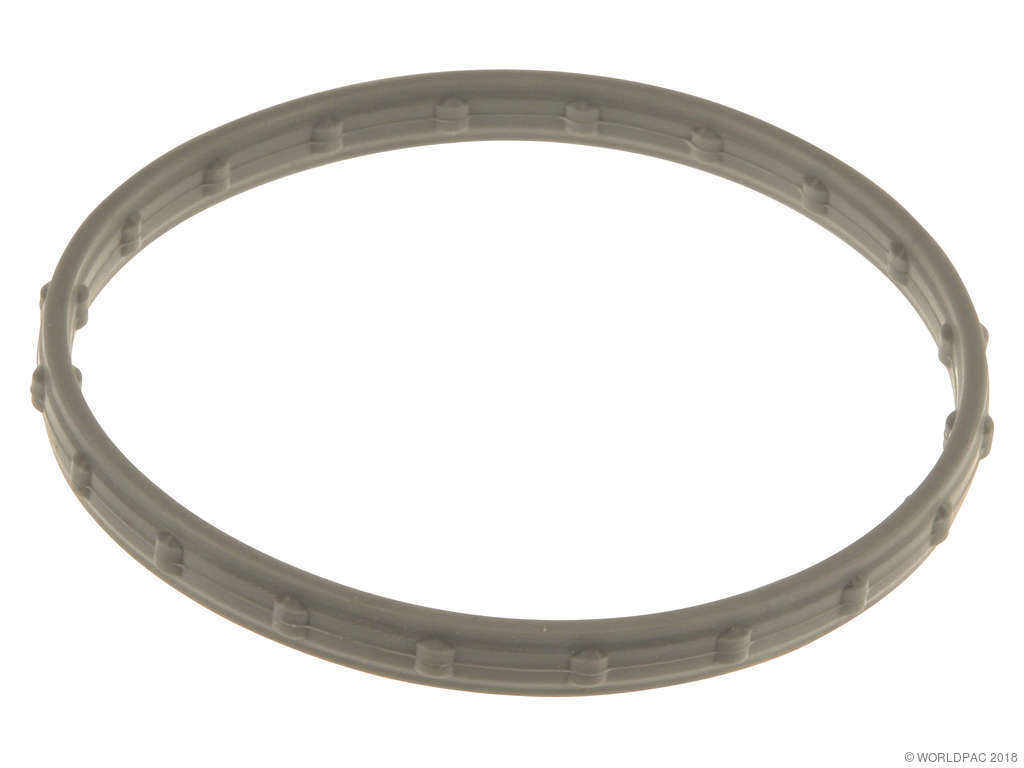
What fixed it: Checking for vacuum leaks, specifically a bad throttle body gasket.
Source hint: HyundaiKlub.pl - Błąd P0121 nierówna praca silnika (https://www.hyundaiklub.pl/forum/viewtopic.php?t=8909)
Related OBD-II Codes
Frequently Asked Questions
Does TSB 23-EE-005H apply to my 2013-2018 Hyundai Santa Fe 2.4L?
Can I just replace the Throttle Position Sensor (TPS) on my Santa Fe's Theta II engine?
Why is my Santa Fe's GDi engine more prone to P0121 than other vehicles?
Is there a specific part number for the common steering clunk I'm hearing along with this engine code?
What is the recommended first step to fix P0121 on a 2014 Santa Fe?
Is there a software update for engine management issues on the 2.4L GDi engine?
Helpful Videos
Used OEM Parts in Stock

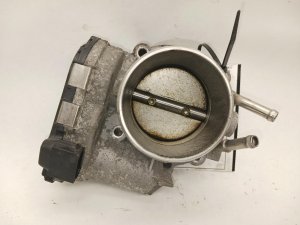

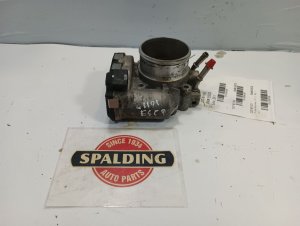
New Aftermarket Parts Available

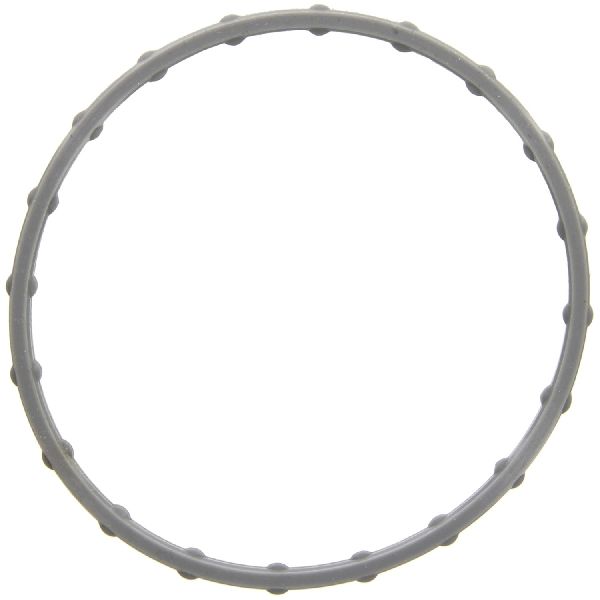
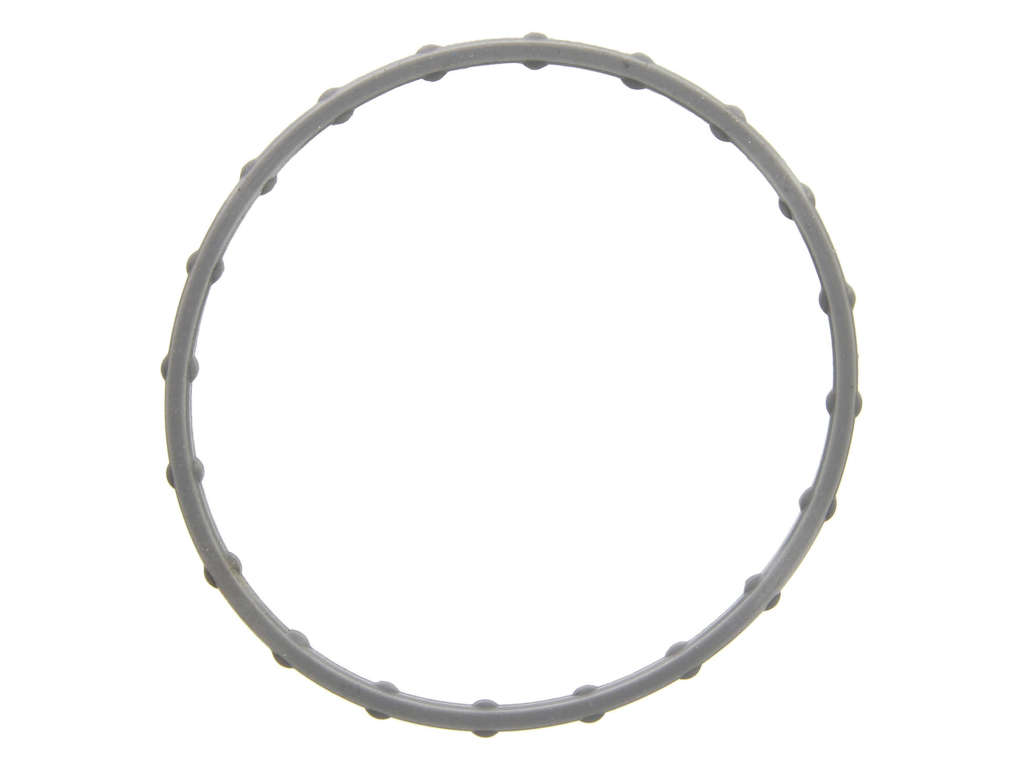

The information in this article is provided for general reference and educational purposes only. Vehicle specifications, procedures, and part compatibility can vary by production date, trim level, and region. Always consult your vehicle's factory service manual and verify part numbers before purchasing or performing repairs. Safety-critical components such as airbags, seat belts, and braking systems should be installed by a qualified professional.
- Hyundai Santa Fe:
- 🎬 Helpful Videos
- 🛍️ Shop This Part
- What's Unique About the 2013-2018 Hyundai Santa Fe
- Symptoms You May Notice
- Most Likely Causes
- Rare But Worth Checking
- Diagnosis Steps
- Parts You'll Likely Need
- Related Codes That Often Appear With This One
- Technical Service Bulletins (TSBs) & Recalls
- Platform-Specific Known Issues
- Mechanic-Grade Diagnostic Values
- Scan Tool Commands That Help
- Wiring & Ground Locations
- Real Owner Repair Stories
- "I Checked Everything" — The Actual Cause
- OEM Part Supersession History
- Model Year Variations Within This Range
- Diagnostic Flowchart
- Other Known Issues on This Vehicle
- Used vs. New Parts: Buying Guide for This Vehicle
- Real Owner Stories
- 2014 Hyundai Santa Fe 2.4L GDi
- 2013-2018 Hyundai Santa Fe 2.4L GDi
- Related OBD-II Codes
- Frequently Asked Questions
- 🎟️ Get 5% Off