

P0121 on 2014-2018 GMC Yukon: Throttle Position Sensor Causes and Fixes
On a 2014-2018 GMC Yukon, code P0121 is most often caused by a dirty throttle body restricting the throttle plate's movement. A thorough cleaning and an idle relearn procedure often fixes it. If not, the entire throttle body assembly, which contains the sensor, needs replacement for around $180-$250 in parts. Always check for wiring issues at the connector first.
- P0121 on your Yukon almost always points to an issue with the throttle body.
- Before buying any parts, remove and thoroughly clean the throttle body. This costs very little and often solves the problem.
- If cleaning doesn't work, you will need to replace the entire throttle body assembly; the sensor is not sold separately.
- After cleaning or replacing the throttle body, an idle relearn procedure is mandatory to restore correct idle speed.
- This is a very common, well-documented issue and is a manageable DIY repair for most home mechanics.
What's Unique About the 2014-2018 Gmc YUKON

This generation of GMC Yukon, along with its K2XX platform mates, is well-known for throttle body issues leading to code P0121. Carbon and oil residue from the PCV (Positive Crankcase Ventilation) system can bake onto the throttle body and plate, physically restricting the blade's movement. This causes the sensor's reported position to lag or differ from the ECM's commanded position, triggering the code. A manufacturer Technical Service Bulletin (TSB PIP4578B) acknowledges this exact scenario on high-mileage vehicles, often leading to reduced engine power and idle surges.
Diagnostic Flowchart

Tap your situation to follow the diagnostic path that matches what you're seeing on this vehicle.
Symptoms You May Notice

- Check Engine Light illuminated
- "Reduced Engine Power" message on the driver information center
- Sluggish, delayed, or non-responsive acceleration
- Unstable, high, or surging idle, especially after cleaning or replacement if relearn is not done
- Vehicle may hesitate or stall, particularly at low speeds
- Engine revs high and won't return to idle after pressing the accelerator
- Replacing the Accelerator Pedal Position (APP) sensor. While the APP sensor also relates to throttle control, P0121 specifically points to a performance issue at the throttle body itself, not the pedal. The APP sensor has its own set of codes (e.g., P2138).
Most Likely Causes

- Dirty Throttle Body 🔴 High Probability The PCV system routes oil vapors into the intake, which can bake onto the throttle body over time, creating a sticky carbon buildup that restricts the throttle plate. As the buildup worsens, the ECM compensates until it can no longer maintain control, triggering P0121.
How to confirm: Remove the air intake tube from the throttle body and visually inspect the throttle plate and bore for a thick, black, tar-like substance. The back side of the plate is often dirtier than the front.
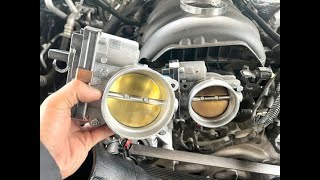
Typical fix: Remove the throttle body (four 10mm bolts) and clean it thoroughly off the vehicle with a dedicated throttle body cleaner and a soft brush or rag. 🎬 Watch: How to clean your throttle body and clear code P0121 An idle relearn procedure is required afterward.
Est. part cost: $5-$15 - Failed Throttle Body Assembly 🟡 Medium Probability The throttle position sensors are integrated into the throttle body and cannot be replaced separately. Electronic failure of the internal sensor, worn plastic gears inside the actuator, or the actuator motor itself will require replacement of the whole unit.
How to confirm: If a thorough cleaning does not resolve the code, and the wiring is confirmed to be good, the throttle body assembly itself is the likely point of failure. This is a very common replacement part for these trucks.
Typical fix: Replace the entire throttle body assembly with a new part. This is a straightforward unbolt/re-bolt procedure followed by an idle relearn. Many owners report that using a genuine GM/ACDelco part is critical to avoiding repeat failures that are common with cheaper aftermarket units.
Est. part cost: $170-$350 - Wiring or Connector Issue ⚪ Low Probability Engine vibration and heat can cause wires to chafe or the connection at the throttle body to become loose or corroded. A specific issue known as 'fretting corrosion' can occur on the connector pins, causing an intermittent and poor connection that is hard to see.
How to confirm: Visually inspect the wiring harness leading to the throttle body for any signs of rubbing, melting, or damage. Unplug the connector and check the pins on both the harness and throttle body side for a faint, almost invisible corrosion. Wiggling the harness with the engine running may trigger the fault.
Typical fix: Repair the damaged section of wire. For fretting corrosion, unplug and replug the connector several times to scrape the pins clean, then apply a small amount of dielectric grease before reconnecting to prevent recurrence.
Est. part cost: $5-$50
Rare But Worth Checking
- Failing Powertrain Control Module (PCM): This is extremely rare. The PCM should only be considered after all other possibilities, including the throttle body and wiring, have been definitively ruled out by professional diagnostics.
Diagnosis Steps
- Read all trouble codes with an OBD-II scanner. Note any other codes present with P0121.
- Inspect the air intake tube for any cracks or loose connections between the MAF sensor and the throttle body.
- Remove the air intake tube and visually inspect the throttle body bore and plate for heavy carbon buildup. Pay close attention to the edges of the plate and where it seats in the bore.
- If dirty, remove the four 10mm bolts holding the throttle body, unplug the electrical connector, and clean it thoroughly off the vehicle using throttle body cleaner and a soft brush. Do not manually force the throttle plate open on a new electronic throttle body.
- While the throttle body is accessible, inspect the wiring harness and 6-pin connector for damage, chafing, or corrosion ('fretting').
- Reinstall the cleaned throttle body with a new gasket if required. Torque bolts to 89 lb-in (10 Nm).
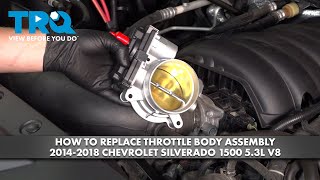
- Perform an idle relearn procedure. The most common manual method is: Start the engine and let it idle in Park for 3 minutes. Turn the engine off for 60 seconds. Start the engine again and let it idle in Park for another 3 minutes. The idle should now be stable. If not, a drive cycle 🎬 See this walkthrough for throttle body replacement and idle relearn with highway speeds and several decelerations may be needed.
- If the code returns after cleaning and a successful relearn, the throttle body assembly is likely faulty and should be replaced.
Parts You'll Likely Need
- Throttle Body Assembly
(OEM #12670839 (for 5.3L V8), 12685535 or 12629992 (for 6.2L V8))— This is the most common fix if cleaning the original unit fails. The part is an entire assembly that includes the new throttle position sensors and actuator motor. Part numbers can vary, always confirm with VIN.
Trusted brands: ACDelco (GM Original Equipment), Bosch, Hitachi
OEM price range: $220-$350
Aftermarket price range: $170-$250 - Throttle Body Cleaner — Required for the most common and least expensive repair attempt: cleaning the existing throttle body.
Trusted brands: CRC, Berryman, WD-40
Aftermarket price range: $5-$15 - Throttle Body Gasket
(OEM #12632900)— Recommended to be replaced any time the throttle body is removed to prevent vacuum leaks.
Trusted brands: ACDelco, Fel-Pro
OEM price range: $5-$10
Aftermarket price range: $3-$8
Related Codes That Often Appear With This One
- P0068 — MAP/MAF - Throttle Position Correlation. This code is cited in the same TSB and indicates a conflict between airflow sensor data and throttle position, which is a direct consequence of a P0121 fault.
- P2135 — Throttle/Pedal Position Sensor/Switch 'A'/'B' Voltage Correlation. This is a more specific code indicating a voltage mismatch between the two internal TPS sensors, often appearing with P0121 and pointing directly to a failing throttle body unit.
- P1516, P2101, P2119, P2176 — These codes are all related to the Throttle Actuator Control (TAC) system and are mentioned alongside P0121 in TSB #PIP4578B, indicating a broader issue with the electronic throttle control system that often originates with the throttle body itself.
Technical Service Bulletins (TSBs) & Recalls
- PIP4578B: Mentions that P0121, along with other codes (P0068, P1516, P2101, etc.), can be experienced on high mileage vehicles. It states that as carbon builds up, the ECM learns to compensate, but if the buildup becomes excessive or is cleaned without an idle learn reset, it can cause these codes and performance issues.
Platform-Specific Known Issues
- A Technical Service Bulletin (TSB #PIP4578B) exists for these vehicles, noting that P0121 may occur on high-mileage vehicles and can be accompanied by an idle surge or reduced engine power mode. The TSB explicitly recommends inspecting for carbon buildup and cleaning the throttle body before replacing parts.
Mechanic-Grade Diagnostic Values
- TPS 5-Volt Reference Circuit — expected: 4.8V - 5.2V with key on, engine off.. Failure: Voltage below 4.8V or above 5.2V indicates a problem with the ECM or wiring.
- TPS Ground Circuit — expected: Less than 0.1V (100mV) when tested between the ground pin and chassis ground.. Failure: Higher voltage indicates a poor ground connection, which can skew sensor readings.
- TPS Sensor 1 (TP1) Signal Voltage — expected: Approximately 0.5V - 1.0V at idle, sweeping smoothly up to ~4.5V at wide-open throttle (WOT).. Failure: Voltage that is stuck, jumps erratically, or doesn't change smoothly when the throttle is opened indicates a failed sensor.
- TPS Sensor 2 (TP2) Signal Voltage — expected: Opposite sweep of TP1. Approximately 4.5V at idle, sweeping smoothly down to ~0.5V at WOT.. Failure: The ECM compares TP1 and TP2 signals; if they do not have a perfect inverse correlation, it will set a performance code like P0121.
Scan Tool Commands That Help
- GDS2 (GM Global Diagnostic System 2): Idle Learn Reset / Throttle Learn Reset — This function must be used after cleaning or replacing the throttle body to clear the old learned airflow compensation values from the ECM. Failing to do this can cause a high or unstable idle and may cause the P0121 code to return even with a clean/new part.
Wiring & Ground Locations
- Throttle Body Connector (X1) — The 6-pin electrical connector on the throttle body assembly.. This is the primary connection point for the two TPS sensors and the throttle actuator motor. The pins are susceptible to fretting corrosion and the harness is prone to damage from heat and vibration. The 6 wires consist of a 5V reference, a low reference (ground), a signal for TP1, a signal for TP2, and two wires for the throttle motor.
- G103 / G104 — Grounds located on the engine cylinder heads (G103 on passenger side head, G104 on driver side head for some applications).. These are critical engine ground points. A loose or corroded connection at these locations can create a floating ground, causing erratic voltage readings for multiple engine sensors, including the throttle position sensors, leading to a P0121 code.
Real Owner Repair Stories
- GMTNation Forum & common YouTube repair narratives (2015 Chevrolet Tahoe (sister vehicle)) — Intermittent 'Reduced Engine Power' light and P0121 code, especially on cold mornings. Vehicle would barely accelerate. Shutting the truck off and restarting would temporarily fix it.
❌ Tried (didn't work) Thoroughly cleaning the throttle body. This fixed the problem for about a week, but the code and symptoms returned., Wiggling the wiring harness at the throttle body connector did not replicate the issue, suggesting the wiring was intact.
✅ What actually fixed it Replacing the entire throttle body assembly with a new ACDelco OEM part and performing the idle relearn procedure. The conclusion was that the internal electronics of the original throttle position sensor were failing intermittently, a common issue that cleaning cannot fix.
When the Usual Fixes Don't Work
- While cleaning the throttle body is the most common first step and often recommended, numerous owner accounts state that it is only a temporary fix. The P0121 code often returns within days or weeks, especially in colder weather. This suggests the root cause is frequently the failure of the non-serviceable electronic sensors inside the throttle body, not just the carbon buildup itself. Conversely, mechanics warn against immediately replacing the throttle body without first performing a thorough inspection of the wiring harness and ground connections (G103/G104), as a simple wiring repair can be a much cheaper fix than a new $250+ part.
OEM Part Supersession History
12670839→12740725— GM regularly updates service parts to improve reliability and integrate design changes. The newer part is the current recommended OEM replacement for this platform.
Heads up: While the original part number may have been used on early models of this generation, using the most current superseded part number (12740725) is recommended for repair to ensure you have the latest revision.
Model Year Variations Within This Range
- 2018: For the 2018 model year, Yukons equipped with the 6.2L V8 (primarily Denali trims) were upgraded to a 10-speed automatic transmission. This change does not affect the diagnosis or common causes of code P0121, as the throttle body and its control system remained the same.
Helpful Videos
Used OEM Parts in Stock


New Aftermarket Parts Available

The information in this article is provided for general reference and educational purposes only. Vehicle specifications, procedures, and part compatibility can vary by production date, trim level, and region. Always consult your vehicle's factory service manual and verify part numbers before purchasing or performing repairs. Safety-critical components such as airbags, seat belts, and braking systems should be installed by a qualified professional.
- Gmc YUKON:
- 🎬 Helpful Videos
- 🛍️ Shop This Part
- What's Unique About the 2014-2018 Gmc YUKON
- Diagnostic Flowchart
- Symptoms You May Notice
- Most Likely Causes
- Rare But Worth Checking
- Diagnosis Steps
- Parts You'll Likely Need
- Related Codes That Often Appear With This One
- Technical Service Bulletins (TSBs) & Recalls
- Platform-Specific Known Issues
- Mechanic-Grade Diagnostic Values
- Scan Tool Commands That Help
- Wiring & Ground Locations
- Real Owner Repair Stories
- When the Usual Fixes Don't Work
- OEM Part Supersession History
- Model Year Variations Within This Range
- 🎟️ Get 5% Off