

P0121 on 2014-2018 Chevrolet Silverado 3500: Throttle Body Causes and Fixes
On a 2014-2018 Silverado 3500, code P0121 is almost always caused by carbon buildup inside the throttle body, preventing the throttle plate from moving correctly. The most common fix is to clean the throttle body and perform an idle relearn procedure. If cleaning doesn't work, the throttle body assembly may need replacement. This issue is common across the GM K2XX platform, including the GMC Sierra and Tahoe/Suburban.
- P0121 on your Silverado 3500 almost always points to a problem with the throttle body.
- Before buying any parts, your first step should be to thoroughly clean the throttle body and perform an idle relearn procedure.
- The truck may enter a 'Reduced Engine Power' mode, making it unsafe to drive normally until the issue is fixed.
- If cleaning doesn't solve the problem, the entire throttle body assembly usually needs to be replaced, as the sensor is built-in.
- Always perform an idle relearn with a scan tool after cleaning or replacing the throttle body to prevent further issues.
What's Unique About the 2014-2018 Chevrolet SILVERADO 3500
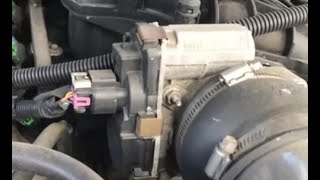
On this generation of Chevrolet V8 trucks (K2XX platform), P0121 is frequently triggered not by a failed sensor, but by a physical problem: carbon buildup. This is particularly common on the 6.0L L96 gasoline V8. As documented in GM's own Technical Service Bulletins, heavy carbon deposits from the PCV system accumulate in the throttle body, making the throttle plate stick. The ECM tries to command a specific throttle angle but sees a delayed or incorrect response from the sensor due to the sticking plate. This discrepancy between the desired and actual position triggers the P0121 code 🎬 Watch: A quick guide on how to fix P0121. and often forces the truck into 'Reduced Engine Power' mode.
Diagnostic Flowchart
Tap your situation to follow the diagnostic path that matches what you're seeing on this vehicle.
Symptoms You May Notice
- Check Engine Light is on
- "Reduced Engine Power" message on the dash
- Vehicle has limited acceleration or speed (Limp Mode)
- Unstable, surging, or rough idle
- Hesitation or stumbling when accelerating
- Engine may stall at low speeds or when stopping
- Delayed throttle response
- Replacing the accelerator pedal position (APP) sensor. While a faulty pedal sensor can cause similar symptoms (like reduced power), P0121 is specifically related to the throttle body's performance, not the pedal's input. The pedal sensor has its own set of codes (e.g., P2138).
Most Likely Causes
- Dirty Throttle Body 🔴 High Probability GM has a Technical Service Bulletin (PIP4578B) specifically addressing this issue on high-mileage V8 engines. Carbon from the PCV system builds up around the throttle plate, causing it to stick and report an incorrect position relative to what the ECM commands.
How to confirm: Remove the air intake hose from the throttle body. Visually inspect the throttle bore and the edges of the metal throttle plate for a thick, black layer of carbon. A scan tool may also show a high throttle position percentage at idle (e.g., over 20%) when it should be lower.
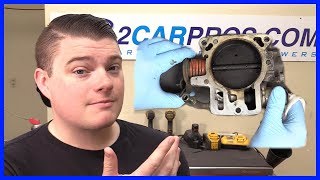
Typical fix: Clean the throttle body thoroughly with a dedicated throttle body cleaner and a soft cloth or brush. 🎬 See how to service the throttle body on a 6.0L. After cleaning, an 'Idle Learn Reset' procedure must be performed. This can be done instantly with a capable scan tool, or by performing a specific drive cycle, during which it may idle high until the ECM relearns the new clean-throttle position.
Est. part cost: $5-$15 for cleaner - Failed Throttle Body Assembly 🟡 Medium Probability The throttle position sensor (TPS) is integrated into the throttle body assembly on these models. If cleaning does not resolve the code, it often means the internal sensor has failed or the motor is worn out. In this case, the entire unit must be replaced.
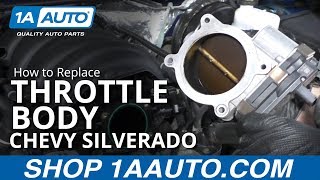
How to confirm: After a thorough cleaning and idle relearn, if the code returns and a scan tool shows erratic TPS voltage or a persistent discrepancy between desired and actual throttle position, the unit is likely faulty. 🎬 Watch: Step-by-step throttle body replacement for 2014-2019 trucks. Some owners report the code returning weeks after cleaning, indicating a failing sensor.
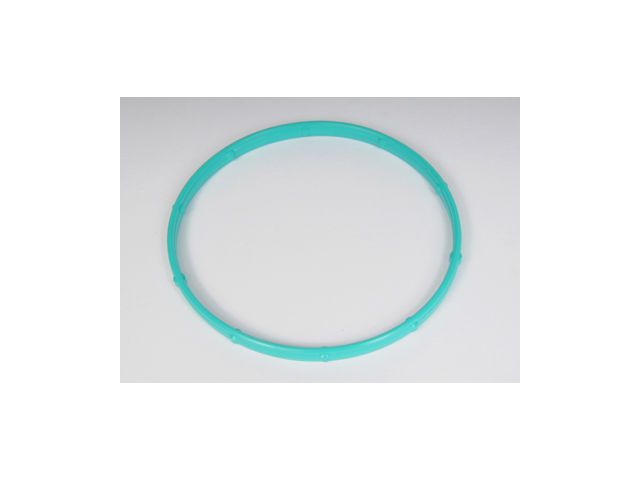
Typical fix: Replace the entire throttle body assembly and the gasket. Perform an idle learn procedure after installation. The OEM part is often recommended for longevity.
Est. part cost: $150-$400 - Wiring or Connector Issue ⚪ Low Probability Engine bay heat and vibration can, over time, cause wires in the harness leading to the throttle body to fray or the connector pins to lose contact. GM has issued bulletins for other models regarding harness chafing, indicating a known area of concern.
How to confirm: Visually inspect the wiring harness for any signs of chafing, melting, or damage, especially where it might rub against brackets or the engine itself. Wiggle the connector at the throttle body while the engine is running (if safe) or while monitoring TPS voltage on a scan tool to see if the signal fluctuates.
Typical fix: Repair the damaged section of wire or replace the connector pigtail.
Est. part cost: $10-$50
Rare But Worth Checking
- Faulty Engine Control Module (ECM): This is very rare. The ECM should only be considered after all other possibilities, including the throttle body and wiring, have been definitively ruled out.
Diagnosis Steps
- Scan the ECM for P0121 and any other stored codes. Note codes like P0068, P1516, P2101, etc., as they strongly point to the throttle body.
- Remove the air intake duct from the throttle body.
- Visually inspect the throttle bore and plate for carbon buildup. If significant carbon is present, this is the most likely cause.
- If carbon is found, clean the throttle body thoroughly using throttle body cleaner and a soft rag. Manually open the plate to clean the edges and seating area.
- Reassemble the intake and perform an 'Idle Learn Reset'. This can be done with a capable OBD-II scan tool (e.g., GDS2) or by performing a manual drive cycle. Be aware that the idle may be high (1500-2500 RPM) for a period after cleaning until the relearn is complete.
- If cleaning does not fix the issue, inspect the wiring harness and connector at the throttle body for damage, corrosion, or loose pins.
- If wiring is intact and the code persists after cleaning, the throttle body assembly itself is likely faulty and requires replacement.
Parts You'll Likely Need
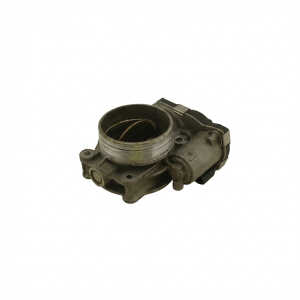
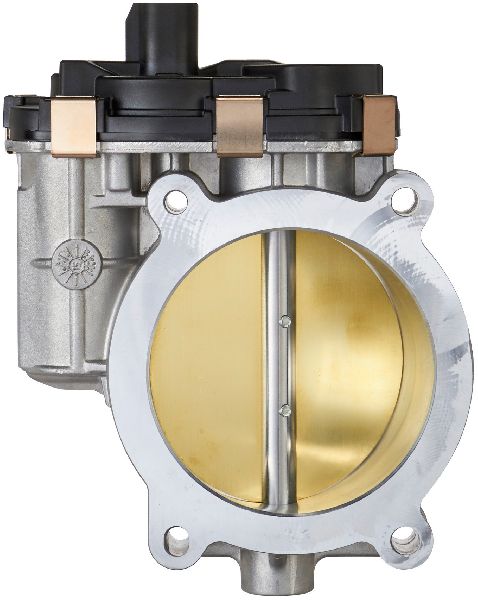
- Throttle Body Assembly
(OEM #ACDelco 12629992 (supersedes 12601387))— This is the most common repair if cleaning fails. The sensor is integrated, so the entire assembly must be replaced if the sensor or motor fails.
Trusted brands: ACDelco, Bosch, Dorman
OEM price range: $250-$400
Aftermarket price range: $150-$250 - Throttle Body Cleaner — This is required for the most common and first-step fix: cleaning the carbon buildup from the throttle body.
Trusted brands: CRC, Berryman, Gumout
OEM price range: $5-$15
Aftermarket price range: $5-$15
Related Codes That Often Appear With This One
- P0068 — Relates to a mismatch between MAP/MAF sensor readings and throttle position, often caused by the same carbon buildup issue.
- P1516, P2101, P2119 — These are GM-specific codes that relate directly to the Throttle Actuator Control (TAC) module and motor performance, often triggered alongside P0121 when the throttle plate cannot achieve the commanded position.
- P2176 — This code indicates the ECM has not learned the minimum throttle position, which can happen after cleaning or replacing the throttle body if the idle relearn procedure is not performed correctly or is incomplete.
Technical Service Bulletins (TSBs) & Recalls
- PIP4578B: Addresses idle surge, reduced engine power, and DTCs P0068, P0121, P1516, P2101, P2119, and/or P2176 on high mileage vehicles due to carbon in the throttle body.
- PIP5199A: While for a crankshaft balancer wobble, it applies to the same 2014-2016 model year trucks with 5.3L and 6.2L engines, helping to cross-reference GM's attention on this platform during that period.
Platform-Specific Known Issues
- A known issue documented by GM TSB #PIP4578B describes how carbon buildup on high-mileage vehicles leads to idle surge, reduced power, and DTCs including P0121. The fix is to clean the throttle body and perform an idle learn reset.
- Owners on forums report that even after cleaning, the idle can be very high (2000+ RPM) and may take several days or a few hundred miles of driving to return to normal as the ECM relearns the new throttle plate minimum position.
Mechanic-Grade Diagnostic Values
- Throttle Position Percentage at Idle (Scan Tool) — expected: Below 15-20%. Failure: A reading consistently above 20% (e.g., 21-26%) at idle suggests the throttle plate is not closing properly due to carbon buildup or a fault.
- TPS1 and TPS2 Voltage Correlation (Scan Tool Live Data) — expected: The two sensor voltages should move in opposite directions. As one increases, the other should decrease. Their sum should remain relatively constant at approximately 5V.. Failure: If one sensor's voltage is stuck, erratic, or does not move in opposition to the other, it indicates a sensor or wiring fault.
- TPS Signal Voltage at Connector — expected: Approximately 0.5V at closed throttle and 4.5V at wide-open throttle (WOT).. Failure: Voltage that is stuck, has dropouts, or does not sweep smoothly from ~0.5V to ~4.5V as the throttle plate is moved indicates a failed sensor.
Scan Tool Commands That Help
- GDS2 / Tech 2 (or equivalent professional scanner): Idle Learn Reset / Throttle/Idle Learn — This function must be used after cleaning or replacing the throttle body. It instantly erases the old learned idle values that compensated for carbon buildup, preventing a persistent high idle condition that would otherwise take many drive cycles to resolve on its own. It is typically found in the 'Module Setup' or 'Special Functions' menu of the ECM.
Wiring & Ground Locations
- G104 / Firewall-to-Engine Ground — A braided ground strap running from the firewall on the driver's side to a bolt on the rear of the driver's side cylinder head.. This is a critical ground path for the engine's sensor network. Corrosion or a break in this strap can cause fluctuating or incorrect reference voltages for sensors like the TPS, leading to erratic readings and codes like P0121 even if the sensor itself is good.
- G103 / ECM Ground — Located on the front of the passenger side cylinder head.. This serves as another primary engine ground point. Ensuring it is clean and tight is crucial for stable sensor operation. Problems here can manifest as a wide range of electrical and sensor-related DTCs.
- Throttle Body Connector (X115) — The 6-pin electrical connector on the throttle body assembly.. This is where all voltage and signal tests are performed. The 6 pins typically include: Throttle Motor Control 1, Throttle Motor Control 2, 5V Reference, Low Reference (Ground), TPS 1 Signal, and TPS 2 Signal. Damage to this connector or its terminals is a common point of failure.
Real Owner Repair Stories
- Summit Racing Customer Review (2010 Chevrolet Silverado 1500) — Intermittent 'Reduced Power' limp mode and a stored P2135 code (a related throttle correlation code).
❌ Tried (didn't work) Dealer replaced the throttle body three times., Dealer replaced the throttle body wiring pigtail at least once.
✅ What actually fixed it The owner replaced the throttle body, the throttle body wire harness (pigtail), AND the electronic accelerator pedal assembly all at once to finally resolve the persistent intermittent failure. - Reddit user in r/AskMechanics (2011 Chevrolet Silverado 1500 6.2L) — P0121 code and erratic engine behavior.
❌ Tried (didn't work) Cleaned the throttle body., Replaced the throttle position sensor (implying a non-integrated design, or replaced the whole assembly)., Replaced the accelerator pedal position sensor.
✅ What actually fixed it The user's problem was unresolved after replacing all common components, strongly suggesting the root cause was in the wiring harness between the components or a poor ground connection, which was the advice given by other mechanics in the thread.
OEM Part Supersession History
12601387→12629992— Standard part revision and update by the manufacturer.
Heads up: The new part may require programming or a special setup/relearn procedure to ensure proper operation in the vehicle.
Model Year Variations Within This Range
- 2017-2018: For diesel models, the 6.6L Duramax L5P engine was introduced in 2017, replacing the LML. The L5P is a significant redesign with a different air intake system and engine management. While P0121 is less common on diesels, diagnostic procedures and part numbers for the throttle assembly may differ between LML (2014-2016) and L5P (2017-2018) equipped trucks.
Helpful Videos

Used OEM Parts in Stock


New Aftermarket Parts Available


The information in this article is provided for general reference and educational purposes only. Vehicle specifications, procedures, and part compatibility can vary by production date, trim level, and region. Always consult your vehicle's factory service manual and verify part numbers before purchasing or performing repairs. Safety-critical components such as airbags, seat belts, and braking systems should be installed by a qualified professional.
- Chevrolet SILVERADO 3500:
- 🎬 Helpful Videos
- 🛍️ Shop This Part
- What's Unique About the 2014-2018 Chevrolet SILVERADO 3500
- Diagnostic Flowchart
- Symptoms You May Notice
- Most Likely Causes
- Rare But Worth Checking
- Diagnosis Steps
- Parts You'll Likely Need
- Related Codes That Often Appear With This One
- Technical Service Bulletins (TSBs) & Recalls
- Platform-Specific Known Issues
- Mechanic-Grade Diagnostic Values
- Scan Tool Commands That Help
- Wiring & Ground Locations
- Real Owner Repair Stories
- OEM Part Supersession History
- Model Year Variations Within This Range
- 🎟️ Get 5% Off