

P0117 on 2018-2019 Volkswagen Golf: ECT Sensor Circuit Low Causes and Fixes
On a 2018-2019 VW Golf, code P0117 almost always points to a failed Engine Coolant Temperature (ECT) sensor or a short in its wiring. The ECU sees a short circuit and assumes the engine is overheating, causing fans to run constantly and the temp gauge to max out. Replacing the sensor (G62), located on the thermostat housing under the intake manifold, is a common DIY fix. However, this code is often a secondary symptom of a leaking thermostat housing, a notorious issue on these engines, which req
- P0117 on your Golf means the computer thinks the engine is critically overheating, even if it's not.
- The most likely cause is a simple, inexpensive Engine Coolant Temperature (ECT) sensor that has failed.
- Before replacing the sensor, check its wiring for damage and inspect the plastic thermostat housing for any signs of a pink coolant leak, as this is a very common VW issue.
- Using a scan tool to check live data is the fastest way to confirm the fault: a cold engine showing a temperature of ~284°F points directly to this problem.
- This is a manageable DIY repair, but be prepared to lose a small amount of coolant when swapping the sensor.
What's Unique About the 2018-2019 Volkswagen GOLF

The Mk7/Mk7.5 Golf platform uses a complex cooling system with an integrated water pump/thermostat housing module on its EA888 and EA211 engines. While P0117 directly points to the ECT sensor circuit (G62), these plastic thermostat housings are a notorious failure point, often developing cracks and leaking coolant. A coolant leak can saturate the sensor or its wiring connector, causing the short circuit that triggers the code. Therefore, it's crucial to inspect the entire assembly for pink, crusty G12/G13 coolant residue during diagnosis, as the housing itself is often the root cause.
Diagnostic Flowchart
Tap your situation to follow the diagnostic path that matches what you're seeing on this vehicle.
Symptoms You May Notice
- Check Engine Light is on
- Engine cooling fans run constantly at high speed, even when the engine is cold.
- Temperature gauge on the dashboard reads maximum (hot) or doesn't move at all.
- Poor fuel economy
- Engine may be difficult to start, especially when cold.
- Rough or hesitant running until the engine warms up.
- A coolant system warning light may appear on the dash.
- Sweet smell of coolant from the engine bay, indicating a leak.
- Replacing the radiator outlet temperature sensor (G83) instead of the main engine sensor (G62). P0117 specifically refers to Sensor 1 (G62), which is on the engine/thermostat housing. The G83 sensor is located on the lower radiator hose and will set different codes (like P2184).
- Replacing the thermostat alone when the issue is the sensor or its wiring. While thermostat issues are common, they typically set performance codes (like P0128) rather than circuit-low codes.
- Ignoring a coolant leak. If the thermostat housing is leaking, simply replacing the ECT sensor will only be a temporary fix until coolant contaminates the new sensor or its connector.
Most Likely Causes

- Failed Engine Coolant Temperature (ECT) Sensor (G62) 🔴 High Probability The sensor itself is a common failure item due to age and constant heat cycles. The internal thermistor can fail, creating a permanent short circuit. The plastic housing can also crack, allowing coolant intrusion.
How to confirm: Use a scan tool to view live data. If the coolant temperature reads a fixed, extremely high value (e.g., 140°C or 284°F) immediately at cold start, the sensor has failed or the circuit is shorted. You can also test the sensor with a multimeter; at room temperature (~68°F/20°C), resistance should be 2,000-3,000 Ohms.
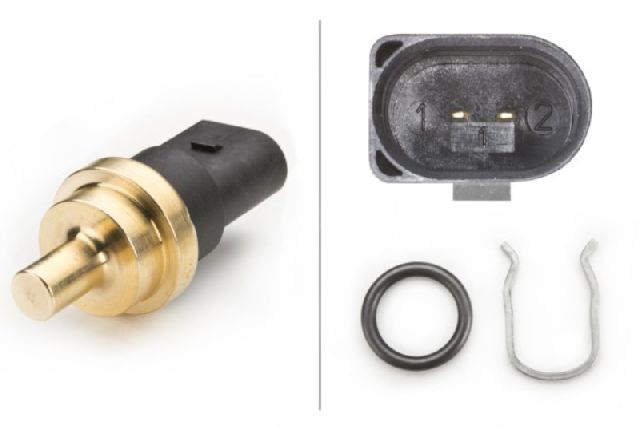
Typical fix: Replace the Engine Coolant Temperature sensor (G62). It is typically held in the thermostat housing by a small plastic clip and sealed with an O-ring.
Est. part cost: $20-$60 - Shorted Sensor Wiring or Damaged Connector 🟡 Medium Probability The wiring harness is located in a hot, tight engine bay under the intake manifold. Oil or coolant leaks from other components can degrade the wire insulation over time, leading to a short circuit to ground.
How to confirm: Disconnect the sensor. If the live data reading on the scan tool changes from max-hot to max-cold (e.g., -40°F), the wiring is likely okay and the sensor is bad. A multimeter can be used to check for continuity to ground on the signal wire.
Typical fix: Repair the damaged section of the wiring harness or replace the connector pigtail. Ensure the connector is clean and dry before reconnecting.
Est. part cost: $15-$40 - Leaking or Failing Water Pump / Thermostat Housing Assembly 🟡 Medium Probability The plastic thermostat housings on MQB engines are a well-documented weak point and frequently develop leaks from seams or cracks due to constant heat cycling. Leaking coolant can seep into the integrated ECT sensor's connector or other nearby wiring, causing a short.
How to confirm: Visually inspect the entire water pump and thermostat assembly, which is located on the front of the engine (driver's side) under the intake manifold. Look for signs of pink/white crusty residue, indicating a dried coolant leak. Check the coolant reservoir level; if it is consistently low, a leak is highly probable.
Typical fix: Replace the entire water pump and thermostat housing assembly. This is an involved repair often requiring removal of the intake manifold. It is highly recommended to replace the water pump, belt, and sensor at the same time.
Est. part cost: $250-$500
Rare But Worth Checking
- Air Pocket in the Cooling System: This is almost always a symptom of another problem, such as a recent coolant service or, more likely, a leak in the system (like the thermostat housing). An air pocket trapped around the sensor can cause erratic readings and trigger a fault, but the root cause is the source of the air.
- Faulty Engine Control Module (ECM): This is extremely rare. The ECM should only be considered after all other possibilities, including the sensor and all related wiring, have been exhaustively tested and ruled out. Voltage supply issues to the ECM can also cause erroneous faults.
Diagnosis Steps
- Connect an OBD-II scanner and confirm P0117 is the active code. Note any other codes present.
- Access the live data stream on the scanner and observe the value for 'Engine Coolant Temperature'.
- If the engine is cold but the temperature reads 130-140°C (266-284°F), a short circuit is present.
- Visually inspect the area around the thermostat housing (under the intake manifold) for signs of coolant leaks (pink crust). Check the coolant reservoir level.
- Locate the primary ECT sensor (G62). On Gen 3 engines, it is part of the thermostat housing assembly. It is distinct from the G83 sensor on the radiator outlet hose.
- Inspect the sensor's electrical connector and nearby wiring for obvious damage, corrosion, or oil/coolant contamination.
- Disconnect the ECT sensor's electrical connector. Watch the live data on the scanner. The temperature reading should drop to its lowest possible value (e.g., -40°C/F). If it does, the wiring is good and the sensor is faulty.
- If the temperature reading remains at maximum high after unplugging the sensor, there is a short to ground in the wiring harness between the sensor and the ECM. This short must be located and repaired.
- If the sensor is deemed faulty, replace it. It is held by a plastic clip (Part No. 032121142) and sealed by an O-ring (Part No. N90316802) which should also be replaced. Have the new sensor ready for a quick swap to minimize coolant loss.
- After any repair, clear the codes, top off the coolant with the correct type (VW G13 or compatible), and run the engine to verify the fix.
Parts You'll Likely Need

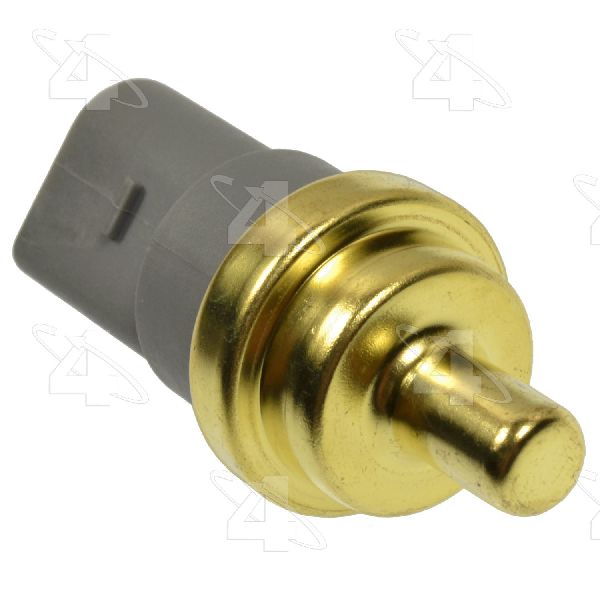
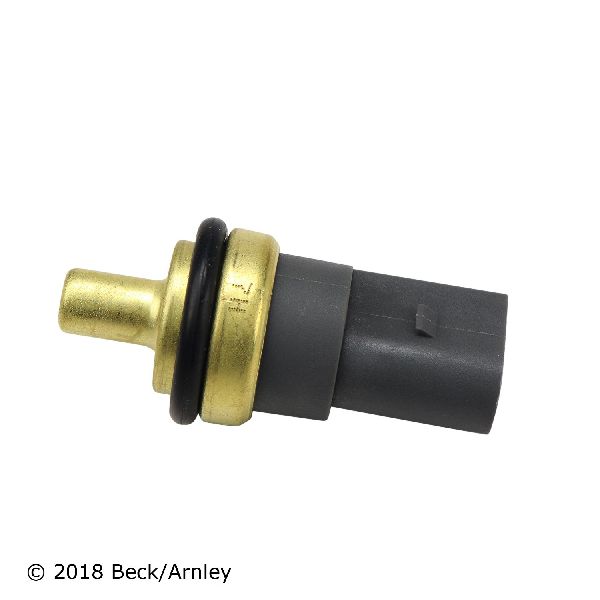
- Engine Coolant Temperature Sensor (G62)
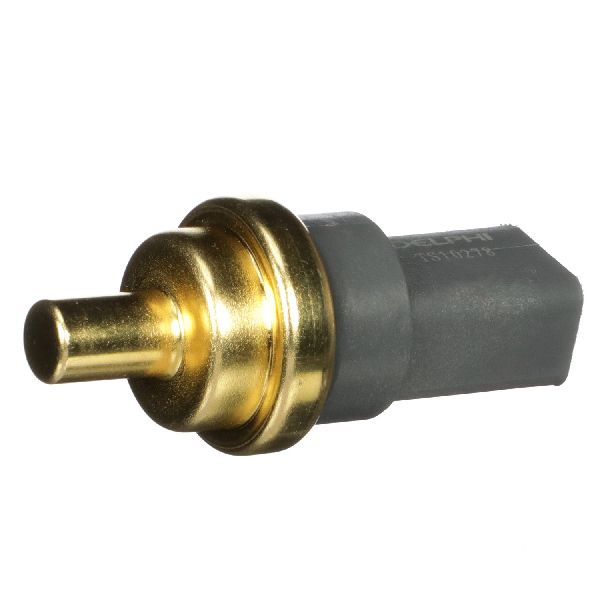
(OEM #06A919501A)— This is the most common failure part for a P0117 code. It directly provides the reading that the ECM is flagging as out of range. Note: Some older models used a 4-pin green sensor (059919501A), but the MQB platform typically uses the 2-pin black sensor.
Trusted brands: Genuine VW/Audi, Bosch, HELLA, Febi Bilstein
OEM price range: $40-$60
Aftermarket price range: $20-$40 - Water Pump & Thermostat Housing Assembly
(OEM #06L121111P (latest revision, verify for your specific engine))— A known major failure point on this platform. A coolant leak from the housing is often the root cause of the electrical short in the sensor. This part has been revised many times; previous versions include suffixes F, G, H, J, K, L, and M.
Trusted brands: Genuine VW/Audi, Continental, INA
OEM price range: $350-$500
Aftermarket price range: $250-$400
Related Codes That Often Appear With This One
- P0116 — P0116 indicates an ECT sensor performance/range issue. It can appear alongside P0117 if the sensor is failing erratically before it shorts out completely. The provided NHTSA TSB also lists them together.
- P0118 — P0118 is the opposite code (Circuit High), indicating an open circuit. A loose connector or intermittent wiring fault could cause the ECM to see both high and low circuit conditions at different times.
- P261A — This code for "Coolant Pump B Control Circuit/Open" can appear if there are widespread wiring issues or coolant contamination affecting multiple components in the same area as the ECT sensor.
Technical Service Bulletins (TSBs) & Recalls
- Bulletin #VIN4APIN20220831: Mentions fault code P0117 in a list of potential customer complaints including MIL-on and coolant light warnings.
Platform-Specific Known Issues
- Chronic Thermostat Housing Leaks: The plastic water pump and thermostat housing assembly is a common point of failure on the Gen 3 EA888 and related EA211 engines, often requiring replacement between 40,000 and 80,000 miles. The plastic can become brittle and crack from heat cycles, causing coolant leaks that can trigger P0117.
- TSB Mention: A Technical Service Bulletin (TSB) from Volkswagen, #VIN4APIN20220831, lists P0117 among a series of potential fault codes related to MIL-on and coolant light warnings, indicating it can be part of a cluster of issues the dealer may investigate.
Mechanic-Grade Diagnostic Values

- ECT Sensor (G62) Resistance — expected: 1500-2000 Ω at 30°C (86°F); 275-375 Ω at 80°C (176°F).. Failure: Readings significantly outside the expected range for a given temperature indicate a faulty sensor.
- ECT Sensor (G62) Signal Voltage — expected: A voltage between 0.5V (cold) and 4.5V (hot).. Failure: A constant voltage reading below 0.2V or 0.14V indicates a short circuit to ground, which triggers P0117.
- Continuity check from G62 connector to ECM — expected: Maximum resistance of 1.5 Ω.. Failure: Resistance higher than 1.5 Ω indicates an open or high-resistance fault in the wiring harness.
Scan Tool Commands That Help
- VCDS (VAG-COM) or OBDeleven: Output Test Sequence (Function 03) for [01-Engine] or [08-Auto HVAC] — This allows a technician to command specific components like the radiator fans (V7, V177) or coolant pumps to activate, verifying their electrical function independently of the ECT sensor's input. This helps rule out a failed fan module that might be causing an overheat condition, which could be confused with a sensor issue.
- VCDS (VAG-COM) or OBDeleven: Read Measuring Value Blocks (MVB) for Coolant Temperature — To compare the readings from the engine-side ECT sensor (G62) and the radiator outlet sensor (G83). A large discrepancy when the engine is cold or fully warm can indicate a sensor failure or a thermostat that is stuck open or closed.
Wiring & Ground Locations
- Ground Point 15 — On the cylinder head.. This is a primary ground point for many engine sensors. While the G62 sensor grounds through the ECM, the ECM itself relies on clean engine and chassis grounds. A corroded or loose ground here can cause floating voltages and erratic sensor readings across the system.
- Ground Point 81 — In the center of the engine compartment.. Another key engine bay ground point. Verifying it is clean and tight (9 Nm torque spec) is a crucial step in diagnosing any persistent, hard-to-trace electrical faults.
- ECM Ground Path — The G62 sensor's ground path is completed internally through the Engine Control Module (ECM), not directly to a chassis ground stud.. This means a short to a chassis ground on either the signal or reference wire can cause the P0117 code. The diagnostic step of unplugging the sensor works because it isolates the ECM from this external short; if the code's symptom (max temp reading) persists with the sensor unplugged, the short is confirmed to be in the harness.
Real Owner Repair Stories
- Reddit user r/GolfGTI (2016 MK7 GTI Autobahn, 51k miles) — Low coolant warning light, required topping off.
❌ Tried (didn't work) Initially just topping off coolant without finding the source of the leak.
✅ What actually fixed it A dealer performed a leak test and confirmed a leak at the thermostat housing. The final repair was the replacement of both the water pump and the thermostat housing assembly. - GOLFMK7 forum user (2015 GTI) — Coolant smell and having to top off coolant a couple of times.
❌ Tried (didn't work) A previous repair where the thermostat and both water pumps were replaced.
✅ What actually fixed it The user's post indicates a recurring leak even after a full water pump and thermostat replacement, highlighting that repeat failures can occur and that careful inspection is needed. The final resolution was not posted, but the recurrence is a critical data point for owners.
OEM Part Supersession History
06L121111F, 06L121111G, 06L121111H, 06L121111J, 06L121111K, 06L121111L, 06L121111M→06L121111P— The thermostat housing assembly is a known failure point prone to developing cracks and coolant leaks. The part has been revised multiple times to improve the durability of the plastic and seals.
Heads up: All previous revisions are superseded by 06L121111P. It is critical to install the latest available revision to ensure the most durable repair. Using an older, new-old-stock part is not recommended.
Model Year Variations Within This Range
- 2019: For 2019, the base Golf model's 1.8T EA888 engine was replaced by a 1.4T EA211 engine, which is smaller and more efficient. While both engines utilize a similar integrated thermostat/water pump module design prone to leaks, the specific part numbers for the housing and sensors may differ. The GTI and R models retained the 2.0T EA888 engine, but the 2019 Golf R received a different ECU and potentially an upgraded camshaft compared to the 2018 model.
Helpful Videos
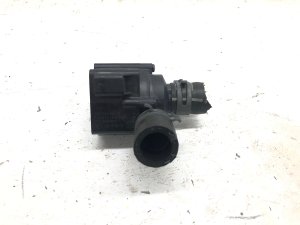
Used OEM Parts in Stock

New Aftermarket Parts Available


The information in this article is provided for general reference and educational purposes only. Vehicle specifications, procedures, and part compatibility can vary by production date, trim level, and region. Always consult your vehicle's factory service manual and verify part numbers before purchasing or performing repairs. Safety-critical components such as airbags, seat belts, and braking systems should be installed by a qualified professional.
- Volkswagen GOLF:
- 🎬 Helpful Videos
- 🛍️ Shop This Part
- What's Unique About the 2018-2019 Volkswagen GOLF
- Diagnostic Flowchart
- Symptoms You May Notice
- Most Likely Causes
- Rare But Worth Checking
- Diagnosis Steps
- Parts You'll Likely Need
- Related Codes That Often Appear With This One
- Technical Service Bulletins (TSBs) & Recalls
- Platform-Specific Known Issues
- Mechanic-Grade Diagnostic Values
- Scan Tool Commands That Help
- Wiring & Ground Locations
- Real Owner Repair Stories
- OEM Part Supersession History
- Model Year Variations Within This Range
- 🎟️ Get 5% Off