

P0117 on 2001-2007 Toyota Sequoia: Engine Coolant Temp Sensor Circuit Low Causes and Fixes
On a 2001-2007 Toyota Sequoia, code P0117 is most often caused by a failed Engine Coolant Temperature (ECT) sensor or a genuine overheating event from low coolant. This can cause a pegged temperature gauge, poor fuel economy, and hard starting. Replacing the correct two-wire sensor is a common, affordable DIY fix, but checking for coolant leaks is a critical first step.
- P0117 on a Sequoia means the computer thinks the engine is extremely hot, usually due to a bad Engine Coolant Temperature (ECT) sensor or a real coolant loss event.
- Before buying parts, ALWAYS check your coolant level when the engine is cold. A true overheating event from a leak is a common cause for this code.
- The most likely fix is replacing the two-wire ECT sensor (part #89422-30030), which is an accessible and affordable DIY job.
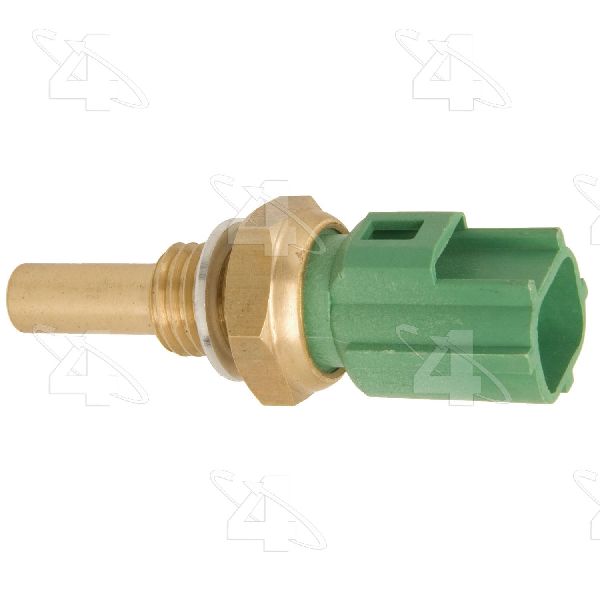
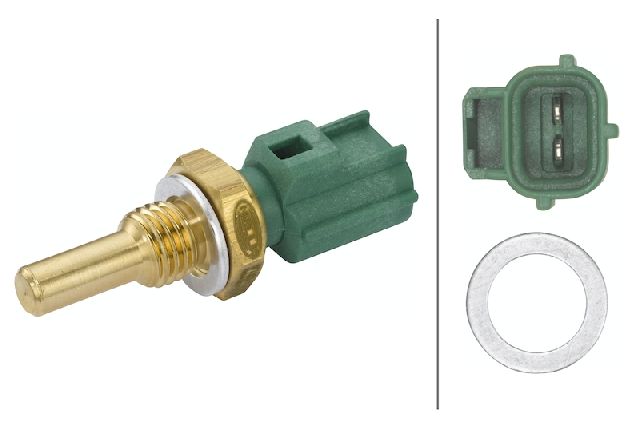
- The 4.7L V8 has two temp sensors; make sure you are replacing the correct one (usually with a green connector) that feeds the computer, not the one for the gauge.
What's Unique About the 2001-2007 Toyota Sequoia

The 2001-2007 first-generation Sequoia uses the robust 4.7L 2UZ-FE V8 engine, which it shares with the Tundra, Land Cruiser, and Lexus LX470/GX470. On this engine, the P0117 code is a straightforward issue almost always pointing to the ECT sensor itself, its wiring, or a legitimate cooling system problem. A key detail for this platform is that the 2UZ-FE engine has two separate temperature sensors in the same area: a two-wire sensor with a green connector that sends data to the ECU (this is the one that causes P0117), and a single-wire sensor that only operates the dashboard temperature gauge. The most common failure is the original Denso sensor simply wearing out after many years and heat cycles.
Symptoms You May Notice
- Check Engine Light is on
- Engine overheating or temperature gauge reading pegged at Hot
- Cooling fans running constantly, even when the engine is cold
- Poor fuel economy
- Black smoke from the exhaust
- Difficulty starting the engine, especially when warm
- Rough idle or engine running rough
- A/C blowing warm air
- Replacing the thermostat. While a stuck-closed thermostat can cause a real overheating event that triggers P0117, the thermostat itself does not cause the electrical circuit code directly. If the code is present on a cold engine, the thermostat is not the issue. Always diagnose the code's trigger (electrical fault vs. actual heat) first.
- Replacing the wrong sensor. The 2UZ-FE has a two-wire sensor for the ECU and a one-wire sender for the gauge. Replacing the gauge sender will not fix a P0117 code.
Most Likely Causes

- Failed Engine Coolant Temperature (ECT) Sensor 🔴 High Probability The sensor is a simple thermistor that can fail over time due to age and constant exposure to extreme temperature changes. It is the most common point of failure for a P0117 code when no actual overheating is present.
How to confirm: With a cold engine, use a scan tool to check the live ECT data. If it reads an impossibly high temperature (e.g., 250°F+), the sensor is bad. You can also test the sensor's resistance with a multimeter; at around 68°F (20°C), it should be between 2,000 and 3,000 ohms. If the sensor is shorted internally, it will show very low or zero resistance.
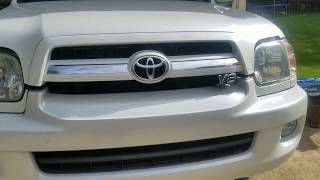
Typical fix: Replace the two-wire ECT sensor and its gasket. The sensor is located on the front of the engine in the coolant crossover pipe. Ensure you are replacing the correct sensor (typically the one with the green connector 🎬 Watch this walkthrough for replacing the sensor on a Sequoia.) and not the single-wire gauge sender.
Est. part cost: $15-$50 - Low Engine Coolant or Air Pocket 🟡 Medium Probability Cooling systems can develop leaks over time from radiator seams, hoses, water pumps, or plastic heater hose 'T' connectors common on the 100-series platform. If coolant is lost, the sensor can be exposed to steam or air, causing it to read an extremely high temperature and trigger P0117. This means the code is a symptom, not the root cause.
How to confirm: Check the coolant level in the radiator (when cold) and the overflow tank. If it's low, there is a leak that needs to be found and repaired. A user on Tundras.com with a 2005 Tundra reported the P0117 code cleared itself after simply refilling the coolant. A pressure test of the cooling system is the best way to find leaks.
Typical fix: Find and repair the source of the coolant leak (e.g., replace radiator, hose, or cap). Then, top off the coolant and properly bleed the system to remove any air pockets.
Est. part cost: $20-$40 for Toyota-specific coolant, plus the cost of any leaking parts. - Damaged Wiring or Connector 🟡 Medium Probability The wiring harness is located in a hot, tight area of the engine bay and can become brittle, cracked, or damaged over time, leading to a short circuit to ground. Moisture can also get into a compromised connector and cause a short, as a ClubLexus user may have experienced during heavy rain.
How to confirm: Visually inspect the wiring and connector leading to the ECT sensor for any signs of cracking, melting, corrosion, or loose pins. A short to ground in the signal wire will cause a P0117 code. A good test is to disconnect the sensor; if the code changes to P0118 (Circuit High), the wiring is likely intact and the sensor is the problem.
Typical fix: Repair the damaged section of the wire or replace the connector pigtail. Clean any corrosion from the connector pins with electrical contact cleaner.
Est. part cost: $10-$30
Rare But Worth Checking
- Faulty Powertrain Control Module (PCM): This is extremely rare. The PCM should only be considered after the sensor, wiring, and coolant level have all been confirmed to be good. A faulty PCM can fail to correctly interpret the sensor's voltage.
Diagnosis Steps

- Read the code with an OBD-II scanner. Note any other codes that are present, like P0118 or P0125.
- CRITICAL: With the engine completely cold, check the coolant level in the radiator and overflow reservoir. If low, the P0117 is likely a symptom of a real overheating/coolant loss issue. Find and fix the leak first.
- With the engine still cold, use the scanner's live data function to view the Engine Coolant Temperature reading. If it shows a very high value (e.g., 250°F or higher), the sensor has failed or its circuit is shorted to ground.
- Inspect the ECT sensor's electrical connector (the two-wire green one) and nearby wiring for any signs of damage, corrosion, or melting.
- Disconnect the sensor. The temperature reading on the scan tool should now go to its extreme opposite (e.g., -40°F) and a P0118 code may set. If this happens, the wiring and PCM are likely okay, and the original sensor is the problem.
- If you have a multimeter, you can test the sensor's resistance. For the 2UZ-FE, it should be around 2-3 kΩ at room temperature (approx. 68°F/20°C). The resistance should drop as the sensor warms up. 🎬 See two quick DIY methods to fix the P0117 code.
- If the sensor and wiring test good, and the coolant level is full, ensure there are no air pockets in the cooling system, especially if service was recently performed. Bleed the system properly.
Parts You'll Likely Need
- Engine Coolant Temperature Sensor (for ECU)
(OEM #89422-30030)— This two-wire sensor provides the temperature reading to the engine computer and is the most common part to fail and cause a P0117 code. It is distinct from the single-wire gauge sender.
Trusted brands: Toyota (Genuine OEM), Denso (OEM Supplier)
OEM price range: $40-$75
Aftermarket price range: $15-$35 - Toyota Super Long Life Coolant (Pink)
(OEM #00272-SLLC2)— Required if the system is drained for sensor replacement or if the code was caused by a coolant leak. Using the correct coolant type is critical. 🎬 Watch this guide on how to properly replace your coolant. Earlier models may have used Toyota Red Long Life Coolant.
Trusted brands: Toyota
OEM price range: $25-$40 per gallon
Related Codes That Often Appear With This One
- P0118 — P0118 is for 'ECT Sensor Circuit High Input'. Seeing both codes, or one switching to the other after wiggling wires, often points to an intermittent wiring problem or a failing sensor. Disconnecting the sensor should intentionally trigger a P0118.
- P0125 — P0125 means 'Insufficient Coolant Temperature for Closed Loop Fuel Control'. A faulty ECT sensor providing a shorted (P0117) or open (P0118) signal can prevent the computer from confirming the engine has reached operating temperature, triggering this code as well.
Platform-Specific Known Issues
- A Reddit user with a 2003 Sequoia experienced code P0117 after the engine overheated and a radiator hose popped off, indicating the code was a symptom of a real overheating event caused by coolant loss, not a faulty sensor. This highlights the importance of checking coolant levels first.
- On the Tundras.com forum, a 2005 Tundra owner with a P0117 found the code disappeared after he refilled the low coolant, confirming the link between coolant level and this specific code.
- An IH8MUD forum member with a 4.7L V8 (in a Land Cruiser) diagnosed a P0117 code and ultimately found the radiator itself had a crack, which caused the coolant loss and subsequent overheating that triggered the code.
Mechanic-Grade Diagnostic Values
- ECT Sensor Resistance vs. Temperature — expected: Approx. 2,200 - 3,000 Ω at 20°C (68°F); Approx. 250 - 350 Ω at 80°C (176°F); Approx. 180 - 250 Ω at 100°C (212°F).. Failure: Very low or zero resistance indicates an internal short. Infinite resistance indicates an open circuit. Readings that don't change with temperature are also a failure.
- ECT Sensor Circuit Voltage at ECM — expected: Normal operating range is typically between 0.5V (hot) and 3.5V (cold).. Failure: A voltage reading below 0.14V for more than 0.5 seconds will trigger DTC P0117.
- Scan Tool Live Data - Disconnected ECT Sensor — expected: The temperature reading should display an extreme cold value, such as -40°C (-40°F).. Failure: If the temperature still reads high or does not change, there is a short to ground in the wiring harness between the sensor and the ECM.
- Scan Tool Live Data - Jumpered ECT Connector — expected: With the connector pins shorted with a paperclip, the scan tool should display an extreme hot value, such as 140°C (284°F).. Failure: If the reading does not change or goes to -40°F, there is an open circuit in the wiring harness.
Scan Tool Commands That Help
- Toyota Techstream: Data List -> Primary -> COOLANT TEMP — This is the primary function to view the live data the ECM is receiving from the ECT sensor. It's the first step to see if the reading is logical (matches ambient temp on a cold engine) or illogical (pegged high or low).
- Toyota Techstream: Utility -> All Readiness — After a repair, this function can be used to check the status of the DTC judgment to confirm if the monitor has run and passed, verifying the fix without waiting for a full drive cycle.
Wiring & Ground Locations

- EC — Rear bank of the left cylinder head (driver's side).. The ECT sensor circuit relies on a clean ground connection to provide an accurate voltage reading to the ECM. The main engine-to-chassis grounds are critical. While the sensor itself is grounded through the ECM, a poor engine block ground can introduce electrical noise and potential voltage offsets affecting all sensors. A video showing 2UZ-FE grounds confirms a 10mm bolt for a ground on the back of the block near the transmission.
- ECT Sensor Connector (B4) — On the front coolant crossover pipe of the 2UZ-FE engine.. This is the direct connection point for the sensor. The two pins are THW (Signal to ECM) and ETHW (Ground reference from ECM). A short between these two pins, or a short from the THW wire to chassis ground, will cause the P0117 code.
Real Owner Repair Stories
- PriusChat Forum (principles apply) (Toyota Prius (demonstrates common Toyota diagnostic logic)) — P0117 code present.
❌ Tried (didn't work) The user was planning to replace the sensor first.
✅ What actually fixed it The discussion highlights the diagnostic process: P0117 indicates a short circuit that was present for at least 0.5 seconds. It's crucial to test if the problem is the sensor itself or the wiring. The manual lists potential causes as 1) ECT sensor, 2) thermostat, 3) wiring/connectors. This reinforces that while the sensor is common, it's not the only possibility.
OEM Part Supersession History
89422-30030→89422-30030 (current)— This part number has remained stable and fits a wide range of Toyota and Lexus vehicles for many years, including the 2001-2007 Sequoia.
Heads up: While the part number is consistent, be aware that aftermarket connectors may be black instead of the original green color. Functionality should be the same if the quality is good.
Model Year Variations Within This Range
- 2005-2007: The 2UZ-FE engine was updated with Variable Valve Timing-intelligent (VVT-i) starting in the 2005 model year. While this was a significant update to the engine's top end and control system, the basic cooling system layout and the function/location of the ECT sensor remained the same.
Diagnostic Flowchart
Used vs. New Parts: Buying Guide for This Vehicle
When a used part is the smart pick: For this specific repair, buying a used ECT sensor is not recommended. The part is inexpensive new, is a common failure item due to age, and its failure can lead to significant engine performance issues. A used wiring harness pigtail from a junkyard is a viable option if only the connector is damaged.
Donor-vehicle mileage cap: roughly under 100000 miles for the part to have meaningful remaining life.
What to inspect on the donor part:
- For a wiring pigtail: check for flexible, non-brittle insulation.
- Ensure the connector's locking tab is intact and not broken.
- Look for clean, corrosion-free metal pins inside the connector.
- Avoid harnesses from vehicles with signs of engine fire or major coolant leaks.
OEM-only on this vehicle (don't cheap out):
- Thermostat: While not a direct cause of P0117, if replacing it during cooling system service, using an OEM Toyota thermostat is highly recommended by specialists to ensure the correct opening temperature and flow.
Aftermarket brands forum-validated for this vehicle:
- Denso (for the ECT sensor, as they are the OEM supplier)
Brands owners have reported issues with on this vehicle:
- Unknown, no-name brand sensors from online marketplaces. The sensor's accuracy is critical for fuel economy and engine performance, and cheap sensors may not be calibrated correctly.
Real Owner Stories
Aggregated from forums and TSBs cited above. Mileages and costs reflect what owners reported in those sources.
2003 Toyota Sequoia
Symptoms: Check Engine light came on, engine was steaming and overheating, and a radiator hose had popped off.
What fixed it: The owner reconnected the hose, replaced the radiator cap, and refilled the coolant. The P0117 code was a symptom of the coolant loss, not a primary sensor failure.
Source hint: Reddit r/toyotasequoia
2005 Toyota Tundra
Symptoms: P0117 code was present and the engine coolant was found to be low.
What fixed it: The code disappeared after simply refilling the low coolant.
Source hint: Tundras.com forum
Toyota Land Cruiser (4.7L V8)
Symptoms: P0117 code was triggered by coolant loss and subsequent overheating.
What fixed it: The root cause was a crack in the radiator. Repairing the radiator and refilling the coolant resolved the issue.
Source hint: IH8MUD forum
Related OBD-II Codes
Frequently Asked Questions
Where is the engine coolant temperature (ECT) sensor located on my 2001-2007 Sequoia's 4.7L V8?
My Sequoia has a P0117 code and the fans are always on, but the engine isn't actually overheating. What's the most likely cause?
How can I test the ECT sensor on my Sequoia before replacing it?
I found my coolant is low and I have a P0117 code. Should I just replace the sensor?
Does this P0117 information also apply to my 4.7L V8 Tundra or Land Cruiser?
What's the difference between the two coolant temperature sensors on the 2UZ-FE engine?
Helpful Videos
![How to Fix TOYOTA P0117 Engine Code in 3 Minutes [2 DIY Methods / Only $7.43]](https://img.youtube.com/vi/UHULPKXHPrU/mqdefault.jpg)
We Have This Part in Stock


The information in this article is provided for general reference and educational purposes only. Vehicle specifications, procedures, and part compatibility can vary by production date, trim level, and region. Always consult your vehicle's factory service manual and verify part numbers before purchasing or performing repairs. Safety-critical components such as airbags, seat belts, and braking systems should be installed by a qualified professional.
- Toyota Sequoia:
- 🎬 Helpful Videos
- 🛍️ Shop This Part
- What's Unique About the 2001-2007 Toyota Sequoia
- Symptoms You May Notice
- Most Likely Causes
- Rare But Worth Checking
- Diagnosis Steps
- Parts You'll Likely Need
- Related Codes That Often Appear With This One
- Platform-Specific Known Issues
- Mechanic-Grade Diagnostic Values
- Scan Tool Commands That Help
- Wiring & Ground Locations
- Real Owner Repair Stories
- OEM Part Supersession History
- Model Year Variations Within This Range
- Diagnostic Flowchart
- Used vs. New Parts: Buying Guide for This Vehicle
- Real Owner Stories
- 2003 Toyota Sequoia
- 2005 Toyota Tundra
- Toyota Land Cruiser (4.7L V8)
- Related OBD-II Codes
- Frequently Asked Questions
- 🎟️ Get 5% Off