

P0117 on 2004-2011 Mazda RX-8: Engine Coolant Sensor Causes and Fixes
On a Mazda RX-8, P0117 is almost always a failed Engine Coolant Temperature (ECT) sensor or a wiring issue. This is a critical fix, as a bad sensor can cause the Renesis engine to overheat. Expect to pay $20-$60 for an aftermarket sensor or $70-$100 for an OEM part, with a DIY difficulty of 3/5 due to tight access.
- P0117 on an RX-8 is a critical warning that must be addressed immediately to prevent catastrophic engine damage from overheating.
- The most likely cause is a failed Engine Coolant Temperature (ECT) sensor, which is an affordable part.
- Before replacing the sensor, always inspect the wiring and connector for damage, as this is another common point of failure.
- The sensor is located under the alternator, and access is tight but manageable for a DIY repair.
- Never rely on the stock dashboard temperature gauge; use an OBD-II scanner to monitor the actual coolant temperature.
What's Unique About the 2004-2011 Mazda RX-8
The Renesis rotary engine in the RX-8 is notoriously sensitive to overheating, which can quickly lead to catastrophic apex seal failure and warped rotor housings. A P0117 code is therefore more critical on an RX-8 than on many piston-engine cars. A faulty ECT sensor can fail to trigger the cooling fans at the correct temperature, directly risking the engine's life. Furthermore, the factory dashboard temperature gauge is known for being inaccurate and heavily buffered, making an OBD-II scanner's live data reading the only reliable way to see the true coolant temperature. Many owners will not see the gauge move from its normal position until the engine is already dangerously hot.
Symptoms You May Notice
- Check Engine Light is on
- Cooling fans run constantly, even when the engine is cold
- Temperature gauge on the dashboard may behave erratically, show maximum temperature, or not move at all
- Poor fuel economy due to the PCM defaulting to a rich fuel mixture
- Black smoke from the exhaust due to unburned fuel
- Rough idle, stalling, or difficulty starting, especially a hot restart
- Engine overheating or showing signs of overheating (steam, strange smells)
- Inaccurate temperature readings on an OBD-II scanner (e.g., stuck at -40°F/C or maxed out at 250°F+)
- Replacing the thermostat. While a stuck thermostat can cause overheating, the P0117 code specifically points to an electrical fault in the sensor's circuit (low voltage/short), not a mechanical cooling problem. An overheating issue from a bad thermostat would typically set a P0126 code on an RX-8. 🎬 Watch: Overview of what causes code P0117
Most Likely Causes
- Failed Engine Coolant Temperature (ECT) Sensor 🔴 High Probability The ECT sensor is a common failure point on many vehicles of this era. It's a relatively simple thermistor that can degrade over time due to constant heat cycles in the Renesis engine bay. The sensor's internal resistance can short out, causing the low voltage signal.
How to confirm: With a multimeter, test the sensor's resistance when cold (approx. 2.0-3.0 kΩ at 68°F/20°C) and ensure it changes smoothly as it warms up. Alternatively, monitor live data with a scan tool; a faulty sensor may show a fixed, extreme temperature like 284°F (140°C) or higher. If disconnecting the sensor changes the code to P0118, the sensor is almost certainly bad.
Typical fix: Replace the ECT sensor. It is located on the water pump housing, under the alternator on the passenger side. A partial coolant drain is required. A deep 19mm socket is typically needed for removal. 🎬 Watch: Quick DIY methods to fix code P0117
Est. part cost: $20-$100 - Damaged Wiring or Connector 🟡 Medium Probability The sensor is located in a tight, hot area of the engine bay. Wires can become brittle and crack, or the connector can get filled with coolant or oil, causing corrosion and short circuits. The plastic connectors themselves become brittle with age and can fail.
How to confirm: Visually inspect the wiring harness leading to the ECT sensor for any signs of breaks, chafing, melting, or green/blue corrosion inside the connector pins. Perform a continuity test. With the connector unplugged from the sensor, check for a short to ground on the signal wire using a multimeter; there should be no continuity.
Typical fix: Repair the damaged section of the wire or replace the connector pigtail. Clean corroded terminals with electrical contact cleaner.
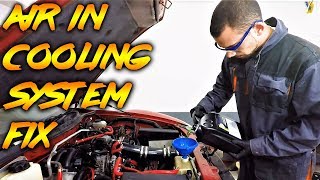
Est. part cost: $5-$30 - Air Pocket in the Cooling System ⚪ Low Probability This typically occurs after a coolant flush or other cooling system service if the system is not properly 'burped' to remove all air. The RX-8 is known to be tricky to bleed. 🎬 Watch: Step-by-step Mazda RX-8 cooling system air bleed process An air pocket trapped at the sensor can cause erratic readings and genuine overheating.
How to confirm: If the code appeared immediately after cooling system work, this is a strong possibility. You may hear a gurgling or sloshing sound from the heater core area. The engine may show signs of actual overheating while the gauge reads erratically.
Typical fix: Properly bleed the cooling system. The official Mazda procedure involves elevating the front of the vehicle and temporarily removing a coolant hose from the throttle body until coolant flows out, indicating air has been purged. Using a spill-proof funnel is highly recommended by owners to make the process cleaner and more effective.
Est. part cost: $0 (if DIY)
Rare But Worth Checking
- Genuine Engine Overheating: While a faulty sensor is the usual cause of P0117, a severe and legitimate overheating event (from a stuck thermostat, failing water pump, or major leak) can sometimes cause the sensor's reading to go out of range, triggering the code. A user on RX8Club.com reported a P0117 along with detonation and smoke from the dipstick tube after a severe overheat.
- Faulty Powertrain Control Module (PCM): This is extremely rare. The PCM itself can fail, but it should only be considered after all other possibilities (sensor, wiring, and cooling system health) have been exhaustively ruled out. A failed PCM might also present with multiple other unrelated codes.
Diagnosis Steps
- Connect an OBD-II scanner. Confirm P0117 is present and check for any other codes. Note the Freeze Frame data, which shows engine conditions when the code was set.
- View live data for the Engine Coolant Temperature. A P0117 will often correspond to an impossibly high temperature reading (e.g., 250°F+ or 120°C+) even on a cold engine.
- Turn the engine off and let it cool completely. Locate the ECT sensor on the water pump housing, below the alternator on the passenger side of the engine.
- Inspect the sensor's connector and wiring harness. Look for green corrosion, frayed or melted wires, or loose pins. A user on RX8Club.com found a chewed wire to be the cause.
- If wiring looks good, disconnect the sensor. Turn the ignition to 'ON' (engine off) and check the live data again. The code should change to P0118 (Circuit High) and the temperature should read a default low value like -40°F/C. If it does, the wiring and PCM are likely okay and the sensor itself has failed internally.
- To be certain, test the sensor. Remove it from the engine (a deep 19mm socket is often needed). Use a multimeter set to Ohms. At room temperature (68°F/20°C), resistance should be 2,000-3,000 Ohms. Place the sensor tip in hot water and verify the resistance drops smoothly as temperature increases. A failed sensor will often show very low or zero resistance.
- If the sensor tests good but the code persists, check the wiring more thoroughly. Check for ~5V reference on one pin of the connector and a good ground on the other with the key on.
- If the code appeared after a coolant service, assume an air pocket is the cause. Perform a thorough cooling system bleed procedure.
Parts You'll Likely Need
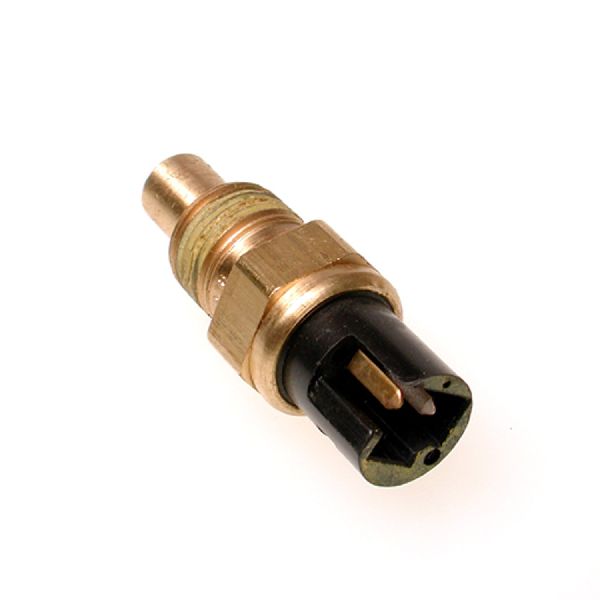
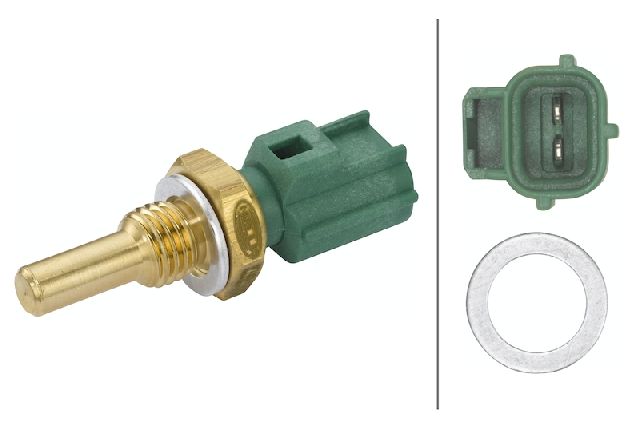
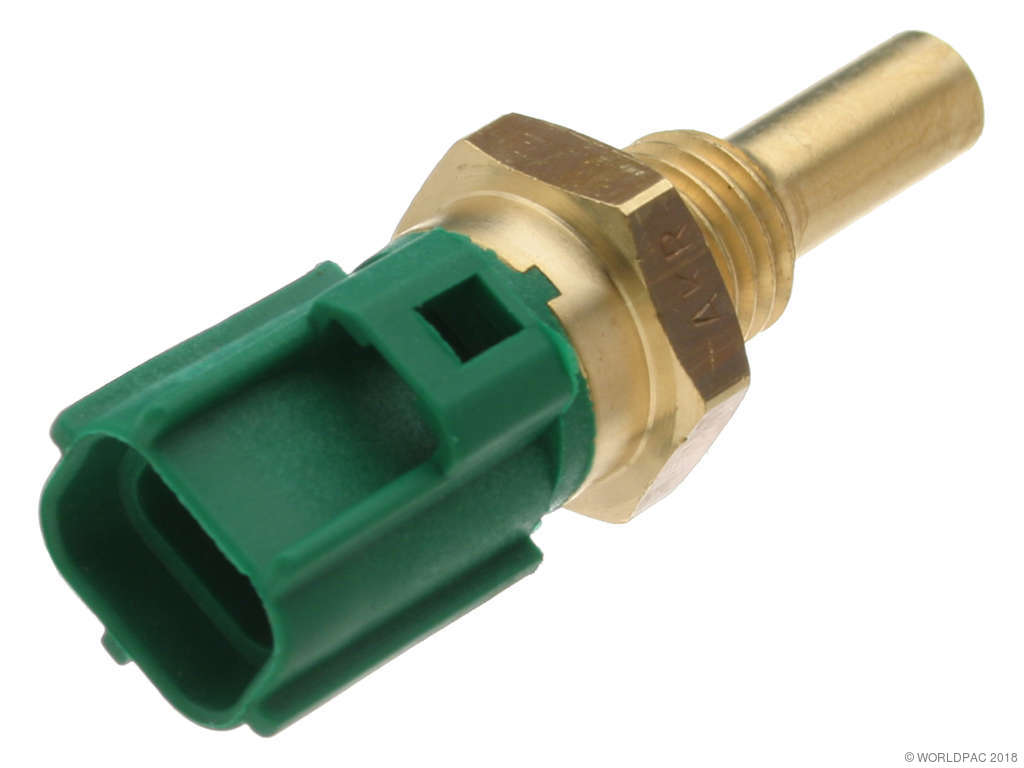
- Engine Coolant Temperature Sensor
(OEM #B593-18-840A)— This sensor is the most frequent cause of a P0117 code due to internal failure (short circuit).
Trusted brands: Mazda (OEM), Denso, Beck/Arnley, NGK/NTK
OEM price range: $50-$80
Aftermarket price range: $20-$60
Related Codes That Often Appear With This One
- P0118 — P0118 (ECT Circuit High Input) is the companion code. If you disconnect the sensor and P0117 is replaced by P0118, it strongly suggests the sensor itself is faulty (internally shorted), not the wiring.
Technical Service Bulletins (TSBs) & Recalls
- E001/06: 'Engine Coolant Replacement Caution - Air-Bleeding' - A Mazda M-Tip bulletin emphasizing the importance of the correct air-bleeding procedure after any coolant service to prevent issues.
- R008/09A: 'Coolant Warning Light Comes ON - UPDATE' - While not for P0117 directly, this TSB addresses issues with the cooling
Platform-Specific Known Issues
- The stock dashboard temperature gauge is not linear and is considered unreliable for monitoring engine health; it may not show an overheating condition until it's too late. Trusting the gauge can lead to a false sense of security.
- Air pockets are a common and difficult issue after coolant changes on the RX-8. An air bubble at the sensor can cause it to read incorrectly and trigger this code. The official Mazda bleed procedure is specific and should be followed closely.
- The plastic connectors in the engine bay, including the one for the ECT sensor, become very brittle over time due to the high heat output of the rotary engine, making them easy to break during maintenance.
Mechanic-Grade Diagnostic Values
- ECT Sensor Signal Voltage at PCM — expected: 1.0-1.5V at idle, dropping smoothly as engine warms.. Failure: Voltage below 0.20V indicates a short circuit and will trigger P0117.
- ECT Sensor Resistance (Cold) — expected: 2.0 kΩ to 3.0 kΩ at 68°F (20°C).. Failure: Very low or near-zero resistance indicates an internal short in the sensor.
- ECT Sensor Resistance (Hot) — expected: Resistance should decrease smoothly as the sensor is heated (e.g., with a heat gun or in hot water).. Failure: No change or erratic jumps in resistance indicates a faulty sensor.
- ECT Connector Reference Voltage — expected: ~5V on one pin with the sensor unplugged and key on, engine off.. Failure: No voltage suggests a wiring issue from the PCM or a PCM fault.
Scan Tool Commands That Help
- Mazda WDS (or equivalent): Retrieve Freeze Frame PID Data — To see the exact engine conditions (coolant temp, RPM, speed, etc.) at the moment the P0117 code was triggered, which can help differentiate between a cold start failure and a genuine overheating event.
- Mazda WDS (or equivalent): Retrieve Pending Trouble Codes — To check if the fault was detected on the first drive cycle but hasn't yet matured into a stored, MIL-on code. This can help catch intermittent issues.
Wiring & Ground Locations
- PCM Ground Points — Multiple ground points for the ECU & EPS are located on the left side of the engine bay, near the firewall.. A poor ground connection for the PCM can cause incorrect sensor readings, including the ECT sensor, leading to false codes. Cleaning these grounds is a valid diagnostic step if the sensor and wiring test good.
- Main Engine/Harness Grounds — Key grounds are on the lower intake manifold to the chassis, on the crossmember under the airbox/battery, and from the main harness to the chassis on the passenger side near the strut mount and washer bottle.. The ECT sensor's signal return (ground) path relies on these main engine and chassis grounds. Corrosion or looseness at these points can create voltage offsets and trigger circuit codes like P0117.
- ECT Sensor Connector — On the water pump housing, below the alternator. It is a 2-pin green connector.. This is the primary point of failure for wiring issues. The connector itself can crack, and the pins can corrode. The signal wire (to PCM terminal 38) and the ground reference wire terminate here.
Real Owner Repair Stories
- RX8Club.com user (Mazda RX-8 (year not specified)) — P0117 code, genuine overheating, detonation heard, and white smoke coming from the oil dipstick tube.
❌ Tried (didn't work) Initial focus was on the code itself, assuming a sensor failure.
✅ What actually fixed it The P0117 was a symptom of a severe underlying overheating problem, likely caused by an air pocket or other cooling system failure, which led to catastrophic engine issues. This highlights that while P0117 is usually the cause, it can sometimes be the result of a real overheat.
OEM Part Supersession History
b59318840→B593-18-840A— Standard part number update/revision.
Heads up: The parts are interchangeable. 'B593-18-840A' is the current and most common part number to find.
Model Year Variations Within This Range
- 2009-2011 (Series 2): The Series 2 RX-8 features a completely new PCM design that includes an internal temperature sensor. If the ECU itself gets too hot after engine shutdown, it can trigger the cooling fans to run. While this doesn't directly change the P0117 diagnosis, it's a notable difference in the cooling control logic.
- 2009-2011 (Series 2): Series 2 models have revised radiator fan motors and a 3-speed fan control system (Low, Middle, High) compared to the 2-speed system on the Series 1, allowing for more precise cooling control.
Diagnostic Flowchart
Other Known Issues on This Vehicle
Issues unrelated to this code that are worth knowing about as an owner of this generation:
- Apex Seal Wear / Compression Loss 🔴 High — A defining issue for the Renesis engine. Can occur as early as 30,000 miles but is highly dependent on maintenance, oil levels, and driving habits. Premixing 2-stroke oil with fuel is a common owner practice to improve lubrication.
- Ignition Coil Failure 🟠 Medium — Coils are considered a frequent wear item, often needing replacement every 30,000-50,000 miles. Failing coils cause misfires, which can quickly destroy the catalytic converter and contribute to engine damage. (Ref: E001/07: Ignition Coil Inspection- UPDATE)
- Engine Flooding 🟡 Low — Common if the car is started and then shut off before reaching operating temperature. The excess fuel washes oil from the rotor housings, causing a temporary loss of compression. There is a specific 'de-flooding' procedure owners must learn.
- Starter Motor Failure / Slow Cranking 🟠 Medium — The original starter motor on early models (2004-2005) was weak and prone to failure, exacerbating hot-start issues. An upgraded, faster starter was introduced on later models and is a common retrofit. (Ref: E011/07: Starter Motor Insulator Established)
- Catalytic Converter Clogging/Failure 🔴 High — Often a secondary failure caused by failing ignition coils leading to unburnt fuel overheating and melting the catalyst material. A clogged cat creates excessive backpressure, which can cause rapid engine failure.
- Coolant Level Sensor Failure 🟡 Low — The float sensor inside the coolant overflow bottle frequently fails, causing the coolant warning light to illuminate on the dashboard even when the coolant level is correct. (Ref: R008/09A: Coolant Warning Light Comes ON - UPDATE)
Used vs. New Parts: Buying Guide for This Vehicle
When a used part is the smart pick: For a low-cost, critical electronic sensor like the ECT, buying new is almost always the best choice. A used sensor offers no significant cost savings and carries a high risk of being near the end of its service life. A used connector pigtail from a junkyard is a viable option if only the connector is damaged, provided the donor wiring is in good condition.
Donor-vehicle mileage cap: roughly under 40000 miles for the part to have meaningful remaining life.
What to inspect on the donor part:
- For a connector pigtail, inspect for any cracks in the plastic.
- Ensure the locking tab is intact and clicks firmly.
- Check for any signs of green or white corrosion on the metal pins.
- Ensure the attached wires are flexible and not brittle or cracked.
OEM-only on this vehicle (don't cheap out):
- While not strictly OEM-only, using a known, quality brand for the ECT sensor is highly recommended due to the Renesis engine's sensitivity to overheating.
Aftermarket brands forum-validated for this vehicle:
- NTK
- Delphi
- Beck/Arnley
- Standard Motor Products (SMP)
Brands owners have reported issues with on this vehicle:
- Unbranded, low-cost sensors from online marketplaces are reported by some owners to have inaccurate readings, which can negatively affect performance and fuel economy even if they clear the code.
Real Owner Stories
Aggregated from forums and TSBs cited above. Mileages and costs reflect what owners reported in those sources.
2004-2008 Mazda RX-8 13B-MSP
Symptoms: Experienced a P0117 CEL and severe overheating issues immediately after having the coolant changed at a quick lube shop.
What fixed it: Properly bleeding the cooling system using the official Mazda procedure to remove trapped air pockets.
Source hint: RX8Club.com - 'p0117 CEL and overheating issues?' (https://www.rx8club.com/series-i-tech-garage-22/p0117-cel-overheating-issues-175315/)
2004 Mazda RX-8 13B-MSP
Symptoms: The Engine Coolant Temperature sensor was providing erratic data to the PCM.
What fixed it: Found a chewed wire in the sensor's wiring harness.
Source hint: RX8Club.com - 'RX-8 Symptoms and Causes' (https://www.rx8club.com/series-i-tech-garage-22/rx-8-symptoms-causes-249396/)
Related OBD-II Codes
Frequently Asked Questions
Why does my RX-8 temperature gauge stay in the middle even when the OBD-II scanner shows a P0117 fault?
I just did a coolant flush and now I have a P0117 code. Is my sensor broken?
Does Mazda TSB E001/06 apply to my P0117 issue?
Where is the ECT sensor located on the Renesis 1.3L engine?
Can a bad ECT sensor cause my RX-8 to have trouble starting when the engine is hot?
Why are the cooling fans on my 2005 RX-8 running constantly even when I first start the car?
Helpful Videos
![How to Fix P0117 Engine Code in 3 Minutes [2 DIY Methods / Only $7.43]](https://img.youtube.com/vi/0PE930ETa4Y/mqdefault.jpg)
We Have This Part in Stock


The information in this article is provided for general reference and educational purposes only. Vehicle specifications, procedures, and part compatibility can vary by production date, trim level, and region. Always consult your vehicle's factory service manual and verify part numbers before purchasing or performing repairs. Safety-critical components such as airbags, seat belts, and braking systems should be installed by a qualified professional.
- Mazda RX-8:
- 🎬 Helpful Videos
- 🛍️ Shop This Part
- What's Unique About the 2004-2011 Mazda RX-8
- Symptoms You May Notice
- Most Likely Causes
- Rare But Worth Checking
- Diagnosis Steps
- Parts You'll Likely Need
- Related Codes That Often Appear With This One
- Technical Service Bulletins (TSBs) & Recalls
- Platform-Specific Known Issues
- Mechanic-Grade Diagnostic Values
- Scan Tool Commands That Help
- Wiring & Ground Locations
- Real Owner Repair Stories
- OEM Part Supersession History
- Model Year Variations Within This Range
- Diagnostic Flowchart
- Other Known Issues on This Vehicle
- Used vs. New Parts: Buying Guide for This Vehicle
- Real Owner Stories
- 2004-2008 Mazda RX-8 13B-MSP
- 2004 Mazda RX-8 13B-MSP
- Related OBD-II Codes
- Frequently Asked Questions
- 🎟️ Get 5% Off