

P0117 on 2001-2006 Audi A4 3.0L V6: Engine Coolant Temperature Sensor Causes and Fixes
On a 2001-2006 Audi A4 with the 3.0L V6, code P0117 is almost always caused by a failed Engine Coolant Temperature (ECT) sensor. The code indicates a 'low circuit' input, which the ECU interprets as an extremely high temperature, leading to issues like constant cooling fan operation and hard starting. The sensor is difficult to access at the rear of the engine against the firewall, making replacement more labor-intensive. Expect to pay $20-$50 for an OEM-quality sensor and 1.5-2.5 hours of labor
- P0117 on this car almost always means you need a new Engine Coolant Temperature (ECT) sensor.
- The main difficulty of this repair is the sensor's location at the back of the engine against the firewall.
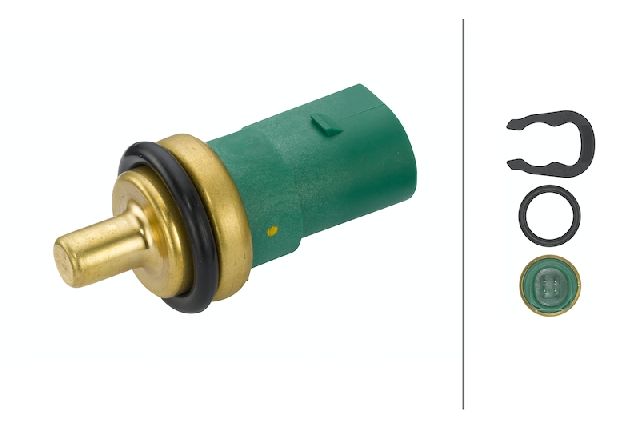
- Always replace the sensor, O-ring, and retaining clip together to prevent leaks and ensure a secure fit.
- Symptoms like cooling fans running constantly or a hard-starting engine are classic signs of this sensor failing on an Audi.
- Due to the difficult access, a DIY repair is challenging and may take several hours. A professional repair will have significant labor costs.
What's Unique About the 2001-2006 Audi A4
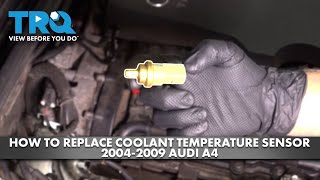
The key challenge for this code on the Audi A4 with the 3.0L V6 (AVK or BGN engine) is the location of the Engine Coolant Temperature (ECT) sensor, designated as G62. Unlike many other engines where the sensor is easily accessible, on this V6 it is buried at the back of the engine against the firewall, underneath the main intake air duct. 🎬 Watch: This walkthrough shows how to access the sensor on the A4. To access it, a technician must remove the plastic engine covers and the large plastic intake pipe that runs from the mass air flow sensor to the throttle body. This significantly increases the difficulty and labor time for what is otherwise a simple part replacement, making a DIY repair challenging for novices due to the tight space and component removal required.
Symptoms You May Notice
- Check Engine Light is on
- Temperature gauge on the dashboard behaves erratically, often immediately pegging to maximum (H) even on a cold start.
- Cooling fans run constantly at high speed, even when the engine is cold.
- Engine is hard to start, especially when warm, due to the ECM injecting a lean fuel mixture based on the false high temp reading.
- Reduced fuel economy.
- Black smoke from the exhaust due to a rich fuel mixture (less common, but possible if the ECM defaults to a rich map).
- Rough idle or poor engine performance, particularly at low RPM.
- Replacing the thermostat first. While a thermostat can cause cooling system issues, the specific 'Circuit Low' definition of P0117 points directly to an electrical fault 🎬 See this guide for a breakdown of P0117 causes and fixes. with the sensor or its wiring, making the sensor itself the most likely culprit.
Most Likely Causes
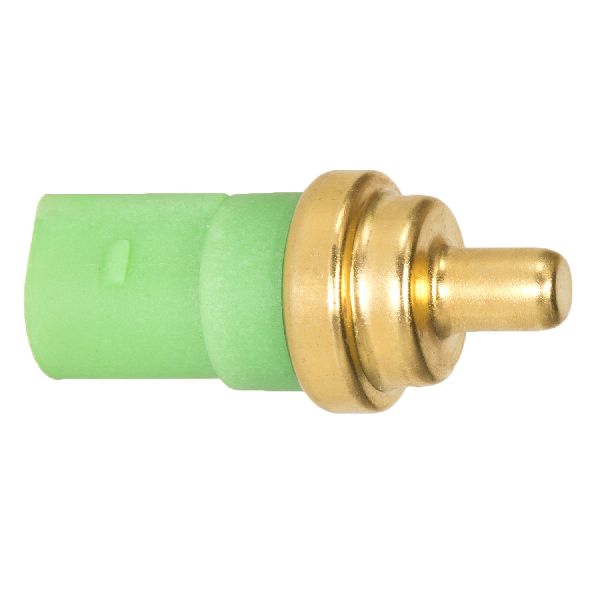
- Failed Engine Coolant Temperature (ECT) Sensor (G62) 🔴 High Probability The ECT sensor is a very common failure item on many VW/Audi vehicles of this era. It can fail electronically, sending an incorrect signal (shorting internally), or physically, by developing a coolant leak around its O-ring. The original black sensors were known to be less reliable than the later revised green sensors.
How to confirm: Use a scan tool to monitor live data for the ECT sensor. If it shows a static, extreme temperature (e.g., -40°F or a value over 280°F) that doesn't change as the engine warms up, the sensor is bad. A P0117 code specifically points to a reading that is too low (interpreted as too hot), so you'll likely see a fixed high temp like 140°C. You can also test the sensor's internal resistance with a multimeter; for example, at 30°C (86°F), it should be between 1500-2000 Ohms, and at 80°C (176°F), it should be 275-375 Ohms.
Typical fix: Replace the ECT sensor, its O-ring, and the retaining clip. Given the difficult access, it's crucial to replace all three components at once to avoid repeat labor.
Est. part cost: $20-$50 - Damaged Wiring or Connector 🟡 Medium Probability The wiring harness is exposed to significant heat at the back of the engine, which can make wires and the connector brittle over time. Coolant can also leak from a faulty sensor and wick into the connector, causing corrosion and a short circuit to ground, which directly causes a P0117.
How to confirm: Visually inspect the ECT sensor connector and nearby wiring for signs of green corrosion, brittleness, or damage. Disconnect the sensor and check for a short to ground on the signal wire using a multimeter. Wiggle the harness while testing to check for intermittent shorts.
Typical fix: If the connector is corroded or damaged, it will need to be replaced with a new pigtail connector (e.g., part number 1J0973704 for a 4-pin connector). Damaged sections of wire should be repaired with heat-shrink butt connectors.
Est. part cost: $15-$30 - Low Engine Coolant or Air in the System ⚪ Low Probability If the coolant level is too low, the sensor may be exposed to an air pocket instead of coolant, leading to inaccurate readings. This can happen due to a leak anywhere in the system, which is common on aging vehicles.
How to confirm: Check the coolant level in the expansion tank when the engine is cold. If it's low, top it off and inspect the system for leaks. If the system was recently serviced, it may need to be properly bled to remove trapped air. A P0117 is less likely from low coolant than a performance code (P0116), but it's a crucial basic check.
Typical fix: Top off the coolant with the correct type (G12/G12+ for this model) and bleed the system. Find and repair any leaks.
Est. part cost: $20-$40 for coolant
Rare But Worth Checking
- Faulty Thermostat: A thermostat stuck open can cause P0116 (ECT Sensor Performance) more often than P0117, but if it contributes to erratic temperature behavior, it could be a factor. It's usually diagnosed after replacing the ECT sensor doesn't solve the issue.
- Faulty Engine Control Module (ECM): This is extremely rare. The ECM should only be considered a potential cause after all other possibilities, including the sensor and its entire wiring circuit, have been thoroughly tested and ruled out.
Diagnosis Steps
- Read the fault code with an OBD-II scanner to confirm P0117 is present.
- Use the scanner's live data function to view the Engine Coolant Temperature reading. If it shows a static, illogical value (e.g., a fixed 140°C or 284°F) even on a cold engine, the sensor or its circuit is faulty.
- As a cross-check on a cold engine, compare the ECT reading to the Intake Air Temperature (IAT) reading. They should be very close. A large discrepancy points to the ECT circuit.
- Check the coolant level in the expansion tank (when the engine is cold) to ensure it is at the proper level.
- Locate the ECT sensor (G62) at the rear of the 3.0L V6 engine, near the firewall, under the main intake air tube.
- Visually inspect the sensor's electrical connector and wiring for any signs of green corrosion, damage, or loose connections. Pay close attention to coolant wicking into the connector.
- If wiring looks good, the next step is to replace the ECT sensor. Due to its difficult location, testing the sensor in place is less practical than replacing it as the primary suspect.
- When replacing, ensure you also replace the rubber O-ring and the plastic retaining clip. These are often brittle and fail.
- After replacement, clear the fault codes and monitor the live data to ensure the new sensor is reading correctly as the engine warms up.
- Top off any lost coolant with the appropriate G12/G12+ type coolant and bleed the system if necessary.
Parts You'll Likely Need
- Engine Coolant Temperature Sensor
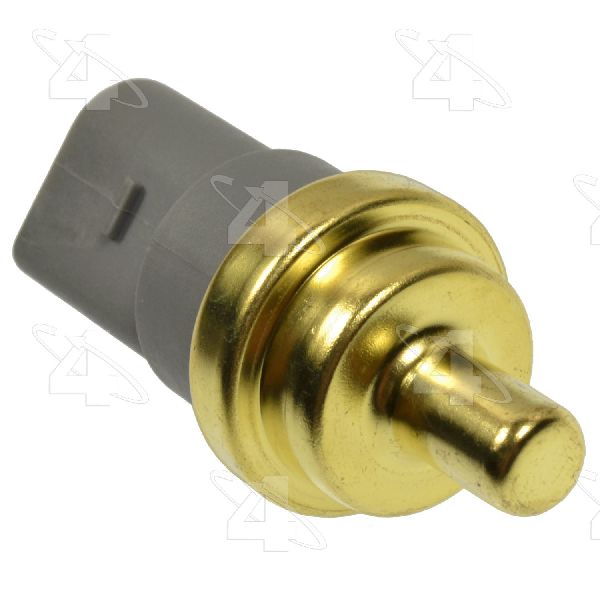
(OEM #059919501A)— This 4-pin green sensor is the most common failure point for code P0117. It provides temperature readings to both the ECM and the dashboard gauge. This part number supersedes the older, less reliable black sensor and part number 078919501C.
Trusted brands: Genuine Audi/VW, Hella, VEMO, Elth
OEM price range: $35-$55
Aftermarket price range: $15-$35 - ECT Sensor O-Ring
(OEM #N90316802)— The O-ring provides the seal. It becomes brittle with age and should always be replaced with the sensor to prevent leaks. It is often included with a new sensor but should be verified.
Trusted brands: Genuine Audi
OEM price range: $2-$5
Aftermarket price range: $1-$3 - ECT Sensor Retaining Clip
(OEM #032121142)— This plastic clip holds the sensor in place. It is notoriously brittle and often breaks during removal, especially after years of heat cycles. It is crucial to have a new one on hand.
Trusted brands: Genuine Audi
OEM price range: $3-$8
Aftermarket price range: $2-$5 - ECT Sensor Connector Pigtail
(OEM #1J0973704 (Verify Pin Count))— If the connector housing is cracked or the terminals are corroded from a coolant leak, the connector itself must be replaced. The 3.0L V6 typically uses a 4-pin sensor, so a 4-pin connector is required.
Trusted brands: Genuine Audi, Standard Motor Products
OEM price range: $25-$40
Aftermarket price range: $15-$25
Related Codes That Often Appear With This One
- P0118 — P0118 is 'ECT Circuit High Input'. It's common to see this code if the wiring is intermittently shorting and opening, causing the voltage signal to swing between extremes.
- P0116 — P0116 is 'ECT Circuit Range/Performance'. This code may appear alongside P0117 if the ECM sees the sensor's readings as irrational over time (e.g., not warming up as expected), in addition to the circuit being low.
Platform-Specific Known Issues
- The primary vehicle-specific issue is the difficult access to the ECT sensor on the 3.0L V6 engine, requiring removal of the main intake air duct between the MAF and throttle body.
- A real-world owner experience highlights the symptoms and fix: An owner with a P0117 code experienced a rough warm idle and hard starting when warm. Live data showed one coolant temp reading at a static 260°F while the other reading was normal. Replacing the sensor resolved both the code and the drivability issues.
Mechanic-Grade Diagnostic Values
- ECT Sensor (G62) Resistance — expected: At 30°C (86°F): 1500-2000 Ω. At 80°C (176°F): 275-375 Ω.. Failure: Readings significantly outside these ranges, or an open/short circuit, indicate a failed sensor.
- VCDS/VAG-COM Live Data Block (Cold Engine) — expected: In Measuring Block Group 004, Display Zone 3 (Coolant Temp) should be very close to the Intake Air Temp reading.. Failure: A large difference between ECT and IAT on a cold engine points to a fault in the G62 sensor circuit.
- ECT Sensor Signal Wire Voltage (Sensor Unplugged) — expected: With the key on and sensor unplugged, the signal wire at the connector should show a reference voltage from the ECU (typically ~5V).. Failure: 0V on the signal wire could indicate a short to ground in the harness; no voltage on the supply wire indicates a harness or ECU issue.
Scan Tool Commands That Help
- VCDS (VAG-COM): Read Measuring Value Block (MVB) - Group 004 — Use this to view the live coolant temperature reading from the G62 sensor as seen by the ECU. This is the primary method to confirm if the sensor is reporting a logical value or a static, incorrect temperature.
Wiring & Ground Locations
- G62 Sensor Connector — At the rear of the 3.0L V6 engine, near the firewall, under the main intake air tube.. This is the 4-pin connector for the sensor. A P0117 is often caused by coolant leaking into this connector and corroding the pins, or the wiring becoming brittle from heat and shorting to ground.
- Main Engine-to-Chassis Ground — On the passenger side front frame rail, located behind the secondary air pump and connecting to the engine mount area.. A poor main engine ground can cause floating voltages and erratic sensor readings across the entire engine management system. While not a direct cause, it can create electrical noise that may contribute to a P0117 code if the sensor circuit is marginal.
- ECU Ground Connection — Ground point G12 is located at the center of the firewall and grounds the ECM.. This is the reference ground for the Engine Control Module. Any corrosion or looseness at this point can affect all sensor readings, including the ECT sensor.
Real Owner Repair Stories
- JustAnswer user (2004 Audi A4 3.0 V6) — P0117 code present, temperature gauge reads a constant 143°C even when cold, cooling fans not activating.
❌ Tried (didn't work) Replaced the coolant temperature sensor with a new, genuine Audi part.
✅ What actually fixed it The problem persisted after sensor replacement, indicating the fault was not the sensor itself but a wiring problem. The expert advised checking the wiring harness for a short to ground or corrosion in the connectors as the next step. - AudiWorld Forums user (2003 Audi A4 B6 V6) — Unspecified symptoms leading to a coolant sensor replacement.
✅ What actually fixed it The user successfully replaced the G62 green sensor located at the back of the V6 engine. The post details the difficult access, requiring removal of the main intake snorkel and unbolting a wire harness platform to reach the sensor. The fix cost was only the price of the sensor ($27) and coolant, avoiding a $500+ quote from a dealer.
OEM Part Supersession History
078919501C (and others)→059919501A— The original black (and sometimes blue) 4-pin sensors were known for a high failure rate. The green sensor (059919501A) is the revised, more reliable part.
Heads up: If the vehicle still has a black or blue sensor, it should be replaced with the green version as a preventative measure, even if it hasn't failed yet.
Model Year Variations Within This Range
- 2002-2004 vs 2005: The engine code for the 3.0L V6 changed from AVK to BGN for the 2005 model year. While the fundamental architecture and the P0117 fault remain the same, there may be minor differences in emissions components or ECU software. One forum user noted a potential piston change associated with the new engine code.
Diagnostic Flowchart
Used vs. New Parts: Buying Guide for This Vehicle
When a used part is the smart pick: For this repair, a used part is generally not recommended for the sensor itself. However, sourcing a used wiring connector pigtail from a junkyard vehicle can be a viable option if a new one is not readily available or if you need a longer section of the original harness.
Donor-vehicle mileage cap: roughly under 100000 miles for the part to have meaningful remaining life.
What to inspect on the donor part:
- For a connector pigtail, inspect for any signs of green corrosion on the pins.
- Check that the plastic connector housing is not cracked or brittle.
- Ensure the locking tab on the connector is intact and functional.
- Verify the wires have at least 6 inches of flexible, undamaged insulation.
OEM-only on this vehicle (don't cheap out):
- Engine Coolant Temperature Sensor (G62)
Aftermarket brands forum-validated for this vehicle:
- Hella
- VEMO
- Elth
- Delphi
Brands owners have reported issues with on this vehicle:
- Unnamed, no-brand 'white box' parts from online marketplaces should be avoided. For critical sensors on German vehicles, sticking to OEM or known OEM-supplier brands prevents compatibility issues with the ECU.
Real Owner Stories
Aggregated from forums and TSBs cited above. Mileages and costs reflect what owners reported in those sources.
2001-2006 Audi A4 3.0L V6
Symptoms: The owner experienced a rough idle and difficulty starting the engine, but only when it was warm. A scan tool's live data showed one of the coolant temperature readings was stuck at a static 260°F while another reading was normal.
What fixed it: Replacing the faulty Engine Coolant Temperature (ECT) sensor resolved the code, the rough warm idle, and the hard starting issue.
Source hint: AudiWorld Forums: P0117 Engine coolant temperature low input
Related OBD-II Codes
Frequently Asked Questions
Where is the Engine Coolant Temperature (ECT) sensor located on my 3.0L V6 A4? I can't seem to find it.
My temperature gauge shot up to maximum (H) on a cold start. Is my engine actually overheating?
I'm planning to replace the ECT sensor for this P0117 code. Is there anything else I should replace at the same time?
I see black and green versions of the ECT sensor for sale. Does it matter which one I buy for my Audi?
My 2004 A4 3.0L is very hard to start when the engine is warm. Could the P0117 code be causing this?
What type of coolant do I need to use to top off the system after replacing the sensor?
I have a 2003 Audi A6 with the 3.0L V6 engine. Is the P0117 problem the same on my car?
Helpful Videos

We Have This Part in Stock



The information in this article is provided for general reference and educational purposes only. Vehicle specifications, procedures, and part compatibility can vary by production date, trim level, and region. Always consult your vehicle's factory service manual and verify part numbers before purchasing or performing repairs. Safety-critical components such as airbags, seat belts, and braking systems should be installed by a qualified professional.
- Audi A4:
- 🎬 Helpful Videos
- 🛍️ Shop This Part
- What's Unique About the 2001-2006 Audi A4
- Symptoms You May Notice
- Most Likely Causes
- Rare But Worth Checking
- Diagnosis Steps
- Parts You'll Likely Need
- Related Codes That Often Appear With This One
- Platform-Specific Known Issues
- Mechanic-Grade Diagnostic Values
- Scan Tool Commands That Help
- Wiring & Ground Locations
- Real Owner Repair Stories
- OEM Part Supersession History
- Model Year Variations Within This Range
- Diagnostic Flowchart
- Used vs. New Parts: Buying Guide for This Vehicle
- Real Owner Stories
- 2001-2006 Audi A4 3.0L V6
- Related OBD-II Codes
- Frequently Asked Questions
- 🎟️ Get 5% Off