

P0116 on 2017-2019 Volkswagen Passat: Engine Coolant Temperature Sensor Issues & Fixes
For a 2017-2019 VW Passat, code P0116 almost always points to a failing Engine Coolant Temperature (ECT) sensor, also known as the G62 sensor. It's an inexpensive part (around $15-$40) and a common DIY repair that can be done in under an hour. The primary symptom is often the radiator fan running at full speed even when the engine is cold.
- P0116 on a 2017-2019 Passat is most often caused by a bad Engine Coolant Temperature (ECT) sensor.
- Key symptoms include a wildly fluctuating temperature gauge and cooling fans that won't turn off.
- This is a DIY-friendly repair; the sensor is inexpensive and typically held in by a simple clip.
- Always check the coolant level first, as low coolant can also cause this code.
- If a new sensor doesn't fix the problem, investigate the thermostat and sensor wiring.
What's Unique About the 2017-2019 Volkswagen PASSAT
On the 2017-2019 Passat (part of the North American B7 generation), the P0116 code is a very common and well-documented issue. The primary culprit is almost always the ECT sensor itself (VW's G62 sensor), which is known to fail and send erratic signals. While other causes are possible, the high failure rate of this specific sensor on VWs from this era means it should be the first suspect. The provided NHTSA technical service bulletins confirm that P0116 is a known issue that triggers the check engine light on these models, logged by VW for internal tracking. [VIN4APIN20190805, VIN4APIN20190923, VIN4APIN20190617, VIN4APIN20190611]
Diagnostic Flowchart
Tap your situation to follow the diagnostic path that matches what you're seeing on this vehicle.
Symptoms You May Notice
- Check Engine Light is on.
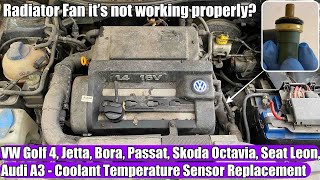
- Radiator cooling fans run constantly at high speed, even when the engine is cold. 🎬 Watch: How to fix a radiator fan that runs constantly.
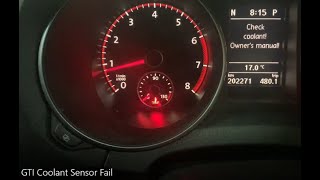
- Temperature gauge on the dashboard behaves erratically (e.g., jumps from cold to hot, drops to zero while driving, or doesn't move at all).
- Reduced fuel economy because the engine runs in a rich 'warm-up' mode.
- Difficulty starting the engine, especially when it's warm (hot-start issue).
- Rough or unstable idle.
- Black smoke from the exhaust due to an overly rich fuel mixture.
- Replacing the thermostat when the issue is the much cheaper and easier-to-replace ECT sensor.
- Replacing the water pump unnecessarily, unless there are clear signs of leaking or other cooling system failures like code P2181.
- Ignoring a low coolant level and just replacing the sensor, which won't fix the root cause of the inaccurate reading.
Most Likely Causes
- Faulty Engine Coolant Temperature (ECT) Sensor 🔴 High Probability The ECT sensor (often referred to by its VW part number G62) is a known high-failure part on many VW/Audi models of this era, leading to 'implausible signals'. The internal thermistor fails, causing erratic resistance values. The original black sensors 🎬 Watch: Diagnosing a faulty G62 sensor and common failure codes. were particularly prone to failure and were often superseded by a more reliable green or blue version.
How to confirm: Use an OBD-II scanner to monitor live data for the coolant temperature. On a cold engine, the ECT reading should be nearly identical to the Intake Air Temperature (IAT). As the engine warms up, the temperature should climb steadily. If it jumps erratically, drops to -40°F, or doesn't move, the sensor is bad. You can also test the sensor's resistance with a multimeter; it should be between 2,000-3,000 ohms at room temperature (~68°F/20°C).
Typical fix: Replace the Engine Coolant Temperature sensor, its O-ring, and the retaining clip. It is a quick job, often accessible from the top of the engine.
Est. part cost: $15-$40 - Low Engine Coolant Level or Air in the System 🟡 Medium Probability The EA888 engine family can be prone to leaks from the thermostat housing or water pump assembly. A low coolant level can expose the sensor to air pockets, causing it to send erratic readings and trigger a P0116 code.
How to confirm: Visually inspect the coolant reservoir to ensure the level is between the 'MIN' and 'MAX' marks when the engine is cold. Check for any visible pink/purple crust (dried G12/G13 coolant) around the water pump/thermostat housing on the front of the engine, radiator hoses, and reservoir.
Typical fix: Top off the coolant with the correct VW G12/G13/G12evo specification. If a leak is found, the leaking component (often the entire water pump and thermostat assembly) must be replaced, and the system must be properly bled to remove air pockets.
Est. part cost: $20-$50 for coolant - Sticking or Faulty Thermostat ⚪ Low Probability If the thermostat is stuck open, the engine will warm up very slowly. The PCM expects the engine to reach operating temperature within a certain time; if it doesn't, it can flag the ECT sensor for a performance issue (P0116) or set a separate code like P2181 (Cooling System Performance).
How to confirm: Monitor the coolant temperature via live data on a scan tool during a drive. If the engine takes an excessively long time (over 15-20 minutes of mixed driving) to reach operating temperature (~190-220°F or ~88-104°C), the thermostat is likely stuck open.
Typical fix: Replace the thermostat and thermostat housing assembly. On the EA888 engine, this is often a single integrated plastic unit combined with the water pump.
Est. part cost: $50-$150 for just the thermostat, or $200-$400 for the entire water pump/thermostat assembly.
Rare But Worth Checking
- Damaged Wiring or Corroded Connector: The wiring harness leading to the ECT sensor can become brittle from heat cycles. A visual inspection for cracked insulation or green corrosion on the connector pins is worthwhile, especially if a new sensor doesn't fix the issue. Wiggling the connector while watching live data can expose a bad connection. VW specifies using only gold-plated terminals for repairs on this connector to ensure a reliable connection.
- Malfunctioning Cooling Grille Actuator (on some models): A user with a 2018 Passat Hybrid reported that a stuck cooling grille actuator caused P0116 by preventing proper airflow management, leading to temperature irregularities. While less common on non-hybrid models, it's a possibility if the vehicle is equipped with active grille shutters.
- Faulty Powertrain Control Module (PCM): In very rare cases, the PCM itself can be the source of the problem, misinterpreting a perfectly good signal from the sensor. This should only be considered after all other possibilities (sensor, wiring, thermostat, coolant level) have been exhaustively ruled out.
Diagnosis Steps
- Read the code with an OBD-II scanner to confirm P0116 is present and check for any other related codes like P2181.
- Check the engine coolant level in the reservoir. Ensure it's at the correct level when the engine is cold. Look for signs of leaks.
- Use the scanner's live data feature to monitor 'Engine Coolant Temperature' and 'Intake Air Temperature'.
- With a cold engine (left overnight), start the car and compare the two temperature readings. They should be within a few degrees of each other. If the ECT reading is wildly different (e.g., -40°F or 250°F), the sensor or its wiring is faulty.
- Watch the ECT reading as the engine warms up. It should climb steadily without any sudden jumps or drops. If it behaves erratically, the ECT sensor is the most likely cause.
- If the temperature rises very slowly and struggles to reach operating temperature (~190-220°F or ~88-104°C), suspect a thermostat that is stuck open.
- If the sensor reading seems plausible, visually inspect the sensor's wiring and connector for any signs of damage, corrosion, or loose connections. Wiggle the harness to see if the live data reading fluctuates.
- If all else fails, test the sensor directly with a multimeter. At ~68°F (20°C), the resistance should be 2000-3000 Ohms. At operating temperature (~194°F/90°C), it should be 200-300 Ohms.
Parts You'll Likely Need
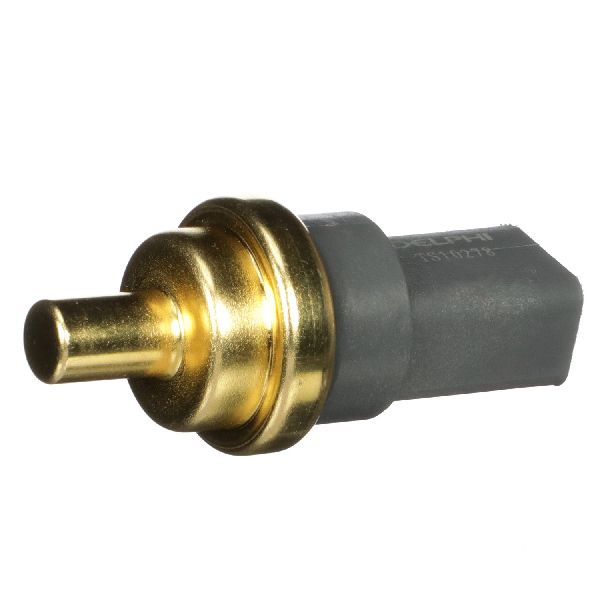
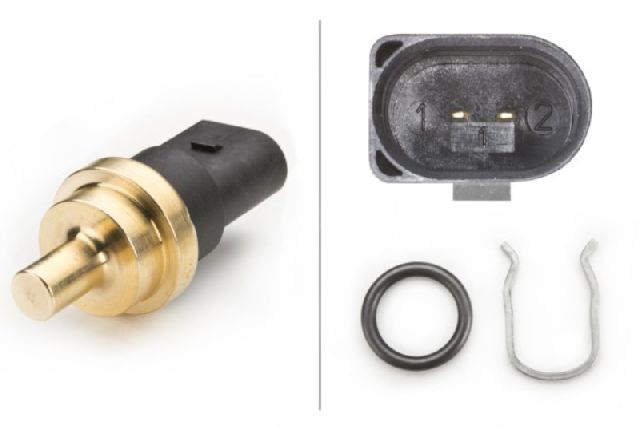
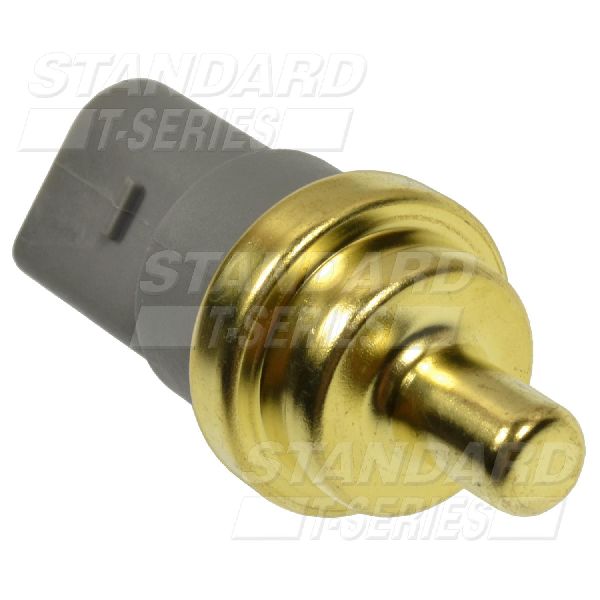
- Engine Coolant Temperature Sensor (ECT)
(OEM #06A919501A, 059919501A)— This is the most common failure part for P0116 on this vehicle. It sends incorrect temperature data to the engine computer. The original black sensors are known to be less reliable than the superseding green or blue versions.
Trusted brands: Bosch, Hella, Febi, Delphi, Genuine VW/Audi
OEM price range: $25-$50
Aftermarket price range: $15-$30 - Engine Coolant Thermostat Assembly
(OEM #06L121111H (or similar, verify by VIN))— Replaced if the engine is warming up too slowly, indicating the thermostat is stuck open. On these engines, it's often part of a larger plastic housing that can also leak.
Trusted brands: Mahle, Wahler, Behr, Genuine VW/Audi
OEM price range: $100-$200
Aftermarket price range: $50-$150 - Retaining Clip and O-Ring
(OEM #N90316802 (O-Ring), 032121142 (Clip))— Always replace the O-ring and plastic retaining clip when replacing the sensor to prevent leaks. The clip often becomes brittle and breaks during removal.
Related Codes That Often Appear With This One
- P2181 - Cooling System Performance: Often indicates a thermostat that is stuck open, causing the engine to warm up too slowly.
- P0117 - Engine Coolant Temperature Sensor Circuit Low Input: Indicates the signal voltage is below the specified range (short to ground).
- P0118 - Engine Coolant Temperature Sensor Circuit High Input: Indicates the signal voltage is above the specified range (open circuit).
Technical Service Bulletins (TSBs) & Recalls
- VIN4APIN20190805: Customer states MIL-on with P0116
- VIN4APIN20190923: Customer states MIL-on with P0116
- VIN4APIN20190617: Customer states MIL-on with P0116
- VIN4APIN20190611: Customer states MIL-on with P0116
- VIN4APIN20190610: Customer states MIL-on with P0116
Platform-Specific Known Issues
- Volkswagen issued several Technical Service Bulletins (TSBs) that list P0116 as a potential customer complaint for the Malfunction Indicator Lamp (MIL) being on, confirming it's a recognized issue for the 2017-2019 Passat. [VIN4APIN20190805, VIN4APIN20190923, VIN4APIN20190617, VIN4APIN20190611, VIN4APIN20190610]
- On the EA888 engine, the ECT sensor (G62) is a very common point of failure. Owners often report that the radiator fans running at maximum speed is the first and most obvious symptom, which is the ECU's failsafe response to an 'implausible' temperature signal.
Mechanic-Grade Diagnostic Values
- ECT Sensor (G62) Resistance vs. Temperature — expected: 30°C (86°F): 1500-2000 Ω; 80°C (176°F): 275-375 Ω; 90°C (194°F): 200-300 Ω.. Failure: Resistance values are significantly outside the expected range for a given temperature, or show an open/short circuit.
- ECT Sensor (G62) Signal Voltage — expected: Approximately 2.0V - 3.0V on a cold engine, dropping to around 0.5V when the engine is fully warmed up.. Failure: Voltage is stuck, erratic, or does not decrease smoothly as the engine warms up.
- ECT Sensor (G62) Circuit Wiring Resistance — expected: Less than 1.5 Ω from the sensor connector pin to the corresponding ECM pin.. Failure: Resistance is higher than 1.5 Ω, indicating a corroded wire or poor connection.
Hidden / Shadow Codes Worth Checking
- 16500: This is the VAG-specific fault code that directly corresponds to the generic OBD-II code P0116, often displayed as 'Engine Coolant Temp. Sensor (G62): Implausible Signal'. (see via VW/Audi specific scan tools like VCDS (VAG-COM) or ODIN will display this code.)
Scan Tool Commands That Help
- VCDS (VAG-COM): Engine -> Measuring Value Blocks -> Group 004 — Use this function to view the live coolant temperature reading from the G62 sensor. Field of Group 004 displays the engine coolant temperature as seen by the ECM. This is critical for comparing the sensor's reading to the actual engine state (cold vs. hot) to diagnose implausible signals.
Wiring & Ground Locations
- G62 Sensor Connector — On the EA888 engine, the G62 sensor is typically located on the thermostat housing on the front-right side (passenger side) of the cylinder head.. This is the primary connection to inspect for corrosion, damage, or looseness. A poor connection here is a common cause of erratic signals.
- Engine Block Ground — A primary engine-to-chassis ground strap is typically located near the engine or transmission mount. Another key ground point is on the cylinder head itself.. The ECT sensor circuit relies on a solid engine ground. A corroded or loose main ground strap can introduce electrical noise and cause a variety of sensor performance codes, including P0116.
- Firewall/Bulkhead Ground Point — There are several ground studs on the firewall/bulkhead in the plenum chamber (under the windshield cowl).. Various engine sensors and the ECM itself may use these ground points. A problem here can affect the reference ground for the entire engine management system.
OEM Part Supersession History
059919501A (and similar black sensors)→06A919501A (typically green or blue)— The older black sensors had a high failure rate. The updated green or blue sensors are considered more durable and reliable.
Heads up: The connectors are physically the same (oval, 2-pin), so they are direct replacements. Ensure you are getting the updated color sensor when purchasing a replacement.
Model Year Variations Within This Range
- 2017 vs 2018-2019: The 2017 Passat primarily used the 1.8T EA888 Gen3 engine. For the 2018 model year, this was replaced by the updated 2.0T EA888 Gen3 'B-Cycle' engine. While both engines are from the same family and share the same fundamental design for the cooling system and G62 sensor, some surrounding components and plumbing may have minor differences. However, the diagnosis and primary fix for P0116 remain identical for both engines.
Helpful Videos
We Have This Part in Stock



The information in this article is provided for general reference and educational purposes only. Vehicle specifications, procedures, and part compatibility can vary by production date, trim level, and region. Always consult your vehicle's factory service manual and verify part numbers before purchasing or performing repairs. Safety-critical components such as airbags, seat belts, and braking systems should be installed by a qualified professional.
- Volkswagen PASSAT:
- 🎬 Helpful Videos
- 🛍️ Shop This Part
- What's Unique About the 2017-2019 Volkswagen PASSAT
- Diagnostic Flowchart
- Symptoms You May Notice
- Most Likely Causes
- Rare But Worth Checking
- Diagnosis Steps
- Parts You'll Likely Need
- Related Codes That Often Appear With This One
- Technical Service Bulletins (TSBs) & Recalls
- Platform-Specific Known Issues
- Mechanic-Grade Diagnostic Values
- Hidden / Shadow Codes Worth Checking
- Scan Tool Commands That Help
- Wiring & Ground Locations
- OEM Part Supersession History
- Model Year Variations Within This Range
- 🎟️ Get 5% Off