

P0116 on 2021 Volkswagen ID.4: Thermal Management System Faults and Fixes
On a 2021 VW ID.4, code P0116 indicates a problem with the thermal management system's coolant temperature sensor. A specific VW Technical Service Bulletin (TSB) points to a faulty High-Voltage Battery Coolant Temperature Sensor (G844) as a common cause. This is not a typical DIY fix due to the high-voltage system. The fault can affect battery performance, protection, and charging speeds.
- P0116 on a 2021 VW ID.4 is a serious fault in the high-voltage battery's thermal management system, not a traditional engine issue.
- The most likely cause is a faulty High-Voltage Battery Coolant Temperature Sensor (G844), an issue documented by VW in a specific TSB.
- This is not a DIY repair due to high-voltage system risks; professional service is required.
- Driving with the fault can lead to reduced charging speed and performance to protect the battery.
What's Unique About the 2021-2021 Volkswagen ID.4
Unlike a gasoline-powered Volkswagen, the P0116 code on an ID.4 points to an issue within the thermal management system for the high-voltage battery, not an internal combustion engine. This system is crucial for battery longevity, charging speed, and power output. A fault here can lead to reduced performance or disabled fast-charging to protect the battery pack. The ID.4 system uses multiple temperature sensors, such as the G712 Drive Motor Temperature Sensor and the G844 HV Battery Coolant Temperature Sensor. Repair involves high-voltage components and specific coolant, making it a job for trained technicians rather than a typical DIY project.
Diagnostic Flowchart
Tap your situation to follow the diagnostic path that matches what you're seeing on this vehicle.
Symptoms You May Notice
- Check Engine Light is illuminated
- Warning messages related to the cooling or thermal management system
- Reduced DC fast charging speed
- Potentially reduced power output, especially in demanding conditions
- Cooling fans may run constantly or not at all
- Inability to precondition the cabin or battery via the app
- Replacing the wrong temperature sensor. The ID.4 has multiple sensors in its thermal management system (e.g., G712, G844); proper diagnosis using a dealer-level tool is key to identifying the correct one as specified in TSBs.
Most Likely Causes
- Faulty Coolant Temperature Sensor (G844) 🔴 High Probability A specific Technical Service Bulletin (TSB 2069331/5) has been issued that identifies an internal malfunction of the 'High-voltage battery coolant temperature sensor -G844-' as a known issue causing this fault. Sensors are common failure points in automotive systems.
How to confirm: A technician will use a diagnostic scan tool (like ODIS) to follow the guided fault finding procedure outlined in TSB 2069331/5. This involves checking the sensor's live data. If the reading is erratic, stuck, or nonsensical (e.g., -40°F), the sensor is faulty.
Typical fix: Replace the faulty G844 coolant temperature sensor and its seal, followed by clearing the fault memory.
Est. part cost: $50-$100 - Low Coolant Level 🟡 Medium Probability Leaks can occur in any cooling system. The ID.4 has multiple cooling loops with many connections. If the coolant level drops to a point where the sensor is exposed to air, it will send an inaccurate reading.
How to confirm: Visually inspect the coolant reservoirs for the thermal management system. The levels should be between the 'min' and 'max' marks. Note: The ID.4 has a complex system, and checking levels should be done according to the owner's manual when the vehicle is cool.
Typical fix: Identify and repair the source of the leak, then refill the system with the correct specification coolant (e.g., VW G12evo or G13) and bleed any air from the system.
Est. part cost: $30-$60 for coolant, plus parts for leak repair. - Wiring or Connector Issue ⚪ Low Probability Vibrations and exposure to the elements can cause damage to wiring harnesses or corrosion in connectors over time, leading to an implausible signal.
How to confirm: Visually inspect the wiring and connector at the temperature sensor for any signs of damage, corrosion, or looseness. A technician can perform a continuity and resistance test on the circuit from the sensor to the control module.
Typical fix: Repair the damaged section of the wiring harness or clean/replace the connector.
Est. part cost: $10-$50 for repair materials.
Rare But Worth Checking
- Control Module Fault: A software glitch or internal failure of one of the vehicle's control modules (such as the Instrument Cluster, which processes sensor data) could incorrectly interpret sensor data. This is rare and should only be considered after all other possibilities have been exhausted.
Diagnosis Steps
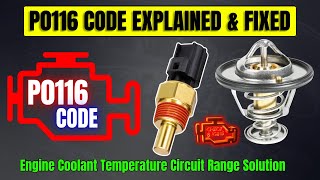
- Connect a compatible OBD-II scanner and verify that P0116 is the primary code. 🎬 Watch: A helpful breakdown of the P0116 code and solutions Note any other codes present.
- For this specific vehicle, it is highly recommended to use a VW-specific tool (like ODIS) and check for Technical Service Bulletins (TSBs). TSB 2069331/5 directly addresses this code.
- Follow the guided fault-finding procedure in the TSB, which will test the G844 sensor.
- If no TSB is followed, check the coolant level in the appropriate reservoir(s) for the battery thermal management system. Ensure the vehicle is cool before opening any caps.
- Use the scan tool to monitor live data from the relevant coolant temperature sensor (G844). Compare the reading on a cold vehicle to the ambient air temperature. They should be very close.
- Observe the sensor data as the vehicle operates (if safe to do so). The temperature should rise smoothly and plausibly. Erratic jumps or a stuck value indicate a problem.
- Locate the suspect temperature sensor. Inspect its electrical connector and nearby wiring for any signs of corrosion, damage, or loose connections.
- After any repair, clear the codes and perform a drive cycle to ensure the fault does not return.
Parts You'll Likely Need
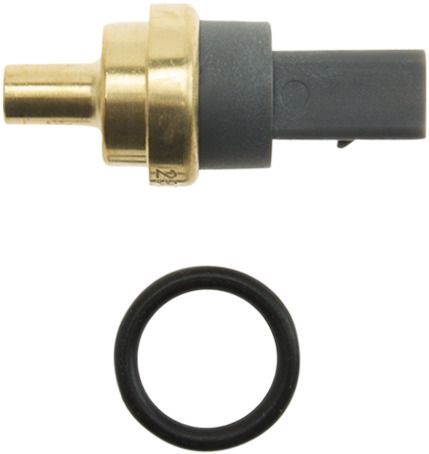
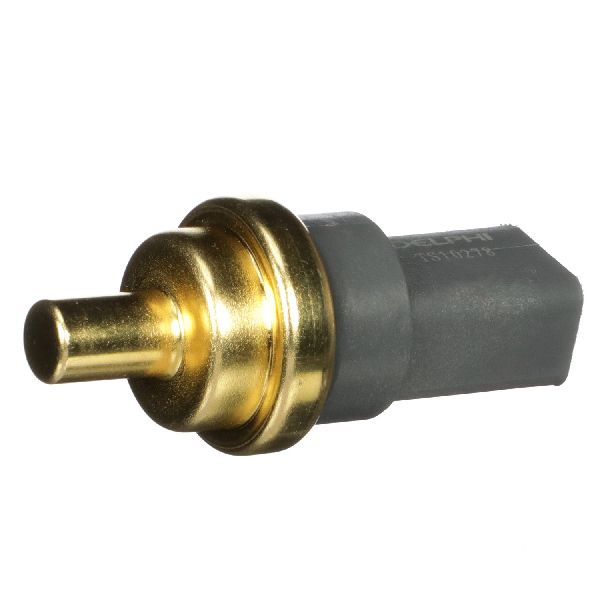
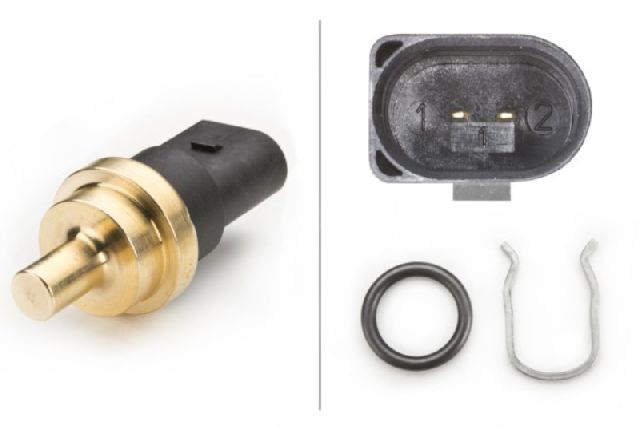
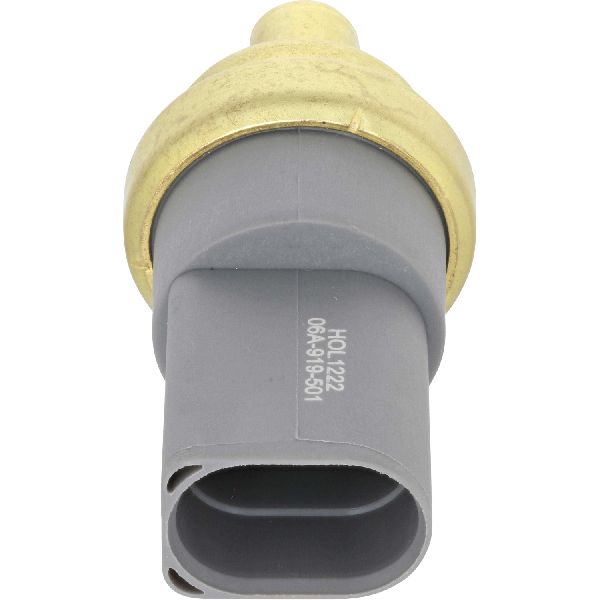
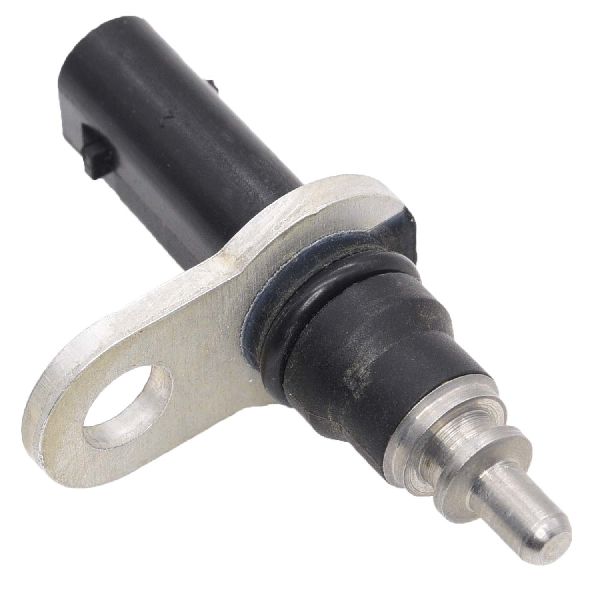
- High-Voltage Battery Coolant Temperature Sensor (G844)
(OEM #1EA919525)— This specific sensor is identified in a VW TSB as the most common cause for the P0116 code on this vehicle due to internal malfunction.
Trusted brands: Genuine Volkswagen
OEM price range: $60-$100
Aftermarket price range: $40-$70
Related Codes That Often Appear With This One
- P0117 — This code means 'Engine Coolant Temperature Sensor 1 Circuit Low,' which indicates a specific type of electrical fault (a short to ground) in the same circuit that P0116 monitors for general performance. It is often listed in the same TSBs.
- P19F7 — This is a manufacturer-specific code. The provided TSB lists it alongside P0116, suggesting they can be related to a common underlying issue in the thermal or electrical systems. [⭐ MANUFACTURER TSB — highest authority] Bulletin #VIN4APIN20220831
- P3081 — Another manufacturer-specific code mentioned in the same TSB as P0116, indicating a potential related fault. [⭐ MANUFACTURER TSB — highest authority] Bulletin #VIN4APIN20220831
- U112300 — A generic CAN bus communication code for 'Databus error value received'. This code can be logged by other modules on the network when the battery control module sends out the irrational temperature data from the faulty sensor, indicating the bad data is propagating through the vehicle's network.
Technical Service Bulletins (TSBs) & Recalls
- VIN4APIN20220831: A general TSB logging various customer complaints and associated fault codes, including P0116, for the 2021 ID.4.
- 2069331/5: A specific TSB that identifies the High-voltage battery coolant temperature sensor (G844) as the cause for P0116 and provides a detailed diagnostic plan.
Platform-Specific Known Issues
- TSB 2069331/5: Specific Sensor Failure: Volkswagen issued Technical Service Bulletin 2069331/5 which directly addresses fault code P0116. It points to an internal malfunction of the High-voltage battery coolant temperature sensor (G844) and provides a specific guided fault-finding plan for technicians to confirm the failure and replace the sensor. This is the most authoritative guidance for this specific issue.
- General TSB VIN4APIN20220831: A general TSB #VIN4APIN20220831 was issued for the 2021 ID.4, which logs P0116 among several other potential fault codes. This indicates it is a known issue being tracked by the manufacturer, but this bulletin is for data collection rather than a specific repair instruction. [⭐ MANUFACTURER TSB — highest authority] Bulletin #VIN4APIN20220831
Mechanic-Grade Diagnostic Values
- Sensor Circuit Voltage Range — expected: 0.5V to 4.5V. Failure: Voltage reading is outside of this range.
- Sensor Signal Voltage (Cold Engine) — expected: ~2.8V to 3.5V. Failure: Voltage is significantly higher or lower when the battery pack is at ambient temperature.
- Sensor Signal Voltage (Warm/Operating Temp) — expected: ~0.8V to 1.2V. Failure: Voltage does not drop into this range as the system warms up.
- Charge Socket AC Temperature Sensor Resistance — expected: 1091 Ohms at 30.0°C. Failure: While not the G844 sensor, this provides a real-world reference value from an ID.4's thermal management system. A significant deviation on a similar sensor would warrant investigation.
Hidden / Shadow Codes Worth Checking
- U112300: Databus Error Value Received. This code is set by modules on the CAN bus when they receive data from another module (like the J840 Battery Regulation Control Module) that is considered irrational or implausible. It's a secondary code that confirms the P0116 fault is being broadcast across the vehicle network. (see via A full system scan with a dealer-level tool like ODIS or an advanced aftermarket scanner (VCDS, Autel, etc.).)
Scan Tool Commands That Help
- ODIS / Advanced Scanner: Guided Fault Finding — This is the manufacturer-prescribed first step. The tool runs a specific test plan to verify the fault, check sensor values, and guide the technician to the root cause as outlined in TSBs.
- ODIS / Advanced Scanner: Live Data / Measuring Value Blocks — To monitor the G844 sensor's temperature reading in real-time. A technician will compare this value to ambient temperature on a cold vehicle and watch for smooth, logical changes as the system operates. Erratic jumps or a stuck value indicates a fault.
- ODIS / Advanced Scanner: Active Tests / Bi-Directional Control — To command components in the thermal management system, such as coolant pumps or fans, to operate. This helps verify the functionality of the overall system and can help isolate the problem to the sensor circuit.
Wiring & Ground Locations
- J840 — This is the Battery Regulation Control Module, located within the high-voltage battery assembly.. The G844 coolant temperature sensor is wired directly to this control module. Any wiring checks for continuity, shorts, or opens must be performed between the sensor connector and the connector at the J840 module.
- Earth Points (e.g., 792) — Vehicle wiring diagrams show multiple chassis ground locations, such as 'Earth point, in front right wheel housing' (Point 792).. A poor ground connection for the J840 control module or its associated circuits can cause erratic sensor readings. Verifying the integrity of the relevant ground point is a key step in diagnosing electrical faults.
OEM Part Supersession History
N/A (Black colored sensors)→N/A (Green colored sensors)— On many older VW models, black coolant temperature sensors were updated to a more reliable green version. While not confirmed for this specific ID.4 part, it's a known VW practice.
Heads up: If a technician sees a black sensor, replacing it with the latest revision (often green) is a common preventative measure, even if it tests okay.1EA919525→Unknown— This is the primary part number associated with the TSB. Another part, 079-919-525-B, is also listed for the 2021 ID.4, described as a 'Coolant Temp Sensor' that is 'Included with #1 or #3 water hose'.
Heads up: The existence of multiple temperature sensor part numbers for the same system can lead to confusion. It is critical to use the vehicle's VIN to confirm the correct part for the specific location (G844) being serviced.
Helpful Videos
We Have This Part in Stock


The information in this article is provided for general reference and educational purposes only. Vehicle specifications, procedures, and part compatibility can vary by production date, trim level, and region. Always consult your vehicle's factory service manual and verify part numbers before purchasing or performing repairs. Safety-critical components such as airbags, seat belts, and braking systems should be installed by a qualified professional.
- Volkswagen ID.4:
- 🎬 Helpful Videos
- 🛍️ Shop This Part
- What's Unique About the 2021-2021 Volkswagen ID.4
- Diagnostic Flowchart
- Symptoms You May Notice
- Most Likely Causes
- Rare But Worth Checking
- Diagnosis Steps
- Parts You'll Likely Need
- Related Codes That Often Appear With This One
- Technical Service Bulletins (TSBs) & Recalls
- Platform-Specific Known Issues
- Mechanic-Grade Diagnostic Values
- Hidden / Shadow Codes Worth Checking
- Scan Tool Commands That Help
- Wiring & Ground Locations
- OEM Part Supersession History
- 🎟️ Get 5% Off