

P0116 on 2016-2019 Volkswagen Golf: Causes for ECT Sensor Range/Performance Fault
On a 2016-2019 VW Golf (Mk7) with the EA888 Gen 3 engine, code P0116 is most often caused by a failing plastic thermostat and water pump housing that leads to coolant leaks. These leaks cause low coolant levels or introduce air pockets, resulting in erratic temperature readings. While the ECT sensor (G62) itself can fail, the housing is a well-documented weak point. The definitive fix is replacing the entire thermostat housing assembly with an updated OEM part.
- P0116 on a 2016-2019 Golf is very often a symptom of a leaking thermostat housing, not just a bad sensor.
- Before buying any parts, carefully inspect for signs of a coolant leak around the water pump and thermostat area.
- The most effective repair is often to replace the entire thermostat housing assembly, not just the sensor or thermostat inside it.
- Always use the correct VW-specific G12 or G13 coolant when refilling the system.
- If the cooling fans run at maximum speed immediately after a cold start, it's a strong sign the ECU is receiving an implausible temperature signal and has entered a failsafe mode.
What's Unique About the 2016-2019 Volkswagen GOLF

The 2016-2019 Golf (Mk7/Mk7.5 generation) primarily uses the EA888 Gen 3 engine, which features a complex, integrated plastic water pump and thermostat housing assembly. This entire unit, often called the 'Thermostat and Water Pump Module', is notoriously prone to becoming brittle from constant heat cycles, cracking, and developing slow coolant leaks. These leaks can introduce air into the system or cause low coolant levels, leading to inaccurate readings from the ECT sensor (G62) and triggering a P0116 code, even if the sensor itself is still functional. The failure is so common that it's often considered a maintenance item, with failures sometimes occurring as early as 15,000 miles, though more typically between 40,000-60,000 miles.
Diagnostic Flowchart

Tap your situation to follow the diagnostic path that matches what you're seeing on this vehicle.
Symptoms You May Notice

- Check Engine Light is on
- Temperature gauge behaving erratically (e.g., dropping to zero, then jumping back to normal operating temperature).
- Cooling fans running at maximum speed constantly, even when the engine is cold or after the car is shut off.
- Heater not blowing warm or hot air consistently.
- Poor fuel economy.
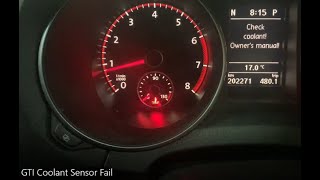
- Low coolant warning light may illuminate on the dashboard.
- A sweet smell of burnt coolant from the engine bay, especially after driving.
- Visible pink/purple crusty residue (dried G13/G12 coolant) on or below the thermostat housing, which is located on the driver's side of the cylinder head, under the intake manifold.
- Replacing only the ECT sensor (G62) when the root cause is a hairline crack in the thermostat housing causing a slow coolant leak and air pockets.
- Replacing the thermostat alone (which is often not possible) when the entire plastic housing is brittle and prone to leaking from other areas.
- Ignoring a slow coolant leak and repeatedly topping off the coolant, leading to eventual failure of the sensor or a more catastrophic housing failure.
Most Likely Causes

- Leaking Thermostat / Water Pump Housing 🔴 High Probability The plastic composite used for the integrated thermostat and water pump housing on the EA888 Gen 3 engine is a well-documented failure point. It becomes brittle from thousands of heat cycles, leading to hairline cracks and gasket failure. This is the most common root cause for coolant system issues and P0116 on this platform.
How to confirm: Visually inspect the area around and under the thermostat housing for signs of pink/purple dried coolant residue or active drips. The leak often originates from the main housing seal or seams. A cooling system pressure test can confirm the leak, but very slow 'weeping' leaks may not show an immediate pressure drop. Look for residue on the transmission bell housing below the assembly.
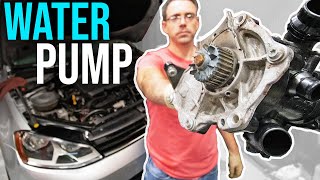
Typical fix: Replace the entire thermostat and water pump housing assembly. 🎬 Watch: Full walkthrough of the water pump and thermostat replacement. It is critical to use the latest revised OEM part or a high-quality OEM-spec aftermarket part (e.g., INA, Mahle). Do not replace just the thermostat or one gasket, as the plastic housing itself is the point of failure.
Est. part cost: $200-$450 - Faulty Engine Coolant Temperature (ECT) Sensor (G62) 🟡 Medium Probability The G62 sensor, which is often integrated into the thermostat housing on the EA888.3, can fail electronically. It can also be damaged by leaking coolant wicking into its connector. While less common than a housing leak, it's a frequent secondary failure or misdiagnosis.
How to confirm: Using a scan tool (like VCDS or OBDeleven), monitor live data from the ECT sensor (G62). On a cold engine, the reading should be nearly identical to the Intake Air Temp (IAT) and ambient temperature. As the engine warms up, the temperature should rise smoothly to ~90-105°C without sudden jumps or drops. An erratic reading points to a bad sensor or wiring.
Typical fix: Replace the ECT sensor. On the EA888.3, there are two main sensors: one at the radiator outlet and the primary G62 sensor located on the thermostat housing itself. It is often replaced during the thermostat housing job as a preventative measure.
Est. part cost: $25-$70 - Low Engine Coolant Level 🟡 Medium Probability This is almost always a symptom of a leaking thermostat housing, not a root cause on its own. If the coolant level drops low enough for the sensor to be exposed to air pockets, it will send irrational readings to the ECM, triggering P0116.
How to confirm: Visually check the coolant expansion tank. If the level is below the 'MIN' line, a leak is present. Top it off with the correct G13 (or newer G12evo) coolant and immediately begin searching for the source of the leak.
Typical fix: Top off the coolant with the appropriate spec (VW G13/G12evo) and find and repair the source of the leak, which is most likely the thermostat housing.
Est. part cost: $25-$40 for coolant - Damaged Wiring or Connector ⚪ Low Probability
How to confirm: Visually inspect the wiring harness and connector going to the ECT sensor (G62) on the thermostat housing for any signs of corrosion, damage, or loose pins. Coolant leaks can contaminate the connector. Wiggle the connector while monitoring live data to see if the reading fluctuates.
Typical fix: Repair the damaged section of the wiring harness or clean/replace the connector pigtail. Only gold-plated terminals should be used for repairs on the ECT sensor connector.
Est. part cost: $15-$60
Rare But Worth Checking
- Sticking Thermostat: If the thermostat sticks open, the engine will warm up very slowly, which can trigger a P0116 'Range/Performance' fault. If it sticks closed, an overheat condition will occur. This is less common as a standalone failure because the thermostat is part of the housing assembly that is usually replaced as a unit.
- Faulty Engine Control Module (ECM): This is extremely rare. The ECM should only be considered after all other possibilities, including the sensor, housing, and all related wiring, have been exhaustively ruled out by a professional.
Diagnosis Steps
- Scan for any other trouble codes. Codes like P2181, P0117, or P0118 can help pinpoint the issue.
- Check the engine coolant level in the expansion tank. If it's low, top it off with the correct VW-spec G13 or G12evo coolant. Note that G13 is purple and should not be mixed with other coolant types.
- Perform a thorough visual inspection of the cooling system, focusing on the thermostat and water pump housing on the driver's side of the engine. Use a flashlight and mirror to look for pink/purple crusty residue on the housing itself and on the transmission below it.
- With a scan tool, monitor the live data for the Engine Coolant Temperature (G62). On a cold engine, it should be within a few degrees of the Intake Air Temperature (IAT).
- Start the engine and watch the temperature reading as it warms up. It should climb steadily to a normal operating temperature of around 90-105°C (194-221°F). If it jumps, drops suddenly, or fails to reach temperature, it points to a problem with the sensor, thermostat, or air in the system.
- If a leak is suspected but not visible, perform a cooling system pressure test. Pressurize the system to the specified cap pressure (around 1.5 bar) and watch for a pressure drop over 15-20 minutes.
- If no leak is found and the sensor reading is still irrational, inspect the G62 sensor's electrical connector for corrosion or coolant intrusion.
- If wiring is confirmed good, test the ECT sensor itself. At room temperature (~20°C/68°F), resistance should be around 2000-3000 Ohms. However, given its location and the high probability of a housing failure, most technicians will recommend replacing the housing and sensor together.
Parts You'll Likely Need
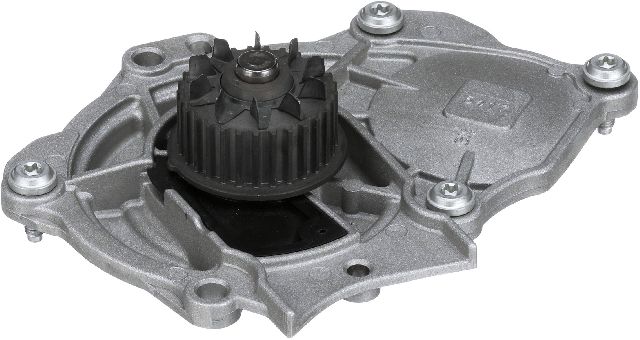
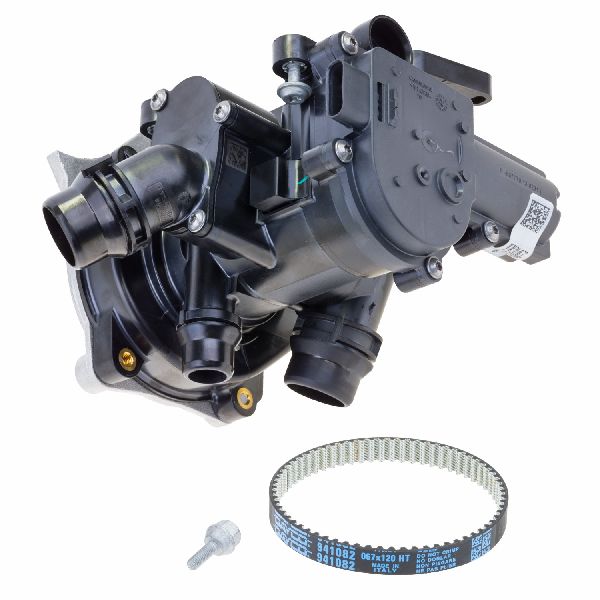
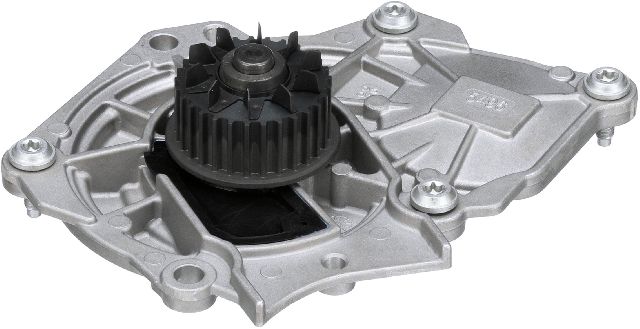
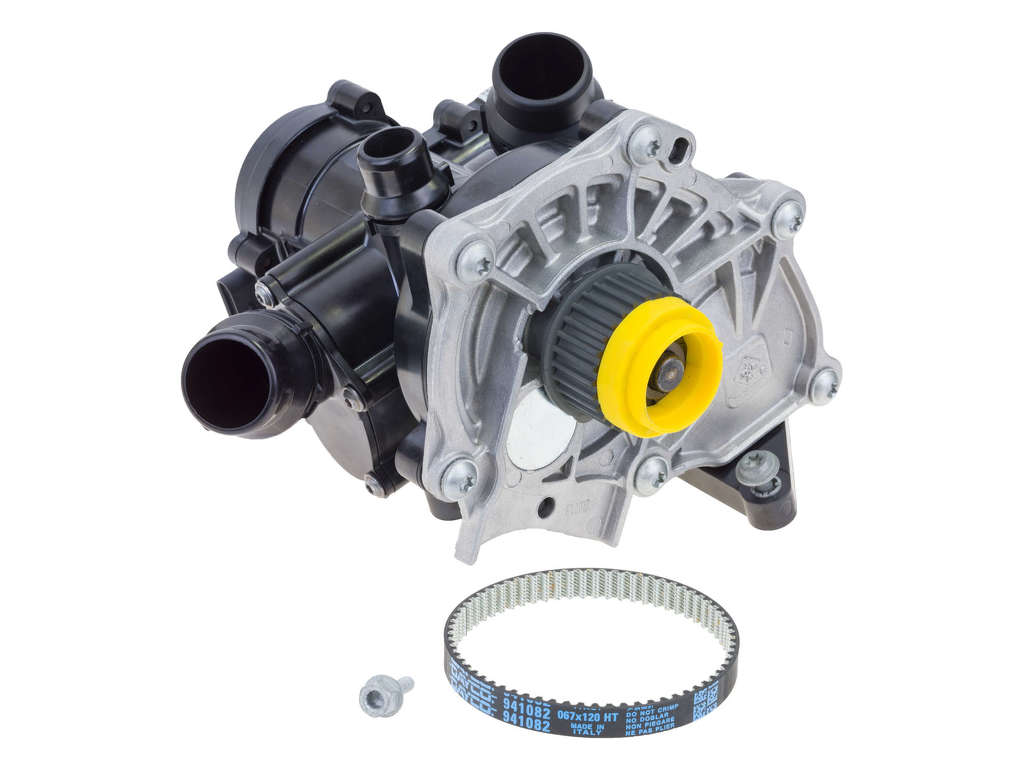
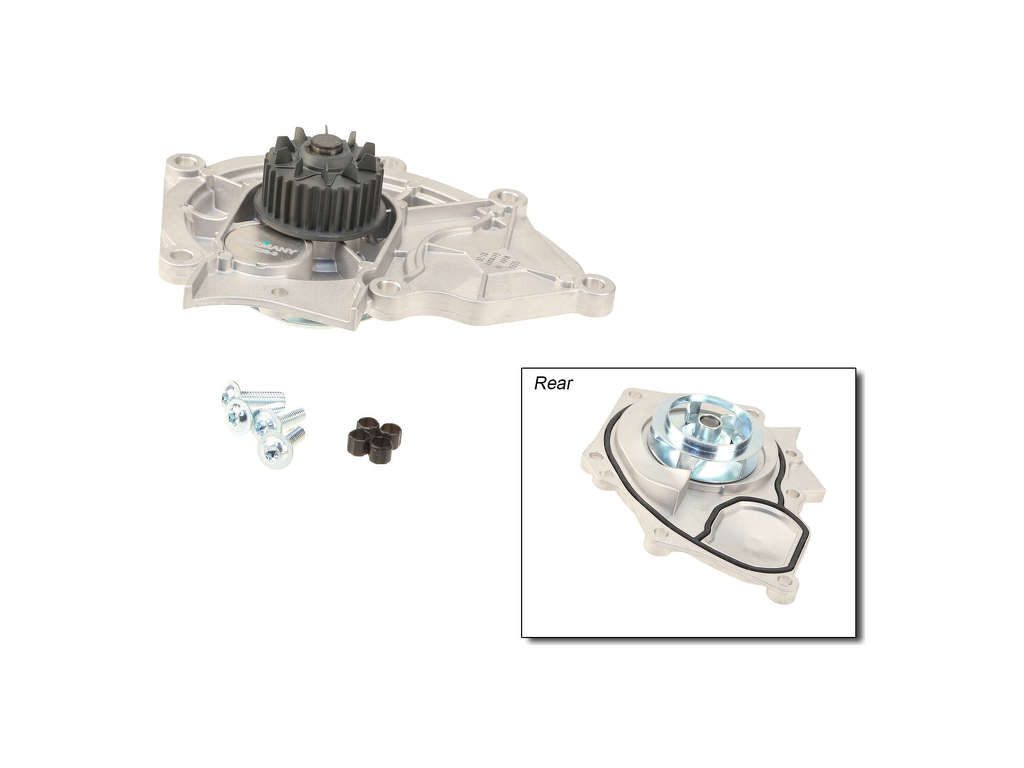
- Thermostat and Water Pump Housing Assembly
(OEM #06L121111P (supercedes 06L121111M, 06L121111K, 06L121111H))— This is the most common point of failure on the EA888 Gen 3 engine leading to coolant leaks and P0116.
Related Codes That Often Appear With This One
- P0117 — This code indicates 'ECT Sensor Circuit Low Input', which can occur if the sensor or its wiring shorts to ground, often due to coolant contamination in the connector.
- P0118 — This code indicates 'ECT Sensor Circuit High Input', which can happen if the sensor circuit has an open, the connector is unplugged, or the sensor fails in a high-resistance state.
- P2181 — This code means 'Cooling System Performance' and is often set alongside P0116. It indicates the engine is not reaching its target operating temperature within a specified time, often due to a stuck-open thermostat or low coolant level.
- Coolant Warning Light — This is not a DTC, but a dashboard warning that directly indicates a low coolant level, which is a primary cause of P0116 on this vehicle.
Technical Service Bulletins (TSBs) & Recalls
- While multiple TSBs (VIN4APIN20220831, VIN4APIN20190617, etc.) mention P0116 as a possible fault, they are general diagnostic bulletins. A more relevant TSB is VW-19-20-03 (NHTSA ID 10176395), which addresses updating the thermostat on some EA888 engines, though it may not directly name P0116, it addresses the root hardware failure.
- TSB 2042955 addresses component-related deviations in door locks and is not relevant to this DTC, despite online mentions.
Platform-Specific Known Issues
- The plastic thermostat and water pump housing assembly is a known design weakness on the EA888 Gen 3 engine, with a high failure rate often between 40,000 and 80,000 miles. VW has released multiple revisions of the part to address the issue.
- Access to the thermostat housing is difficult, typically requiring removal of the intake manifold, which significantly increases labor time and cost for the repair.
- There are two ECT sensors on this platform. The primary one (G62) is on the thermostat housing, and a secondary one (G83) is at the radiator outlet. P0116 almost always refers to a problem with the G62 sensor or the related housing leak.
Mechanic-Grade Diagnostic Values
- ECT Sensor (G62) resistance — expected: 2000-3000 Ω at 20°C (68°F). Failure: A reading significantly outside this range, or an open/short circuit.
- ECT Sensor (G62) resistance at operating temperature — expected: 275-375 Ω at 80°C (176°F). Failure: A reading outside this range when the engine is warm.
- ECT Sensor (G62) circuit wiring resistance — expected: Max 1.5 Ω. Failure: Higher resistance indicates corrosion or a damaged wire.
- Scan tool live data (ECT vs IAT, cold engine) — expected: ECT and Intake Air Temperature (IAT) should be within a few degrees of each other.. Failure: A significant difference between ECT and IAT on a cold-soaked engine points to a sensor or wiring fault.
- Scan tool live data (ECT reading with suspected open circuit) — expected: N/A. Failure: A fixed reading of approximately -40°C often indicates an open circuit or short to positive.
- Scan tool live data (ECT reading with suspected short circuit) — expected: N/A. Failure: A fixed reading of approximately 140°C often indicates a short circuit to ground.
Scan Tool Commands That Help
- VCDS (VAG-COM): 01-Engine -> Measuring Value Blocks (MVB) -> Group 004 — To monitor the live coolant temperature reading from the G62 sensor in field. This is used to verify if the sensor is reporting a plausible temperature and if it rises smoothly as the engine warms up.
Wiring & Ground Locations
- Main Chassis Ground — A grounding lug is located on the passenger-side frame rail, behind the headlight.. While not specific to the ECT sensor, a poor main chassis ground can cause a variety of difficult-to-diagnose electrical and sensor-related issues. This is a primary grounding point for many components in the engine bay.
- Engine Ground — An engine ground point is located on an engine cover post behind the high-pressure fuel pump.. The ECM and its sensors rely on a solid engine ground. Voltage fluctuations from a poor ground can cause implausible sensor readings, potentially triggering a P0116 code.
- ECT Sensor (G62) Connector — On the thermostat housing assembly, located under the intake manifold on the driver's side of the engine.. This is the direct connection point for the sensor. It is highly susceptible to contamination from coolant leaks, which can corrode the pins and cause signal issues. VW specifies using only gold-plated terminals for any repairs to this connector.
Real Owner Repair Stories
- Reddit user ShmuckNuts (2013 Jetta GLI (uses EA888 engine similar to Golf)) — P0116 code, radiator fan comes on at full speed and vibrates the car shortly after starting.
❌ Tried (didn't work) Initial diagnosis pointed towards the common ECT sensor or water pump failure.
✅ What actually fixed it The user disconnected their aftermarket subwoofer and door amplifiers from the battery, cleared the code, and the problem was resolved. Reconnecting the audio equipment caused the fault to return, indicating the issue was electrical interference or a grounding problem caused by the aftermarket wiring.
"I Checked Everything" — The Actual Cause
- For this code, the equivalent scenario is a cooling system pressure test that passes, yet a leak is still present. The common failure is a hairline crack in the thermoplastic thermostat housing. This crack may only open and leak coolant when the engine is hot due to thermal expansion. A pressure test on a cold engine may not reveal the leak, leading a technician to incorrectly rule out the housing. The key is to look for the tell-tale signs of dried pink coolant residue below the housing, even if an active drip isn't present.
When the Usual Fixes Don't Work
- While the vast majority of P0116 codes on this platform are resolved by replacing the thermostat housing assembly, there are cases where this does not fix the issue. If the code persists after replacing the housing and sensor, the diagnostic path must shift to less common causes. The most likely culprits are faults in the wiring harness between the sensor and the ECM (corrosion, breaks) or, in a documented but rare case, electrical interference from poorly installed aftermarket equipment creating grounding or voltage stability issues that confuse the sensor reading. Before condemning the extremely reliable ECM, a thorough bleed of the cooling system with a vacuum tool should be performed to eliminate any stubborn air pockets that could also cause erratic readings.
OEM Part Supersession History
06L121111F, 06L121111G, 06L121111H, 06L121111J, 06L121111K, 06L121111L, 06L121111M→06L121111P— The original thermoplastic housings were prone to cracking and warping from engine heat cycles, causing coolant leaks. The subsequent revisions, culminating in 'P', are made with improved, more durable materials to address this widespread design flaw.
Model Year Variations Within This Range
- 2016-2019: The North American market saw the facelift from the Mk7 to the Mk7.5 in model year 2018. While the core engine (EA888 Gen 3) and the associated thermostat housing failure remain the same across this range, the Mk7.5 introduced a 7-speed DSG transmission (vs. 6-speed in the Mk7), which may have a different auxiliary cooling setup.
- Around 2016: A minor change occurred with the ignition coil pack connectors. Vehicles made before approximately 2016 often use connector part number 8K0971994, while vehicles from 2016 onward typically use 4D0971994. While not directly related to the cooling system, it's a relevant detail for any technician working in that area of the engine.
Helpful Videos


We Have This Part in Stock


The information in this article is provided for general reference and educational purposes only. Vehicle specifications, procedures, and part compatibility can vary by production date, trim level, and region. Always consult your vehicle's factory service manual and verify part numbers before purchasing or performing repairs. Safety-critical components such as airbags, seat belts, and braking systems should be installed by a qualified professional.
- Volkswagen GOLF:
- 🎬 Helpful Videos
- 🛍️ Shop This Part
- What's Unique About the 2016-2019 Volkswagen GOLF
- Diagnostic Flowchart
- Symptoms You May Notice
- Most Likely Causes
- Rare But Worth Checking
- Diagnosis Steps
- Parts You'll Likely Need
- Related Codes That Often Appear With This One
- Technical Service Bulletins (TSBs) & Recalls
- Platform-Specific Known Issues
- Mechanic-Grade Diagnostic Values
- Scan Tool Commands That Help
- Wiring & Ground Locations
- Real Owner Repair Stories
- "I Checked Everything" — The Actual Cause
- When the Usual Fixes Don't Work
- OEM Part Supersession History
- Model Year Variations Within This Range
- 🎟️ Get 5% Off