

P0116 on 2018-2019 Volkswagen Beetle: ECT Sensor and Thermostat Housing Guide
On a 2018-2019 VW Beetle, code P0116 is most often caused by a failure of the integrated water pump and thermostat housing assembly, a known weak point. While the ECT sensor itself can fail, the housing is prone to leaks and internal thermostat faults. A class-action lawsuit resulted in an 8-year/80,000-mile extended warranty for this specific part, which should be the first line of inquiry. The complete assembly replacement is the most reliable fix.
- P0116 on the 2018-2019 Beetle points to an issue with the engine coolant temperature reading.
- The most likely cause is not just a bad sensor, but a failure of the entire plastic thermostat and water pump housing assembly, which is a known weak point.
- Before buying parts, check for low coolant and look for signs of pink coolant residue around the thermostat housing.
- If you replace the housing, it is highly recommended to use the latest revised OEM part (such as 06L121111M) and replace the entire assembly.
- A primary symptom is the cooling fan running at full speed even when the engine is cold.
What's Unique About the 2018-2019 Volkswagen BEETLE
The 2018-2019 Beetle uses the EA888 Gen 3 engine, which features a complex, electronically controlled thermostat integrated into a large plastic water pump housing. This entire assembly is a widely documented failure point across many modern VW and Audi models. The plastic can become brittle from constant heat cycles, causing hairline cracks and coolant leaks, or the internal electronically-activated thermostat can malfunction. The thermostat system is map-controlled, actively adjusting coolant temperature between 85°C and 107°C based on engine load, making it more complex than a simple mechanical thermostat. Either a physical leak or a mechatronic failure within this housing can trigger a P0116 code, leading to a class-action lawsuit and subsequent warranty extension from VW.
Diagnostic Flowchart
Tap your situation to follow the diagnostic path that matches what you're seeing on this vehicle.
Symptoms You May Notice
- Check Engine Light is on
- Cooling fans running at maximum speed, even when the engine is cold
- Temperature gauge on the dashboard behaving erratically, staying on cold, or not working at all
- Reduced fuel economy
- Engine may be hard to start, or idle roughly, especially when warm
- Coolant warning light may be illuminated due to low coolant from a leak
- Smell of sweet coolant from the engine bay, especially after driving
- On diesel variants, this code can be associated with an extremely long glow plug light duration.
- Replacing only the ECT sensor when the thermostat housing is the actual cause of the problem. This may seem to fix it temporarily, but the code will return as the underlying leak or thermostat issue persists.
- Replacing the radiator outlet temperature sensor (G83) instead of the primary engine-side sensor (G62) that this code refers to.
- Topping off coolant repeatedly without pressure testing to find the root cause of the leak, which is typically the thermostat housing.
Most Likely Causes
- Leaking or Faulty Thermostat & Water Pump Housing Assembly 🔴 High Probability The EA888 Gen 3 engine's integrated plastic thermostat and water pump housing is a notorious weak point. The polymer composite degrades from heat cycles, leading to cracks, coolant leaks, and internal thermostat failures. This is a common issue across many VW/Audi models using this engine, prompting a warranty extension from VW.
How to confirm: Visually inspect the area around the water pump and thermostat housing (located on the front of the engine, below the intake manifold) for signs of pink or white crusty residue, indicating a dried coolant leak. A cooling system pressure test will confirm a leak. A scan tool may show erratic temperature readings that don't correspond to the engine's actual state, often accompanied by code P2181.
Typical fix: Replace the entire water pump and thermostat housing assembly. Due to the high labor involved and the high failure rate of all components in the assembly, it is strongly recommended to replace the whole unit. Check for eligibility under VW's extended warranty (8 years/80,000 miles) before paying for the repair.
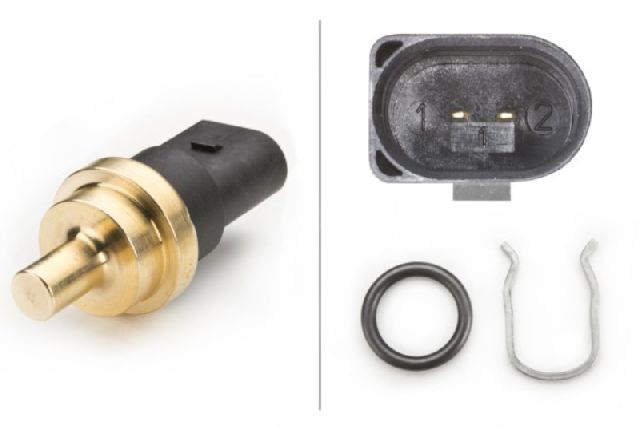
Est. part cost: $250-$450 - Faulty Engine Coolant Temperature (ECT) Sensor (G62) 🟡 Medium Probability The ECT sensor itself can fail, sending incorrect signals to the ECM. While less common than the housing failure on this engine, it is still a frequent cause for this code on many vehicles and is a much simpler repair.
How to confirm: Use a scan tool to monitor the live data from the ECT sensor. Check if the reading is plausible (e.g., matches ambient temperature on a cold start). You can also test the sensor's resistance with a multimeter; it should be between 2,000-3,000 ohms at room temperature (~68°F/20°C) and drop to 275-375 ohms at 80°C (176°F). If the reading is nonsensical (e.g., -40°F), the sensor is bad.
Typical fix: Replace the ECT sensor, its O-ring, and retaining clip. It is often located on the thermostat housing.
Est. part cost: $15-$40 - Low Engine Coolant Level ⚪ Low Probability This is almost always a symptom of a leaking thermostat housing, but can also be from other leaks (hoses, radiator). If the coolant level is too low, air pockets can form around the ECT sensor, causing it to give erratic readings and trigger P0116.
How to confirm: Check the coolant level in the expansion tank when the engine is cold. If it is below the 'MIN' line, there is a leak in the system that must be found and repaired.
Typical fix: Top off the coolant with the correct type (VW G13 or G12evo) and perform a cooling system pressure test to find and repair the source of the leak.
Est. part cost: $20-$40 for coolant
Rare But Worth Checking
- Wiring or Connector Issue: The wiring harness or connector for the ECT sensor can become damaged, corroded, or loose, leading to an intermittent or lost signal. This should be checked if a new sensor and housing do not resolve the code. A visual inspection and continuity test from the sensor plug to the ECM may be required.
- Faulty Powertrain Control Module (PCM): In very rare cases, the PCM itself may be faulty and unable to correctly interpret the sensor's signal. This is a last resort and should only be considered after all other possibilities have been exhaustively ruled out by a professional.
Diagnosis Steps
- Check for eligibility for the VW Water Pump Extended Warranty (8 years/80,000 miles) by contacting a VW dealer with your VIN. If eligible, this should be your first step.
- Check for any other stored DTCs, especially P2181, P00B7, P0117, or P0118.
- With a cold engine, check the coolant level in the expansion tank. If low, this strongly suggests a leak. Note the sweet smell of coolant.
- Use a scan tool to compare the live data from the Engine Coolant Temperature (ECT) sensor and the Intake Air Temperature (IAT) sensor with the engine off after it has sat for several hours. The readings should be very close (within a few degrees).
- Start the engine and monitor the ECT data on the scan tool. The temperature should rise steadily without any sudden, irrational jumps or drops.
- Perform a cooling system pressure test to definitively identify any leaks. Pay close attention to the thermostat/water pump housing on the front of the engine. Look for white or pink crusty residue.
- If no leaks are found, test the ECT sensor's resistance with a multimeter. At ~68°F (20°C), it should read between 2,000-3,000 Ohms. At 80°C (176°F), it should be 275-375 Ohms. If the reading is out of spec or open, replace the sensor.
- If a new sensor does not fix the issue, or if leaks are present, the thermostat/water pump housing assembly is the confirmed culprit and should be replaced.
- After replacement, clear the codes, properly bleed the cooling system, and perform a drive cycle to ensure the problem is resolved.
Parts You'll Likely Need
- Thermostat & Water Pump Housing Assembly
(OEM #06L121111M)— This is the most common point of failure on the EA888 Gen 3 engine for this code. It integrates the thermostat, housing, and water pump. Replacing the assembly addresses potential leaks and internal thermostat failure simultaneously. Part number 06L121111M is an updated revision of earlier parts like -H, -J, and -K.
Trusted brands: Volkswagen Genuine, INA, Pierburg
OEM price range: $300-$450
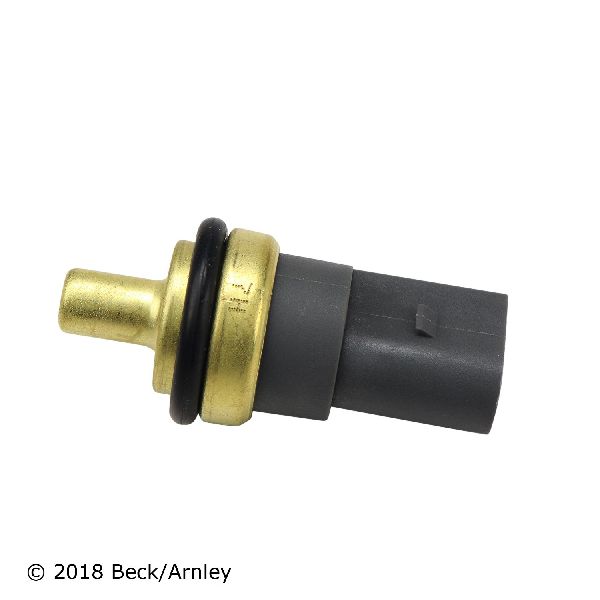
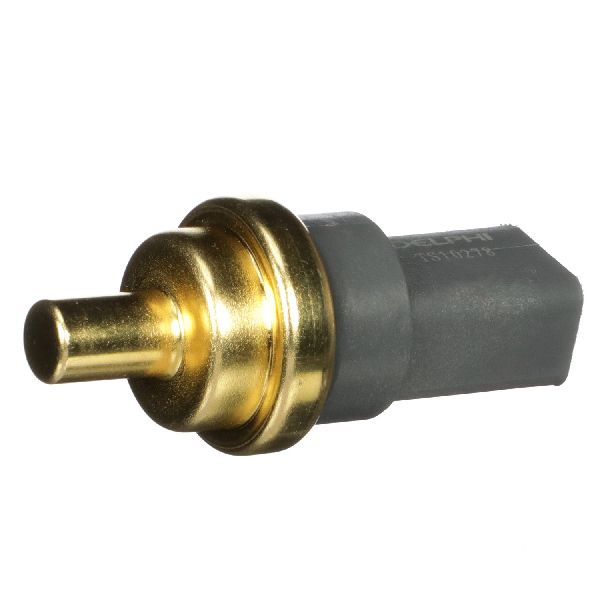
Aftermarket price range: $200-$350 - Engine Coolant Temperature Sensor (G62)
(OEM #06A919501A)— If the housing is not leaking, the sensor itself may have failed. It's an inexpensive part to replace as a primary diagnostic step. Note that a new sensor is often included with the thermostat assembly.
Trusted brands: Bosch, Delphi, Volkswagen Genuine
OEM price range: $30-$50
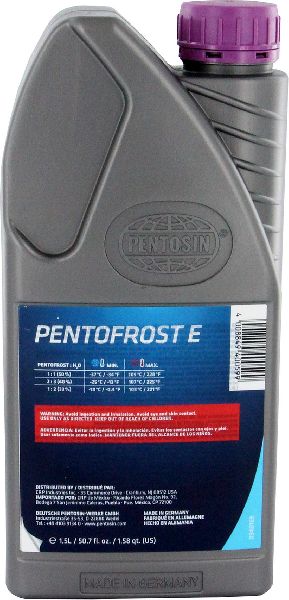
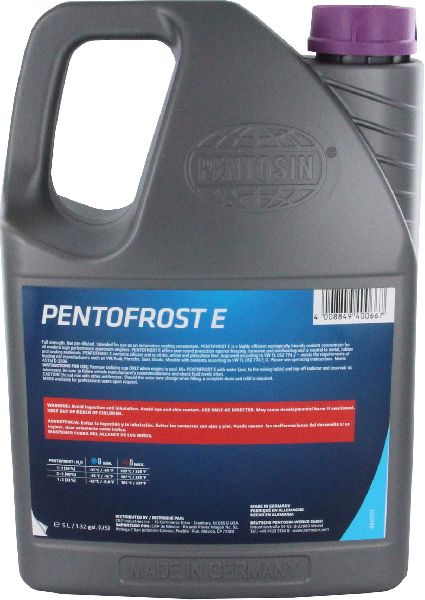
Aftermarket price range: $15-$30 - G13 or G12evo Coolant
(OEM #G013A8J1G (G13), G12E050A2 (G12evo))— The system will need to be drained and refilled during the repair. Using the correct VW-specific coolant is critical for system longevity.
Trusted brands: Volkswagen Genuine, Pentosin, Febi
OEM price range: $30-$45 per gallon
Aftermarket price range: $25-$35 per gallon
Related Codes That Often Appear With This One
- P2181 — This code for 'Cooling System Performance' often appears with P0116 because it indicates the engine isn't warming up as expected, which can be caused by a stuck-open thermostat or low coolant—both directly related to P0116 causes on this engine.
- P00B7 — Indicates 'Insufficient Engine Coolant Flow', which can be triggered alongside P0116 if the water pump component of the assembly is failing.
- P0117 / P0118 — These codes indicate ECT Sensor Circuit Low or High Input, respectively. They point more directly to an electrical failure of the sensor or its wiring, whereas P0116 is a 'performance' code that can be caused by mechanical issues (like a leak or stuck thermostat) affecting the sensor's reading.
Technical Service Bulletins (TSBs) & Recalls
- Water Pump Limited Warranty Extension (VW Code: U55): As a result of a class-action settlement, VW extended the warranty on the primary engine water pump, thermostat, and thermostat housing to 8 years or 80,000 miles, whichever comes first. This directly addresses the most common cause of P0116 on this engine. The effective date was June 10, 2022.
- NHTSA TSBs VIN4APIN20190628, VIN4APIN20190617, etc.: These are generic bulletins listing P0116 as one of many possible codes when a customer reports a Check Engine Light. They confirm the code is tracked by VW but do not provide specific diagnostic information for this fault.
Platform-Specific Known Issues
- The integrated water pump and thermostat housing on the EA888 Gen 3 engine is a well-documented weak point, prone to cracking and leaking. Volkswagen of America issued an extended warranty for this part on many vehicles, including the Beetle, due to high failure rates from a class-action lawsuit. The coverage is for 8 years or 80,000 miles.
- Due to the location of the assembly under the intake manifold, replacement is a labor-intensive job, often quoted at 4-5 hours of labor, leading to high repair costs if not covered by warranty.
- The provided NHTSA TSBs (e.g., VIN4APIN20190628) list P0116 as a potential code when the MIL is on, confirming it's a tracked issue by the manufacturer, though the bulletins themselves don't offer specific repair details beyond acknowledging the fault code.
Mechanic-Grade Diagnostic Values
- ECT Sensor (G62) Resistance — expected: 2,000-3,000 Ω at 20°C (68°F); 275-375 Ω at 80°C (176°F).. Failure: Readings outside of this range indicate a faulty sensor.
- ECT Sensor (G62) Signal Voltage (Scan Tool) — expected: Should correspond to ambient temperature on a cold start and rise steadily.. Failure: A reading of -40°F suggests an open circuit. A reading >250°F on a cold engine suggests a short to ground.
- ECT Sensor (G62) Signal Wire Voltage (Multimeter) — expected: Approximately 3.5V on a cold engine, with voltage decreasing as temperature rises.. Failure: No voltage or 5V indicates a wiring problem or faulty PCM.
- EA888 Gen 3 Target Coolant Temperature (Scan Tool Live Data) — expected: The ECU will target a temperature between 85°C and 107°C depending on engine speed and load.. Failure: Failure to reach the lower end of this range (~85-90°C) after warming up can indicate a thermostat stuck open.
Hidden / Shadow Codes Worth Checking
- 16500/P0116/000278: Engine Coolant Temp. Sensor (G62): Implausible Signal. This is the manufacturer-specific code that corresponds to the generic P0116. (see via VAG-specific scan tools like VCDS (Ross-Tech) or ODIS will display this code.)
Scan Tool Commands That Help
- VCDS (Ross-Tech): Read Measuring Value Block (MVB) — Use Group 004, Field 3 (or Group 007 on older controllers) to monitor the live temperature reading from the G62 sensor as the engine warms up. The temperature should rise steadily with no sudden drops or spikes. This helps differentiate a sensor/wiring fault (erratic readings) from a mechanical fault like a stuck thermostat (slow rise).
Wiring & Ground Locations
- G62 Sensor Connector — On the thermostat/water pump housing assembly, located on the front of the engine below the intake manifold.. This is the primary connection point for the sensor. Coolant leaks from the housing often contaminate this connector, causing corrosion and poor signal quality.
- Engine Ground Strap — A primary ground strap is typically located between the engine block or transmission mount and the chassis frame rail.. A corroded or loose main engine ground can create electrical noise and cause unstable reference voltage for many sensors, including the ECT, leading to performance codes.
- Chassis Grounding Lug — On many related MQB platform vehicles, a key grounding point is a lug located on the passenger-side frame rail, behind the headlight.. This is a common grounding point for various engine components. While often associated with ignition coil grounding kits, ensuring it is clean and tight can resolve intermittent sensor issues.
Real Owner Repair Stories
- Mechanic anecdote on an e-commerce site (2017 VW Tiguan (EA888 Gen 3 engine)) — Check engine light, rough idle, poor fuel consumption.
✅ What actually fixed it Diagnosis revealed the thermostat was stuck open. Replacing the thermostat assembly (with part 06L121011F) resolved the idle, warm-up, and fuel consumption issues. - Reddit user in /r/AskMechanics (Unknown VW model) — P0116 and P0128 codes appeared 3 months after a thermostat housing replacement.
❌ Tried (didn't work) A mechanic replaced the thermostat housing to fix a coolant leak.
✅ What actually fixed it The vehicle was still leaking coolant after the repair. The mechanic then simply tightened hose clamps to stop the leak, suggesting the initial repair was performed incorrectly or with a faulty part. The final resolution was not posted, but the story highlights the risk of improper installation.
"I Checked Everything" — The Actual Cause
- The cooling system equivalent is a 'pressure test clean'. A common reason for P0116 that a pressure test will NOT find is a thermostat that is stuck in the open position. The system will hold pressure perfectly, but the engine will fail to reach operating temperature in the time expected by the ECM, triggering the 'performance' code.
- Air pockets trapped in the cooling system after a coolant service can also cause the ECT sensor to give erratic readings, triggering P0116. This will not be detected by a pressure test.
OEM Part Supersession History
06L121111H (and others like 06K121011)→06L121111J, 06L121111K, 06L121111L, 06L121111M, 06L121111P— To improve the reliability of the plastic housing and internal thermostat mechanism to prevent cracking and premature failure.
Heads up: All revisions are generally interchangeable, but it is critical to install the latest available revision (e.g., 'P') to get the most robust design.
Model Year Variations Within This Range
- 2018-2019: No significant variations in the cooling system, ECT sensor, or thermostat housing are documented between the 2018 and 2019 model years for the Beetle with the 2.0T EA888 Gen 3 engine. The causes and repair procedures are identical.
Helpful Videos

Used OEM Parts in Stock

New Aftermarket Parts Available


The information in this article is provided for general reference and educational purposes only. Vehicle specifications, procedures, and part compatibility can vary by production date, trim level, and region. Always consult your vehicle's factory service manual and verify part numbers before purchasing or performing repairs. Safety-critical components such as airbags, seat belts, and braking systems should be installed by a qualified professional.
- Volkswagen BEETLE:
- 🎬 Helpful Videos
- 🛍️ Shop This Part
- What's Unique About the 2018-2019 Volkswagen BEETLE
- Diagnostic Flowchart
- Symptoms You May Notice
- Most Likely Causes
- Rare But Worth Checking
- Diagnosis Steps
- Parts You'll Likely Need
- Related Codes That Often Appear With This One
- Technical Service Bulletins (TSBs) & Recalls
- Platform-Specific Known Issues
- Mechanic-Grade Diagnostic Values
- Hidden / Shadow Codes Worth Checking
- Scan Tool Commands That Help
- Wiring & Ground Locations
- Real Owner Repair Stories
- "I Checked Everything" — The Actual Cause
- OEM Part Supersession History
- Model Year Variations Within This Range
- 🎟️ Get 5% Off