

P0116 on 2015 Dodge Journey: Engine Coolant Temperature Sensor Performance Fixes
For a 2015 Dodge Journey, code P0116 often points to a faulty Engine Coolant Temperature (ECT) sensor or a stuck thermostat. However, a crucial vehicle-specific issue is outdated Powertrain Control Module (PCM) software, which can be fixed with a dealer update. Always check for TSBs before replacing parts, as this is a very common software-related fault on this platform.
- Before buying any parts for a P0116 code on a 2015 Dodge Journey, check if your vehicle needs a PCM software update, as this is a known issue documented by Dodge.
- The most common hardware failures are the Engine Coolant Temperature (ECT) sensor and the thermostat.
- Diagnosing with a scan tool that can read live data is the best way to differentiate between a sensor, thermostat, or other issue.
- If you see P0116 along with EVAP codes (P0456, P0441), it's highly likely that a PCM software update is the correct fix.
What's Unique About the 2015-2015 Dodge JOURNEY
For the 2015 Dodge Journey, particularly models with the 2.4L engine, P0116 is not always a straightforward part failure. Multiple Technical Service Bulletins (TSBs) issued by Dodge indicate that this code can be falsely triggered due to sensitive software logic in the Powertrain Control Module (PCM). In many cases, especially if seen with other seemingly unrelated codes like P0456 (EVAP Leak) or U0140 (Lost Communication with BCM), the official fix is a PCM software update from a dealership, not a part replacement.
Diagnostic Flowchart
Tap your situation to follow the diagnostic path that matches what you're seeing on this vehicle.
Symptoms You May Notice
- Check Engine Light is on
- Engine temperature gauge behaving erratically or not working
- Cooling fans running constantly, even when the engine is cold
- Cooling fans not turning on, leading to overheating
- Reduced fuel economy
- Hard starting, especially when the engine is cold
- Dark exhaust smoke
- Engine stalling when coming to a stop or making a turn
- Replacing the thermostat when the actual issue is a faulty ECT sensor.
- Replacing hardware parts (sensor, thermostat) when the root cause is a PCM software glitch that requires a dealer update.
- Replacing the ECT sensor when the thermostat is stuck open, causing the engine to warm up too slowly.
Most Likely Causes
- Faulty Engine Coolant Temperature (ECT) Sensor 🔴 High Probability The sensor is a common failure point on many vehicles. On the 2.4L Journey, it's relatively accessible, located in the thermostat housing on the passenger side of the engine.
How to confirm: Use a scan tool to monitor live ECT data. On a cold start, the ECT reading should be very close to the Intake Air Temperature (IAT). As the engine warms, the temperature should rise smoothly without sudden jumps or dropouts. A reading that is stuck (e.g., -40°F) or erratic indicates a bad sensor. You can also test the sensor with a multimeter; at ~68°F (20°C), resistance should be between 2,000-3,000 Ohms.
Typical fix: Replace the ECT sensor. 🎬 Watch: A quick guide to diagnosing the ECT sensor It's often located on the thermostat housing and can be replaced with basic tools, though some coolant will be lost.
Est. part cost: $20-$50 - Stuck-Open Thermostat 🟡 Medium Probability Thermostats can fail over time, and a stuck-open one is a classic cause for a slow-to-warm-up condition that triggers P0116. One owner on a Reddit forum described a coolant loss issue combined with no heat, which are classic symptoms pointing towards a thermostat or related cooling system problem.
How to confirm: Monitor the ECT data on a scan tool or watch the temperature gauge during warm-up. If the engine takes an excessively long time (e.g., more than 15-20 minutes of driving) to reach operating temperature of ~195-205°F, the thermostat is likely stuck open.
Typical fix: Replace the thermostat and gasket. On the 2.4L engine, this is typically sold as a complete housing assembly that includes the thermostat.
Est. part cost: $40-$150 - Powertrain Control Module (PCM) Software Update Needed 🟡 Medium Probability Manufacturer TSBs #18-081-17, #18-033-16, and #18-014-15 REV-A specifically list P0116 as a code that can be resolved by a PCM software update on 2015 Journeys with the 2.4L engine. This is a very common issue across multiple Chrysler/Dodge/Jeep vehicles using this engine.
How to confirm: A Dodge dealership or a well-equipped independent shop can check for available software updates for your vehicle's VIN using a wiTECH scan tool.
Typical fix: The dealership reprograms (reflashes) the PCM with the latest software. This is not a DIY repair. Owners on forums report dealer costs for this service typically range from $100 to $200.
Est. part cost: $100-$200 - Low Engine Coolant Level ⚪ Low Probability
How to confirm: Visually inspect the coolant reservoir when the engine is cold. If the level is below the 'MIN' line, it's low. This can expose the sensor to air pockets, causing erratic readings.
Typical fix: Top off the coolant with the correct type (Mopar 10 Year/150,000 Mile OAT Coolant is specified) and inspect for leaks from common failure points like the thermostat housing or radiator hoses.
Est. part cost: $20-$40
Rare But Worth Checking
- Wiring or Connector Issue: Check the wiring harness and connector going to the ECT sensor for any signs of corrosion, damage, or loose pins. The red locking tab on the connector should be fully engaged. A multimeter can be used to check for 5V reference voltage at the connector with the key on, and to check for continuity to ground on the ground wire.
Diagnosis Steps
- Check for any Technical Service Bulletins (TSBs) for your vehicle's VIN. This is the most critical first step for this specific vehicle and code.
- With a cold engine, check the engine coolant level in the reservoir and top off if necessary with the correct Mopar OAT coolant.
- Connect an OBD-II scanner and check for any other stored codes. Note codes like P0456, P0128, or U0140 which reinforce the likelihood of a software issue.
- View live data on the scanner. Compare the Engine Coolant Temperature (ECT) and Intake Air Temperature (IAT) readings on a completely cold engine. They should be within a few degrees of each other.
- Start the engine and monitor the ECT reading as it warms up. The temperature should climb steadily without any sudden drops or spikes.
- If the temperature rises very slowly or fails to reach operating temperature (~195-205°F) after 15 minutes of driving, suspect a stuck-open thermostat.
- If the temperature reading is erratic, stuck at a default value (like -40°F), or doesn't change, inspect the ECT sensor's wiring and connector for damage. If the wiring is good, the sensor is likely faulty. 🎬 Watch: Two simple DIY methods to fix code P0116
- If all hardware (sensor, thermostat, coolant level) and wiring check out, the issue is almost certainly the PCM software, as noted in multiple TSBs, and a trip to the dealer is required.
Parts You'll Likely Need
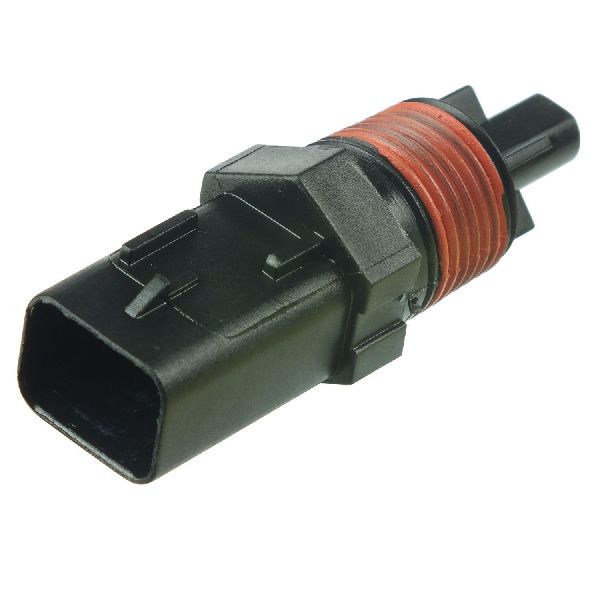
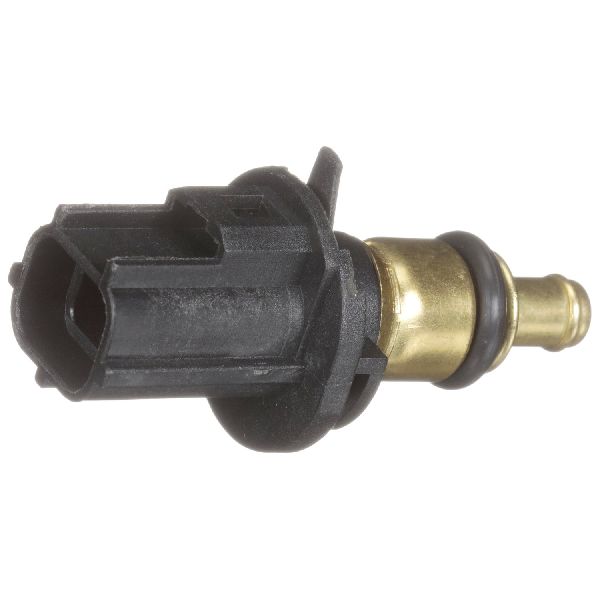
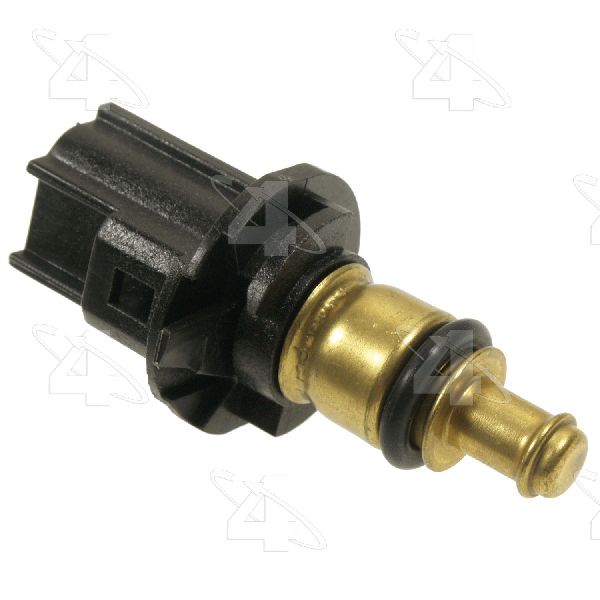
- Engine Coolant Temperature Sensor
(OEM #05149077AB)— This is the most common hardware failure for P0116. It directly measures the temperature and its failure leads to irrational performance readings.
Trusted brands: Mopar, Dorman, NTK/NGK
OEM price range: $30-$60
Aftermarket price range: $20-$40 - Engine Coolant Thermostat
(OEM #68676479AA (replaces 4884571AB))— A thermostat stuck open will prevent the engine from warming up correctly, triggering a performance code. On the 2.4L, it is sold as a complete housing assembly. 🎬 See this walkthrough for replacing the dual thermostat housing
Trusted brands: Mopar, Motorad, Duralast
OEM price range: $80-$150
Aftermarket price range: $40-$100
Related Codes That Often Appear With This One
- P0456 — EVAP System Small Leak. This code is listed alongside P0116 in the same TSBs, suggesting a PCM software update may resolve both.
- P0441 — EVAP Purge System Performance. Also listed in the TSBs related to the PCM update.
- U0140 — Lost Communication With Body Control Module. Also listed in the TSBs related to the PCM update.
- P0117 — ECT Sensor Circuit Low. This indicates a short to ground, while P0116 is a performance issue. They can appear together if the sensor is failing intermittently.
- P0118 — ECT Sensor Circuit High. This indicates an open circuit, often seen when a sensor is unplugged or has failed completely. A failing sensor can trigger P0116 before it fails completely and sets P0118.
- P0128 — Coolant Temperature Below Thermostat Regulating Temperature. This code is very closely related and often points directly to a stuck-open thermostat, but can also be caused by a faulty ECT sensor.
Technical Service Bulletins (TSBs) & Recalls
- 18-081-17: Recommends a PCM software update to address P0116 and other codes on 2015 models with the 2.4L engine.
- 18-033-16: An earlier bulletin, superseded by 18-081-17, that also lists P0116 as a code fixed by a PCM reflash.
- 18-014-15 REV-A: An even earlier bulletin also identifying a PCM software update as the solution for P0116 on the 2.4L engine.
Platform-Specific Known Issues
- Multiple TSBs (#18-081-17, #18-033-16, #18-014-15 REV-A) confirm that for the 2.4L engine, a PCM software update is a designated fix for P0116, often when it appears with other codes like P0456 and U0140.
Mechanic-Grade Diagnostic Values
- ECT Sensor Resistance — expected: ~31,700 to 42,900 Ohms at 68°F (20°C). Failure: A reading significantly outside this range, or an open/short circuit reading.
- ECT Sensor Resistance — expected: ~1,760 to 2,380 Ohms at 212°F (100°C). Failure: A reading that does not drop to this low range when the sensor is heated to boiling temperature indicates a faulty sensor.
- ECT Sensor Circuit Voltage — expected: 5V reference from PCM on one pin, with a variable signal voltage on the other that changes with temperature.. Failure: No 5V reference suggests a PCM or wiring issue. A signal voltage that is stuck high (5V) or low (0V) points to a wiring short/open or a failed sensor.
Scan Tool Commands That Help
- wiTECH: Loss of Comm Test — This function continuously 'pings' all modules on the CAN bus. If P0116 is intermittent and suspected to be caused by a wiring issue or poor connection, a technician can run this test while performing a 'wiggle test' on the ECT sensor harness. If wiggling the harness causes the PCM to show 'no response' intermittently, it confirms a wiring fault.
- wiTECH: Guided Methods — For complex issues, the dealer-level wiTECH tool offers guided diagnostic procedures that walk a technician through a logical series of tests, asking for input and providing the next step based on the results, which can help pinpoint non-obvious causes of a P0116 code.
Wiring & Ground Locations
- ECT Sensor Connector — On the thermostat housing, passenger side of the 2.4L engine. It is a 2-pin connector.. This is the most common point for connection failure due to corrosion, damage, or a loose pin. One pin is the 5V reference from the PCM, the other is the signal return. A bad connection here directly causes the P0116 code.
- PCM Connector C2, Pin 11 — At the Powertrain Control Module (PCM). The ECT signal wire (Violet/Brown) for the 2.4L engine connects to this specific pin.. For advanced diagnostics, a technician can test for continuity and shorts on the signal wire directly from this pin back to the sensor connector, definitively ruling out a wiring harness failure between the sensor and the computer.
- Main Chassis/Engine Grounds — The main battery negative cable connects to a ground stud on the driver's side strut tower. From there, a cable connects to the engine block. Another ground strap is located on the passenger side engine mount, connecting to the strut tower.. The ECT sensor's reading is a voltage relative to ground. A poor or corroded engine-to-chassis ground can create a voltage offset, causing the PCM to misinterpret the sensor's signal and potentially trigger a P0116 code, even if the sensor and its direct wiring are perfect.
Real Owner Repair Stories
- YouTube user 'Repairs from the other guy' (Dodge Journey (year not specified, but 4-cylinder engine)) — Check Engine Light with code P0116.
✅ What actually fixed it The problem was fixed by replacing the Engine Coolant Temperature (ECT) sensor. The video shows the location on the 4-cylinder engine and the process of replacing it.
OEM Part Supersession History
5149096AB→05149077AB— Part number update/replacement for the Engine Coolant Temperature Sensor.
Helpful Videos
![How to Fix P0116 Engine Code in 3 Minutes [2 DIY Methods / Only $7.31]](https://img.youtube.com/vi/lEaB_7q1xKI/mqdefault.jpg)
We Have This Part in Stock


The information in this article is provided for general reference and educational purposes only. Vehicle specifications, procedures, and part compatibility can vary by production date, trim level, and region. Always consult your vehicle's factory service manual and verify part numbers before purchasing or performing repairs. Safety-critical components such as airbags, seat belts, and braking systems should be installed by a qualified professional.
- Dodge JOURNEY:
- 🎬 Helpful Videos
- 🛍️ Shop This Part
- What's Unique About the 2015-2015 Dodge JOURNEY
- Diagnostic Flowchart
- Symptoms You May Notice
- Most Likely Causes
- Rare But Worth Checking
- Diagnosis Steps
- Parts You'll Likely Need
- Related Codes That Often Appear With This One
- Technical Service Bulletins (TSBs) & Recalls
- Platform-Specific Known Issues
- Mechanic-Grade Diagnostic Values
- Scan Tool Commands That Help
- Wiring & Ground Locations
- Real Owner Repair Stories
- OEM Part Supersession History
- 🎟️ Get 5% Off