

P0116 on 2014-2021 Dodge Durango: Engine Coolant Temperature Sensor Performance Guide
Code P0116 on a 2014-2021 Dodge Durango most often indicates a faulty thermostat that is stuck open or a failing engine coolant temperature (ECT) sensor. Replacing the thermostat assembly is the most common fix. Low coolant levels, air in the system, or a bad ECT sensor are other likely culprits. In some 2014 models, a PCM software update may be required.
- P0116 means the engine's coolant temperature isn't behaving as the computer expects.
- The most likely cause is a thermostat stuck open, followed by a bad ECT sensor.
- Always check your coolant level first; it's a simple check that can sometimes be the root cause.
- Use a scan tool to watch the live temperature data as the engine warms up; this is the best way to distinguish between a bad thermostat and a bad sensor.
- For 2014 models, be aware that a software update could be the official fix if mechanical parts check out.
What's Unique About the 2014-2021 Dodge DURANGO
For the 2014-2021 Dodge Durango, the P0116 code is a straightforward cooling system issue, often pointing to a stuck thermostat or a bad sensor. A key difference lies in the location and difficulty of replacing the ECT sensor depending on the engine. On the 3.6L V6, the sensor is on the thermostat housing at the rear of the engine, making access more difficult. On the 5.7L and 6.4L V8s, the sensor is a more accessible screw-in type on the front of the engine. Additionally, Chrysler has issued Technical Service Bulletin (TSB) #18-044-26 for the 2014 model year, which lists P0116 as a code that may be resolved with a PCM software update, indicating a potential software logic issue.
Diagnostic Flowchart
Tap your situation to follow the diagnostic path that matches what you're seeing on this vehicle.
Symptoms You May Notice
- Check Engine Light is on
- Temperature gauge behaving erratically, staying on cold, or reading lower than normal
- Reduced fuel economy
- Engine cooling fans running continuously or not turning on when needed
- Difficulty starting the engine, especially when cold
- Rough or fluctuating idle
- Heater not blowing warm air
- Replacing the ECT sensor when the thermostat is actually the faulty component. It's crucial to diagnose whether the engine is truly not warming up (thermostat issue) or if the sensor is just reporting the temperature incorrectly (sensor issue). Monitoring live data during warmup is the key to differentiating.
- Failing to properly bleed the cooling system after replacing the thermostat or coolant, leading to air pockets that cause the P0116 code to return.
Most Likely Causes
- Faulty Thermostat 🔴 High Probability Thermostats are wear-and-tear items. On the Pentastar 3.6L and HEMI V8s, they can fail and stick open, preventing the engine from reaching its normal operating temperature within the time frame expected by the PCM. This is a very common failure point.
How to confirm: Use a scan tool to monitor the live coolant temperature data. Start the engine from cold and watch the temperature rise. If it warms up very slowly, plateaus, or never reaches the target temperature (typically around 203°F for these models), the thermostat is almost certainly stuck open.
Typical fix: Replace the thermostat and its integrated housing as an assembly. It is highly recommended to drain and refill the coolant at the same time, and to properly bleed the system to remove air pockets.
Est. part cost: $50-$120 - Faulty Engine Coolant Temperature (ECT) Sensor 🟡 Medium Probability
How to confirm: With a cold engine, use a scan tool to compare the ECT reading with the Intake Air Temperature (IAT) reading. They should be within a few degrees of each other. If the ECT reading is nonsensical (e.g., -40°F or 250°F on a cold engine) or jumps erratically as the engine warms up, the sensor is likely bad.
Typical fix: Replace the ECT sensor. On the 3.6L V6, this is more involved as the sensor is on the thermostat housing at the back of the engine. 🎬 See this walkthrough for replacing the ECT sensor on a 3.6L engine. On V8s, it's easier to access at the front.
Est. part cost: $20-$60 - Low Engine Coolant Level / Air in System 🟡 Medium Probability
How to confirm: Visually inspect the coolant reservoir and the radiator (when the engine is cold) to ensure the coolant is at the proper level. If the level is low, the sensor may be exposed to air pockets, giving false readings. This often happens after a coolant service if the system was not bled properly. 🎬 Watch: How to properly burp the coolant to fix erratic readings.
Typical fix: Top off the coolant with the correct type (Mopar OAT 10-year/150,000-mile coolant is specified) and properly bleed the system to remove any trapped air. Inspect for leaks if the level continues to drop.
Est. part cost: $20-$40 for coolant - Wiring or Connector Issue ⚪ Low Probability
How to confirm: Visually inspect the ECT sensor's wiring harness and connector for any signs of damage, corrosion, or loose connections. Wiggle the connector while monitoring live data on a scan tool to see if the reading jumps, indicating a poor connection.
Typical fix: Repair the damaged wire or clean/replace the connector pigtail.
Est. part cost: $15-$40
Rare But Worth Checking
- Powertrain Control Module (PCM) Software Issue: A Technical Service Bulletin for 2014 models (TSB #18-044-26) indicates that P0116 can be one of several codes that may require a PCM software update. If you've ruled out other causes on a 2014 model, it's worth checking with a dealer to see if any software updates are available for your vehicle's VIN.
- Internal PCM Fault: This is very rare, but if all other components and wiring have been thoroughly tested and confirmed to be working correctly, the PCM itself could be the source of the problem. This should be the last resort after all other possibilities are exhausted.
Diagnosis Steps
- Check the engine coolant level in the reservoir and radiator (only when the engine is completely cool). Top off if necessary with the correct Mopar OAT coolant.
- Connect an OBD-II scanner to view live data. With a cold engine, compare the Engine Coolant Temperature (ECT) reading to the Intake Air Temperature (IAT). They should be within 5-10 degrees of each other.
- Start the engine and monitor the ECT reading as it warms up. The temperature should rise steadily and smoothly without large, erratic jumps.
- If the temperature rises very slowly or fails to reach the normal operating range (around 195-210°F), the thermostat is most likely stuck open and needs replacement.
- If the temperature reading is erratic, jumps around, or is stuck at an extreme high or low value (e.g., -40°F), the ECT sensor or its wiring is the likely culprit.
- Visually inspect the ECT sensor's connector and wiring for any damage, corrosion, or loose pins.
- If a component (thermostat, sensor, radiator) was recently replaced, ensure the cooling system was properly bled. Air pockets are a common cause of this code.
- If parts have been replaced and the issue persists, check for any available PCM software updates with a dealership, referencing TSB #18-044-26 for 2014 models.
Parts You'll Likely Need
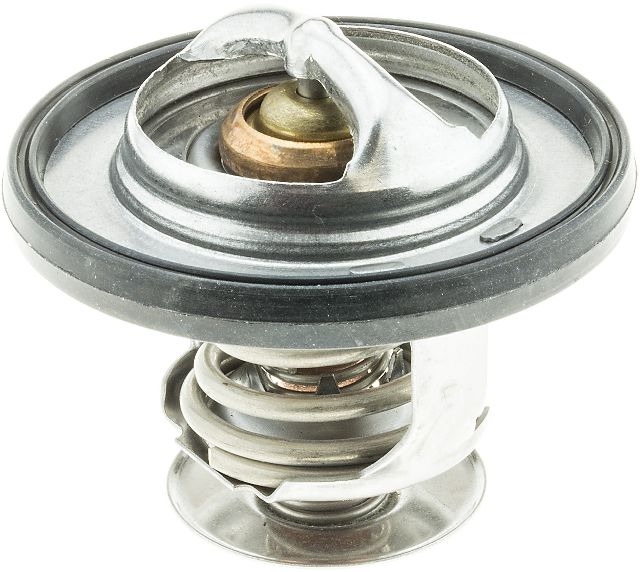
- Engine Coolant Thermostat
(OEM #5184651AH (superseded by 5184651AJ for 3.6L V6))— This is the most common failure part for a P0116 code, as it gets stuck open and prevents the engine from warming up properly. It is sold as a complete housing assembly.
Trusted brands: Mopar, Motorad
OEM price range: $60-$100
Aftermarket price range: $40-$70 - Engine Coolant Temperature (ECT) Sensor
(OEM #05149077AB (for 3.6L V6) / 56027873 (for 5.7L V8))— The sensor provides the temperature reading to the PCM. It can fail and send incorrect or erratic signals, directly causing a P0116 code. Part numbers differ between V6 and V8 engines.
Trusted brands: Mopar, Bosch, NTK, Delphi
OEM price range: $30-$50
Aftermarket price range: $15-$35 - Engine Coolant / Antifreeze
(OEM #68163848AB)— Required when replacing the thermostat or sensor, as some coolant will be lost. It's critical to use the correct OAT (Organic Additive Technology) 10-year/150,000-mile coolant specified for the vehicle to prevent cooling system damage.
Trusted brands: Mopar
OEM price range: $25-$40 per gallon
Aftermarket price range: $20-$30 per gallon
Related Codes That Often Appear With This One
- P0128 — Coolant Thermostat (Coolant Temperature Below Thermostat Regulating Temperature). This code is very similar to P0116 and often appears alongside it, strongly pointing to a thermostat that is stuck open and preventing the engine from reaching operating temperature.
Technical Service Bulletins (TSBs) & Recalls
- 18-044-26: Mentions P0116 in a list of codes that may be resolved with a PCM software update on 2014 models.
Platform-Specific Known Issues
- PCM Software Update (2014 Models): A PCM software update may be required to fix this code on some 2014 models, as mentioned in TSB #18-044-26.
- ECT Sensor Location - 3.6L V6: On the 3.6L V6 engine, the ECT sensor is located on the thermostat housing, which is positioned at the back of the engine in the valley between the cylinder heads, underneath other components. This makes it significantly more difficult to access and replace compared to the V8.
- ECT Sensor Location - 5.7L/6.4L V8: On the V8 HEMI engines, the ECT sensor is a screw-in type that is much easier to access, typically located on the front of the engine near the water pump or intake manifold.
Mechanic-Grade Diagnostic Values
- ECT Sensor Resistance — expected: Approximately 2000-3000 Ω at 20°C (68°F), decreasing to 200-300 Ω at 90°C (194°F).. Failure: Resistance is outside the expected range for a given temperature, or shows an open/infinite reading.
- ECT Sensor Signal Voltage (Cold Engine) — expected: Approximately 2.0V to 3.0V after a cold soak.. Failure: Voltage is significantly different, such as 0V (short to ground) or 5.0V (open circuit).
- ECT Sensor Signal Voltage (Warm Engine) — expected: Should decrease smoothly to around 0.5V as the engine reaches operating temperature.. Failure: Voltage stays high, jumps erratically, or doesn't decrease as the engine warms up.
- Cold Start Sensor Comparison (ECT vs IAT vs Ambient) — expected: After an 8+ hour cold soak, the ECT, IAT, and Ambient Temp sensor readings should all be within 10°C (18°F) of each other.. Failure: The ECT sensor reading is an outlier compared to the other two sensors.
Wiring & Ground Locations
- ECT Sensor Ground (Shared) — The ECT sensor receives its ground reference from the PCM via the sensor ground circuit. A key engine-to-chassis ground is G905A, located on the right rear of the engine compartment for 2014 models.. A poor engine ground at G905A or other locations can cause a floating ground for multiple sensors, including the ECT, leading to erratic readings and fault codes.
- ECT Sensor Signal Wire (PCM Pin) — For a 2015 Durango, the ECT sensor signal wire (often a K2 circuit, Dark Blue/Dark Green wire) runs to a specific pin on the Powertrain Control Module (PCM) C2 connector.. When diagnosing a persistent wiring fault (open or short), a technician needs to test for continuity from the sensor connector directly to the corresponding pin at the PCM to isolate the location of the break or short in the harness.
Real Owner Repair Stories
- DodgeDurango.net forum user (2014 Dodge Durango 3.6L) — Check engine light with code P0116.
❌ Tried (didn't work) Initially, the user only replaced the thermostat, but the code returned.
✅ What actually fixed it The problem was resolved after replacing both the thermostat housing assembly and the engine coolant temperature sensor at the same time. The user noted that while the thermostat was the likely primary cause, replacing the sensor was recommended due to the high labor involved in accessing the area on the 3.6L engine.
OEM Part Supersession History
5184651AH→5184651AJ— Part revision by the manufacturer. Often done to improve reliability or make minor design changes.
Heads up: The new part number (5184651AJ) is the correct and current replacement for the older versions (including AF, AG, AH, AI) and should be used for repairs.
Helpful Videos
![How to Fix P0116 Engine Code in 3 Minutes [2 DIY Methods / Only $7.31]](https://img.youtube.com/vi/lEaB_7q1xKI/mqdefault.jpg)


We Have This Part in Stock


The information in this article is provided for general reference and educational purposes only. Vehicle specifications, procedures, and part compatibility can vary by production date, trim level, and region. Always consult your vehicle's factory service manual and verify part numbers before purchasing or performing repairs. Safety-critical components such as airbags, seat belts, and braking systems should be installed by a qualified professional.
- Dodge DURANGO:
- 🎬 Helpful Videos
- 🛍️ Shop This Part
- What's Unique About the 2014-2021 Dodge DURANGO
- Diagnostic Flowchart
- Symptoms You May Notice
- Most Likely Causes
- Rare But Worth Checking
- Diagnosis Steps
- Parts You'll Likely Need
- Related Codes That Often Appear With This One
- Technical Service Bulletins (TSBs) & Recalls
- Platform-Specific Known Issues
- Mechanic-Grade Diagnostic Values
- Wiring & Ground Locations
- Real Owner Repair Stories
- OEM Part Supersession History
- 🎟️ Get 5% Off