

P0116 on 2011-2015 Chrysler 200: Engine Coolant Sensor Causes and Fixes
On the 2011-2015 Chrysler 200, P0116 is most often caused by either a faulty Engine Coolant Temperature (ECT) sensor or outdated powertrain software. Before replacing parts, check with a dealer for software updates (TSBs), especially for 2012 models (TSB 18-080-16) and 2015 2.4L models (TSB 18-022-17 REV. A). Replacing the sensor is a simple, sub-$50 DIY job, but a stuck thermostat is also a common cause and should be considered if the engine warms up very slowly.
- Before buying any parts, call a Chrysler dealer with your VIN to check for open TSBs related to PCM updates for P0116.
- If the engine warms up very slowly, the thermostat is the most likely culprit, not the sensor.
- If the temperature gauge is erratic or jumps wildly, the ECT sensor or its wiring is the most likely cause.
- The ECT sensor is in a different location on the 2.4L engine (passenger side, in thermostat housing) versus the 3.6L V6 (driver's side, in cylinder head).
- Replacing the thermostat and housing assembly together is recommended because the original plastic housing can warp.
What's Unique About the 2011-2015 Chrysler 200
The Chrysler 200 from this era is known for setting false P0116 codes due to overly sensitive software in the Powertrain Control Module (PCM). Chrysler released multiple Technical Service Bulletins (TSBs) to address this, which instruct dealers to reprogram the PCM with updated software. Specifically, TSB 18-080-16 targets the 2012 model year for this issue, while TSB 18-022-17 REV. A and others apply to the 2015 model with the 2.4L engine. This means that on this specific vehicle, a P0116 code is very often a software issue, not a hardware failure. Ignoring this and immediately replacing the sensor can lead to the code returning.
Diagnostic Flowchart
Tap your situation to follow the diagnostic path that matches what you're seeing on this vehicle.
Generation note: This range covers two generations of the Chrysler 200: the first generation (2011-2014, JS platform) and the first model year of the second generation (2015, UF platform). The provided TSBs from Chrysler cover model years in both generations (specifically 2012 and 2015), indicating the software-related cause can affect both distinct platforms.
Symptoms You May Notice
- Check Engine Light is on
- Engine temperature gauge reading is erratic, jumps around, or stays on cold
- Cooling fans run constantly, even when the engine is cold
- Reduced fuel economy due to the PCM defaulting to a rich fuel mixture
- Engine running rough, hesitating, or hard starting, especially when cold
- Heater may not blow warm air
- Black smoke from the exhaust in some cases due to an overly rich condition
- Replacing the ECT sensor when the root cause is outdated PCM software that requires a dealer reflash.
- Replacing the ECT sensor when the root cause is a thermostat that is stuck open, causing a slow warm-up.
- Replacing the thermostat when the ECT sensor itself is sending erratic, jumpy signals.
Most Likely Causes
- Outdated Powertrain Control Module (PCM) Software 🔴 High Probability Chrysler issued multiple TSBs for this exact issue, indicating the factory software logic was too sensitive. TSB 18-080-16 specifically calls out P0116 on 2012 models. TSB 18-022-17 REV. A and 18-023-16 apply to 2015 models with the 2.4L engine. This is a well-documented software problem.
How to confirm: Call a Chrysler dealership with your VIN. Ask them to check if TSB #18-080-16 (for 2012 models) or #18-022-17 REV. A / #18-023-16 (for 2015 2.4L models) are open for your vehicle.
Typical fix: A Chrysler dealer must reprogram the PCM with the updated software using their wiTECH tool. This is not a DIY repair. The cost for a dealer reflash is typically one hour of labor.
Est. part cost: $0 - Faulty Engine Coolant Temperature (ECT) Sensor 🔴 High Probability Like any electronic sensor, the ECT can fail with age, sending incorrect or irrational readings to the PCM. Given the low cost, it's a common replacement part. The sensor location differs by engine.
How to confirm: Use a scan tool to monitor the ECT data in real-time. On a cold engine, it should be within 5-10°F of the ambient air temperature sensor reading. As the engine warms up, the temperature should rise smoothly without erratic jumps. A jumpy reading strongly suggests a bad sensor or wiring.
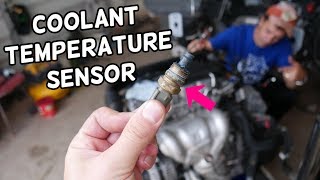
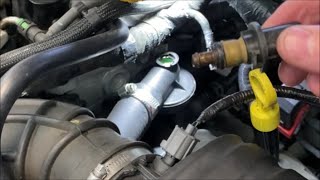
Typical fix: Replace the Engine Coolant Temperature sensor. On the 2.4L engine, it is on the passenger side in the thermostat housing. 🎬 See this walkthrough for replacing the sensor on 2.4L engines. On the 3.6L V6, it is on the front of the engine, on the driver's side, near the thermostat housing.
Est. part cost: $25-$70 - Stuck or Faulty Thermostat 🟡 Medium Probability If the thermostat is stuck open, the engine will take too long to reach operating temperature. The PCM sees this slow warm-up via the ECT sensor and flags it as a performance problem (P0116) or sets a P0128 code.
How to confirm: Monitor the ECT temperature on a scan tool during warm-up. If it rises very slowly and struggles to reach the normal operating temperature (around 195-205°F), the thermostat is likely stuck open. The upper radiator hose may also feel only lukewarm when the engine should be hot.
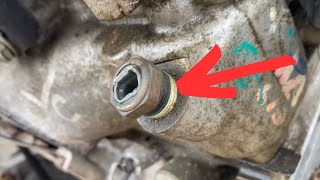
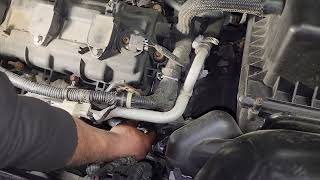
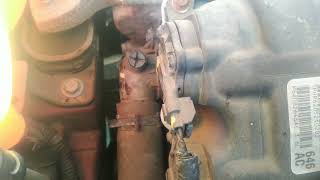
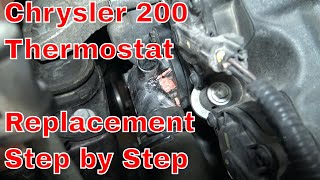
Typical fix: Replace the thermostat and housing assembly. 🎬 Watch: Step-by-step guide to replacing the V6 thermostat and housing. It's recommended to replace the entire plastic housing as it can warp or become brittle over time, and often a new sensor is included.
Est. part cost: $40-$100 - Low Engine Coolant or Air in the System ⚪ Low Probability If the coolant level is low, the sensor may be exposed to air pockets instead of coolant, causing sudden, inaccurate readings that the PCM flags as a performance fault.
How to confirm: Visually inspect the coolant reservoir. If it is low, top it off. After any cooling system service, ensure it is properly bled to remove all air pockets.
Typical fix: Top off coolant to the correct level with the specified type (OAT for this vehicle) and bleed the cooling system. If the level drops again, diagnose and repair the source of the leak.
Est. part cost: $15-$30 - Wiring or Connector Issue ⚪ Low Probability Damage to the wires leading to the ECT sensor or corrosion in the connector can disrupt or add resistance to the signal, causing the PCM to see an irrational reading.
How to confirm: Visually inspect the wiring harness and connector for the ECT sensor. Check for breaks, corrosion, or loose pins. A 'wiggle test' on the connector while monitoring live data can reveal a poor connection if the temperature reading jumps.
Typical fix: Repair the damaged wiring or clean/replace the connector pigtail.
Est. part cost: $10-$40
Rare But Worth Checking
- Faulty Powertrain Control Module (PCM): This is extremely rare. All other possibilities, especially software updates, sensor/thermostat failures, and wiring issues should be exhausted before considering a PCM replacement.
- Leaking Oil Filter Housing (3.6L V6): On the 3.6L Pentastar engine, the oil filter housing assembly is made of plastic and sits in the engine valley. It is notorious for developing coolant and oil leaks. A coolant leak here can drip down the back of the engine, and while it won't directly cause P0116, the resulting low coolant level can. This leak is often misdiagnosed.
Diagnosis Steps
- Check for TSBs: This should be the first step. Call a Chrysler dealer with your VIN to see if any PCM software updates (TSB 18-080-16, 18-022-17, etc.) related to P0116 are open for your vehicle.
- Check Coolant Level: Ensure the coolant reservoir is filled to the proper level. If low, top it off and check for visible leaks.
- Scan Live Data (Cold Engine): Use an OBD-II scanner to monitor live data. With the engine cold (off for several hours), compare the Engine Coolant Temperature (ECT) reading to the Intake Air Temperature (IAT) reading. They should be within a few degrees of each other. A large discrepancy points to a faulty ECT sensor.
- Monitor Warm-Up: Start the engine and watch the ECT reading on the scanner. It should climb steadily to the normal operating range (approx. 195-205°F) and stabilize. If it warms up extremely slowly or never reaches this temperature, suspect a stuck-open thermostat.
- Check for Erratic Readings: If the temperature reading jumps around randomly (e.g., from 150°F to 230°F to 90°F in seconds), the ECT sensor is almost certainly faulty or has a bad electrical connection.
- Inspect Wiring: Visually inspect the ECT sensor's connector and wiring for any signs of damage, corrosion, or looseness. Perform a wiggle test on the harness while watching live data.
- Test the Sensor: If you suspect the sensor, you can test its resistance with a multimeter. At room temperature (around 68°F/20°C), it should read between 2,000 and 3,000 ohms. However, given the low cost, replacement is often easier than testing.
- Replace Parts: Based on your findings, replace the most likely component. If no hardware issues are found after thorough testing, the problem is very likely the PCM software, requiring a dealer visit.
Parts You'll Likely Need
- Engine Coolant Temperature (ECT) Sensor
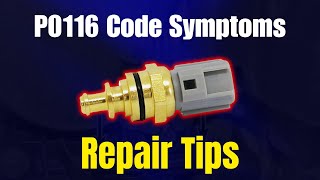
(OEM #5149077AB)— This sensor provides the raw temperature reading to the PCM. It can fail electrically or become inaccurate over time, directly causing a P0116 code. This part is also listed under alternate number 05149077AB and replaces 5149096AB
Related Codes That Often Appear With This One
- P0128 — This code for 'Coolant Temperature Below Thermostat Regulating Temperature' is very closely related and often points directly to a stuck-open thermostat, which is also a common cause of P0116.
- U0140 — Listed in TSB #18-080-16 and #18-022-17 REV. A as a code that can be resolved by the same PCM software update that fixes P0116.
- P0441 — Listed in TSB #18-022-17 REV. A as a code that can be resolved by the same PCM software update.
- P1D73 — Listed in TSB #18-022-17 REV. A as a code that can be resolved by the same PCM software update.
Technical Service Bulletins (TSBs) & Recalls
- 18-022-17 REV. A: Addresses P0116 among other codes, fixed by a PCM software update.
- 18-080-16: Specifically mentions P0116 on 2012 MY vehicles, fixed by a PCM software update.
- 18-023-16 REV. D: Also lists P0116 as a code addressed by a PCM software update.
Platform-Specific Known Issues
- A primary issue for the 2011-2015 Chrysler 200 is the high likelihood of the P0116 code being triggered by a software glitch rather than a hardware failure. Owners who replace the sensor or thermostat without first checking for Technical Service Bulletins (TSBs) often report the Check Engine Light returning.
- For the 2012 model year specifically, TSB 18-080-16 was released to correct a false P0116 code via a PCM reflash.
- For the 2015 model year with the 2.4L 'Tigershark' engine, TSB 18-022-17 REV. A and subsequent revisions were issued to address P0116 among other codes with a software update.
- On the 3.6L Pentastar V6, a common leak from the oil filter housing assembly can cause coolant loss, leading to air pockets in the system and erratic temperature readings that can trigger P0116. This should be inspected carefully.
Mechanic-Grade Diagnostic Values
- ECT Sensor Resistance (Negative Temperature Coefficient) — expected: Approx. 2000-3000 Ω at 20°C (68°F) and 200-300 Ω at 90°C (194°F).. Failure: Resistance is outside the expected range at a known temperature, or shows an open/short circuit.
- ECT Sensor Signal Voltage — expected: Approx. 2.0V - 3.0V on a cold engine, dropping to around 0.5V when the engine is fully warmed up.. Failure: Voltage that is stuck, erratic, or does not correspond to the change in engine temperature. A signal shorted to ground will read near 0V, while an open circuit will read near the 5V reference.
- ECT Sensor Reference Voltage — expected: A steady 5V supplied from the PCM to the sensor circuit.. Failure: Voltage that is not present or significantly lower than 5V, indicating a PCM or wiring issue upstream of the sensor.
Scan Tool Commands That Help
- wiTECH 2.0 (OEM Dealer Tool): View live ECT sensor data, graph temperature changes over time, and check for PCM software updates (flashes). — This is the definitive tool for diagnosing software-related P0116 issues by checking for and applying TSB-related PCM updates. It also provides the most detailed live data for monitoring sensor performance.
- High-End Aftermarket (e.g., Foxwell NT510 Elite, Autel): Active Tests / Bidirectional Controls for components like the cooling fan. — To manually command the cooling fans on and off. This helps verify if the fan control circuit is working, which is relevant if overheating or incorrect fan behavior is a symptom alongside P0116.
Wiring & Ground Locations
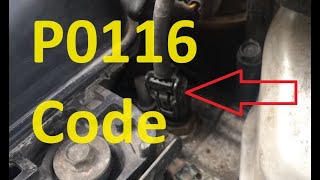
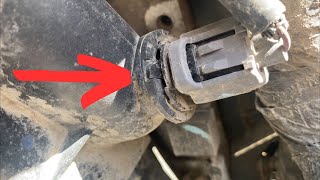
- ECT Sensor Connector — Plugs directly into the ECT sensor. On the 2.4L, it's on the passenger side thermostat housing. On the 3.6L, it's on the front, driver's side of the engine near the thermostat housing.. This is the most common point of failure for wiring issues. It's a 2-pin connector. One pin is the 5V reference from the PCM, and the other is the signal return to the PCM. Corrosion or damage here will directly cause incorrect readings.
- ECT Sensor Connector Pigtail — Replacement pigtails, such as Standard Motor Products S2442 or Wells 1P2227, are available with a 2-wire harness.. If the original connector or nearby wires are corroded or broken, splicing in a new pigtail is the standard repair. These kits typically include weatherproof splice connectors.
- PCM Connector C2, Pin 11 (2015 2.4L) — At the Powertrain Control Module (PCM).. According to a wiring diagram for the 2015 2.4L model, the ECT signal wire (VIO/BRN) runs to pin 11 of the C2 connector at the PCM. This is a key location for advanced diagnostics, such as checking for a continuous, non-shorted wire between the sensor and the PCM.
OEM Part Supersession History
5149096AB→5149077AB— Part number update/replacement.
Heads up: 5149077AB is the current, correct OEM part number for the ECT sensor on the 2011-2017 Chrysler 200 (both 2.4L and 3.6L engines). The older number 5149096AB has been replaced by this part.
Model Year Variations Within This Range
- 2011 and earlier 2.4L (Pre-200 models, but relevant context): Some earlier 2.4L engines used two ECT sensors. However, 2012 and later 2.4L models, like those in the specified vehicle range, use only one ECT sensor located on the coolant adapter/thermostat housing.
- 2012: This model year is specifically called out in TSB #18-080-16 for having P0116 and U0140 codes that can be resolved with a PCM software update.
- 2015 (2.4L Engine): This model year and engine are specifically mentioned in multiple TSBs (#18-022-17 REV. A, #18-023-16) for P0116 being resolvable with a PCM software update.
Helpful Videos
We Have This Part in Stock


The information in this article is provided for general reference and educational purposes only. Vehicle specifications, procedures, and part compatibility can vary by production date, trim level, and region. Always consult your vehicle's factory service manual and verify part numbers before purchasing or performing repairs. Safety-critical components such as airbags, seat belts, and braking systems should be installed by a qualified professional.
- Chrysler 200:
- 🎬 Helpful Videos
- 🛍️ Shop This Part
- What's Unique About the 2011-2015 Chrysler 200
- Diagnostic Flowchart
- Symptoms You May Notice
- Most Likely Causes
- Rare But Worth Checking
- Diagnosis Steps
- Parts You'll Likely Need
- Related Codes That Often Appear With This One
- Technical Service Bulletins (TSBs) & Recalls
- Platform-Specific Known Issues
- Mechanic-Grade Diagnostic Values
- Scan Tool Commands That Help
- Wiring & Ground Locations
- OEM Part Supersession History
- Model Year Variations Within This Range
- 🎟️ Get 5% Off