

P0113 on 2017-2018 Jaguar XF: Intake Air Temp Sensor Causes and Fixes
This code indicates a high voltage signal from the Intake Air Temperature (IAT) sensor circuit. The most common cause is a faulty IAT sensor, which is often integrated into the Mass Airflow (MAF) sensor. Replacing the sensor is the typical fix.
- P0113 means the computer sees a high voltage (open circuit) from the intake air temperature sensor, making it think the air is extremely cold (-40°).
- The most likely cause is a failed IAT sensor, which on the 2017-2018 XF is usually part of the Mass Airflow (MAF) sensor assembly.
- On 2.0L Ingenium petrol engines, check for an air leak at the intake elbow below the throttle body, as specified in TSB SSM73671, before replacing parts.
- This fault will cause the engine to run rich, leading to poor fuel economy and potentially other codes like P2178.
- Diagnosis is straightforward with a scan tool that can read live IAT data; a -40° reading is the key indicator.
What's Unique About the 2017-2018 Jaguar XF
On many Jaguar engines, including those in the 2017-2018 XF (2.0L Ingenium and 3.0L V6), the IAT sensor is not a standalone part but is integrated into the Mass Airflow (MAF) sensor assembly. This means that if the IAT portion of the sensor fails, the entire MAF sensor unit usually needs to be replaced. A Jaguar Technical Service Bulletin (SSM73671) specifically links P0113 with other codes like P0111 (range/performance) and P2178 (system too rich). Interestingly, the TSB points to a potential air leak from an incorrectly fitted air intake elbow on the 2.0L Ingenium petrol engine as a root cause for this group of codes, not just a sensor failure.
Diagnostic Flowchart
Tap your situation to follow the diagnostic path that matches what you're seeing on this vehicle.
Symptoms You May Notice
- Check Engine Light is on
- Poor fuel economy
- Difficulty starting the engine, especially in cold weather
- Rough idle or stalling
- Poor acceleration or engine performance
- Engine misfires
- Black, sooty spark plugs with a gasoline smell
- Replacing the oxygen sensors when a rich condition code (like P2178 or P0172) appears alongside P0113. The rich condition is often a symptom of the bad IAT reading, not a separate problem.
- Unnecessarily replacing the MAF sensor when the root cause is an air leak elsewhere in the intake system, as highlighted by TSB SSM73671 for Ingenium engines.
Most Likely Causes
- Faulty Intake Air Temperature (IAT) Sensor 🔴 High Probability The IAT sensor is integrated with the MAF sensor on these models. The internal thermistor, a resistor that changes resistance with temperature, can fail over time, causing an open circuit and a high voltage reading.
How to confirm: Use a scan tool to monitor the IAT live data. A reading of -40°F/-40°C strongly indicates a failed sensor or open circuit. You can also test the sensor's resistance with a multimeter while heating it with a hairdryer to see if the resistance changes; no change indicates a failure. 🎬 Watch: How to test and replace an IAT sensor
Typical fix: Replace the IAT sensor. Since it is integrated into the MAF sensor, the entire MAF sensor assembly must be replaced.
Est. part cost: $50-$250 - Damaged Wiring or Connector 🟡 Medium Probability Engine bay heat and vibration can cause wires to become brittle, frayed, or broken. The connector pins can also become corroded or loose, creating an open circuit. This is especially common after recent engine work where the harness may have been disturbed.
How to confirm: Visually inspect the wiring harness and connector leading to the IAT/MAF sensor for any signs of damage, melting, or corrosion. Use a multimeter to check for the correct reference voltage (typically 5V) and a good ground at the connector with the ignition on.
Typical fix: Repair the damaged section of wire or replace the connector pigtail.
Est. part cost: $10-$50 - Air Leak at Intake Elbow (Ingenium Engines) 🟡 Medium Probability TSB SSM73671 specifically identifies that on 2.0L Ingenium petrol engines, the air intake elbow below the throttle body can be incorrectly fitted, causing an unmetered air leak. This can trigger a group of codes including P0113, P0111, P0100, and P0299.
How to confirm: A smoke test of the intake system is the definitive way to confirm a leak. The TSB recommends using the JLR-approved smoke tester to check for leaks around the intake elbow and throttle body connection.
Typical fix: Correctly refit the air intake elbow to the throttle body to ensure a proper seal.
Est. part cost: $0 if no parts are damaged. - Dirty IAT/MAF Sensor Element ⚪ Low Probability Oil vapors from the crankcase ventilation system or debris from a dirty air filter can coat the sensor element, insulating it and causing incorrect readings.
How to confirm: Remove the sensor and visually inspect the sensing element for contamination.
Typical fix: Clean the sensor carefully using a dedicated MAF sensor cleaner spray. Do not touch the sensor element with your fingers or a tool. Allow it to dry completely before reinstalling. 🎬 See this quick guide on cleaning your sensor safely
Est. part cost: $10-$15
Rare But Worth Checking
- Faulty Powertrain Control Module (PCM): This is extremely rare. All other possibilities, especially sensor and wiring issues, should be exhaustively ruled out before considering the PCM as the cause.
Diagnosis Steps
- Connect an OBD-II scanner and confirm the P0113 code is present. Check for any other related codes like P0111, P2178, or MAF-related codes.
- View the live data stream for the Intake Air Temperature sensor. If it reads a static, extremely low value (like -40°F/-40°C), it confirms a circuit high fault.
- Turn the engine off. Locate the IAT sensor, which is integrated into the MAF sensor on both the 2.0L Ingenium and 3.0L V6 engines. It is found in the intake tube just after the air filter box.
- Inspect the sensor's electrical connector and wiring for any visible damage, corrosion, or loose connections. Wiggle the harness while monitoring live data (if possible) to check for intermittent faults.
- Disconnect the sensor. With the key on and engine off, use a multimeter to check for a 5-volt reference signal on one pin and a good ground on another at the connector.
- If voltage and ground are present, the wiring is likely okay. If the sensor element appears dirty, try cleaning it with a dedicated MAF sensor cleaner. Allow it to dry completely before reinstalling.
- For 2.0L Ingenium engines, perform a smoke test on the intake system, paying close attention to the intake elbow below the throttle body, as indicated by TSB SSM73671.
- If cleaning doesn't work, the sensor was clean, and no air leaks are found, replace the MAF sensor assembly.
- After replacement or repair, clear the codes with the scanner and perform a test drive to ensure the code does not return.
Parts You'll Likely Need
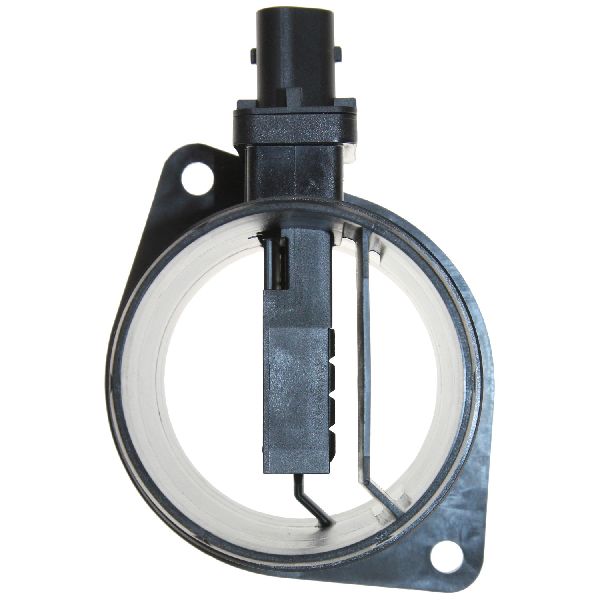
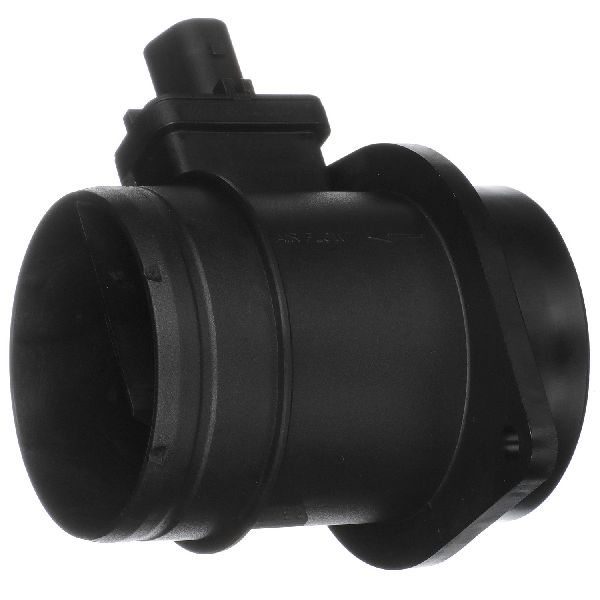
- Mass Airflow (MAF) Sensor with Integrated IAT
(OEM #FW93-12B579-AC (for 2.0L Ingenium), C2D38211 (for 3.0L V6) - *verify with VIN*)— This is the most common failure point for a P0113 code on this vehicle, as the IAT sensor is typically integrated into the MAF sensor housing.
Trusted brands: Bosch, Denso, Genuine Jaguar
OEM price range: $180-$300
Aftermarket price range: $70-$200
Related Codes That Often Appear With This One
- P0111 — This code for 'IAT Sensor Circuit Range/Performance' often accompanies P0113, as a high circuit fault is a type of performance issue. The provided TSB SSM73671 lists them together.
- P2178 — This code for 'System Too Rich Off Idle' is a direct consequence of the P0113 fault. The PCM injects excess fuel because it incorrectly thinks the intake air is extremely cold and dense. The TSB SSM73671 also confirms this link.
- P0101 — A code related to the MAF sensor performance might appear since the IAT is often housed within the same unit. A failure in one part of the assembly can sometimes affect the other, or an air leak could affect both readings.
- P0172 — Similar to P2178, this code for 'System Too Rich (Bank 1)' can be triggered as the PCM over-fuels the engine based on the false -40° temperature reading.
Technical Service Bulletins (TSBs) & Recalls
- SSM73671: Mentions P0113-00 - Intake Air Temperature Sensor 1 Circuit High Bank 1. For 2.0L Ingenium Petrol engines, it links this code to a potential air leak at the intake elbow below the throttle body, which can also cause lack of power and other DTCs like P0111, P2178, and P0299.
Platform-Specific Known Issues
- Jaguar Technical Service Bulletin SSM73671 explicitly mentions P0113 on 2017 models with the 2.0L Ingenium petrol engine. It suggests that an incorrectly fitted air intake elbow can cause an air leak, triggering P0113 along with P0111, P2178, P0100, and P0299. The fix is to check for the leak with a smoke machine and properly refit the elbow.
Mechanic-Grade Diagnostic Values
- IAT Sensor Resistance — expected: Resistance should decrease as temperature increases. Approx. 37 kOhms @ 20°C (68°F), 24 kOhms @ 30°C (86°F), 2.8 kOhms @ 90°C (194°F). Note: Values can vary; comparing to a new part is a reliable test.. Failure: Infinite resistance (open circuit) or a resistance value that does not change when the sensor is heated with a hairdryer.
- IAT/MAF Connector Voltage (Key On, Engine Off) — expected: One pin should show a ~5V reference signal from the PCM. Another pin should show near 0V for ground.. Failure: Absence of the 5V reference or a ground reading significantly above 0V points to a wiring or PCM issue.
- Engine Ground Point Voltage Drop — expected: Less than 0.5V (500mV) between the negative battery terminal and various engine block ground points while an assistant cranks the engine (with fuel disabled).. Failure: A reading higher than 500mV indicates a poor ground connection that must be located, cleaned, and tightened.
Hidden / Shadow Codes Worth Checking
- P0113-00: This is the full DTC format often seen on Jaguar-specific scanners. The '-00' suffix indicates 'no sub type information,' meaning it is the generic 'Circuit High' fault without more specific details from the PCM. (see via A professional-grade scanner capable of reading manufacturer-specific codes, such as Jaguar SDD (Symptom Driven Diagnostics) or Pathfinder.)
Scan Tool Commands That Help
- Manual Test / Generic Scan Tool: Induce Opposite Code — If you suspect a wiring issue but the connector voltage seems okay, this can confirm the PCM and wiring integrity. Disconnect the IAT/MAF sensor and use a jumper wire to connect the signal and ground pins in the harness connector. This should trigger the opposite code, P0112 (Circuit Low). If it does, the wiring and PCM are likely good, and the sensor itself is faulty.
- OBD-II Scanner: Clear Adaptations / Reset ECU — After replacing the MAF/IAT sensor, it is good practice to clear any stored trouble codes and reset the ECU's learned fuel trims. This can be done by using a scanner's 'Clear Codes' function or by disconnecting the battery's negative terminal for at least 15 minutes. This forces the ECU to relearn values with the new, functioning sensor.
Wiring & Ground Locations
- Electrical Box behind Wheel Arch — Behind the right-side (passenger side in US) front wheel arch liner, there is an electrical box housing a stud where the alternator-to-battery cable passes through the bulkhead.. This box can fill with road debris and, in areas where roads are salted, this crud can become conductive and cause electrical issues, including short-to-ground faults that could affect sensor readings.
- Engine Ground Strap — The main engine grounding strap is typically located on the lower right side of the engine/frame, often connecting near the starter motor to the chassis.. A poor main engine ground can cause a floating ground reference for multiple sensors, including the IAT, leading to incorrect voltage readings and fault codes. A voltage drop test is required to confirm its integrity.
- MAF/IAT Sensor Connector — The 4-pin or 5-pin connector plugs directly into the MAF sensor body, located in the intake tube right after the air filter box.. This is the most common point of failure for wiring issues. Pins can corrode, and the harness itself can become frayed or damaged from engine heat and vibration, causing an open circuit (P0113) or a short (P0112).
Real Owner Repair Stories
- Jaguar Forums (Jaguar F-Type (similar engine architecture and wiring)) — Rough idle when MAF sensor was connected, but a good idle when disconnected. Check Engine Light with code P0112 (Circuit Low).
❌ Tried (didn't work) Replacing spark plugs., Replacing the MAF sensor with a used unit., Cleaning the MAF sensor., Performing a hard battery reset.
✅ What actually fixed it The original MAF connector had melted due to a cracked crankcase breather hose venting hot gases onto it. The final fix was to splice in new wires for the MAF connector, resolving the poor connection that was causing the fault code.
Model Year Variations Within This Range
- 2018: For the 2018 model year, Jaguar introduced new 2.0L four-cylinder Ingenium petrol engines with 197hp (200PS) and 247hp (250PS). Later in the model year, a higher-output 296hp (30t) version was also introduced. While the IAT sensor's function and location (within the MAF) remain the same, technicians should be aware of these different engine variants when sourcing parts or consulting service data.
Helpful Videos
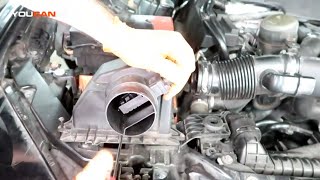
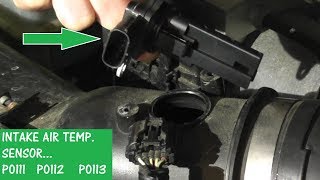


Used OEM Parts in Stock


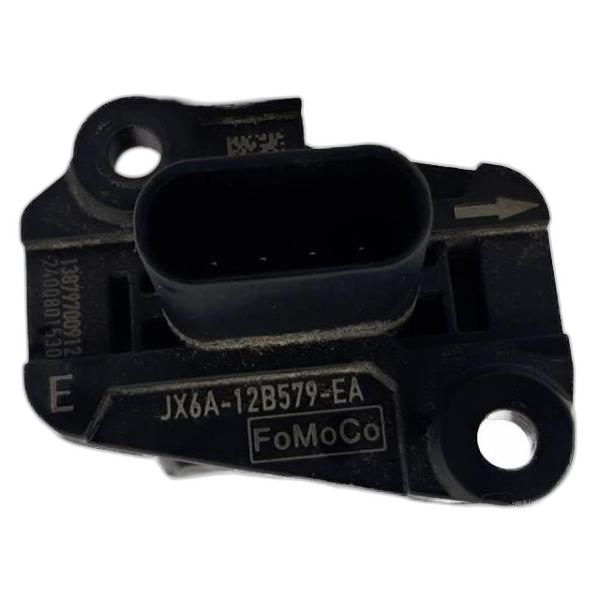
New Aftermarket Parts Available

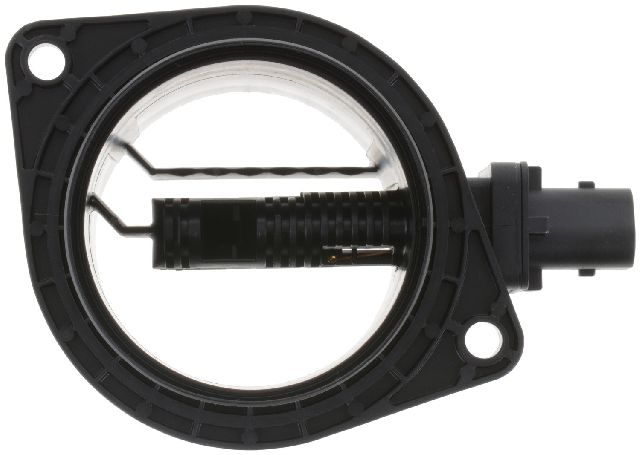


The information in this article is provided for general reference and educational purposes only. Vehicle specifications, procedures, and part compatibility can vary by production date, trim level, and region. Always consult your vehicle's factory service manual and verify part numbers before purchasing or performing repairs. Safety-critical components such as airbags, seat belts, and braking systems should be installed by a qualified professional.
- Jaguar XF:
- 🎬 Helpful Videos
- 🛍️ Shop This Part
- What's Unique About the 2017-2018 Jaguar XF
- Diagnostic Flowchart
- Symptoms You May Notice
- Most Likely Causes
- Rare But Worth Checking
- Diagnosis Steps
- Parts You'll Likely Need
- Related Codes That Often Appear With This One
- Technical Service Bulletins (TSBs) & Recalls
- Platform-Specific Known Issues
- Mechanic-Grade Diagnostic Values
- Hidden / Shadow Codes Worth Checking
- Scan Tool Commands That Help
- Wiring & Ground Locations
- Real Owner Repair Stories
- Model Year Variations Within This Range
- 🎟️ Get 5% Off