

P0111 on 2016-2020 Volkswagen Passat: IAT Sensor Range/Performance Causes and Fixes
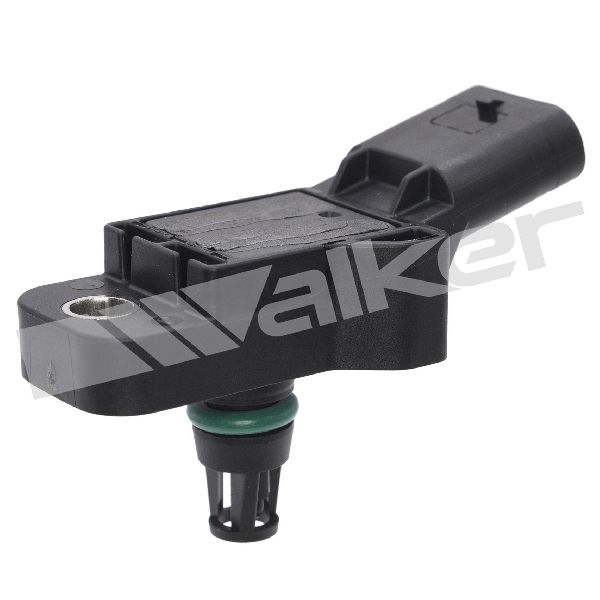
This code usually means the Intake Air Temperature (IAT) sensor is faulty or dirty. On the Passat's EA888 turbo engines, this sensor is integrated with the Manifold Absolute Pressure (MAP) sensor. Cleaning or replacing this combination sensor, which is located on the intake manifold, is the most common fix.
- P0111 on a 2016-2020 Passat points to a problem with the Intake Air Temperature sensor's performance.
- The most likely cause is a dirty or faulty IAT/MAP combination sensor located on the intake manifold.
- Diagnosis involves checking live sensor data with a scan tool and inspecting the sensor and its wiring.
- The fix is often simple and affordable: cleaning the sensor with electronics cleaner or replacing the sensor unit, which is a DIY-friendly job.
What's Unique About the 2016-2020 Volkswagen PASSAT

The 2016-2020 Passat uses the turbocharged EA888 engine family (initially a 1.8T, later a 2.0T). On these engines, Volkswagen integrates the Intake Air Temperature (IAT) sensor with the Manifold Absolute Pressure (MAP) sensor, also called a boost pressure sensor. This means you aren't looking for a small, standalone IAT sensor in the intake tube; you're looking for a larger sensor mounted directly on the intake manifold, which performs both functions. 🎬 Watch: Understanding how the combined boost and IAT sensor works. This combination design is common across modern VW and Audi models using the MQB platform and EA888 engine.
Diagnostic Flowchart

Tap your situation to follow the diagnostic path that matches what you're seeing on this vehicle.
Symptoms You May Notice
- Check Engine Light is on
- Reduced fuel economy
- Engine hesitation or stumbling on acceleration
- Rough or uneven idle
- Difficulty starting, especially in cold weather
- Black smoke from the exhaust if the mixture is too rich
- EPC (Electronic Power Control) light may be illuminated
- Start/Stop system disabled
- Replacing the Mass Airflow (MAF) sensor. While some vehicles integrate the IAT into the MAF, the 2016-2020 Passat with the EA888 engine does not have a MAF sensor and instead integrates the IAT with the MAP sensor on the intake manifold.
Most Likely Causes

- Faulty or Dirty Intake Air Temperature (IAT) / MAP Sensor 🔴 High Probability The sensor is located on the intake manifold where it is exposed to oil vapor and blow-by from the PCV system. This oil residue can coat the sensing element over time, insulating it and causing slow or incorrect temperature readings, which triggers the P0111 performance code.
How to confirm: With a scan tool, compare the IAT reading to the ambient air temperature on a cold engine; they should be within a few degrees of each other. If the reading is stuck at a default value (like -40°F or 257°F) or doesn't change logically as the engine warms up, the sensor is likely bad. The sensor is held in by a single T20 Torx screw.
Typical fix: Remove the sensor from the intake manifold and clean it carefully with MAF or electronics cleaner. Do not touch the sensing element. If cleaning doesn't resolve the issue, replace the sensor assembly. When replacing, it's good practice to wipe out any pooled oil from the sensor port in the manifold.
Est. part cost: $30-$100 - Damaged Wiring or Poor Connector Contact 🟡 Medium Probability Engine vibrations and heat cycles can cause wiring to become brittle or connectors to loosen over time. The connector's locking tab can also break, leading to a poor connection. Oil contamination from a leaking PCV can also degrade the connector and wiring.
How to confirm: Visually inspect the wiring harness and connector for any signs of fraying, melting, or corrosion. Wiggle the connector while monitoring live data on a scan tool to see if the reading fluctuates wildly, indicating a bad connection. Use a multimeter to check for 5V reference and ground at the connector.
Typical fix: Repair the damaged section of wire or replace the connector pigtail. Ensure the connector is clean and securely fastened with contact cleaner if needed.
Est. part cost: $15-$40 - Clogged or Dirty Engine Air Filter ⚪ Low Probability A severely clogged air filter can restrict airflow, potentially causing temperature and pressure readings that the ECU deems implausible under certain conditions, leading to a performance-related code.
How to confirm: Visually inspect the engine air filter. If it is visibly dirty, clogged with debris, or has not been changed in a long time, it needs replacement.
Typical fix: Replace the engine air filter.
Est. part cost: $20-$50
Rare But Worth Checking
- Intake System Air Leak: A significant vacuum leak after the sensor (e.g., a cracked intake manifold, loose hose, or failing PCV valve) can sometimes alter air temperature and pressure in a way that the PCM flags as a performance issue.
- Faulty Powertrain Control Module (PCM): This is very rare. Before condemning the PCM, all other possibilities, including the sensor, wiring, and connections, must be exhaustively ruled out.
- Heat Soak on Dark Colored Vehicles: A specific VW TSB for the 1.4T engine (not the Passat's EA888, but relevant) notes that on hot days, the IAT sensor can get too warm from engine hood heat soak, causing a P0111 at startup. The fix was to install a hood insulation blanket. While not directly applicable, it highlights the sensor's sensitivity to heat.
Diagnosis Steps
- Connect an OBD-II scanner and check for any other stored codes.
- View live data for the Intake Air Temperature sensor. With the engine cold (off for several hours), the IAT reading should be very close to the ambient air temperature and engine coolant temperature readings.
- Start the engine. Monitor the IAT reading to ensure it responds logically to engine temperature changes. It should not be stuck at a fixed value or show erratic behavior.
- Locate the IAT/MAP sensor on the intake manifold. It is typically on the driver's side of the manifold, held in by a single T20 Torx screw.
- Inspect the sensor's electrical connector and wiring for any signs of damage, corrosion, or looseness.
- If the wiring looks good, remove the sensor. It is held by a single T20 Torx screw.
- Inspect the sensor element for contamination (oil, carbon, dirt). Oil pooling from the PCV system is a common issue.
- If dirty, clean it carefully with a dedicated Mass Airflow or electronics cleaner. Do not touch the element. Allow it to dry completely before reinstallation.
- Reinstall the sensor, clear the codes, and perform a test drive to see if the code returns. A drive cycle may be required for the permanent code to clear.
- If the code returns, the sensor itself is likely faulty and should be replaced. Ensure you are using the correct OEM part number as multiple versions exist.
Parts You'll Likely Need

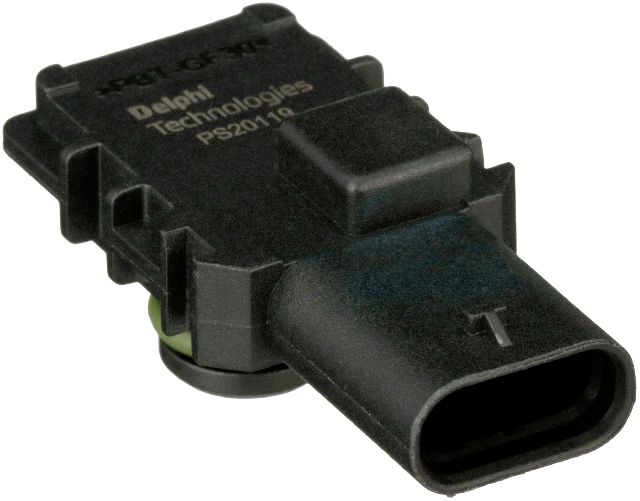
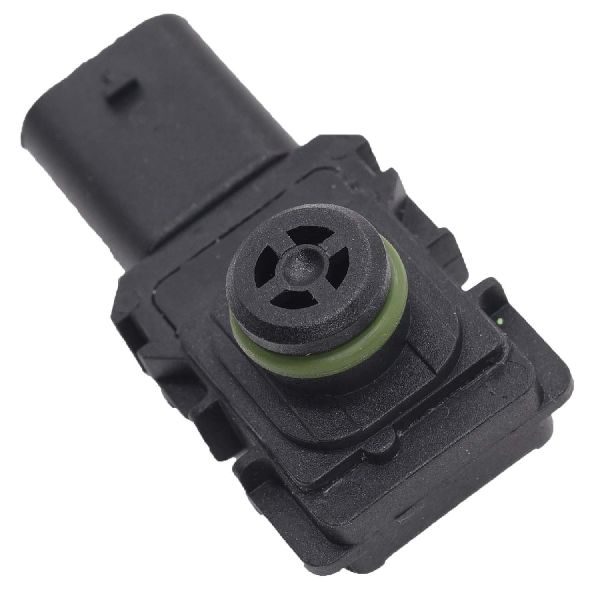
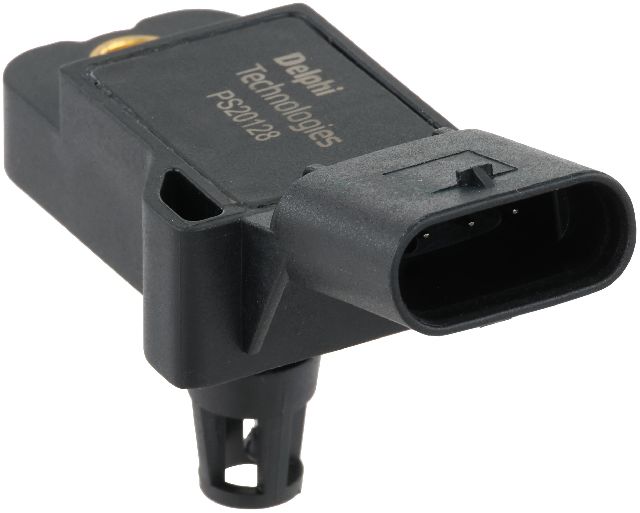
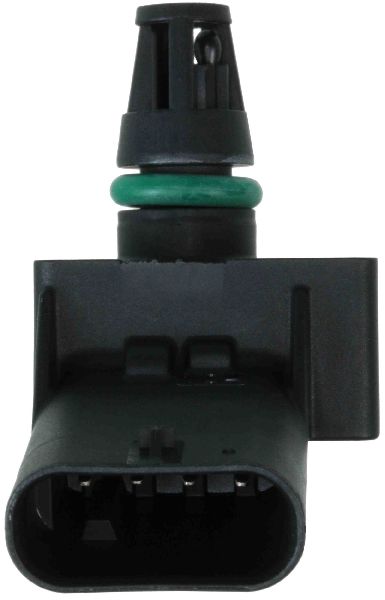
- Intake Air Temperature / MAP Sensor
(OEM #06H906051K (Bosch P/N: 0261230414))— This combination sensor is the most common failure point for a P0111 code on this vehicle. The internal thermistor fails or becomes too insulated by contaminants to read temperature accurately. The original part number may have been superseded.
Trusted brands: Bosch, Genuine Volkswagen
OEM price range: $80-$120
Aftermarket price range: $30-$70
Related Codes That Often Appear With This One
- P0106 — Manifold Absolute Pressure/Barometric Pressure Circuit Range/Performance. Since the IAT and MAP sensors are in the same housing, a failure of the unit can trigger both codes.
- P0112 — Intake Air Temperature Sensor 1 Circuit Low. This indicates a short in the circuit, whereas P0111 is a performance range issue.
- P0113 — Intake Air Temperature Sensor 1 Circuit High. This indicates an open circuit, whereas P0111 is a performance range issue.
Technical Service Bulletins (TSBs) & Recalls
- VIN4APIN20201001: Customer states MIL-on with P0111 (Generic list of codes)
- VIN4APIN20200911: Customer states MIL-on with P0111 (Generic list of codes)
- VIN4APIN20200921: Customer states MIL-on with P0111 (Generic list of codes)
- 01-20-05 (for 1.4T engines): Mentions P0111 caused by heat soak, where the sensor near the hood gets too warm on hot days, causing a rationality fault at startup.
Platform-Specific Known Issues
- Volkswagen has issued several Technical Service Bulletins (TSBs) that list P0111 as a potential fault code that a customer may report. These bulletins (e.g., #VIN4APIN20201001, #VIN4APIN20200911, #VIN4APIN20200921) group P0111 with a wide array of other engine codes, suggesting it can be part of a more complex diagnostic procedure, though it often appears as a standalone issue.
- Oil Contamination: A common failure mode on the EA888 engine is for the IAT/MAP sensor to become coated in oil from the PCV (Positive Crankcase Ventilation) system. Cleaning the sensor and the port in the intake manifold is a frequent repair discussed by owners.
Mechanic-Grade Diagnostic Values
- IAT Sensor Resistance at ~70°F (20-25°C) — expected: 2.0 to 3.0 kΩ (kilo-ohms). Failure: Significantly higher or lower resistance, or an open/infinite reading, indicates a faulty sensor thermistor.
- IAT Sensor Signal Voltage (Key On, Engine Off) — expected: Varies with temperature, typically between 0.5V (hot) and 4.5V (cold). A common reading at 70°F is around 2.5V-3.5V.. Failure: A reading of 0V suggests a short to ground, while a 5V reading suggests an open circuit or a bad ground.
- 5V Reference at Sensor Connector (Key On, Engine Off) — expected: 4.8V - 5.2V. Failure: Voltage outside this range indicates a problem with the ECU's voltage regulator or the wiring between the ECU and the sensor.
Wiring & Ground Locations
- Engine/Gearbox Ground Strap (652) — A primary ground strap connecting the engine block or transmission housing to the vehicle's chassis/frame.. A corroded or loose main engine ground can cause unstable voltage and floating ground references for all engine sensors, including the IAT/MAP sensor, leading to erratic readings and performance codes like P0111.
- Ground Point on Cylinder Head (15) — A ground connection point located directly on the cylinder head of the engine.. This is a critical grounding point for the engine's sensor network. Degradation at this point can introduce noise and instability into the sensor signals that the ECU receives.
- IAT/MAP Sensor Connector Pins — The 4-pin connector at the sensor on the intake manifold.. Testing at the pins is required to diagnose the fault. On a typical 4-pin combined sensor, you will find: Pin 1: Ground, Pin 2: IAT Signal, Pin 3: 5V Reference, Pin 4: MAP Signal. This can vary, so probing is necessary to confirm.
Real Owner Repair Stories
- Ross-Tech Forums (2013 Passat TDI (Note: Different engine, but same sensor function and initial codes)) — Check Engine Light with codes P0111 and P026A.
❌ Tried (didn't work) Clearing codes without repair.
✅ What actually fixed it For the P0111 code, the user removed and cleaned the MAP/IAT sensor with electronics cleaner. This successfully resolved the P0111 code, although the second code (P026A) remained and required further diagnosis of the intercooler system. - YouTube - Austin Does Stuff (2014 VW Passat TDI) — Check Engine Light with a P0111 code, described as 'value high or unreadable'.
✅ What actually fixed it The owner replaced the IAT/MAP sensor with a new OEM Bosch part, which resolved the code. The video shows a comparison of the old, contaminated sensor and the new one.
Model Year Variations Within This Range
- 2016-2017: The standard engine was the 1.8T EA888 Gen 3, producing 170 hp and 184 lb-ft of torque.
- 2018-2020: For the 2018 model year, the base engine was changed to a 2.0T EA888 Gen 3 'B-Cycle' engine. This new engine had a slightly higher horsepower rating (174 hp) but the same torque (184 lb-ft). Despite the displacement change, the location and function of the combined IAT/MAP sensor on the intake manifold remained consistent.
Helpful Videos

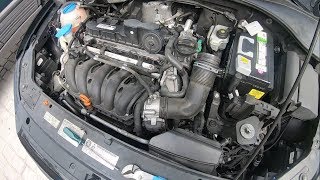
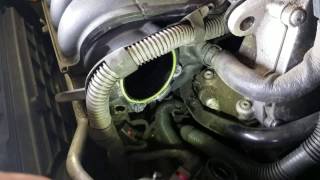
We Have This Part in Stock


The information in this article is provided for general reference and educational purposes only. Vehicle specifications, procedures, and part compatibility can vary by production date, trim level, and region. Always consult your vehicle's factory service manual and verify part numbers before purchasing or performing repairs. Safety-critical components such as airbags, seat belts, and braking systems should be installed by a qualified professional.
- Volkswagen PASSAT:
- 🎬 Helpful Videos
- 🛍️ Shop This Part
- What's Unique About the 2016-2020 Volkswagen PASSAT
- Diagnostic Flowchart
- Symptoms You May Notice
- Most Likely Causes
- Rare But Worth Checking
- Diagnosis Steps
- Parts You'll Likely Need
- Related Codes That Often Appear With This One
- Technical Service Bulletins (TSBs) & Recalls
- Platform-Specific Known Issues
- Mechanic-Grade Diagnostic Values
- Wiring & Ground Locations
- Real Owner Repair Stories
- Model Year Variations Within This Range
- 🎟️ Get 5% Off