

P0111 on 2009-2016 Volkswagen Jetta: Intake Air Temp Sensor Causes and Fixes
P0111 on a VW Jetta usually means the Intake Air Temperature (IAT) sensor is faulty or its readings are illogical. This is often a standalone sensor or one integrated into the MAF or MAP sensor, depending on your engine. A replacement sensor is the most common fix, costing between $25 and $75 for the part. On some models, especially in hot climates, this code can be triggered by 'heat soak' where the sensor gets too hot after parking, a known issue with a TSB.
- P0111 means the IAT sensor's reading is illogical, not just that there's an electrical fault.
- The first diagnostic step is to use a scanner to compare IAT, ECT, and ambient temps on a cold engine. They should be nearly identical.
- Before buying parts, you MUST identify your Jetta's specific engine (2.5L, 2.0T, 1.8T, TDI) to know if the IAT sensor is a standalone part or integrated into the MAF or MAP sensor.
- Don't overlook simple causes like a severely dirty engine air filter or a loose/corroded connector before replacing sensors.
What's Unique About the 2009-2016 Volkswagen JETTA

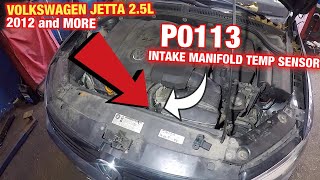
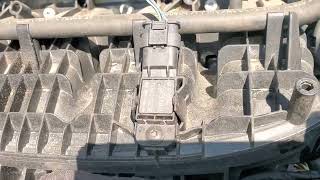
For the 2009-2016 Jetta, which spans two generations (Mk5 and Mk6), the key difference is the variety of engines offered. The location and type of IAT sensor depend entirely on the engine. - 2.5L 5-Cylinder: Typically uses a standalone IAT sensor located in the intake manifold. 🎬 Watch: How to replace the intake manifold temperature sensor - 2.0L TDI (Diesel, e.g., CJAA): The IAT sensor is commonly integrated into the Mass Airflow (MAF) sensor located in the intake tube after the air filter, or into the MAP sensor on the charge pipe. - 1.8T/2.0T TSI (Gen 1/2/3 EA888): The IAT is most often integrated into the Manifold Absolute Pressure (MAP) sensor, also called a T-MAP, located on the intake manifold. 🎬 See this walkthrough for diagnosing and replacing the MAP sensor This variation is the most critical factor in diagnosing and fixing P0111 on these Jettas.
Diagnostic Flowchart

Tap your situation to follow the diagnostic path that matches what you're seeing on this vehicle.
Generation note: This range covers the late Volkswagen Jetta Mk5 (2009-2010) and the Jetta Mk6 (2011-2016). The Mk6 was designed to be a more cost-effective vehicle than the Mk5. For this code, the main difference is the engine lineup and the corresponding location of the IAT sensor. A notable issue for some later models (like the 1.4T) is a TSB related to 'heat soak' causing a P0111 code on startup, which can be fixed by installing a hood insulation blanket.
Symptoms You May Notice
- Check Engine Light illuminated
- Reduced fuel economy
- Engine hesitation or stumbling on acceleration
- Rough idle
- Hard starting, especially in cold weather
- Poor or harsh automatic transmission shifting
- Failed emissions test
- Replacing the IAT sensor when the actual problem is a dirty air filter or a poor connection.
- Replacing the wrong sensor. On many Jetta engines, the IAT is integrated into the MAF or MAP sensor, so it's crucial to identify the correct component for your specific engine before buying parts.
- Replacing the sensor when the root cause is the 'heat soak' issue described in TSB 01-20-05, which requires a hood blanket for a permanent fix.
Most Likely Causes

- Faulty Intake Air Temperature (IAT) Sensor (or integrated MAP/MAF) 🔴 High Probability On turbocharged models (TSI/TDI), the sensor element can get contaminated with oil from the PCV/CCV system, leading to incorrect readings. On all models, sensors can simply fail over time due to age and heat cycles. A known issue, particularly in hot climates, is 'heat soak' where the sensor near the hood gets too hot after parking, causing a large temperature discrepancy on the next start, which triggers the code. A TSB (01-20-05) addresses this.
How to confirm: With a scan tool, compare the IAT reading to the ambient air and engine coolant temperature on a cold engine; they should be within a few degrees of each other. A reading stuck at an extreme value (like -40°F or 257°F) indicates a failed sensor. You can also test the sensor's resistance with a multimeter; for many VW sensors, the resistance at ~68°F (20°C) should be around 2.0-3.0 kOhms, dropping as temperature increases.
Typical fix: Replace the IAT sensor or the integrated MAP/MAF sensor. For the heat soak issue, VW issued a TSB (01-20-05) suggesting the installation of a hood insulation blanket.
Est. part cost: $25-$75 - Damaged Wiring or Corroded Connector 🟡 Medium Probability Engine vibration and heat can cause wires to become brittle and break, especially near the connector. The wiring harness for the 1.8T/2.0T TSI and 2.0L TDI engines, in particular, is noted in forums for having issues with wires breaking inside the insulation near the MAP/IAT sensor connector. This can cause intermittent faults where the IAT reading suddenly spikes.
How to confirm: Visually inspect the wiring harness and connector for the IAT/MAP/MAF sensor. Check for breaks, chafing, or green/white corrosion on the pins. Gently tug on each wire at the connector to see if it stretches or pulls out, which indicates a break inside the insulation. Perform a continuity test on the wires between the sensor and the ECM.
Typical fix: Repair the damaged section of wiring or clean/replace the connector. Pigtail connector repair kits are available. In some documented cases, owners have run a new 4-wire sub-harness from the sensor to the ECU to bypass the faulty factory wiring.
Est. part cost: $10-$40 - Severely Clogged Engine Air Filter ⚪ Low Probability If neglected, the air filter can become so clogged that it drastically reduces airflow. This can cause the IAT sensor's readings to not change as expected by the ECM relative to engine load and speed, triggering a performance code.
How to confirm: Visually inspect the engine air filter. If it is black, full of debris, or has not been changed in a long time, it is suspect.
Typical fix: Replace the engine air filter.
Est. part cost: $15-$40
Rare But Worth Checking
- Intake Air Leak: A vacuum leak or a tear in the intake boot after the IAT sensor can allow unmetered air to enter, which may cause the sensor's readings to seem implausible to the ECM under certain conditions.
- Faulty Engine Control Module (ECM): This is very rare, but the ECM's internal circuits for processing the IAT signal can fail. This should only be considered after all other possibilities have been exhaustively ruled out.
Diagnosis Steps
- Connect an OBD-II scanner and confirm P0111 is the primary code. Note any other codes present, especially P0101, P0106, P0112, or P0113.
- Access live data on the scanner. With the engine cold (off for several hours), compare the 'Intake Air Temperature', 'Engine Coolant Temperature', and 'Ambient Air Temperature' readings. They should all be within 5-10°F (about 3-5°C) of each other.
- Start the engine and watch the IAT reading. It should slowly and smoothly increase as the engine bay warms up. If it jumps erratically, stays fixed, or reads an extreme temperature (e.g., -40°F or 257°F), the sensor or wiring is likely bad.
- Turn off the engine. Locate the IAT sensor based on your engine type (standalone, in MAP, or in MAF).
- Inspect the sensor element for oil contamination, which is common on TSI and TDI engines. Clean it carefully with MAF sensor cleaner and see if the code returns before replacing.
- Inspect the sensor's electrical connector and wiring. Look for corrosion, backed-out pins, or broken wires. Gently tug each wire at the back of the connector; a broken wire inside the insulation will stretch. Pay close attention to the harness between the sensor and ECU, as breaks are common.
- Inspect the engine air filter. If it's excessively dirty, replace it before proceeding.
- If the sensor is a separate unit, you can test it. Disconnect it and measure the resistance across its terminals with a multimeter set to Ohms. At room temperature (~70°F/20°C), it should read approximately 2000-3000 Ohms. The resistance should decrease as the sensor is warmed (e.g., with a hairdryer).
- If all checks pass, especially if the code appears on hot days after a short stop, investigate TSB 01-20-05 regarding sensor heat soak and consider installing a hood insulation blanket.
Parts You'll Likely Need
- Intake Air Temperature Sensor (Standalone)
(OEM #059919501A)— This is a common standalone IAT sensor for various VW engines, including some 2.5L models. It's a frequent failure point for code P0111.
Trusted brands: Bosch, Hella, Genuine Volkswagen
OEM price range: $30-$50
Aftermarket price range: $15-$30 - MAP / Boost Pressure Sensor (with integrated IAT)
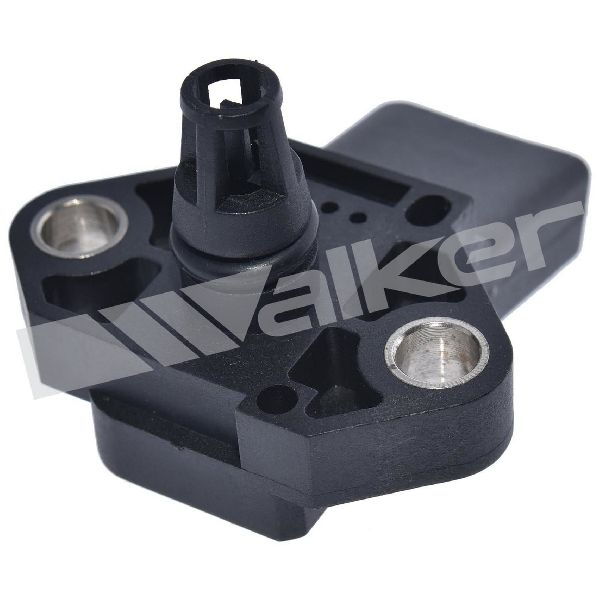
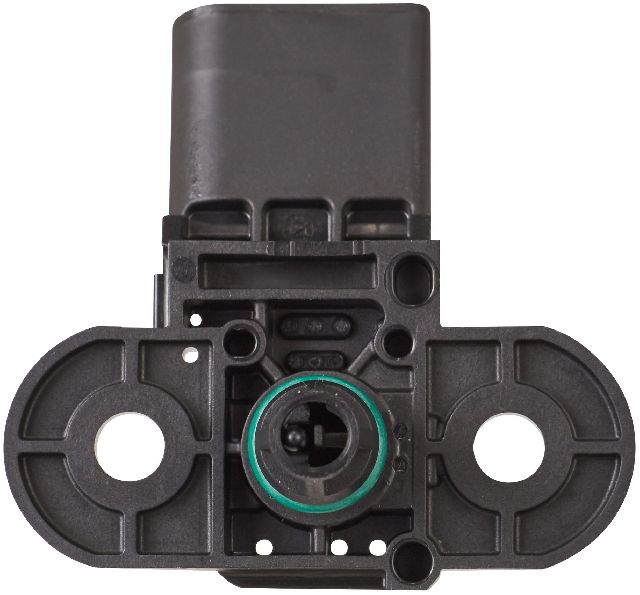
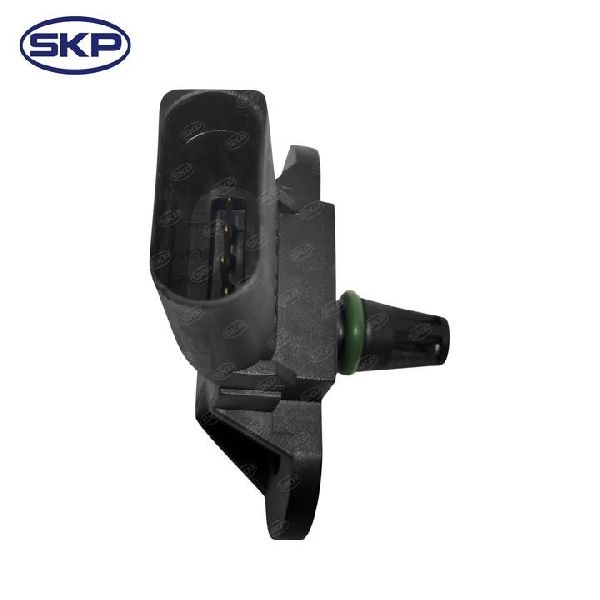
(OEM #03C906051F)— For many Jettas with Gen 3 1.8T and 2.0T engines, the IAT is integrated into the MAP sensor. If the IAT function fails, the whole unit must be replaced. This part is often cited in forums for fixing P0111.
Trusted brands: Bosch, Genuine Volkswagen
OEM price range: $60-$120
Aftermarket price range: $35-$80 - Mass Air Flow (MAF) Sensor (with integrated IAT)
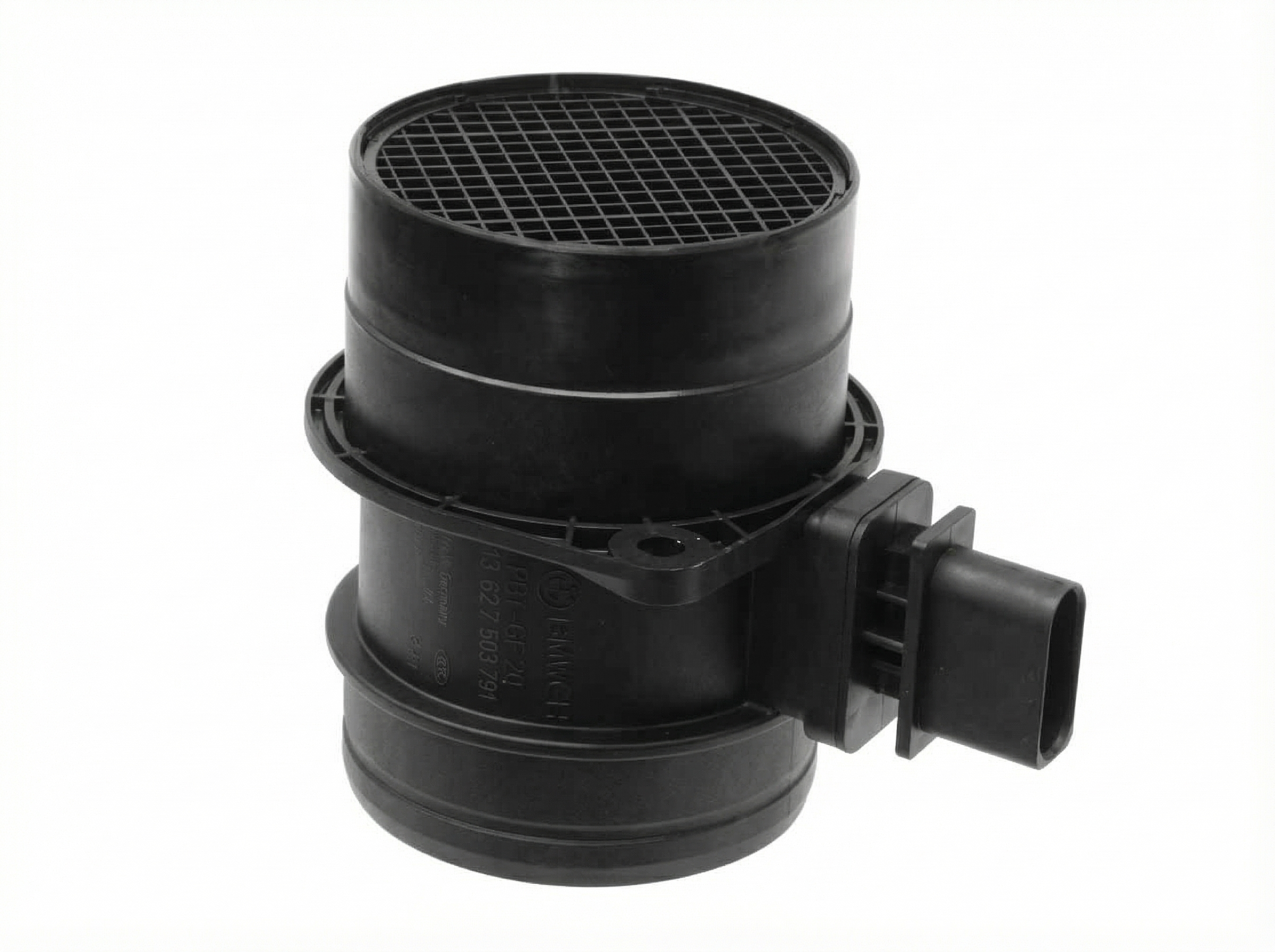
(OEM #03L906461A)— For the 2.0L TDI engine (engine code CJAA), the IAT is built into the MAF sensor. A failure of the IAT component requires replacement of the entire MAF assembly.
Trusted brands: Bosch, Genuine Volkswagen
OEM price range: $120-$180
Aftermarket price range: $70-$130
Related Codes That Often Appear With This One
- P0101 — Mass Airflow (MAF) Sensor Performance. If the IAT is integrated into the MAF sensor (common on TDI models), a fault in the unit can trigger both codes.
- P0106 — Manifold Absolute Pressure (MAP) Sensor Performance. If the IAT is integrated into the MAP sensor (common on TSI engines), a fault in the unit can trigger both codes.
- P0112 — IAT Sensor Circuit Low Input. This indicates a short to ground in the circuit, whereas P0111 is a performance/rationality error. A reading stuck at a high temperature (e.g., 133°C) often points to a short.
- P0113 — IAT Sensor Circuit High Input. This indicates an open circuit (often a broken wire or unplugged sensor), whereas P0111 is a performance/rationality error.
Technical Service Bulletins (TSBs) & Recalls

- TSB 01-20-05 (also listed as 2061109/5): This TSB specifically addresses DTC P0111. It describes how on hot days, the charge air pressure sensor (which contains an IAT) can get too warm from proximity to the hood. On the next engine start, the ECM detects a large temperature difference between it and another temp sensor, setting the code. The service solution is to install an engine hood insulation blanket.
Platform-Specific Known Issues
- Heat Soak TSB (01-20-05 / 2061109): On some VW models, particularly in hot climates, the IAT sensor can get 'heat soaked' from being close to a hot hood after the car is parked. This causes P0111 to set on the next startup because the ECM sees a large, implausible difference between the hot IAT and the cooler ECT. The official fix is to install an under-hood insulation blanket. This has been discussed by owners of newer Jettas and Golfs.
- Oil Contamination on TSI/TDI Sensors: On direct-injected and turbocharged engines (TSI/TDI), oil vapor from the crankcase ventilation (PCV) system can coat the IAT sensor element (whether it's standalone or part of the MAP/MAF). This oil film insulates the sensor, slowing its response time and causing it to read incorrectly, which can trigger a P0111 performance code.
- Brittle Wiring on 1.8T/2.0T Engines: Owners on forums frequently report that the wires leading to the MAP sensor (with integrated IAT) on TSI engines become brittle from heat and vibration, often breaking right at the connector. This causes an open circuit (P0113) or intermittent connection that can log a P0111.
Mechanic-Grade Diagnostic Values
- IAT Sensor (Thermistor) Resistance — expected: Approximately 2.0-3.0 kΩ at 20°C (68°F); 3.7 kΩ at 20°C and 2.0 kΩ at 100°C have also been cited for specific sensors. Resistance should decrease smoothly as temperature increases.. Failure: An open circuit (infinite resistance) or short circuit (zero resistance). Resistance does not change when heated/cooled, or the value is drastically out of spec for the measured temperature.
- IAT Sensor Signal Voltage (at ECU or sensor connector) — expected: Typically a 5V reference is supplied to the sensor circuit. The signal voltage returned to the ECU will vary with temperature, often between 0.5V (hot) and 4.5V (cold).. Failure: Voltage is stuck at 0V (short to ground) or 5V (open circuit/broken wire). Voltage does not change as the engine warms up.
- ECU Fault Trigger Threshold — expected: The difference between Engine Coolant Temp (ECT) vs. Intake Air Temp (IAT) or IAT vs. Ambient Air Temp (AAT) at startup should be less than 25 K (45°F).. Failure: If the temperature difference is greater than 25 K at startup, the ECU will flag a performance issue and set code P0111.
Scan Tool Commands That Help
- VCDS (VAG-COM): Measuring Blocks (MVB) — Use this to view live data for the IAT, ECT, and Ambient Air Temp simultaneously. In the Engine (01) controller, check group 004 to see both Intake Air Temperature and Coolant Temperature side-by-side. Comparing these values on a cold start is the primary diagnostic step for a P0111 rationality fault.
Wiring & Ground Locations
- Engine Harness Ground Point — On the cylinder head or on a ground stud below the battery tray on the left side of the engine compartment.. A poor ground connection for the engine harness can cause erratic readings from multiple sensors, including the IAT sensor. The sensor's signal is compared against this ground, so a faulty ground can mimic a sensor failure.
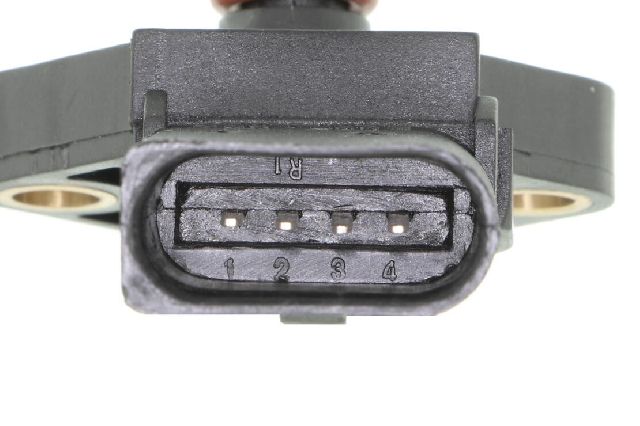
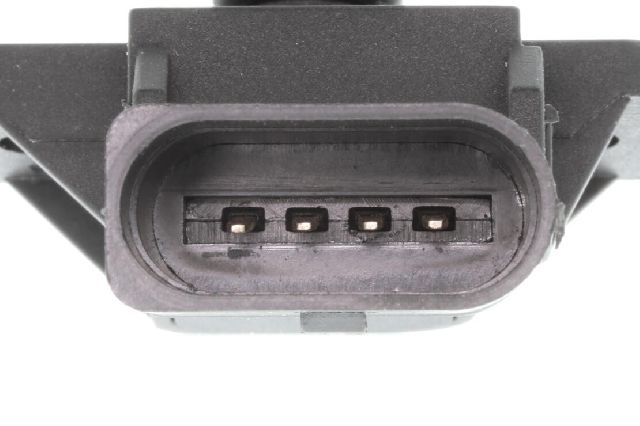
- TDI (CJAA) MAP/IAT Sensor Pinout — At the 4-pin connector for the MAP sensor (which includes the IAT).. For diagnosing a wiring fault, knowing the pinout is critical. For the CJAA engine's T-MAP sensor: Pin 1 (Brown) is Ground to ECU pin T94/66; Pin 2 (Yellow) is 5V reference from ECU pin T94/30; Pin 3 (Black/Grey) is the MAP signal to ECU pin T94/17; Pin 4 (Violet) is the IAT signal to ECU pin T94/83.
- Main ECU Ground — For Mk5/Mk6 Jettas, a primary chassis ground point is located at the bottom of the left-side A-pillar, behind the kick panel.. While less likely to be the sole cause, a corroded main ground can create widespread electrical issues. The ECU relies on a clean ground reference for all its sensor readings.
Real Owner Repair Stories
- Reddit user on /r/tdi (2012 Jetta TDI (CJAA engine)) — Intermittent flashing glow plug light, accompanied by codes P0111 and P0113. Using VCDS, the IAT reading would suddenly jump to over 100°C when the light flashed, then return to normal.
❌ Tried (didn't work) Replacing the MAP/IAT sensor had no effect on the problem.
✅ What actually fixed it The root cause was a broken wire within the engine harness. Specifically, the 5V reference wire (Yellow) between the ECU (connector T94, pin 30) and the sensor had an open circuit. The owner bypassed the faulty factory harness by running four new wires from the sensor connector directly to the ECU harness, soldering them in. This permanently resolved the fault.
OEM Part Supersession History
03C906051, 03C906051E→03C906051F— Updated design or manufacturer change for the common MAP/IAT sensor used on many 2.5L and TSI engines.
Heads up: While these parts are generally interchangeable, always use the latest revision (03C906051F) when replacing. Using an older part number could re-introduce a known issue.
Model Year Variations Within This Range
- 2013.5-2016: Around the 2013.5 model year, VW began phasing in the EA888 Gen 3 1.8T engine to replace the 2.5L 5-cylinder in many Jetta trims. This changed the IAT sensor from a standalone unit (on the 2.5L) to one integrated into the MAP sensor on the intake manifold for the 1.8T. Diagnosis for these later models should focus on the MAP sensor and its wiring.
Helpful Videos
Used OEM Parts in Stock


New Aftermarket Parts Available


The information in this article is provided for general reference and educational purposes only. Vehicle specifications, procedures, and part compatibility can vary by production date, trim level, and region. Always consult your vehicle's factory service manual and verify part numbers before purchasing or performing repairs. Safety-critical components such as airbags, seat belts, and braking systems should be installed by a qualified professional.
- Volkswagen JETTA:
- 🎬 Helpful Videos
- 🛍️ Shop This Part
- What's Unique About the 2009-2016 Volkswagen JETTA
- Diagnostic Flowchart
- Symptoms You May Notice
- Most Likely Causes
- Rare But Worth Checking
- Diagnosis Steps
- Parts You'll Likely Need
- Related Codes That Often Appear With This One
- Technical Service Bulletins (TSBs) & Recalls
- Platform-Specific Known Issues
- Mechanic-Grade Diagnostic Values
- Scan Tool Commands That Help
- Wiring & Ground Locations
- Real Owner Repair Stories
- OEM Part Supersession History
- Model Year Variations Within This Range
- 🎟️ Get 5% Off