

P0111 on 2017-2018 Jaguar XF: IAT Sensor Range/Performance Causes and Fixes
On a 2017-2018 Jaguar XF, code P0111 is most often caused by a faulty Mass Air Flow (MAF) sensor, which contains the Intake Air Temperature (IAT) sensor. This is often confirmed by the presence of a P0100 code. A Jaguar TSB also points to potential air leaks in the intake system as a cause. Replacing the entire MAF sensor assembly is the most common fix, but a thorough inspection for air leaks is crucial.
- P0111 on a 2017-2018 Jaguar XF points to a problem with the Intake Air Temperature sensor's performance.
- The IAT sensor is built into the Mass Air Flow (MAF) sensor; they are one part.
- A likely cause is a faulty MAF sensor assembly, especially if code P0100 is also present.
- However, a known issue on this platform is an air leak from the intake elbow, which can also trigger this code. A smoke test is highly recommended before replacing parts.
- Before replacing the sensor, check the wiring, connector, and engine air filter.
- Replacement is a DIY-friendly task that requires basic tools.
What's Unique About the 2017-2018 Jaguar XF
On this generation of Jaguar XF, the Intake Air Temperature (IAT) sensor is not a standalone part; it is integrated into the Mass Air Flow (MAF) sensor housing. A manufacturer Technical Service Bulletin (TSB #SSM73671) specifically notes that P0111 may be logged along with P0100 (Mass or Volume Air Flow Sensor "A" Circuit). This TSB suggests the cause may be an incorrectly fitted air intake elbow below the throttle body, leading to an air leak. This indicates that while the MAF/IAT sensor itself can fail, unmetered air leaks are a known issue on this platform that can trigger the same codes.
Diagnostic Flowchart
Tap your situation to follow the diagnostic path that matches what you're seeing on this vehicle.
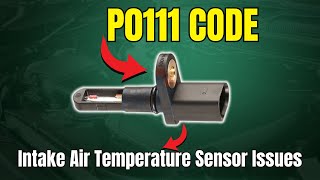
Symptoms You May Notice 🎬 Watch: A quick breakdown of P0111 sensor issues and symptoms.
- Check Engine Light is on
- "Restricted Performance" message displayed on the instrument cluster
- Reduced engine power and hesitation during acceleration
- Poor fuel economy
- Rough or uneven idle
- Difficulty starting, especially in cold weather
- Black smoke from the exhaust due to an incorrect air-fuel mixture
- Replacing only an oxygen sensor when other codes are present without first checking the IAT/MAF sensor data.
- Assuming the IAT is a separate, standalone sensor when it is integrated into the MAF on this vehicle.
- Replacing the MAF sensor without first performing a smoke test to rule out a cheaper-to-fix air leak, as suggested by TSB SSM73671.
Most Likely Causes
- Faulty Mass Air Flow (MAF) / IAT Sensor Assembly 🔴 High Probability The IAT sensor is integrated into the MAF sensor. A TSB (SSM73671) links P0111 with MAF code P0100, pointing to a common failure of the combined unit or an air leak affecting its readings. Forum users frequently report that cleaning or replacing the MAF sensor resolves MAF-related codes.
How to confirm: With the engine cold, use a scan tool to compare the IAT reading to the ambient air temperature and engine coolant temperature. If the IAT reading is significantly different, the sensor is likely faulty. Also, check for a companion P0100 code. Cleaning the sensor with dedicated MAF cleaner can be a diagnostic step; if it temporarily improves performance, the sensor is the likely culprit.
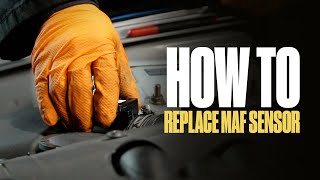
Typical fix: Replace the entire MAF sensor assembly. 🎬 Watch this step-by-step guide on replacing a MAF sensor. It is typically located in the intake tube just after the air filter box.
Est. part cost: $70-$250 - Air Leak in Intake System 🟡 Medium Probability TSB SSM73671 specifically calls out an incorrectly fitted air intake elbow below the throttle body as a cause for P0111 and other codes on the 2.0L Ingenium petrol engine. Vacuum leaks from various hoses, like the brake booster line, are also common culprits for similar codes on Jaguar platforms.
How to confirm: Perform a smoke test on the intake system using a JLR-approved diagnostic leak detector 🎬 See how to perform a smoke test to find leaks. to check for leaks, paying close attention to the intake elbow's fitment on the throttle body. A visual inspection of all intake hoses and vacuum lines for cracks or loose connections is also recommended.
Typical fix: Correctly refit the air intake elbow or replace any cracked or leaking hoses. Replace dried-out O-rings on components like the IMT valves if a leak is traced there.
Est. part cost: $10-$100 - Damaged Wiring or Loose Connector 🟡 Medium Probability
How to confirm: Visually inspect the wiring harness and connector going to the MAF sensor for any signs of damage, corrosion, or loose pins. A 'wiggle test' on the harness while monitoring live data can reveal intermittent connections. Use a multimeter to check for the correct reference voltage (usually 5V) and ground at the connector.
Typical fix: Repair the damaged section of wiring or clean/replace the connector. Apply dielectric grease to the new connection to prevent future corrosion.
Est. part cost: $5-$50 - Severely Clogged Engine Air Filter ⚪ Low Probability
How to confirm: Visually inspect the engine air filter. If it is black, filled with debris, or wet, it is clogged and restricting airflow, which can cause erratic sensor readings.
Typical fix: Replace the engine air filter. This is a simple and inexpensive maintenance item that should be checked first.
Est. part cost: $20-$60
Rare But Worth Checking
- Faulty Powertrain Control Module (PCM): This is very rare. Before condemning the PCM, all other possibilities, including sensor, wiring, air leaks, and connection issues, must be exhaustively ruled out.
Diagnosis Steps
- Read all fault codes using an OBD-II scanner. Note if P0100, P0171/P0174, or other related codes are present.
- With the engine off and cold for several hours, view live data on the scanner. Compare the Intake Air Temperature (IAT), Engine Coolant Temperature (ECT), and Ambient Air Temperature readings. They should all be within a few degrees of each other.
- If the IAT reading is skewed (e.g., stuck at -40°F or an unusually high value), the sensor is a primary suspect.
- Perform a thorough visual inspection of the entire air intake tract from the air filter box to the throttle body. Look for loose clamps or cracked hoses.
- Conduct a smoke test of the intake system to check for air leaks, as recommended by TSB SSM73671. Pay special attention to the air intake elbow's connection to the throttle body.
- Inspect the MAF/IAT sensor's electrical connector for corrosion, damage, or loose pins. Ensure it is securely plugged in.
- Inspect the wiring harness leading to the sensor for any visible signs of fraying, melting, or breaks. A wiggle test while monitoring live data can help identify intermittent faults.
- As a temporary diagnostic step, you can try cleaning the MAF sensor wires with a dedicated MAF sensor cleaner. Do not touch the delicate sensor wires. If cleaning temporarily resolves the issue, it confirms a problem with the sensor.
- If no air leaks are found and the wiring is confirmed to be good, but the sensor reading remains incorrect, replace the entire MAF sensor assembly.
- After any repairs, clear the codes and perform a complete drive cycle to ensure the fault does not return. Note that a P1111 code indicates all system checks are complete, which is a good sign.
Parts You'll Likely Need
- Mass Air Flow (MAF) Sensor
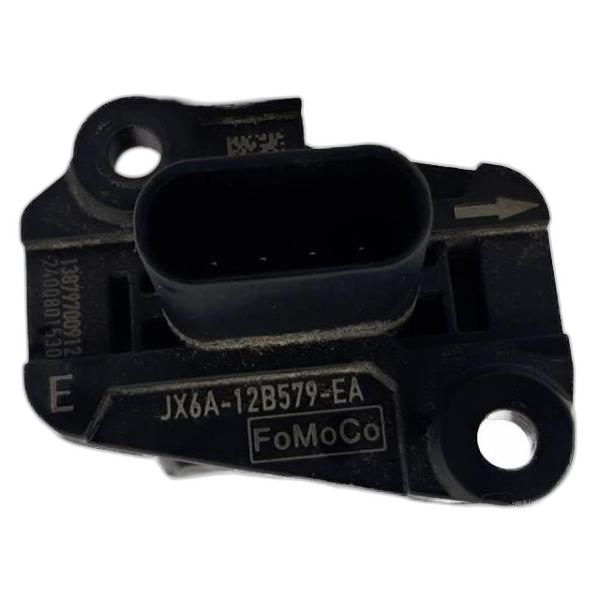
(OEM #2.0L Gas/Diesel: T2R26101 or T2H7707; 3.0L Gas: C2D19537 (Bosch 0280218286))— This assembly contains the integrated IAT sensor and is the most common point of failure for code P0111 on this vehicle, especially when accompanied by code P0100.
Trusted brands: Bosch (OEM supplier), Denso (OEM supplier), Delphi, Duralast
OEM price range: $150-$250
Aftermarket price range: $70-$180
Related Codes That Often Appear With This One
- P0100 — As stated in TSB SSM73671, this code for the MAF sensor circuit often appears with P0111 because the IAT sensor is physically part of the MAF sensor assembly on the Jaguar XF.
- P0102 — A 'Circuit Low' code for the MAF sensor, which can also be triggered by wiring issues or a faulty sensor unit that also houses the IAT sensor.
- P0171/P0174 — These 'System Too Lean' codes often point to unmetered air entering the engine after the MAF sensor, which is the root cause described in TSB SSM73671.
Technical Service Bulletins (TSBs) & Recalls
- SSM73671: Notes that DTCs P0100-38, P0111-84, P0113-00, P2178-00, and P0299-00 may be logged together on 2.0L Ingenium petrol engines. The cause is identified as a potential air leak from an incorrectly fitted air intake elbow below the throttle body. The recommended action is to perform a smoke test to verify fitment.
Platform-Specific Known Issues
- TSB SSM73671 explicitly links P0111 with P0100 and other codes, indicating a known pattern where an air leak from an improperly fitted intake elbow on the 2.0L petrol engine is a likely cause, not just a bad sensor.
- Owners on forums often report resolving MAF-related codes (P0100, P0101) by cleaning the sensor, but replacement is often the permanent solution.
Mechanic-Grade Diagnostic Values
- IAT Sensor Resistance — expected: Approximately 2,000 to 3,000 Ohms at 68°F (20°C). The resistance should decrease as temperature increases.. Failure: Infinite resistance (open circuit), zero resistance (short circuit), or a value that does not change when the sensor is heated or cooled.
- MAF/IAT Connector Voltage (Key On, Engine Off) — expected: One pin should show a 5-volt reference from the PCM, and another pin should show a good ground (near 0 volts). On some models, a 12-volt power supply from a fuse may also be present on a separate pin.. Failure: Absence of the 5V or 12V supply, or a ground reading significantly above 0 volts, points to a wiring issue or a problem with the PCM.
- MAF Sensor Live Data (at idle) — expected: A scan tool should show a reading of 2 to 7 grams/second (g/s) depending on engine size and load.. Failure: A reading that is fixed, zero, or does not increase smoothly as engine RPM rises indicates a faulty sensor or a significant air leak.
Scan Tool Commands That Help
- Jaguar SDD (Symptom Driven Diagnostics): Data Logger / Live Data — To monitor and graph the IAT sensor's reported temperature and the MAF sensor's airflow in grams/second in real-time. This is crucial for diagnosing intermittent faults or performance issues under specific driving conditions that a static test might miss.
Wiring & Ground Locations
- Powertrain Control Module (ECM) — On the X260 platform, the ECM is typically located in the engine bay, under the plastic cowl panel on the driver's side (LHD models), near the base of the windshield.. All wiring for the MAF/IAT sensor terminates at the ECM. Verifying continuity and checking for shorts or corrosion at the ECM connector pins is the final step after confirming the sensor and its harness section are good.
- OBD-II Port Ground Pins — Under the driver's side dashboard.. Pin 4 is a chassis ground and Pin 5 is a signal ground provided by the ECM. Checking resistance between these two pins should yield a fraction of an ohm. A high reading could indicate a poor ECM ground, which can cause numerous erratic sensor codes, including P0111.
OEM Part Supersession History
T2R26101→T2H7707— Part update or supplier change for the MAF sensor used on 2.0L Ingenium engines (both gas and diesel).C2D19537→N/A— This is the consistent part number for the Bosch MAF sensor used on the 3.0L V6 gas engine. It is also cross-referenced with Land Rover part LR035726 and Bosch part 0280218286.
Helpful Videos
![How to Fix P0111 Engine Code in 3 Minutes [2 DIY Methods / Only $7.46]](https://img.youtube.com/vi/ACGyoMBT4K4/mqdefault.jpg)


We Have This Part in Stock



The information in this article is provided for general reference and educational purposes only. Vehicle specifications, procedures, and part compatibility can vary by production date, trim level, and region. Always consult your vehicle's factory service manual and verify part numbers before purchasing or performing repairs. Safety-critical components such as airbags, seat belts, and braking systems should be installed by a qualified professional.
- Jaguar XF:
- 🎬 Helpful Videos
- 🛍️ Shop This Part
- What's Unique About the 2017-2018 Jaguar XF
- Diagnostic Flowchart
- Symptoms You May Notice
- Most Likely Causes
- Rare But Worth Checking
- Diagnosis Steps
- Parts You'll Likely Need
- Related Codes That Often Appear With This One
- Technical Service Bulletins (TSBs) & Recalls
- Platform-Specific Known Issues
- Mechanic-Grade Diagnostic Values
- Scan Tool Commands That Help
- Wiring & Ground Locations
- OEM Part Supersession History
- 🎟️ Get 5% Off