

P0111 on 2017-2018 Jaguar F-PACE: IAT Sensor Range/Performance Causes and Fixes
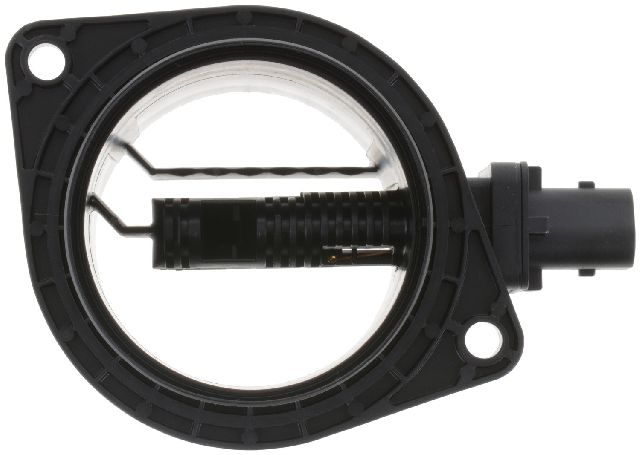
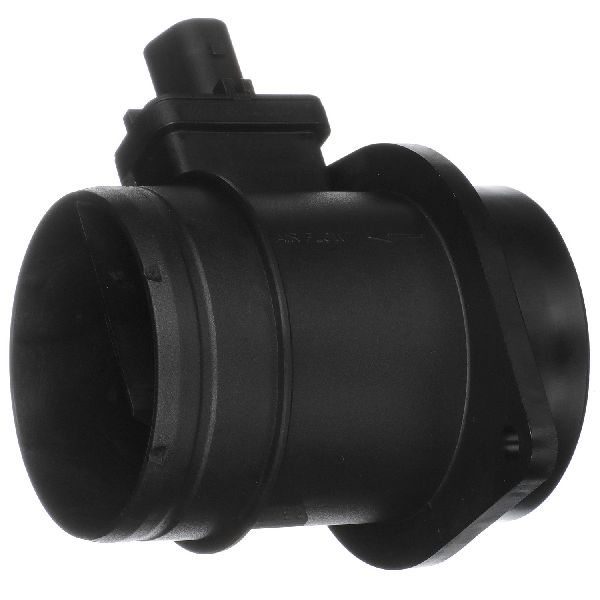
On a 2017-2018 Jaguar F-PACE, code P0111 is almost always caused by a faulty or dirty Intake Air Temperature (IAT) sensor, which is integrated into the Mass Airflow (MAF) sensor. The most common fix is replacing the entire MAF sensor assembly (Bosch P/N: 0280218286 for V6/V8), which costs around $150-$180 for an OEM-quality part and is a simple DIY job. Cleaning the sensor with dedicated MAF cleaner is a valid first step but replacement is often necessary.
- P0111 on a Jaguar F-PACE points to a problem with the Intake Air Temperature sensor, which is built into the Mass Airflow (MAF) sensor.
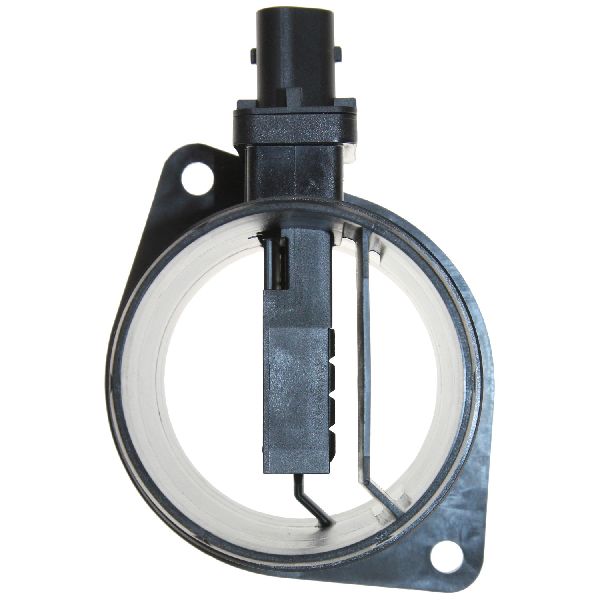
- Do not look for a separate IAT sensor; you will be working with the MAF sensor (Bosch P/N 0280218286) located on the engine air intake tube.
- A common first step is to try cleaning the sensor with dedicated MAF cleaner spray, as contamination is a frequent cause.
- If cleaning doesn't work, replacing the entire MAF sensor assembly (Jaguar P/N T2H7707) is the standard repair and is a very simple DIY task.
What's Unique About the 2017-2018 Jaguar F-PACE
On the Jaguar F-PACE with the 3.0L V6 (AJ126) and other JLR engines of this era, the Intake Air Temperature (IAT) sensor is not a standalone part. Instead, it is integrated into the Mass Airflow (MAF) sensor housing located in the engine's air intake tube. This is confirmed by a Jaguar Technical Service Bulletin (SSM73671) that links the P0111 code directly with a MAF sensor code (P0100). This means that any issue with the IAT sensor requires diagnosing and likely replacing the entire MAF sensor assembly, as the two components are calibrated and sold together.
Diagnostic Flowchart
Tap your situation to follow the diagnostic path that matches what you're seeing on this vehicle.
Symptoms You May Notice
- Check Engine Light is on
- Engine hesitation or stumbling during acceleration
- Reduced fuel economy
- Rough idle
- Hard starting, especially in cold weather
- Vehicle may enter 'Restricted Performance' mode
- Searching for or attempting to replace a standalone IAT sensor, which is not present on this vehicle as it is integrated with the MAF sensor.
- Replacing the MAF sensor without first checking for simple wiring issues or a dirty air filter.
Most Likely Causes
- Faulty or Dirty Mass Airflow (MAF) / IAT Sensor Assembly 🔴 High Probability The sensor element, which includes a delicate thermistor for temperature readings, is exposed to the incoming air stream. Over time, it can become contaminated with dirt, oil vapor from the PCV system, or moisture, which insulates the sensor and skews its readings. The internal electronics can also fail with age, causing the signal to become erratic or stuck.
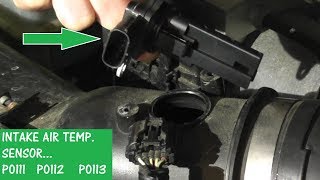
How to confirm: With the engine cold (left overnight), use a scan tool to compare the IAT reading to the Ambient Air Temperature (AAT) and Engine Coolant Temperature (ECT). They should all be within a few degrees (typically 2-5°F) of each other. If the IAT reading is stuck at an extreme value (e.g., -40°F or 240°F) or is significantly different from the others, the sensor is likely faulty. You can also test the sensor's resistance; a typical value is around 2,500 Ohms at 20°C (68°F). You can also test the sensor's responsiveness by carefully applying gentle heat from a hairdryer and watching for a smooth change in the live data reading. 🎬 Watch this guide on how to test and replace IAT sensors.
Typical fix: First, try cleaning the sensor element inside the MAF housing with a dedicated MAF sensor cleaner spray. Do not touch the delicate wires. If cleaning does not resolve the issue or the fix is temporary, replace the entire MAF sensor assembly. This is the most common and reliable repair.
Est. part cost: $10-$20 (cleaner), $150-$225 (new sensor) - Damaged Wiring or Connector 🟡 Medium Probability The wiring harness in the engine bay is exposed to heat cycles and vibration, which can lead to chafing or broken wires over time. The connector pins can also become corroded or loose, causing an intermittent connection.
How to confirm: Visually inspect the wiring harness and connector going to the MAF sensor for any signs of corrosion, frayed wires, or loose pins. Perform a "wiggle test" on the connector and wiring while monitoring the live IAT data on a scan tool to see if the reading fluctuates wildly. Use a multimeter to check for the correct reference voltage (typically 5V) and a good ground at the connector. A proper ground connection should have a voltage drop of less than 9mV.
Typical fix: Repair the damaged section of wiring or replace the connector pigtail. Clean any corrosion from the connector pins using electrical contact cleaner and ensure the connection is secure.
Est. part cost: $15-$50 - Severely Clogged Engine Air Filter ⚪ Low Probability
How to confirm: Inspect the engine air filter. If it is excessively dirty or clogged, it can restrict airflow and potentially cause erratic temperature readings or turbulence around the sensor.
Typical fix: Replace the engine air filter. This is good maintenance regardless and should be done before replacing more expensive parts.
Est. part cost: $25-$60
Rare But Worth Checking
- Powertrain Control Module (PCM) Fault: This is very uncommon, but a software glitch or internal hardware failure in the PCM can cause it to misinterpret sensor data. This should only be considered after all other possibilities, including wiring, have been thoroughly ruled out by a professional.
Diagnosis Steps
- Connect an OBD-II scanner and confirm P0111 is present. Check for any other codes, especially P0100, P0112, or P0113.
- With the engine off and cold for several hours (cold soak), view live data on the scanner. Compare the Intake Air Temperature (IAT) reading to the Ambient Air Temperature (AAT) and Engine Coolant Temperature (ECT) readings. They should be within 2-5°F of each other.
- If the IAT reading is illogical (e.g., -40°F, 250°F) or significantly different from the AAT/ECT, the sensor is the primary suspect.
- Start the engine and monitor the IAT reading. It should slowly and smoothly increase as the engine bay warms up. If it's erratic or doesn't change, this further points to a sensor or wiring issue.
- Visually inspect the MAF sensor connector and wiring for damage, corrosion, or loose connections. Perform a wiggle test on the harness while observing live data.
- If the wiring looks good, disconnect the MAF sensor and carefully remove it from the intake tube.
- Inspect the sensor elements. If they appear dirty, clean them using only a dedicated Mass Airflow Sensor cleaner spray. Do not touch the delicate sensor wires or use brake cleaner. Allow it to dry completely.
- Reinstall the sensor, clear the codes, and perform a test drive to see if the code returns.
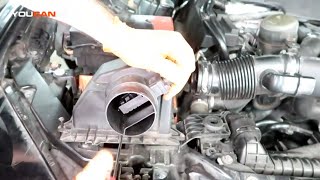
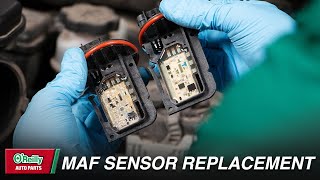
- If the code returns after cleaning, the MAF/IAT sensor assembly is defective and needs to be replaced. Ensure you purchase a quality OEM or OEM-equivalent part like Bosch, verifying the correct part number for your specific engine (V6/V8 vs 2.0L). 🎬 Watch this step-by-step MAF sensor replacement on a Jaguar 3.0L engine.
Parts You'll Likely Need
- Mass Airflow (MAF) / Intake Air Temperature (IAT) Sensor Assembly
(OEM #T2H7707 (Jaguar), LR035726 (Land Rover cross-reference))— This assembly contains the IAT sensor. A failure of the IAT sensor component requires the replacement of the entire MAF unit, as they are calibrated together.
Trusted brands: Bosch (OEM Supplier), Delphi, Walker
OEM price range: $180-$225
Aftermarket price range: $100-$175
Related Codes That Often Appear With This One
- P0100 — Jaguar TSB SSM73671 explicitly states that P0111 may be logged with P0100 ('Mass or Volume Air Flow Sensor "A" Circuit'). Since the IAT is part of the MAF sensor, a fault in the unit can trigger both codes.
- P0113 — This code for 'Intake Air Temperature Sensor 1 Circuit High' is also mentioned in TSB SSM73671 and points to a specific failure mode (open circuit) of the same sensor.
Technical Service Bulletins (TSBs) & Recalls
- SSM73671: Notes that a customer may report lack of power or a Malfunction Indicator Light (MIL). Diagnostic Trouble Codes (DTCs) P0100-38 (Mass or Volume Air Flow Sensor "A" Circuit signal frequency incorrect) and P0111-84 (Intake Air Temperature Sensor 1 Circuit Range/Performance Bank 1 signal below allowable range) may be logged. This TSB also mentions P0113-00 (IAT high) and P0299-00 (Turbo/Supercharger underboost), pointing to a range of issues stemming from incorrect air measurement.
Platform-Specific Known Issues
- A Technical Service Bulletin (TSB #SSM73671) issued by Jaguar notes that P0111 may be logged in the Powertrain Control Module (PCM) along with code P0100, which relates to the MAF sensor. This strongly indicates that the root cause is a single component: the integrated MAF/IAT sensor assembly.
- While not specific to P0111, some F-PACE owners on forums have noted general electrical and cooling system issues, highlighting the importance of using quality replacement parts and checking for related problems like coolant leaks that could damage nearby wiring over time.
Mechanic-Grade Diagnostic Values
- IAT Sensor Resistance — expected: Approximately 2,500 Ohms at 20°C (68°F).. Failure: A reading that is significantly different, open (infinite resistance), or shorted (zero resistance).
- IAT Sensor Signal Voltage — expected: Ranges from approximately 4.5V at -40°C to 0.5V at 100°C. The voltage should decrease as temperature increases.. Failure: Voltage is stuck high (near 5V) or low (near 0V), or does not change with temperature.
- Sensor Reference Voltage at Connector — expected: 4.8V - 5.2V with key on, engine off.. Failure: Voltage outside this range indicates a problem with the PCM's voltage regulator or the wiring.
- Sensor Ground Circuit Voltage Drop — expected: Less than 9mV (0.009V) when measured between the sensor's ground pin and a chassis ground with the engine running.. Failure: Voltage higher than 9mV indicates high resistance in the ground circuit, which can skew sensor readings.
Hidden / Shadow Codes Worth Checking
- P0111-84: The '-84' is a Failure Type Code (FTC) used by Jaguar Land Rover. It specifies the failure mode as 'Signal Below Allowable Range'. This provides more detail than the generic P-code alone. (see via A professional-grade scanner or Jaguar's SDD/Pathfinder software that can read manufacturer-specific codes.)
Wiring & Ground Locations
- MAF/IAT Sensor Connector Wires — At the MAF sensor located on the engine air intake tube.. Knowing the wire functions is critical for testing. Based on similar Jaguar models, the wire colors are likely: Brown/Red for +12V power, Black for ground, and a White/Purple wire for the IAT signal. Always verify with a multimeter before piercing wires.
- Engine Block Ground Stud — Typically found on the engine block or cylinder head, where multiple black ground wires are attached to a single stud/bolt.. The MAF/IAT sensor relies on a clean ground reference. A corroded or loose main engine ground can cause a voltage drop, leading to inaccurate sensor readings and triggering a P0111 code.
OEM Part Supersession History
T2H7707 (Jaguar)→N/A— N/A
Heads up: The Jaguar part number T2H7707 may be used for MAF sensors across different engines (e.g., 2.0L 4-cyl, 3.0L V6, 5.0L V8). However, the underlying OEM supplier part (e.g., Bosch) can be different. For the 3.0L/5.0L engines, the correct Bosch part is typically 0280218286. The 2.0L Ingenium engine may use Bosch 0280218307. It is critical to verify the correct OEM supplier part number for the specific engine in the vehicle, not just the Jaguar part number, to ensure compatibility.
Helpful Videos

Used OEM Parts in Stock


New Aftermarket Parts Available


The information in this article is provided for general reference and educational purposes only. Vehicle specifications, procedures, and part compatibility can vary by production date, trim level, and region. Always consult your vehicle's factory service manual and verify part numbers before purchasing or performing repairs. Safety-critical components such as airbags, seat belts, and braking systems should be installed by a qualified professional.
- Jaguar F-PACE:
- 🎬 Helpful Videos
- 🛍️ Shop This Part
- What's Unique About the 2017-2018 Jaguar F-PACE
- Diagnostic Flowchart
- Symptoms You May Notice
- Most Likely Causes
- Rare But Worth Checking
- Diagnosis Steps
- Parts You'll Likely Need
- Related Codes That Often Appear With This One
- Technical Service Bulletins (TSBs) & Recalls
- Platform-Specific Known Issues
- Mechanic-Grade Diagnostic Values
- Hidden / Shadow Codes Worth Checking
- Wiring & Ground Locations
- OEM Part Supersession History
- 🎟️ Get 5% Off