

P0111 on 2019-2023 Dodge Challenger: Causes and Fixes for IAT Sensor Issues
For a 2019-2023 Dodge Challenger, code P0111 is most often caused by a faulty Intake Air Temperature (IAT) sensor or a software glitch. A TSB suggests a powertrain control module (PCM) update may be required for some models. Replacing the sensor is a simple DIY fix costing around $20-$50, with the Mopar part number being 5149279AC.
- P0111 on a 2019-2023 Challenger means the IAT sensor's reading is illogical to the car's computer.
- Before buying parts, check if your vehicle needs a software update per TSB #18-044-26, especially if code P0071 is also present.
- The most likely part to fail is the IAT sensor itself, which is an inexpensive and easy part to replace for a DIYer.
- Use a scan tool to compare IAT and Ambient Air Temp on a cold engine; this is the fastest way to diagnose a bad sensor.
- The IAT sensor is located on the intake air tube right before the throttle body, not inside the MAF sensor.
What's Unique About the 2019-2023 Dodge CHALLENGER
On many modern Dodge vehicles, including the Challenger, the IAT sensor is a standalone, two-wire sensor that plugs directly into the intake air duct, just before the throttle body. This is different from some other manufacturers that integrate the IAT sensor into the Mass Airflow (MAF) sensor housing; these Challenger engines typically use a MAP sensor (Speed-Density system) instead of a MAF sensor. A key issue for this specific platform is a documented software problem where the PCM can incorrectly flag the P0111 code, often alongside a P0071 code for the ambient air sensor. In these cases, the fix is not a new part but a software update from a Dodge dealership. [TSB #18-044-26]
Diagnostic Flowchart
Tap your situation to follow the diagnostic path that matches what you're seeing on this vehicle.
Symptoms You May Notice
- Check Engine Light is on
- Reduced fuel economy
- Engine hesitation or stumbling during acceleration
- Rough idle
- Hard starting, especially in cold weather
- Replacing the Ambient Air Temperature (AAT) sensor instead of the Intake Air Temperature (IAT) sensor. The AAT sensor is usually located behind the front grille and measures outside air, 🎬 Watch: How to find the ambient air temperature sensor while the IAT is in the engine's air intake path.
- Replacing the Mass Airflow (MAF) sensor. Dodge Challengers in this year range typically use a separate IAT sensor and do not have a MAF sensor.
Most Likely Causes
- Faulty Intake Air Temperature (IAT) Sensor 🔴 High Probability The sensor is a simple thermistor that can degrade over time due to heat cycles and exposure to engine bay elements like oil or coolant vapor. Its resistance curve can break, causing voltage to go outside the expected 0.1V to 5.0V range.
How to confirm: With a cold engine, use a scan tool to compare the IAT reading to the Ambient Air Temperature reading. They should be within a few degrees of each other. If the IAT reading is stuck at an extreme value (e.g., -40°F or over 250°F) or doesn't change as the engine warms up, the sensor is likely bad. You can also test the sensor with a multimeter set to ohms; the resistance should change smoothly when heated with a hairdryer. 🎬 See this walkthrough on testing and replacing the sensor
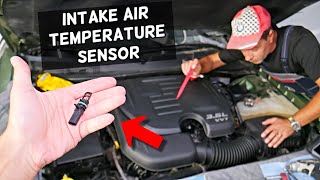
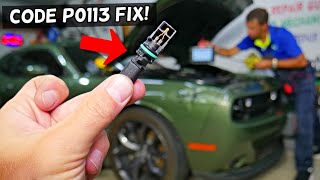
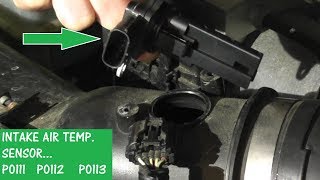
Typical fix: Replace the IAT sensor. It is located on the intake air tube before the throttle body and is typically held in by a simple quarter-turn lock. 🎬 Watch: How to locate and remove the IAT sensor The OEM Mopar part number is 5149279AC.
Est. part cost: $20-$50 - Powertrain Control Module (PCM) Software Update Needed 🟡 Medium Probability A specific Technical Service Bulletin (TSB #18-044-26) was issued for 2019 models because the PCM software can be too sensitive, causing it to set P0111 and/or P0071 incorrectly. This TSB has been referenced in relation to various fuel and performance issues across multiple FCA platforms.
How to confirm: Check with a Dodge dealership to see if TSB #18-044-26 applies to your vehicle's VIN. If the code is present without any actual sensor malfunction (sensor tests good), a software reflash is the likely solution.
Typical fix: A Dodge dealer needs to update the PCM software using their proprietary scan tool. The labor time for this flash is typically estimated at 0.3 hours.
Est. part cost: $0 (if under warranty) - $150 - Damaged Wiring or Loose Connector ⚪ Low Probability The wiring harness in the engine bay is exposed to heat and vibration, which can lead to chafed wires or corroded connector pins over time. The IAT sensor circuit typically uses a 5-volt reference, and a short or open in the wiring will cause an out-of-range reading.
How to confirm: Visually inspect the IAT sensor's connector and wiring for any signs of damage, corrosion, or looseness. Use a multimeter to check for ~5V reference at the connector with the key on. You can also back-probe the connector to check for a changing voltage signal as the engine warms up.
Typical fix: Repair the damaged section of wire or clean the connector terminals with electrical contact cleaner. Apply dielectric grease to prevent future corrosion.
Est. part cost: $5-$25
Rare But Worth Checking
- Dirty or Contaminated Sensor: Oil vapor from the PCV system or dirt from a poorly fitting air filter can coat the sensor tip, insulating it and causing slow or inaccurate readings. Cleaning the sensor tip with electronics cleaner can sometimes resolve the issue without needing a replacement.
- Dirty Air Filter: A severely clogged engine air filter can restrict airflow, potentially affecting the IAT sensor's ability to read temperature changes accurately, which may contribute to a range/performance code.
- Faulty Powertrain Control Module (PCM): While rare, the internal circuitry of the PCM that processes the IAT signal can fail. This should only be considered after all other possibilities, including the software update, have been exhausted.
Diagnosis Steps
- Connect an OBD-II scanner and confirm that P0111 is the primary code. Note if P0071 is also present, as this strongly suggests the software issue from TSB #18-044-26.
- With the engine cold and off, access the live data stream on your scanner.
- Compare the 'Intake Air Temperature' and 'Ambient Air Temperature' readings. They should be within 5°F (3°C) of each other.
- Start the engine. Watch the IAT reading. It should slowly and smoothly increase as the engine bay heats up. If it's stuck, erratic, or reads an illogical temperature (e.g., -40°F), the sensor is the primary suspect.
- Turn off the engine and locate the IAT sensor on the air intake tube, just before the throttle body.
- Inspect the sensor's wiring and connector for any visible damage, corrosion, or loose pins.
- If wiring looks good, test the sensor. Disconnect it and use a multimeter set to Ohms (resistance). A typical reading at room temperature (around 68°F/20°C) should be approximately 2,500 Ohms. Use a hairdryer to gently warm the sensor tip; the resistance should decrease smoothly. If it doesn't change or jumps erratically, the sensor is bad.
- If the sensor and wiring appear fine, check with a dealer for applicable TSBs, specifically TSB #18-044-26, before replacing parts.
- If no TSB applies and the live data points to a bad sensor, replace the IAT sensor. It typically removes with a simple quarter-turn. Be sure to replace the O-ring to prevent vacuum leaks.
Parts You'll Likely Need
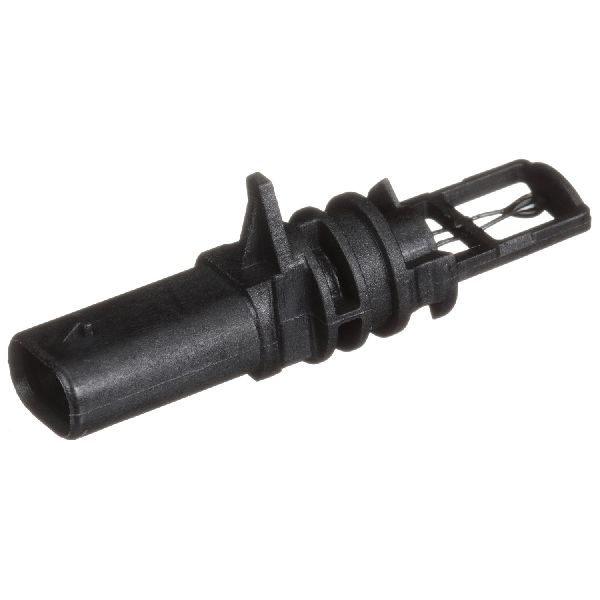
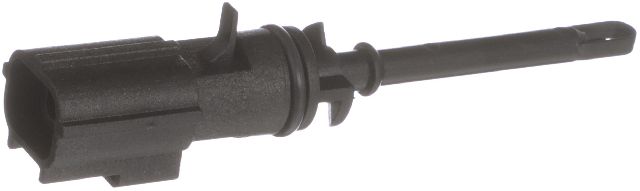
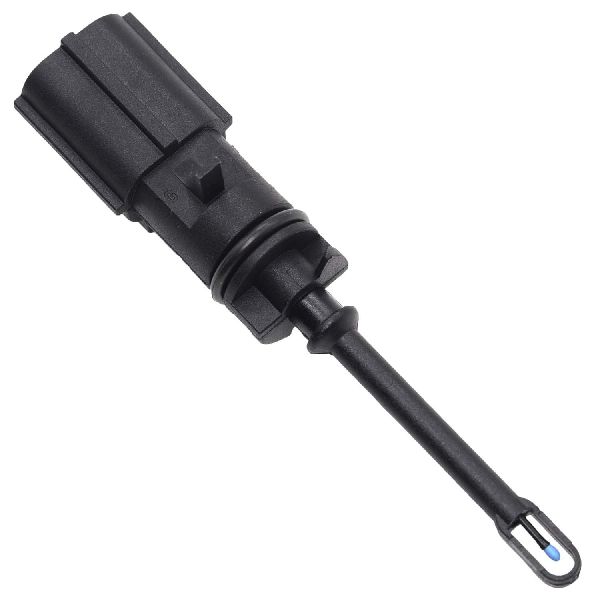
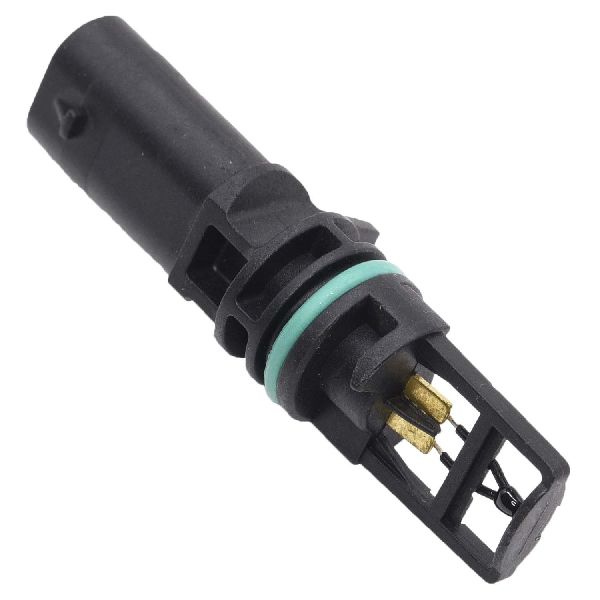
- Intake Air Temperature Sensor
(OEM #5149279AC)— This sensor is the most common component to fail, leading directly to the P0111 code. This part number supersedes 5149279AB and is used across a wide range of FCA vehicles.
Trusted brands: Mopar, NTK, Delphi, Standard Motor Products
OEM price range: $35-$50
Aftermarket price range: $15-$40
Related Codes That Often Appear With This One
- P0071 — This code for the Ambient Air Temperature Sensor is specifically mentioned in TSB #18-044-26 as appearing with P0111 due to the same software issue. The PCM compares the two sensors, so a fault in one can be flagged alongside the other. [TSB #18-044-26]
Technical Service Bulletins (TSBs) & Recalls
- 18-044-26: Addresses a potential software issue causing the Malfunction Indicator Lamp (MIL) to illuminate with DTCs P0111-00 and/or P0071-00. This TSB involves reprogramming the PCM.
Platform-Specific Known Issues
- A known software issue covered by TSB #18-044-26 can cause the P0111 and P0071 codes to be set incorrectly on 2019 models. The official fix is a PCM software update performed by a dealer. [TSB #18-044-26]
- The IAT sensor is a separate component located in the intake tube, not integrated into a MAF sensor, which this vehicle does not use.
Mechanic-Grade Diagnostic Values
- IAT Sensor Resistance vs. Temperature — expected: Approx. 2,500 Ohms at 68°F (20°C), decreasing as temperature rises (e.g., ~1,500 Ohms at 104°F/40°C). A full chart shows a range from 336,600 Ohms at -40°C to 390 Ohms at 120°C.. Failure: Resistance is infinite (open circuit), zero (shorted), or does not change smoothly with temperature.
- IAT Sensor Connector Voltage (Key On, Engine Off, Sensor Unplugged) — expected: One pin should show a 5-volt reference signal from the PCM, and the other pin should be the sensor ground.. Failure: Voltage is significantly below 5V, absent, or present on both pins, indicating a wiring issue or PCM fault.
- IAT Sensor Signal Voltage (Back-probed, Key On, Engine Running) — expected: Voltage should vary smoothly as the engine warms up. A typical range might be close to 4.7V for very cold air and drop towards 0.8V for very hot air.. Failure: Voltage is stuck at a high value (e.g., >4.8V) or a low value (e.g., <0.1V), or it jumps erratically.
Scan Tool Commands That Help
- wiTECH (Dodge Dealer Tool): Powertrain Verification Test — This is a standard procedure to run after a repair (like replacing a sensor or fixing a wire) to confirm that the fault condition is no longer present and that the diagnostic monitor can run and pass.
Wiring & Ground Locations
- IAT Sensor Connector — On the intake air tube, between the air filter box and the throttle body.. This 2-pin connector is the primary interface for the sensor. The pins can corrode or the wires can break at the connector body, causing an open or high-resistance circuit.
- IAT Sensor Signal Wire — One of the two wires in the IAT sensor connector harness. On some Mopar vehicles, this is a Black/Red wire leading to the PCM.. This wire carries the variable voltage signal back to the PCM. A short or open on this specific wire will directly cause the P0111, P0112, or P0113 codes.
- IAT Sensor Ground Wire — The second of the two wires in the IAT sensor connector harness. On some Mopar vehicles, this is a Black/Light Blue wire.. This is the sensor's ground reference, provided by the PCM. A poor connection here can cause erratic or incorrect readings, leading to a P0111 code.
- Engine Ground Strap — Connects the engine block/cylinder head to the vehicle's chassis/firewall to ensure a common ground potential. One common location on similar platforms is from the passenger-side cylinder head to the firewall.. A corroded or loose main engine ground strap can create a floating ground, causing voltage offsets in sensor readings. This can make a perfectly good sensor appear to be out of range to the PCM.
- Engine Management Fuses — In the under-hood fuse box (Front Power Distribution Center). Specifically, fuses F31, F34, F35, F37 and relay R63 have been identified as related to general engine management on these vehicles.. The IAT sensor circuit is powered by the PCM, which in turn is protected by one or more of these main fuses. While a blown fuse would likely cause more codes than just P0111, checking them is a valid preliminary step.
OEM Part Supersession History
5149279AB→5149279AC— Standard part revision, likely for improved durability, material change, or manufacturing process update.
Helpful Videos
We Have This Part in Stock

The information in this article is provided for general reference and educational purposes only. Vehicle specifications, procedures, and part compatibility can vary by production date, trim level, and region. Always consult your vehicle's factory service manual and verify part numbers before purchasing or performing repairs. Safety-critical components such as airbags, seat belts, and braking systems should be installed by a qualified professional.
- Dodge CHALLENGER:
- 🎬 Helpful Videos
- 🛍️ Shop This Part
- What's Unique About the 2019-2023 Dodge CHALLENGER
- Diagnostic Flowchart
- Symptoms You May Notice
- Most Likely Causes
- Rare But Worth Checking
- Diagnosis Steps
- Parts You'll Likely Need
- Related Codes That Often Appear With This One
- Technical Service Bulletins (TSBs) & Recalls
- Platform-Specific Known Issues
- Mechanic-Grade Diagnostic Values
- Scan Tool Commands That Help
- Wiring & Ground Locations
- OEM Part Supersession History
- 🎟️ Get 5% Off