

P0111 on 2017-2024 Chrysler Pacifica: Intake Air Temp Sensor Causes and Fixes
On a 2017-2024 Pacifica, code P0111 is often caused by a software glitch that requires a dealer to update the Powertrain Control Module (PCM). This is especially true if P0071 is also present. If not software, the Intake Air Temperature (IAT) sensor is the next likely cause, which is an inexpensive part and easy to replace.
- For a 2017-2024 Pacifica, P0111 is frequently caused by a software issue that requires a dealer update, as noted in TSB #18-044-26.
- Before replacing any parts, check if the TSB applies to your vehicle, especially if you also have a P0071 code.
- If not software, the most likely part to fail is the Intake Air Temperature (IAT) sensor itself (Part # 5149182AB).
- Replacing the IAT sensor is a very easy DIY job that takes less than 15 minutes and requires no special tools.
- Driving with this code is possible but will negatively impact fuel economy and engine performance.
What's Unique About the 2017-2024 Chrysler PACIFICA
For the Chrysler Pacifica and other vehicles with the 3.6L Pentastar engine, a P0111 code doesn't always point to a bad sensor. Chrysler has issued a Technical Service Bulletin (TSB) indicating that this code, especially when seen with a P0071 (Ambient Air Temperature Sensor Performance), can be caused by overly sensitive software logic in the Powertrain Control Module (PCM). In these cases, the actual fix is a software update performed by a dealer, not a part replacement. This makes checking for applicable TSBs a critical first step for any Pacifica owner seeing this code.
Diagnostic Flowchart
Tap your situation to follow the diagnostic path that matches what you're seeing on this vehicle.
Symptoms You May Notice
- Check Engine Light is on
- Reduced fuel economy
- Rough or unstable idle
- Engine hesitation or stumbling on acceleration
- Hard starting, especially in cold weather
- Engine stalling after a cold start
- Replacing the IAT sensor when the true cause is a required PCM software update as per TSB #18-044-16.
- Replacing the Ambient Air Temperature (AAT) sensor instead of the Intake Air Temperature (IAT) sensor. The AAT is typically in the front bumper or mirror area, while the IAT is in the engine air intake duct.
Most Likely Causes
- Powertrain Control Module (PCM) Software Update Needed 🔴 High Probability As identified in TSB #18-044-16 (and similar TSBs for other models), the factory software has logic that can be too sensitive, incorrectly flagging a performance fault with the IAT sensor when compared to the ambient sensor, especially during certain weather changes.
How to confirm: Check with a Chrysler dealer or use a professional scan tool to see if a PCM software update is available for your vehicle's VIN. This is the most probable cause if code P0071 is also present.
Typical fix: Reprogramming the PCM with the latest software version. This must be done by a dealer or a qualified shop with a J2534 pass-thru device.
Est. part cost: $0 - Faulty Intake Air Temperature (IAT) Sensor 🟡 Medium Probability The IAT sensor is a thermistor that can degrade over time from heat cycles and exposure to the elements, causing its readings to become inaccurate or fail entirely. It's a common failure point across all vehicles using this sensor type.
How to confirm: Use a scan tool to monitor live data. With the engine cold, the IAT reading should be very close to the Ambient Air Temperature (AAT). If it's stuck at a default value (like -40°F) or doesn't change as the engine warms up, the sensor is likely bad. You can also test the sensor's resistance with a multimeter; the resistance should decrease as the sensor is warmed with a hairdryer.
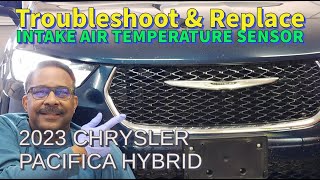
Typical fix: Replace the IAT sensor. It is located in the air intake duct between the air filter box and the throttle body. It is removed with a simple quarter-turn twist. 🎬 Watch: This video shows the Pacifica IAT sensor replacement process.
Est. part cost: $25-$65 - Damaged Wiring or Connector ⚪ Low Probability The wiring harness for the IAT sensor is thin and can be susceptible to damage from engine vibrations, heat, or rodents chewing on the wires, which is a surprisingly common issue. This can lead to an open or shorted circuit.
How to confirm: Visually inspect the IAT sensor's connector and wiring for any signs of damage, corrosion, loose pins, or evidence of rodent activity. Use a multimeter to check for a 5V reference signal and a good ground at the connector with the key on.
Typical fix: Repair the damaged section of wiring or replace the pigtail connector. In cases of rodent damage, soldering in a new section of wire may be necessary.
Est. part cost: $15-$40
Rare But Worth Checking
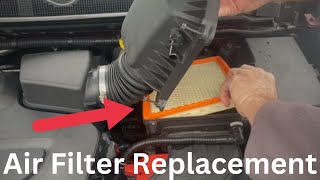
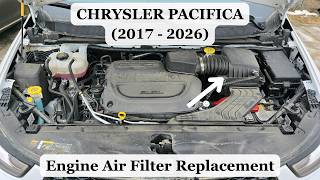
- Extremely Dirty or Clogged Engine Air Filter: A severely clogged air filter can restrict airflow so much that it slows the IAT sensor's response to temperature changes, potentially tricking the PCM into thinking the sensor is not performing correctly. A YouTube tutorial on replacing the Pacifica IAT sensor notes this as a crucial first check. Always inspect the air filter as a simple first step. 🎬 Watch: A quick guide to replacing your engine air filter.
- Faulty Powertrain Control Module (PCM): In very rare cases, the fault can be internal to the PCM itself, specifically the input circuit for the IAT sensor. This should only be considered after all other possibilities (software, sensor, wiring) have been exhaustively ruled out by a professional.
Diagnosis Steps
- Check for TSBs: The first step for this specific vehicle is to check for TSB #18-044-16. If it applies and P0071 is also present, a PCM software update is the most likely solution.
- Scan Tool Live Data: Connect a scan tool and observe the IAT and AAT sensor readings with the engine off and cold (cold soak). They should be within a few degrees of each other and match the actual ambient temperature.
- Monitor Sensor Performance: Start the engine and watch the IAT reading. It should gradually increase as the engine bay heats up. If it remains static, is erratic, or reads an illogical temperature (e.g., -40°F or 250°F), the sensor or its circuit is faulty.
- Inspect Air Filter: As a simple and quick check, inspect the engine air filter. A severely clogged filter can impede airflow and affect sensor readings.
- Inspect Wiring: Visually inspect the IAT sensor connector and its wiring harness for any signs of corrosion, damage, loose connections, or rodent damage. Trace the wiring as far back as possible.
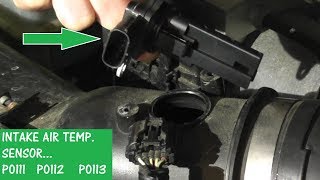
- Test the Sensor: Disconnect the sensor and test its resistance with a multimeter set to Ohms. The resistance should change predictably when heated (e.g., with a hairdryer). Compare readings to the service manual specifications if available. 🎬 See how to test and replace the IAT sensor yourself.
- Test the Circuit: If the sensor tests good, check for a 5V reference voltage and a good ground at the sensor connector with the key on. If either is missing, trace the wiring back to the PCM to find the break or short.
- Replace the IAT Sensor: If the sensor fails tests and the wiring is confirmed to be good, replace the IAT sensor. It is an inexpensive part and simple to replace.
- Perform PCM Update: If all hardware checks out, the issue is almost certainly software-related, requiring a PCM reflash at a dealership or qualified shop.
Parts You'll Likely Need
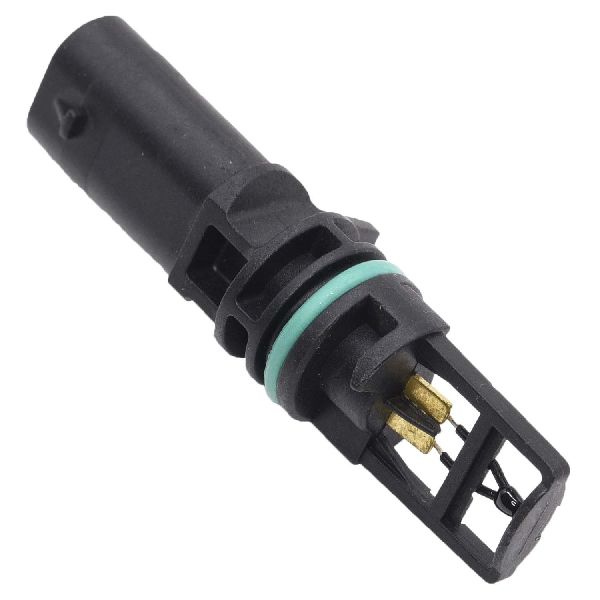
- Intake Air Temperature Sensor
(OEM #5149182AB)— This sensor is the most common hardware failure for this code after software issues are ruled out. It provides the direct temperature reading to the PCM. The part number 5149182AB supersedes the previous number 5149182AA.
Trusted brands: Mopar, Standard Motor Products (TS10539), Delphi, Walker Products (210-1148)
OEM price range: $35-$65
Aftermarket price range: $25-$45
Related Codes That Often Appear With This One
- P0071 — Chrysler TSB #18-044-16 explicitly links P0111 with P0071 (Ambient Air Temperature Sensor Performance). The PCM's rationality check compares the IAT and AAT sensor readings, especially after a cold soak. A software update was issued to correct overly sensitive logic for how these sensors are cross-checked.
- P0112 — This code indicates the IAT sensor circuit is low (shorted to ground). A wiring short could trigger a P0111 performance code before or alongside the specific circuit-low code as the PCM sees an irrational, but not completely failed, signal.
- P0113 — This code indicates the IAT sensor circuit is high (open circuit). A broken wire or unplugged sensor would cause a P0113, which is often accompanied by a default temperature reading like -40°F. The PCM sees this illogical value and flags both the circuit fault (P0113) and the performance fault (P0111).
Technical Service Bulletins (TSBs) & Recalls
- 18-044-16: Addresses Malfunction Indicator Lamp (MIL) illumination for P0111 and P0071, recommending a PCM software update due to overly sensitive diagnostic logic. (Note: The TSB number in Pass 1 was slightly incorrect, it is often cited as 18-044-16, not 26).
Platform-Specific Known Issues
- A known software issue documented in TSB #18-044-16 can cause the PCM to set P0111, often along with P0071, even when no hardware fault exists. The fix is a PCM reflash.
- The IAT sensor wiring harness in the 3.6L Pentastar engine bay can be a target for rodents, leading to chewed wires that cause an open or short circuit, triggering P0111, P0112, or P0113.
Mechanic-Grade Diagnostic Values
- IAT Sensor Resistance — expected: Between 300 and 90,000 ohms, depending on temperature. Resistance should decrease as temperature increases. For example, 2-3 kOhms at 68°F (20°C) is a common approximate value.. Failure: Resistance is 0 ohms (shorted) or infinite/open loop (internal break). Resistance does not change when the sensor is heated with a hairdryer.
- IAT Sensor Signal Wire Voltage (at PCM) — expected: A variable voltage signal that changes with temperature. Lower voltage means hotter air, while higher voltage means colder air. The PCM supplies a 5-volt reference.. Failure: Voltage is stuck near 5V (open circuit, P0113) or near 0V (short to ground, P0112). The voltage does not change as the engine warms up.
- Cold Soak Sensor Comparison (Live Data) — expected: After the vehicle has sat overnight ('cold soak'), the Intake Air Temperature (IAT), Engine Coolant Temperature (ECT), and Ambient Air Temperature (AAT) should all read within a few degrees (approx. 10°C or 18°F) of each other.. Failure: The IAT reading is significantly different from the ECT and AAT readings before the engine is started. This indicates a rationality failure and points to a bad IAT sensor.
Scan Tool Commands That Help
- wiTECH 2.0: PCM Reprogramming / Flash — This is the dealer-level tool function required to perform the software update specified in TSB 18-044-16, which is the primary fix for P0111 when accompanied by P0071.
- wiTECH 2.0 or high-end aftermarket scanner: View Live Data / Graphing — Used to monitor the IAT, AAT, and ECT sensor values simultaneously to check for rationality. Graphing the IAT reading from a cold start is crucial to see if it responds correctly as the engine warms up, or if it is stuck or erratic.
Wiring & Ground Locations
- IAT Sensor Connector — On the IAT sensor itself, which is located in the air intake duct between the air filter housing and the throttle body.. This is the primary connection point for the sensor. Corrosion, spread pins, or wire damage right at the connector are common failure points.
- IAT Sensor Signal Circuit (at PCM) — A generic PCM pinout for a similar Chrysler engine lists the IAT Sensor Signal on Pin 37 (BK/RD wire). This should be verified with a model-year specific diagram.. This is the terminal where the PCM receives the temperature data. Testing for voltage here can confirm if the signal is reaching the computer, helping to isolate a wiring break from a faulty PCM.
- Engine Ground Strap — A key ground strap on some Pacifica models runs from a transmission stud to the engine block, identified as G101 on older platforms. Another is located on the motor mount to the engine frame.. A poor engine ground can cause erratic behavior in multiple sensors that use the engine block as a ground path. While not a direct cause, checking that main engine grounds are clean and tight is a crucial step when diagnosing any electronic issue.
OEM Part Supersession History
5149182AA→5149182AB— Standard part revision or change in manufacturer. The parts are interchangeable.
Model Year Variations Within This Range
- 2017-2024: The IAT sensor is a standalone, two-wire sensor located in the intake air duct for both the gasoline and Hybrid 3.6L Pentastar engines in the Pacifica. Unlike some other Chrysler vehicles, it is not integrated with the MAP sensor.
Helpful Videos

We Have This Part in Stock

The information in this article is provided for general reference and educational purposes only. Vehicle specifications, procedures, and part compatibility can vary by production date, trim level, and region. Always consult your vehicle's factory service manual and verify part numbers before purchasing or performing repairs. Safety-critical components such as airbags, seat belts, and braking systems should be installed by a qualified professional.
- Chrysler PACIFICA:
- 🎬 Helpful Videos
- 🛍️ Shop This Part
- What's Unique About the 2017-2024 Chrysler PACIFICA
- Diagnostic Flowchart
- Symptoms You May Notice
- Most Likely Causes
- Rare But Worth Checking
- Diagnosis Steps
- Parts You'll Likely Need
- Related Codes That Often Appear With This One
- Technical Service Bulletins (TSBs) & Recalls
- Platform-Specific Known Issues
- Mechanic-Grade Diagnostic Values
- Scan Tool Commands That Help
- Wiring & Ground Locations
- OEM Part Supersession History
- Model Year Variations Within This Range
- 🎟️ Get 5% Off