

P0109 on 2020 Ram 1500: MAP Sensor Faults and Critical Software Updates
On the 2020 Ram 1500, P0109 typically indicates an intermittent fault with the Manifold Absolute Pressure (MAP) sensor or its circuit. However, for the 3.0L EcoDiesel, it can be triggered by a software issue that requires a dealer update per a Technical Service Bulletin (TSB). Always check for TSBs before replacing parts, as the P0109 code on an un-updated EcoDiesel is intentionally used to flag a Mass Air Flow (MAF) sensor performance issue.
- For 2020 Ram 1500s with the 3.0L EcoDiesel, P0109 may require a dealer software update, not a new part. Always check for TSB #18-008-21 first.
- Outside of the diesel software issue, the most common causes are a faulty MAP sensor, a vacuum leak, or a wiring problem at the sensor.
- Symptoms typically include rough idle, hesitation on acceleration, and poor fuel economy.
- Diagnosis should involve using a scan tool to watch MAP sensor data, inspecting for vacuum leaks, and checking the sensor's wiring.
- Do not replace the MAF sensor to fix this code unless directed to by a specific diagnostic procedure after the PCM software has been updated.
What's Unique About the 2020-2020 Ram 1500
For the 2020 Ram 1500, particularly models equipped with the 3.0L V6 EcoDiesel engine, this code has a very specific and critical nuance. Manufacturer TSB 18-008-21 (and its revisions) indicates that a software update was issued to fix a number of drivability and MIL illumination issues. One specific function of this update was to change how the vehicle reports certain faults, specifically remapping a "Mass Air Flow Sensor Performance" issue from code P0101 to P0109. This means that on an un-updated 2020 EcoDiesel, a P0109 code may actually be pointing to a MAF sensor performance problem that requires a PCM software reflash, not a faulty MAP sensor. Diagnosing this code without first checking for applicable TSBs can easily lead to replacing the wrong parts.
Diagnostic Flowchart
Tap your situation to follow the diagnostic path that matches what you're seeing on this vehicle.
Symptoms You May Notice
- Check Engine Light (MIL) is on
- Rough or unstable idle
- Hesitation or stumbling during acceleration
- Reduced engine power and sluggish performance
- Decreased fuel economy
- Engine may stall, especially at low speeds
- Backfiring due to incorrect sensor readings (in some cases)
- Replacing the MAP sensor on an EcoDiesel model when the actual problem is a required PCM software update per TSB 18-008-21.
- Replacing the MAF sensor without performing the corresponding software update required by the TSB.
- Replacing other fuel or ignition components before properly diagnosing the MAP sensor circuit and checking for vacuum leaks.
Most Likely Causes
- PCM Software Update Required (EcoDiesel) 🔴 High Probability As per TSB #18-008-21, a comprehensive software update was released to address multiple DTCs and drivability complaints on the 3.0L V6 EcoDiesel, including hard starting and rough idle. A key change was logging P0109 for what is actually a MAF sensor performance issue, making the software check a mandatory first step.
How to confirm: Check the vehicle's service history or have a Ram dealer verify if TSB 18-008-21 (or its preceding revisions like 18-008-20 REV. A) has been applied by checking the VIN in their system.
Typical fix: Reprogram the Powertrain Control Module (PCM) with the latest software at a dealership.
Est. part cost: $0 - $200 (Dealer labor charge for flashing, may be covered under emissions warranty) - Faulty Manifold Absolute Pressure (MAP) Sensor 🔴 High Probability MAP sensors are exposed to heat cycles and oil vapors from the crankcase ventilation system, which can lead to internal failure and erratic readings over time.
How to confirm: Use a scan tool to monitor MAP sensor data (voltage or pressure) with the key on, engine off, and then at idle. The readings should be stable and change smoothly with throttle input. Erratic jumps or no change indicates a problem. Visually inspect the sensor for oil contamination 🎬 Watch: How to clean your EcoDiesel MAP sensor to restore performance. or a damaged O-ring.
Typical fix: Replace the MAP sensor.
Est. part cost: $40 - $100 - Vacuum Leak 🟡 Medium Probability Vacuum hoses, especially PCV lines, can crack, become brittle, or disconnect. Intake manifold gaskets can also fail, causing unmetered air to enter the engine and create erratic pressure readings that the MAP sensor detects.
How to confirm: Visually inspect all vacuum lines connected to the intake manifold. Listen for a hissing sound with the engine running. Perform a smoke test to pressurize the intake system and find leaks that are not visible. 🎬 See this guide on finding and fixing vacuum leaks fast.
Typical fix: Repair the source of the leak, which usually involves replacing a cracked hose or a faulty gasket.
Est. part cost: $5 - $200 (depending on whether it's a simple hose or a more involved gasket replacement) - Damaged Wiring or Loose Connector 🟡 Medium Probability The wiring harness to the MAP sensor can be damaged by engine heat or vibration, and connector pins can become corroded or loose, causing an intermittent signal. This is a common cause for intermittent circuit codes.
How to confirm: Visually inspect the MAP sensor connector and its wiring for any signs of damage, corrosion, or looseness. Wiggle the connector and harness with the engine running to see if it affects engine behavior or the MAP sensor reading on a scan tool.
Typical fix: Repair the damaged wire or clean/replace the connector pigtail.
Est. part cost: $10 - $50
Rare But Worth Checking
- Clogged Air Filter: A severely clogged air filter can restrict airflow to the point that it causes unusual and erratic pressure readings in the intake manifold, potentially triggering a P0109.
- Faulty Powertrain Control Module (PCM): In very rare cases, the internal circuitry of the PCM that processes the MAP sensor signal can fail, causing the code. This should only be considered after all other possibilities have been exhausted.
Diagnosis Steps
- First, check for any applicable Technical Service Bulletins (TSBs) for your vehicle's VIN, paying special attention to TSB #18-008-21 for 3.0L EcoDiesel models. If applicable, have the dealer perform the software update before any other repairs.
- Connect an OBD-II scanner and check for any other stored trouble codes. Freeze frame data can provide context for when the fault occurred.
- With the scanner, view live data from the MAP sensor. Note the reading with the Key On, Engine Off (KOEO). It should be close to the local barometric pressure. Start the engine and observe the reading at idle (it should be low, indicating high vacuum) and while snapping the throttle (it should change rapidly and smoothly).
- Visually inspect all vacuum hoses connected to the intake manifold for cracks, disconnections, or signs of dry rot. Pay close attention to the PCV system hoses.
- Inspect the MAP sensor's electrical connector for corrosion, damage, or a loose fit. Check the wiring harness for any visible signs of damage from heat or chafing.
- If a vacuum leak is suspected but not visible, perform a smoke test to pressurize the intake system and identify the source of the leak.
- If the sensor signal is erratic but wiring and vacuum are good, the MAP sensor itself is the most likely culprit. Remove it and inspect for oil fouling or physical damage.
- If all other tests are inconclusive, the issue could be with the PCM, but this is extremely rare and should be diagnosed by a professional.
Parts You'll Likely Need
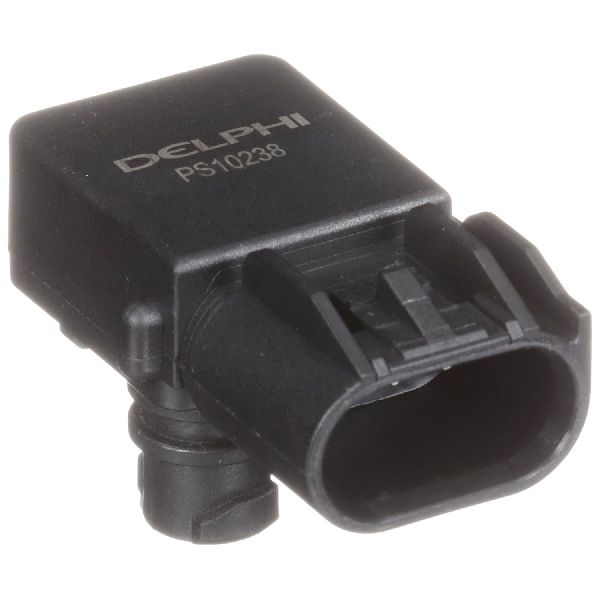
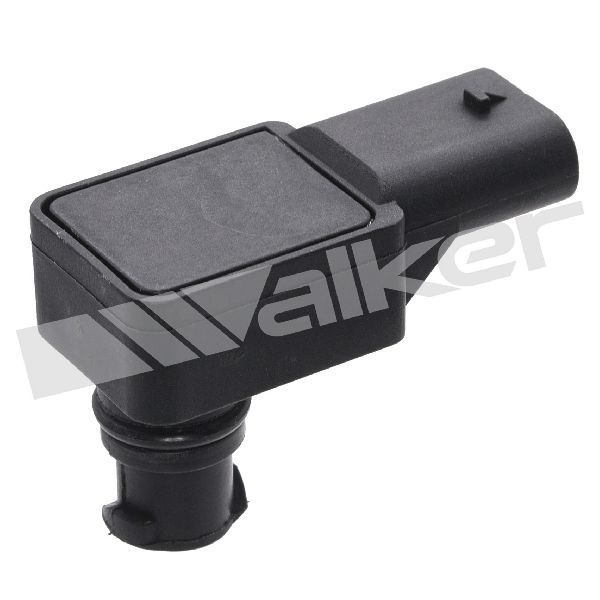
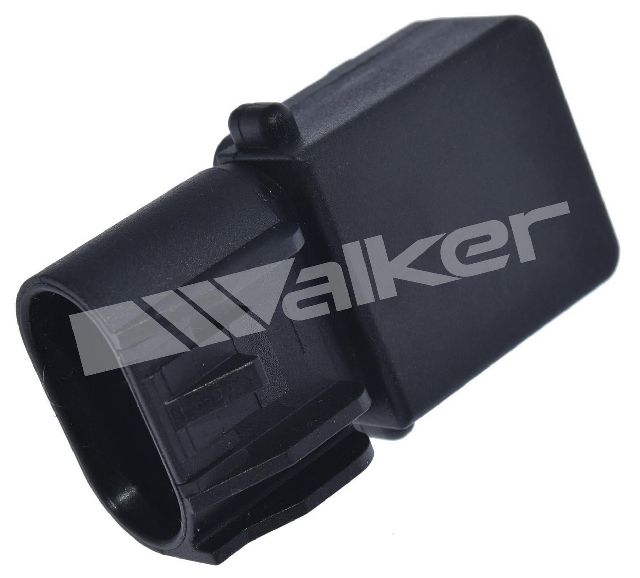
- Manifold Absolute Pressure (MAP) Sensor
(OEM #3.0L EcoDiesel: 68490034AA; 5.7L HEMI: 68199324AB; 3.6L Pentastar: 68371847AA (or superseded by 68371847AB))— This is the primary component that triggers P0109 when it fails internally, providing an erratic signal. It is a common wear item.
Trusted brands: Mopar, Bosch, Delphi, NTK/NGK
OEM price range: $70-$120
Aftermarket price range: $40-$80
Related Codes That Often Appear With This One
- P0101 — On EcoDiesel models, TSBs state the software changes the logged code from P0101 (Mass Air Flow Sensor Performance) to P0109, indicating they are directly related issues that are distinguished by the software version.
- P0106 — This code indicates a MAP/Barometric Pressure Sensor Range/Performance problem, which is closely related to the intermittent fault of P0109 and can point to a failing sensor or vacuum leak.
- P0107 — This code for MAP Circuit Low Input can appear alongside P0109 if the intermittent fault involves the signal dropping out completely.
- P0108 — This code for MAP Circuit High Input can appear with P0109 if the intermittent fault involves voltage spikes.
Technical Service Bulletins (TSBs) & Recalls
- 1800821 (also listed as 18-008-21): Flash: Powertrain Control Module (PCM) Updates for 3.0L V6 Turbo Diesel Engine, which notes the change from DTC P0101-00 to P0109-00 for Mass Air Flow Sensor Performance.
- 18-008-20 REV. A: An earlier revision of the above TSB, also addressing PCM updates for the 3.0L EcoDiesel.
Platform-Specific Known Issues
- TSB for 3.0L EcoDiesel: TSB #18-008-21 (and its earlier revisions like 18-008-20 REV. A) is a critical issue for 2020 Ram 1500s with the diesel engine. It notes that a PCM software update is available to correct a Malfunction Indicator Lamp (MIL) illumination for over two dozen potential DTCs. One of the specific changes is remapping a "Mass Air Flow Sensor Performance" fault to log as P0109 instead of P0101. This makes a software check the first and most important diagnostic step for these engines before any parts are replaced.
Mechanic-Grade Diagnostic Values
- MAP Sensor 5-Volt Reference — expected: Approximately 5.0V with ignition on, engine off.. Failure: Voltage significantly below 5.0V or 0V suggests an issue with the PCM or wiring.
- MAP Sensor Signal Voltage (Key On, Engine Off) — expected: ~4.5V - 5.0V (at sea level, reflecting atmospheric pressure).. Failure: Voltage is significantly lower or does not match barometric pressure reading on a scan tool.
- MAP Sensor Signal Voltage (Engine Idling) — expected: ~1.0V - 2.0V (reflecting high manifold vacuum).. Failure: Voltage remains high (near KOEO reading) or is erratic at a steady idle, indicating a bad sensor or vacuum leak.
- MAP Sensor Signal Voltage (Throttle Snap) — expected: Voltage should smoothly and rapidly increase from idle voltage (~1.5V) to above 3.5V.. Failure: Voltage spikes, drops out, or does not change smoothly with throttle input.
- MAP Sensor Wiring Resistance — expected: Less than 0.5 ohms on signal and ground wires when tested end-to-end.. Failure: A reading of OL (Open Loop) indicates a break in the wire; a reading higher than 0.5 ohms indicates high resistance.
Scan Tool Commands That Help
- wiTECH (or equivalent professional scanner): Live Data Graphing & Wiggle Test — To diagnose an intermittent fault, graph the MAP sensor voltage while physically wiggling the sensor connector and wiring harness. Any sharp drops or spikes in the voltage graph during the wiggle test point to a wiring or connector issue.
- wiTECH (or equivalent professional scanner): PCM Reprogram/Flash — This is a required first step for a 3.0L EcoDiesel with P0109 to apply TSB #18-008-21. The TSB procedure specifies maintaining battery voltage between 13.2 and 13.5 volts with a battery charger during the flash process.
Wiring & Ground Locations
- MAP Sensor Location (5.7L HEMI) — On the top rear of the intake manifold, near the firewall. It is a small, black plastic sensor held in by a twist-lock mechanism.. Knowing the location is the first step for visual inspection, testing, and replacement. Its proximity to the hot, vibrating rear of the engine makes it and its wiring susceptible to heat damage.
- MAP Sensor Location (3.6L Pentastar) — On the top of the intake manifold, easily accessible after removing the engine cover and air intake snorkel.. Easy access makes for a quick DIY inspection and replacement.
- MAP Sensor Connector Pinout (Typical 3-Pin) — At the MAP sensor electrical connector.. Testing requires identifying the pins. Typically: Pin 1: 5-Volt Reference (from PCM). Pin 2: MAP Signal (to PCM). Pin 3: Sensor Ground (to PCM). Pin configuration should always be verified with a vehicle-specific wiring diagram.
- Primary Engine/Body Ground — The main ground strap connects from the negative battery terminal to the inner fender wall/chassis. Other critical grounds are located on the engine block and from the block to the frame.. A poor or corroded main ground can cause unstable voltage across multiple sensor circuits, leading to intermittent faults like P0109.
OEM Part Supersession History
68199324AA, 5149091AA, 5033310AC→68199324AB— Standard part revision and consolidation for 5.7L HEMI engines.68371847AA→68371847AB— Standard part revision for 3.6L Pentastar engines.
Helpful Videos




We Have This Part in Stock


The information in this article is provided for general reference and educational purposes only. Vehicle specifications, procedures, and part compatibility can vary by production date, trim level, and region. Always consult your vehicle's factory service manual and verify part numbers before purchasing or performing repairs. Safety-critical components such as airbags, seat belts, and braking systems should be installed by a qualified professional.
- Ram 1500:
- 🎬 Helpful Videos
- 🛍️ Shop This Part
- What's Unique About the 2020-2020 Ram 1500
- Diagnostic Flowchart
- Symptoms You May Notice
- Most Likely Causes
- Rare But Worth Checking
- Diagnosis Steps
- Parts You'll Likely Need
- Related Codes That Often Appear With This One
- Technical Service Bulletins (TSBs) & Recalls
- Platform-Specific Known Issues
- Mechanic-Grade Diagnostic Values
- Scan Tool Commands That Help
- Wiring & Ground Locations
- OEM Part Supersession History
- 🎟️ Get 5% Off