

P0109 on 2018-2019 Ford Taurus: Intermittent MAP Sensor Fault Causes and Fixes
On a 2018-2019 Ford Taurus with the 3.5L EcoBoost engine, code P0109 is almost always caused by a faulty Manifold Absolute Pressure and Temperature (MAPT) sensor. Ford issued a Technical Service Bulletin (TSB 19-2212) for this exact problem. Replacing the sensor is a simple, low-cost DIY fix.
- For a 2018-2019 Ford Taurus 3.5L EcoBoost, P0109 almost certainly means you need a new MAPT sensor.
- This is a known issue documented by Ford in TSB 19-2212.
- Symptoms include not just a check engine light, but also a lack of power and other system warnings like 'Service AdvanceTrac'.
- The repair is simple, inexpensive, and can be performed by a DIYer in under 30 minutes.
- The same issue affects the 2018-2019 Ford Explorer, Flex, and Lincoln MKT with the same engine.
What's Unique About the 2018-2019 Ford TAURUS
For the 2018-2019 Ford Taurus with the 3.5L EcoBoost V6, this code is specifically addressed by a manufacturer's Technical Service Bulletin (TSB 19-2212). The TSB identifies a known issue with the factory Manifold Absolute Pressure and Temperature (MAPT) sensor, making diagnosis unusually straightforward. While on other vehicles P0109 could lead to a lengthy search for wiring faults or vacuum leaks, on this specific Taurus (and its platform mates like the Explorer, Flex, and MKT), the sensor itself is the documented primary point of failure.
Diagnostic Flowchart
Tap your situation to follow the diagnostic path that matches what you're seeing on this vehicle.
Symptoms You May Notice
- Lack of power or sluggish acceleration, especially from a stop.
- Check Engine Light (Malfunction Indicator Lamp) is on.
- Powertrain Malfunction (Wrench) light may be illuminated.
- "Service AdvanceTrac" message on the dashboard.
- "Hill Start Assist Not Available" message.
- Rough or unstable idle.
- Hesitation or stumbling during acceleration.
- Decreased fuel economy.
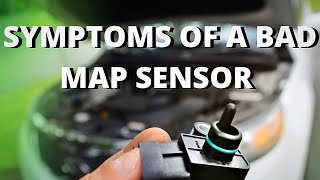
- In some cases, the vehicle may enter a 'limp mode' with severely restricted power. 🎬 See a detailed breakdown of common bad MAP sensor symptoms.
- Replacing the Mass Airflow (MAF) sensor. This engine uses both a MAF and a MAP sensor; P0109 specifically points to the MAP sensor circuit.
- Assuming a transmission problem due to the sluggish acceleration from a stop.
- Attributing the 'Service AdvanceTrac' message to a fault in the ABS or stability control system, when it is actually a secondary symptom caused by the engine performance issue.
Most Likely Causes
- Faulty Manifold Absolute Pressure and Temperature (MAPT) Sensor 🔴 High Probability Ford issued Technical Service Bulletin TSB 19-2212 specifically identifying a faulty MAPT sensor as the cause for P0109 (and related codes P0107, P0108) on this engine and model year. This TSB supersedes a previous version, TSB 19-2183, indicating Ford updated the procedure.
How to confirm: The most definitive confirmation is following the TSB's recommendation. A technician could also monitor the MAP sensor's voltage with a scan tool to observe the intermittent signal drops, which is the procedure outlined in the original TSB 19-2183.
Typical fix: Replace the MAPT sensor. This is a simple repair involving removing the engine cover, disconnecting the sensor's electrical connector, removing one screw, and swapping the old sensor for the new one. 🎬 Watch this step-by-step MAP sensor replacement walkthrough.
Est. part cost: $50-$120 - Damaged Wiring or Loose Connector ⚪ Low Probability While the sensor is the known weak point, wiring issues are always a possibility on any vehicle due to heat, vibration, or rodent damage.
How to confirm: Visually inspect the wiring harness and connector going to the MAPT sensor for any signs of corrosion, damage, or looseness. Perform a 'wiggle test' on the connector and harness with the engine running to see if it causes the engine to stumble or the code to appear.
Typical fix: Repair the damaged section of wiring or clean/secure the connector. Applying dielectric grease to the connector can help prevent future moisture intrusion.
Est. part cost: $5-$25
Rare But Worth Checking
- Vacuum Leak: A cracked or disconnected vacuum hose connected to the intake manifold could cause erratic pressure readings. While less likely than the sensor itself on this vehicle, it's worth a quick visual inspection.
- Failing Powertrain Control Module (PCM): This is extremely rare, but an internal fault in the PCM could theoretically cause it to misinterpret a good sensor signal. This should only be considered after all other possibilities, especially the TSB-identified sensor failure, have been exhausted.
Diagnosis Steps
- Use an OBD-II scanner to confirm the presence of P0109 and check for any other related codes like P0107 or P0108.
- Acknowledge Ford TSB 19-2212, which strongly indicates a faulty MAPT sensor is the root cause for this specific vehicle and engine.
- Visually inspect the MAPT sensor connector and wiring harness for any obvious damage, corrosion, or loose connections.
- Remove the plastic engine cover by first removing the oil cap, then lifting the cover off.
- Locate the MAPT sensor on the intake manifold.
- Disconnect the electrical connector and remove the single T20 Torx screw holding the sensor in place.
- Gently twist and pull the sensor to remove it from the intake manifold.
- Install the new sensor, secure it with the screw, and reconnect the electrical connector.
- Reinstall the engine cover and oil cap.
- Clear the trouble codes with the OBD-II scanner and perform a test drive to ensure the issue is resolved and that associated warnings like 'Service AdvanceTrac' have cleared.
Parts You'll Likely Need
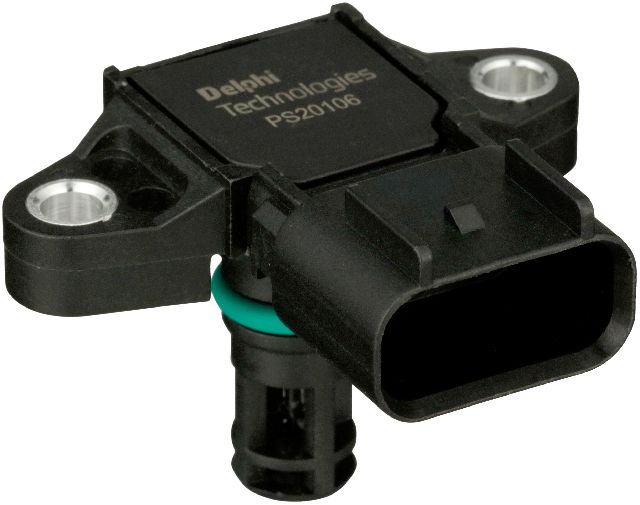
- Manifold Absolute Pressure and Temperature (MAPT) Sensor
(OEM #AA5Z-9F479-E)— This is the specific part identified as faulty in Ford's Technical Service Bulletin (TSB 19-2212) for this exact issue. It replaces older part numbers AA5Z-9F479-A and 2R3Z-9F479-AA.
Trusted brands: Motorcraft
OEM price range: $50-$85
Aftermarket price range: $40-$70
Related Codes That Often Appear With This One
- P0107 — This code for 'MAP/BARO Circuit Low Input' is often triggered along with P0109 because the intermittent signal drops into a low voltage state. TSB 19-2212 explicitly lists this as a companion code.
- P0108 — This code for 'MAP/BARO Circuit High Input' can also appear with P0109 if the intermittent signal spikes. TSB 19-2212 also lists this as a possible companion code.
Technical Service Bulletins (TSBs) & Recalls
- TSB-19-2212: States that some 2018-2019 Taurus, Explorer, Flex, and Lincoln MKT vehicles with the 3.5L EcoBoost engine may exhibit a lack of power, various warning lights, and DTCs P0107, P0108, and/or P0109 due to a faulty MAPT sensor, and advises replacing it. This TSB supersedes TSB 19-2183.
- TSB-19-2183: The earlier version of the bulletin which included steps to monitor PID values before replacing the sensor. The superseding TSB simplifies the procedure to a direct replacement.
Platform-Specific Known Issues
- A known high failure rate of the MAPT sensor on 2018-2019 models with the 3.5L EcoBoost engine prompted Ford to issue TSB 19-2212, which directly links the sensor to DTCs P0107, P0108, and P0109.
- The failure of this single sensor often causes a cascade of seemingly unrelated warning messages, such as 'Service AdvanceTrac' and 'Hill Start Assist Not Available'. This is because the stability control system (AdvanceTrac) relies on consistent engine torque output, and when the PCM cannot guarantee it due to the faulty sensor, it disables the system as a precaution. 🎬 Learn why 'Service AdvanceTrac' appears and how to fix it.
Mechanic-Grade Diagnostic Values
- MAP Sensor PID vs. Other Pressure PIDs (KOEO) — expected: Using a scan tool, the 'MAP (PRESS)' PID value should be within 10.35 kPa (1.5 psi) of the 'BARO (PRESS)', 'TCBP (PRESS)', and 'TURBO INLET (PRESS)' PIDs.. Failure: If the MAP (PRESS) PID value deviates by more than 10.35 kPa (1.5 psi) from the other pressure sensors, the MAPT sensor is faulty.
- MAP Sensor Signal Voltage (KOEO) — expected: Approximately 4.5V - 4.9V. This reflects atmospheric pressure before the engine creates a vacuum.. Failure: Voltage significantly lower than 4.5V, or fluctuating erratically.
- MAP Sensor Signal Voltage (Engine Idling) — expected: Approximately 2.0V - 2.5V for a turbocharged engine at idle.. Failure: Voltage does not drop from the KOEO reading, or is unstable. A reading that stays high (above 4.0V) indicates the sensor is not reading manifold vacuum.
- Sensor 5V Reference Wire — expected: 4.8V to 5.2V with key on.. Failure: No voltage or voltage outside this range indicates a wiring or PCM issue, not a sensor failure.
- Sensor Ground Wire — expected: Less than 0.1V (100 millivolts).. Failure: Higher voltage indicates a bad ground connection, which can cause incorrect sensor readings.
- PCM Intermittent Fault Threshold — expected: Stable voltage within operating range.. Failure: The PCM will register a P0109 fault if the sensor voltage drops below 0.024 volts or exceeds 4.96 volts for 2 seconds.
Hidden / Shadow Codes Worth Checking
- P0109 (Non-MIL): Ford's documentation specifies P0109 as a non-MIL (Malfunction Indicator Lamp) code. This means the fault can be detected and stored in the PCM's memory without immediately illuminating the Check Engine Light, making it a 'hidden' or 'pending' code initially. (see via A standard OBD-II scanner capable of reading pending or permanent codes.)
- Mode 6, Test ID $81: While not a shadow code, Mode 6 data can reveal intermittent misfires caused by the faulty MAP signal before they are frequent enough to set a P030x code. A technician would monitor misfire counts per cylinder to see if they correlate with stumbles or hesitation. (see via A scan tool with Mode 6 capabilities, such as FORScan or the dealer IDS tool.)
Scan Tool Commands That Help
- Ford IDS / FORScan: Live Data / PID Monitoring — This is the primary diagnostic step if you suspect the TSB doesn't apply. Monitor the PIDs for MAP (PRESS), BARO (PRESS), TCBP (PRESS), and TURBO INLET (PRESS) with the Key On, Engine Off. A significant deviation in the MAP reading points to a faulty sensor, as outlined in the original TSB 19-2183.
Wiring & Ground Locations
- MAPT Sensor Connector — On the intake manifold, easily visible after removing the plastic engine cover.. This is the primary point for testing. The connector has four pins: 5-volt reference, ground, MAP signal, and IAT (Intake Air Temperature) signal. A technician would back-probe these pins to verify correct voltages from the PCM and signal from the sensor, ruling out a wiring issue.
Real Owner Repair Stories
- Ford F150 Forum user 'playwphyre' (2013 Ford F-150 3.5L EcoBoost (85,000 miles)) — Rough idle, very poor fuel economy (~15 MPG), and a P0172 (System Too Rich) code with fuel trims at -25%.
❌ Tried (didn't work) Replacing fuel injectors, Replacing spark plugs and coils, Replacing O2 sensors, Replacing the purge valve, Replacing the MAP sensors
✅ What actually fixed it The suggested fix, after all other parts were replaced, was a clogged or faulty PCV (Positive Crankcase Ventilation) system. A bad PCV valve can cause incorrect pressure in the crankcase, which affects manifold vacuum and leads to rich conditions and rough idle. - Ford Truck Enthusiasts Forums user (Ford F-series truck (year not specified)) — Service AdvanceTrac, Hill Start Assist Not Available, and other warning lights.
❌ Tried (didn't work) Initial diagnosis pointed towards common causes related to the engine or ABS system.
✅ What actually fixed it The issue was caused by water intrusion into a large, grey, rectangular electrical connector located on the frame rail near the spare tire. The fix was to disconnect, dry, and apply dielectric grease to the connector pins.
OEM Part Supersession History
2R3Z-9F479-AA, AA5Z-9F479-A→AA5Z-9F479-E— Updated design to improve reliability and address the failures noted in TSB 19-2212.F4TZ-9F479-A→AA5Z-9F479-E (eventually)— Earlier part revision for Ford MAP sensors.
Helpful Videos



We Have This Part in Stock



The information in this article is provided for general reference and educational purposes only. Vehicle specifications, procedures, and part compatibility can vary by production date, trim level, and region. Always consult your vehicle's factory service manual and verify part numbers before purchasing or performing repairs. Safety-critical components such as airbags, seat belts, and braking systems should be installed by a qualified professional.
- Ford TAURUS:
- 🎬 Helpful Videos
- 🛍️ Shop This Part
- What's Unique About the 2018-2019 Ford TAURUS
- Diagnostic Flowchart
- Symptoms You May Notice
- Most Likely Causes
- Rare But Worth Checking
- Diagnosis Steps
- Parts You'll Likely Need
- Related Codes That Often Appear With This One
- Technical Service Bulletins (TSBs) & Recalls
- Platform-Specific Known Issues
- Mechanic-Grade Diagnostic Values
- Hidden / Shadow Codes Worth Checking
- Scan Tool Commands That Help
- Wiring & Ground Locations
- Real Owner Repair Stories
- OEM Part Supersession History
- 🎟️ Get 5% Off