

P0109 on 2018-2019 Ford FLEX: Intermittent MAP Sensor Causes and Fixes
On a 2018-2019 Ford Flex, particularly with the 3.5L EcoBoost engine, code P0109 is most often caused by a faulty Manifold Absolute Pressure and Temperature (MAPT) sensor. This is a known issue covered by Ford's Technical Service Bulletin TSB 19-2212. Replacing the sensor is a straightforward DIY fix costing between $50 and $190 for the part, and it often resolves associated issues like disabled AdvanceTrac and Hill Start Assist warnings.
- P0109 on a 2018-2019 Ford Flex with the 3.5L EcoBoost engine strongly points to a faulty MAPT sensor, an issue officially recognized by Ford in TSB 19-2212.
- Symptoms are more than just a check engine light; they include a lack of power and the disabling of safety features like AdvanceTrac and Hill Start Assist.
- The repair is simple and very DIY-friendly, requiring a single Torx screwdriver and typically less than 30 minutes. The sensor is easily accessible on top of the intake manifold.
- Ensure you purchase the correct MAP sensor (OEM Part # AA5Z-9F479-E for the EcoBoost), as it differs from the one for the naturally aspirated 3.5L V6.
- This code is often accompanied by P0107 (low input) and/or P0108 (high input), which further confirms a failing sensor as per the TSB.
- The same issue affects other Ford/Lincoln vehicles with the 3.5L EcoBoost engine from the same years, including the Explorer, Taurus SHO, and Lincoln MKT.
What's Unique About the 2018-2019 Ford FLEX
For the 2018-2019 Ford Flex with the 3.5L EcoBoost engine, this code is directly addressed by manufacturer TSB 19-2212 (which supersedes TSB 19-2183). Ford recognized that a faulty MAPT sensor was a common issue, causing not just a check engine light but also disabling safety features like AdvanceTrac and Hill Start Assist. This makes the diagnosis more straightforward than on other vehicles where P0109 might point to more ambiguous wiring or vacuum leak issues. The TSB also covers the Ford Explorer, Taurus, and Lincoln MKT with the same engine, confirming it's a platform-wide issue.
Diagnostic Flowchart
Tap your situation to follow the diagnostic path that matches what you're seeing on this vehicle.
Symptoms You May Notice
- Check Engine Light or Malfunction Indicator Lamp (MIL) is on
- Powertrain Malfunction (Wrench) light may be illuminated
- "Service AdvanceTrac" message on the dash
- "Hill Start Assist Not Available" message
- Lack of power, engine hesitation, or stumbling on acceleration
- Rough or erratic idle
- Poor fuel economy
- Black smoke from the exhaust
- Engine may backfire
- Replacing the Mass Air Flow (MAF) sensor. The MAF and MAP sensors perform different functions. P0109 specifically points to the MAP sensor circuit. The 3.5L EcoBoost uses multiple pressure sensors (MAPT), not a traditional MAF sensor.
Most Likely Causes
- Faulty Manifold Absolute Pressure and Temperature (MAPT) Sensor 🔴 High Probability This is a known issue acknowledged by Ford in Technical Service Bulletin #TSB 19-2212 for the 2018-2019 model years with the 3.5L EcoBoost engine. The sensor itself fails intermittently, causing erratic voltage signals.
How to confirm: The TSB provides a specific diagnostic step: with a scan tool, monitor the MAP (PRESS) PID value. If it does not read within 10.35 kPa (1.5 psi) of the BARO, TCBP, and TURBO INLET PIDs, the sensor is faulty and should be replaced. If codes P0107 or P0108 are also present, it further points to the sensor.
Typical fix: Replace the MAPT sensor. The sensor is located on the top of the intake manifold and is held in by a single T19 or T20 Torx screw. Disconnect the electrical connector, remove the screw, and pull the old sensor out. Install the new sensor and reconnect. 🎬 Watch: Step-by-step MAP sensor replacement for the 3.5L EcoBoost.
Est. part cost: $50-$190 - Wiring or Connector Issue 🟡 Medium Probability General wear and tear, engine vibration, and heat can cause wiring to fray or connector pins to become loose or corroded over time.
How to confirm: With the engine running, carefully wiggle the wiring harness and connector for the MAP sensor. If the engine stumbles or the live data on a scan tool shows erratic readings, a wiring fault is likely. Visually inspect the connector for corrosion, pushed-out pins, or damage. A poor connection at the pigtail is a common point of failure.
Typical fix: Repair the damaged section of wiring or clean/replace the connector pigtail. Ensure the connection is secure and apply dielectric grease to prevent future corrosion.
Est. part cost: $10-$40 - Vacuum Leak ⚪ Low Probability While not specific to this platform for this code, vacuum hoses can become brittle and crack over time on any vehicle.
How to confirm: Visually inspect all vacuum hoses connected to the intake manifold for cracks, brittleness, or loose connections. A smoke test is the most effective way to find hard-to-see leaks. An unmetered air leak can cause MAP readings to be inconsistent with what the PCM expects.
Typical fix: Replace the cracked or leaking vacuum hose.
Est. part cost: $5-$50
Rare But Worth Checking
- Faulty Powertrain Control Module (PCM): This is very rare. Before condemning the PCM, all other possibilities, including the sensor, wiring, and vacuum system, must be exhaustively ruled out. An internal ECM circuit fault can cause it to misinterpret a good sensor signal.
- Clogged or Dirty MAP Sensor Port: On EcoBoost engines, oil and carbon from the PCV system can sometimes contaminate the intake tract. While less common than outright sensor failure, a clogged sensing port can cause slow or incorrect readings. Cleaning the sensor with dedicated MAF/sensor cleaner can sometimes be a temporary fix, but replacement is recommended if the issue persists. 🎬 See how to properly clean a dirty MAP sensor port.
Diagnosis Steps
- Connect an OBD-II scanner and check for any other stored codes, paying close attention to P0107 and P0108.
- Access live data on the scan tool. With Key On, Engine Off, compare the 'MAP (PRESS)' PID to the 'BARO (PRESS)', 'TCBP (PRESS)', and 'TURBO INLET (PRESS)' PIDs. If the MAP reading is off by more than 1.5 psi (10.35 kPa), the sensor is likely faulty per TSB 19-2183.
- Visually inspect the MAPT sensor, its electrical connector, and nearby wiring for any obvious signs of damage, corrosion, or loose connections.
- Inspect the vacuum lines connected to the intake manifold for any cracks, loose fittings, or signs of deterioration.
- If the signal is intermittent, gently wiggle the sensor's wiring harness to see if it causes the reading to fluctuate on the scan tool, which would indicate a wiring fault.
- If the wiring and vacuum system appear to be in good condition and the live data test points to the sensor, replacing the MAPT sensor is the most likely fix, as highlighted in TSB 19-2212.
Parts You'll Likely Need
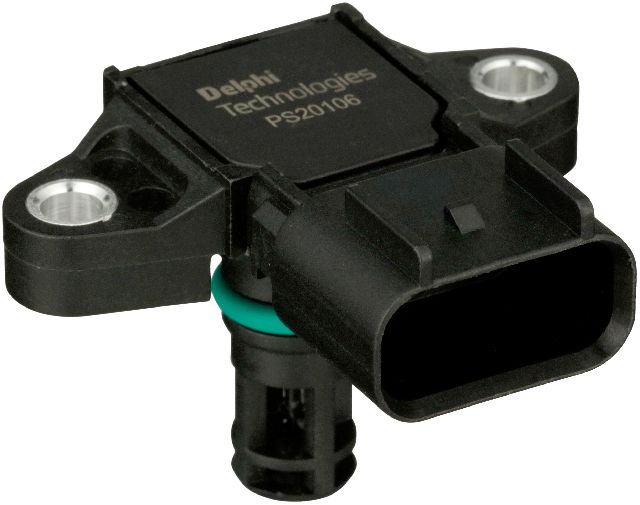
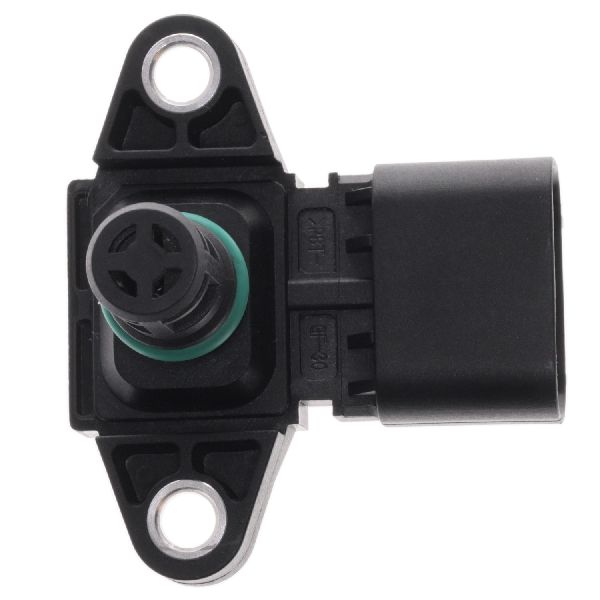
- Manifold Absolute Pressure and Temperature (MAPT) Sensor
(OEM #AA5Z-9F479-E)— This is the primary cause of code P0109 on this vehicle, as documented by Ford's own Technical Service Bulletin (TSB 19-2212). This part number supersedes previous versions like AA5Z-9F479-A and 2R3Z-9F479-AA.
Trusted brands: Motorcraft, Standard Motor Products, NTK
OEM price range: $98-$160
Aftermarket price range: $50-$110
Related Codes That Often Appear With This One
- P0107 — Indicates the MAP sensor circuit input is too low. This code is explicitly mentioned in TSB 19-2212 as appearing with P0109 due to the same faulty sensor.
- P0108 — Indicates the MAP sensor circuit input is too high. This is also mentioned in TSB 19-2212 as a companion code caused by the same faulty sensor.
Technical Service Bulletins (TSBs) & Recalls
- TSB 19-2212 / TSB 19-2183: Addresses DTCs P0107, P0108, and/or P0109 on 2018-2019 Ford Flex, Explorer, Taurus, and Lincoln MKT with the 3.5L EcoBoost engine, identifying a faulty MAPT sensor as the cause and providing the replacement part number AA5Z-9F479-E.
Platform-Specific Known Issues
- Ford issued Technical Service Bulletin #TSB 19-2212 (which supersedes TSB 19-2183 and TSB-2212) specifically for 2018-2019 models with the 3.5L EcoBoost engine. It states that DTCs P0107, P0108, and/or P0109, along with various warning messages and a lack of power, may be due to a faulty MAPT sensor. The recommended fix is to replace the sensor.
- Owner Experience: A common story found in forums involves a 2018 or 2019 Flex or Explorer with the 3.5L EcoBoost suddenly displaying the 'Check Engine' light, 'Wrench' light, and messages for 'Service AdvanceTrac' and 'Hill Start Assist Not Available'. The vehicle may go into a low-power limp mode. After checking the codes and finding P0109 (often with P0107/P0108), replacing the MAPT sensor (Part No. AA5Z-9F479-E) resolves all symptoms. The repair is noted as being very simple, taking only a few minutes with a single Torx screwdriver.
Mechanic-Grade Diagnostic Values
- KOEO Pressure Sensor Correlation Check — expected: MAP, BARO (in PCM), and Turbo Inlet Pressure sensors should all read within 2 kPa of each other.. Failure: A sensor reading that deviates by more than 2 kPa from the others indicates a fault with that sensor or its circuit.
- MAP Sensor 5V Reference Wire Voltage — expected: 4.8V to 5.2V DC with key on, engine off or running.. Failure: Voltage outside this range indicates a problem with the PCM or the wiring.
- MAP Sensor Ground Wire Voltage — expected: Less than 100 millivolts (0.1V) DC.. Failure: Voltage higher than 0.1V indicates a poor ground connection, which can skew sensor readings.
- MAP Sensor Signal Wire Voltage (KOEO) — expected: Approximately 4.5V DC (at sea level).. Failure: Significantly different voltage suggests a faulty sensor.
- MAP Sensor Signal Wire Voltage (Engine Idling) — expected: Approximately 2.0V to 2.5V DC for a turbocharged engine.. Failure: Voltage does not drop from the KOEO reading, or is erratic, suggesting a faulty sensor or vacuum issue.
Wiring & Ground Locations
- Main Chassis Ground — On the chassis frame rail, often near the battery and washer fluid reservoir on the passenger side of the engine bay.. A corroded or loose main ground can cause intermittent voltage fluctuations to multiple components, including the PCM and its sensors, potentially triggering a P0109 code even if the sensor's specific circuit appears intact.
- Body to Chassis Ground — Typically found under the vehicle, near the passenger front door area, connecting the main body to the frame.. This is another critical ground path that, if compromised, can lead to unpredictable electrical issues and intermittent sensor faults throughout the vehicle.
- MAPT Sensor Connector — On the MAPT sensor itself, located on the top rear of the 3.5L EcoBoost intake manifold.. This is the most common point of failure for wiring issues related to P0109. Check for pushed-out pins, corrosion, or damage to the connector or pigtail harness.
Real Owner Repair Stories
- YouTube video from 'FordTechMakuloco' (2018-2019 Ford Explorer/Flex/Taurus or Lincoln MKT with 3.5L EcoBoost V6) — Sluggishness, lack of power from a stop, check engine light with codes P0107, P0108, and/or P0109.
✅ What actually fixed it Replacing the MAPT sensor with OEM part number AA5Z-9F479-E, as specified in TSB 19-2212, resolved all symptoms. The repair was shown to be very simple, requiring only a T20 Torx driver. - iCarsoft-us user example (2017 Ram 1500 (different vehicle, but relevant intermittent electrical fault)) — P0109 code appeared intermittently, especially during rainy weather.
❌ Tried (didn't work) Initial diagnosis focused on the sensor itself.
✅ What actually fixed it The owner discovered and cleaned corroded underbody ground connections. This restored consistent voltage to the sensor circuit and permanently fixed the intermittent P0109 code.
OEM Part Supersession History
2R3Z-9F479-AA→AA5Z-9F479-A— Part revision by manufacturer.AA5Z-9F479-A→AA5Z-9F479-E— Part revision by manufacturer to address failure rates, as documented in TSB 19-2212.CX2228→AA5Z-9F479-E— Part number consolidation/revision.
Model Year Variations Within This Range
- 2018-2019: There are no significant mechanical or electrical differences between the 2018 and 2019 Ford Flex models that would affect the diagnosis or repair of a P0109 code. The TSB 19-2212 applies equally to both years.
Helpful Videos

![How to Fix P0107 Engine Code in 2 Minutes [1 DIY Method / Only $11.58]](https://img.youtube.com/vi/ca3o59rjU7s/mqdefault.jpg)
We Have This Part in Stock




The information in this article is provided for general reference and educational purposes only. Vehicle specifications, procedures, and part compatibility can vary by production date, trim level, and region. Always consult your vehicle's factory service manual and verify part numbers before purchasing or performing repairs. Safety-critical components such as airbags, seat belts, and braking systems should be installed by a qualified professional.
- Ford FLEX:
- 🎬 Helpful Videos
- 🛍️ Shop This Part
- What's Unique About the 2018-2019 Ford FLEX
- Diagnostic Flowchart
- Symptoms You May Notice
- Most Likely Causes
- Rare But Worth Checking
- Diagnosis Steps
- Parts You'll Likely Need
- Related Codes That Often Appear With This One
- Technical Service Bulletins (TSBs) & Recalls
- Platform-Specific Known Issues
- Mechanic-Grade Diagnostic Values
- Wiring & Ground Locations
- Real Owner Repair Stories
- OEM Part Supersession History
- Model Year Variations Within This Range
- 🎟️ Get 5% Off