

P0109 on 2018-2019 Ford Explorer: Intermittent MAP Sensor Causes and Fixes
On a 2018-2019 Ford Explorer, especially with the 3.5L EcoBoost engine, code P0109 is most often caused by a faulty Manifold Absolute Pressure and Temperature (MAPT) sensor. This is a well-documented issue covered by Ford TSB 19-2212. Replacing this sensor is a common and straightforward DIY fix, with the OEM Motorcraft part costing around $100-$160. Many owners report repeat failures of this sensor.
- For a 2018-2019 Ford Explorer with the 3.5L EcoBoost engine, P0109 almost always points to a bad MAPT sensor, a known issue covered by Ford TSB 19-2212.
- Look for a combination of the Check Engine Light, a 'Service AdvanceTrac' message, and sluggish performance.
- The repair is very simple and accessible for a DIYer, requiring a single T20 Torx bit and minimal time. The sensor is on top of the engine.
- The correct OEM part number to fix this specific issue is AA5Z-9F479-E.
- Be aware that this sensor has a high failure rate, and some owners have had to replace it multiple times.
What's Unique About the 2018-2019 Ford EXPLORER
For the 2018-2019 Explorer with the 3.5L EcoBoost engine, this code is so commonly linked to a specific part failure that Ford issued Technical Service Bulletins (first TSB 19-2183, later superseded by TSB 19-2212). The issue is typically not a wiring or vacuum leak problem, but rather an internal failure of the Manifold Absolute Pressure and Temperature (MAPT) sensor itself. This known issue often causes a cascade of warning lights beyond the Check Engine Light, such as 'Service AdvanceTrac' and 'Hill Start Assist Not Available', because those systems rely on accurate engine data to function safely. This exact problem also affects the Ford Flex, Taurus, and Lincoln MKT with the same engine.
Diagnostic Flowchart
Tap your situation to follow the diagnostic path that matches what you're seeing on this vehicle.
Symptoms You May Notice
- Check Engine Light or Malfunction Indicator Lamp (MIL) is on
- Powertrain Malfunction (wrench) light is on
- "Service AdvanceTrac" message
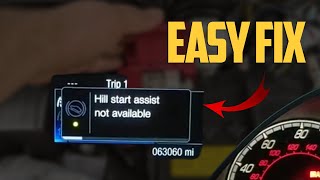
- "Hill Start Assist Not Available&quo 🎬 Watch: What to do when you see this warning message.t; message
- Lack of power or sluggish acceleration
- Sudden loss of power and entering 'limp mode'
- Hesitation during acceleration
- Rough or erratic idle
- Poor fuel economy
- Strong smell of gasoline from running rich
- Replacing the Mass Air Flow (MAF) sensor. The MAF and MAP sensors perform different functions, and P0109 specifically points to the MAP sensor circuit.
- Assuming a transmission problem due to sluggishness and lack of power. The TSB and owner reports confirm the symptoms can feel like a transmission concern but are caused by the faulty MAP sensor providing incorrect data to the engine computer.
Most Likely Causes
- Faulty Manifold Absolute Pressure and Temperature (MAPT) Sensor 🔴 High Probability This is a known, widespread issue documented by Ford in Technical Service Bulletins 19-2183 and 19-2212 for the 3.5L EcoBoost engine in multiple vehicle platforms. Owners on forums report this sensor failing multiple times, sometimes within 10,000-20,000 miles of replacement.
How to confirm: Use a diagnostic scan tool with the key on, engine off. Monitor the PIDs for BARO (PRESS), MAP (PRESS), and TCBP (PRESS). According to TSB 19-2183, if the MAP (PRESS) PID value reads more than 10.35 kPa (1.5 psi) different from the other pressure sensors, the MAPT sensor is faulty. If the readings are erratic or drop out while the engine is running, the sensor is also confirmed bad.
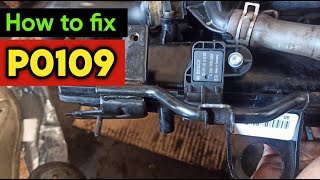
Typical fix: Replace the MAPT sensor located on the top, driver's side of the intake manifold. It is held in by a single T20 Torx screw and is easily accessible 🎬 Watch: This video shows the exact MAP sensor replacement process. after removing the engine cover.
Est. part cost: $90-$160 - Damaged Wiring or Loose Connector ⚪ Low Probability Less common than sensor failure, but can happen. A user on Ford Truck Enthusiasts forum reported a case where a new sensor didn't solve the problem, suspecting a wiring issue.
How to confirm: Visually inspect the wiring harness and electrical connector going to the MAP sensor. Look for any signs of corrosion, damage, frayed wires, or bent pins. With the engine running, wiggle the connector and harness while watching live MAP data on a scan tool to see if the signal fluctuates or drops out.
Typical fix: Repair the damaged section of wiring or clean/replace the pigtail connector.
Est. part cost: $15-$60 for a new pigtail connector - Vacuum Leak ⚪ Low Probability
How to confirm: Listen for a hissing sound around the intake manifold with the engine running. A more definitive method is to perform a smoke test, which will force smoke into the intake system and reveal any leaks from hoses or gaskets.
Typical fix: Replace the cracked or leaking vacuum hose or intake gasket.
Est. part cost: $10-$100
Rare But Worth Checking
- Faulty Powertrain Control Module (PCM): This is very rare and should only be considered after exhaustively ruling out the sensor, wiring, and vacuum leaks. A faulty PCM is the least likely cause.
Diagnosis Steps
- Connect an OBD-II scanner to confirm the P0109 code and check for any other related codes like P0107 or P0108.
- Note all symptoms, including warning messages on the dashboard like 'Service AdvanceTrac' and the wrench light.
- Given the high probability on this specific vehicle, the most direct step is to test or replace the Manifold Absolute Pressure and Temperature (MAPT) sensor. On the 3.5L EcoBoost, it is located on top of the intake manifold, easily accessible after removing the engine cover.
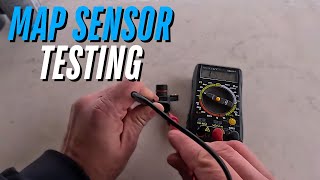
- To confirm with a scan tool (Key On, Engine Off), compare the MAP (PRESS) PID to the BARO (PRESS) PID. 🎬 See how to test a MAP sensor using an OBD scanner. If they differ by more than 1.5 psi (10.35 kPa), the sensor is bad per TSB 19-2183.
- Inspect the sensor's electrical connector and wiring for any visible damage, corrosion, or loose connections.
- If replacing the sensor does not resolve the issue, perform a vacuum leak test using a smoke machine to check for leaks in the intake manifold or hoses.
- If all else fails, the wiring harness between the sensor and PCM should be tested for continuity, and as a last resort, the PCM itself should be investigated.
Parts You'll Likely Need
- Manifold Absolute Pressure and Temperature (MAPT) Sensor
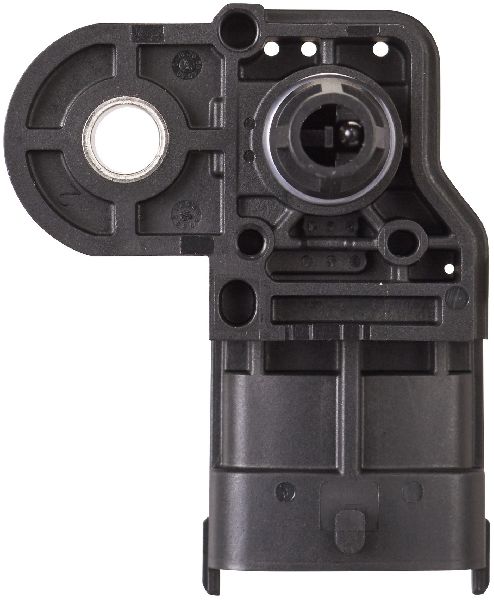
(OEM #AA5Z-9F479-E)— This is the component identified by Ford's own Technical Service Bulletins (TSB 19-2183 and 19-2212) as the cause for P0109 and related symptoms on the 3.5L EcoBoost engine. It is also referred to by the engineering number CX2619. This part supersedes previous versions AA5Z-9F479-A and 2R3Z-9F479-AA.
Trusted brands: Motorcraft (OEM), Bosch, Delphi, NTK
OEM price range: $125-$160
Aftermarket price range: $70-$120
Related Codes That Often Appear With This One
- P0107 — This code indicates 'MAP Sensor Circuit Low Voltage'. It can appear with P0109 if the intermittent signal drops to a very low voltage. Ford's TSB groups these codes together as pointing to the same faulty sensor.
- P0108 — This code indicates 'MAP Sensor Circuit High Voltage'. It can appear with P0109 if the intermittent signal spikes to a high voltage. Ford's TSB also groups this code with P0107 and P0109.
Technical Service Bulletins (TSBs) & Recalls
- TSB 19-2212: Supersedes 19-2183. Addresses an illuminated MIL, lack of power, and warning messages with DTCs P0107, P0108, and/or P0109, pointing to a faulty MAPT sensor on 2018-2019 Explorer, Flex, Taurus, and MKT with 3.5L EcoBoost engines.
- TSB 19-2183: The original bulletin for this issue, providing diagnostic steps such as comparing pressure PIDs. It was later updated by TSB 19-2212.
Platform-Specific Known Issues
- A Technical Service Bulletin (TSB 19-2212, which supersedes TSB 19-2183) was issued by Ford for 2018-2019 Explorer, Flex, Taurus, and Lincoln MKT models with the 3.5L EcoBoost engine. It states that codes P0107, P0108, and/or P0109, along with a lack of power and various warning messages, are likely due to a faulty MAPT sensor.
- Owners on Reddit have reported this being a recurring failure. One owner of a 2019 Explorer Sport stated they were on their second replacement at only 20k miles. Another reported a second failure at 44k miles, with a dealer repair cost of $540.
- The failure can be sudden and dramatic, with the vehicle immediately entering a 'limp mode' with no warning, which owners have described as a significant safety concern when it occurs on a busy highway.
Mechanic-Grade Diagnostic Values
- MAP Sensor Signal Wire Voltage (Key On, Engine Off) — expected: ~4.5V - 5.0V. Failure: Voltage significantly lower than 4.5V, or 0V, indicates a potential open or short in the signal or reference circuit.
- MAP Sensor Signal Wire Voltage (Engine Running at Idle) — expected: ~1.0V - 2.0V. Failure: Voltage remains high (near KOEO levels) or is erratic. A reading below 0.6V may trigger P0107, while a reading above 4.4V may trigger P0108.
- MAP Sensor Ground Circuit Voltage Drop — expected: < 0.1V (100mV). Failure: Voltage significantly higher than 0.1V indicates high resistance in the ground circuit, which can skew sensor readings.
- PCM Fault Trigger Logic — expected: Fewer than 10 intermittent out-of-range events per driving cycle.. Failure: The PCM will set code P0109 when it counts 10 or more intermittent out-of-range signal events from the MAP sensor within a single trip.
When the Usual Fixes Don't Work
- While the vast majority of P0109 codes on the 2018-2019 Explorer are resolved by replacing the MAPT sensor per Ford's TSB, there are rare instances where this does not fix the problem. In these cases, the root cause may be an internal failure of the Powertrain Control Module (PCM) or an outdated software calibration that is too sensitive to minor signal fluctuations. If a new OEM sensor does not resolve the code and the wiring is confirmed to be intact, investigating the PCM itself becomes the necessary next step.
OEM Part Supersession History
2R3Z-9F479-AA, AA5Z-9F479-A→AA5Z-9F479-E— Part was revised to improve reliability and address the common failure mode outlined in TSB 19-2212. The new part may have a slightly different physical appearance.
Helpful Videos


We Have This Part in Stock



The information in this article is provided for general reference and educational purposes only. Vehicle specifications, procedures, and part compatibility can vary by production date, trim level, and region. Always consult your vehicle's factory service manual and verify part numbers before purchasing or performing repairs. Safety-critical components such as airbags, seat belts, and braking systems should be installed by a qualified professional.
- Ford EXPLORER:
- 🎬 Helpful Videos
- 🛍️ Shop This Part
- What's Unique About the 2018-2019 Ford EXPLORER
- Diagnostic Flowchart
- Symptoms You May Notice
- Most Likely Causes
- Rare But Worth Checking
- Diagnosis Steps
- Parts You'll Likely Need
- Related Codes That Often Appear With This One
- Technical Service Bulletins (TSBs) & Recalls
- Platform-Specific Known Issues
- Mechanic-Grade Diagnostic Values
- When the Usual Fixes Don't Work
- OEM Part Supersession History
- 🎟️ Get 5% Off