

P0108 on 2011-2018 Subaru Forester: MAP Sensor Circuit High Causes and Fixes
P0108 on a 2011-2018 Subaru Forester most often indicates a faulty Manifold Absolute Pressure (MAP) sensor or a wiring issue. A known TSB for similar models points to a bad ground connection as a potential cause. Replacing the sensor is a common fix, but thorough circuit diagnosis is critical. An OEM sensor costs around $250.
- P0108 means the MAP sensor circuit is reading a higher-than-normal voltage.
- The most likely causes on a 2011-2018 Forester are a failed MAP sensor or a wiring/ground issue.
- Always check the wiring and connector before buying a new sensor, especially given the known TSB for this issue.
- A faulty MAP sensor can cause significant drivability problems, including rough idle, hesitation, and poor fuel economy.
- The correct OEM part number for the MAP sensor is 22627AA510.
What's Unique About the 2011-2018 Subaru Forester
For this generation of Subaru, the P0108 code has a known association with wiring problems. While Subaru TSB #07-96-15R specifically calls out 2012-13 Forester *Turbo* models for a wiring harness ground relocation, the underlying principle is highly relevant for the non-turbo FB25 as well. The TSB notes that engine movement can affect a critical ground junction, leading to intermittent high resistance and fault codes like P0108. This makes checking the wiring and grounds just as important as inspecting the sensor itself, as demonstrated by owner experiences requiring harness repairs.
Generation note: This range covers the end of the third generation (SH, 2011-2013) and the majority of the fourth generation (SJ, 2014-2018). Both generations used the FB25 engine, and the MAP sensor location and function are similar. The wiring ground issue mentioned in TSB #07-96-15R is officially for early turbo models but highlights a potential weak point in the harness design for the entire platform. A notable change between generations is the switch from hydraulic to electric power steering in 2014, which altered the front of the engine and associated wiring harness routing.
Symptoms You May Notice
- Check Engine Light is on
- Flashing cruise control light and disabled stability control (a common Subaru response to any engine fault)
- Rough or unstable idle
- Engine hesitation or stumbling during acceleration
- Reduced fuel economy
- Black smoke from the exhaust
- Engine stalling, especially when coming to a stop
- Difficulty starting or excessive cranking
- Engine surging
- Spark knock
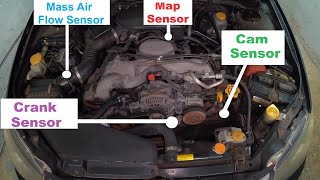
- Replacing the Mass Airflow (MAF) sensor instead of the MAP sensor. They are two distinct sensors; the MAP sensor is on the throttle body, while the MAF sensor is on the air intake tube after the air filter.
- Replacing the MAP sensor without testing the circuit. Unplugging the MAP sensor can also trigger a P0108 code; if the code appears with the sensor disconnected, the problem is in the wiring harness or ECM, not the sensor.
Most Likely Causes
- Faulty Manifold Absolute Pressure (MAP) Sensor 🔴 High Probability Sensors can fail over time due to heat cycles and internal component degradation. The sensor is located directly on the throttle body.
How to confirm: With the key on and engine off, use a scan tool to check the MAP sensor reading; it should match the barometric pressure (approx. 101 kPa at sea level). With the engine idling, the reading should be a low pressure (high vacuum), around 28-34 kPa. If the reading is stuck high (near atmospheric pressure or >119.5 kPa) or provides erratic data, the sensor is likely bad.
Typical fix: Replace the MAP sensor. It is located on the intake manifold/throttle body and secured with one 8mm bolt.
Est. part cost: $200-$250 - Wiring Harness or Connector Issue 🔴 High Probability Subaru TSB #07-96-15R identifies a poor ground connection affected by engine movement as the cause for this code on similar models. Forum users report intermittent signal spikes, suggesting a short to the 5V reference wire or a bad connector. In some cases, the entire engine wiring harness has required replacement to fix the issue.
How to confirm: Visually inspect the MAP sensor connector and wiring for damage or corrosion. Test for 5V reference, proper ground, and signal voltage at the connector using a multimeter. Wiggle the harness while monitoring live data to identify an intermittent short. If voltage is present on the signal wire with the sensor disconnected, the fault is in the wiring or ECM.
Typical fix: Repair the damaged section of the wiring harness, clean the connector contacts, or secure a loose ground connection. In severe cases, the engine harness may need to be replaced.
Est. part cost: $5-$1500 - Clogged Catalytic Converter ⚪ Low Probability
How to confirm: A clogged converter creates high backpressure, which can reduce manifold vacuum and potentially raise the MAP sensor's reading at idle. An exhaust backpressure test can confirm a restriction. Other symptoms often include a significant loss of power, especially at higher RPMs.
Typical fix: Replace the clogged catalytic converter.
Est. part cost: $500-$1500 - Vacuum Leak ⚪ Low Probability While more commonly associated with 'lean' codes, a very large vacuum leak near the MAP sensor could theoretically reduce the vacuum signal enough to trigger a fault, though it's less likely for a 'circuit high' code.
How to confirm: Inspect all vacuum hoses connected to the intake manifold for cracks or disconnections. A smoke test is the most effective way to find hidden leaks. One owner found a huge vacuum leak near the sensor, but the code returned after the fix, indicating a separate electrical issue.
Typical fix: Replace the leaking vacuum hose or gasket.
Est. part cost: $10-$100
Rare But Worth Checking
- Faulty Engine Control Module (ECM): This is extremely rare and should only be considered after all other possibilities have been definitively ruled out. One documented case showed a P0108 that persisted after fixing a vacuum leak; the technician suspected a short to power inside the ECM, though the final fix was a new wiring harness.
Diagnosis Steps
- Read the codes: Use an OBD-II scanner to confirm P0108 and check for any other stored codes like P0107 or P0068.
- Check live data (KOEO): With the Key On, Engine Off, observe the MAP sensor reading. It should be close to the Barometric Pressure (BARO), which is around 101 kPa or 29.9 inHg at sea level.
- Check live data (Engine Idling): Start the engine. At idle, the MAP reading should drop to indicate vacuum, typically around 28-40 kPa. If it stays high (near the KOEO reading), there is a problem.
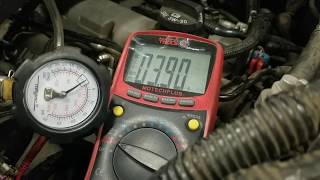
- Test the Circuit: Disconnect the sensor. Using a multimeter on the harness connector, confirm a 5-volt reference wire, a ground wire with good continuity to the chassis, and a signal wire.
- Check for Shorts: With the sensor still disconnected, measure the voltage on the signal wire. It should be 0V. If you read 5V, there is a short between the signal wire and the reference wire in the harness. This is a common cause of P0108.
- Inspect Wiring: Visually inspect the MAP sensor's connector and harness for damage, corrosion, or loose pins. Perform a 'wiggle test' on the harness while monitoring live data to see if the reading spikes, indicating an intermittent connection.
- Test the Sensor: If the wiring tests good, the sensor is the most likely culprit. Replacing it is the next step.
- Check for Restrictions: If a new sensor and good wiring don't solve the issue, check for a restricted exhaust system (clogged catalytic converter) which can cause abnormally high manifold pressure at idle.
Parts You'll Likely Need
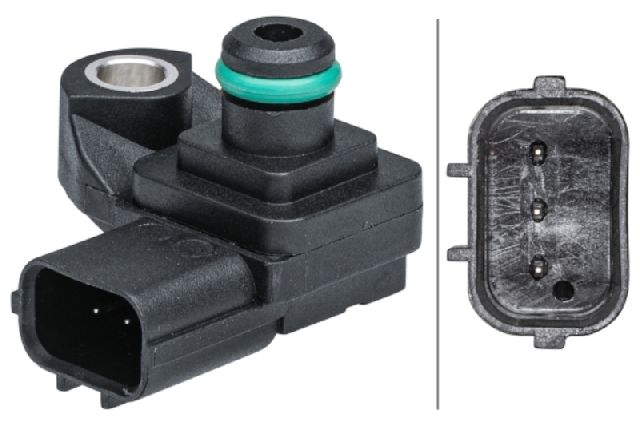
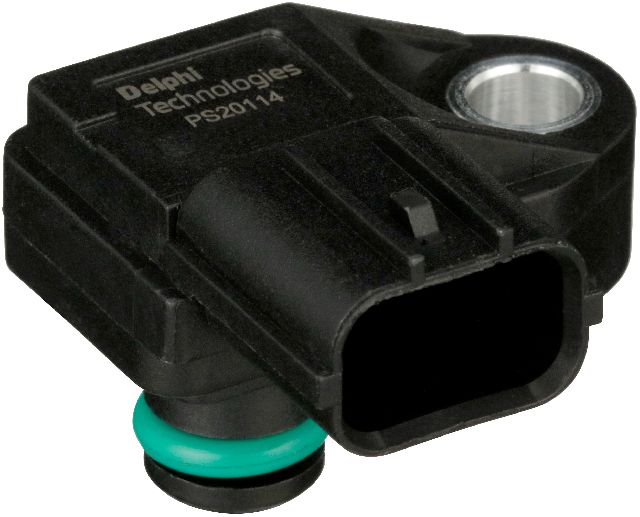
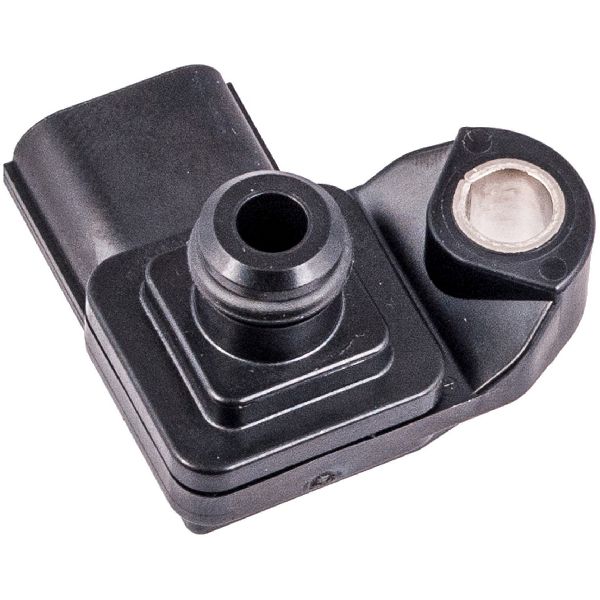
- Manifold Absolute Pressure (MAP) Sensor
(OEM #22627AA510)— This is the most common component to fail or be replaced for a P0108 code.
Trusted brands: Subaru (Genuine), Denso
OEM price range: $245-$346
Aftermarket price range: $70-$150
Related Codes That Often Appear With This One
- P0068 — This code indicates a correlation problem between the MAP sensor, MAF sensor, and throttle position. TSB #07-96-15R specifically lists P0068 as a related code that can be caused by the same wiring harness ground issue.
- P0107 — This is the opposite code, 'MAP Sensor Circuit Low Input'. Seeing both P0107 and P0108 intermittently points strongly to a wiring or connector problem causing the signal to fluctuate wildly between an open circuit/short to ground and a short to power.
- P0300 — This code for 'Random/Multiple Cylinder Misfire' can be a direct result of the incorrect fuel and timing calculations caused by the bad MAP sensor data. The TSB also lists this as a potential accompanying code.
Technical Service Bulletins (TSBs) & Recalls
- Bulletin #07-96-15R: Mentions that codes like P0108, P0068, and P0107 can be set in error due to the positioning of a sensor wiring ground junction point on 2012-13 Forester Turbo models, which was later repositioned by the manufacturer.
Platform-Specific Known Issues
- A known issue documented in Subaru TSB #07-96-15R for early turbo models involves the wiring ground junction point being located in an area where engine movement can cause a poor connection, leading to intermittent high or low circuit codes for various sensors, including P0108.
Mechanic-Grade Diagnostic Values
- MAP Sensor Reference Voltage — expected: Approximately 5.0 Volts DC. Failure: Significantly lower or no voltage indicates a problem with the ECM or wiring.
- MAP Sensor Signal Voltage (Key On, Engine Off) — expected: Approximately 4.5 - 5.0 Volts DC. Failure: A low or zero voltage reading can indicate an open in the signal circuit or a faulty sensor.
- MAP Sensor Signal Voltage (Engine at Idle) — expected: Approximately 1.0 - 2.0 Volts DC. Failure: Voltage remaining high (near the KOEO reading) indicates the sensor is not reading engine vacuum, pointing to a bad sensor, vacuum leak, or engine mechanical issue.
- MAP Sensor Ground Wire — expected: Continuity to chassis ground (near 0 ohms). Failure: High resistance or an open circuit indicates a bad ground, a common cause of sensor issues.
Scan Tool Commands That Help
- Subaru Select Monitor (SSM) or equivalent: Current Data Display & Save — This function is the primary diagnostic tool for this code. It allows a technician to view live data from the MAP sensor to check for readings that are stuck high, erratic, or do not respond to changes in engine load (throttle input).
Wiring & Ground Locations
- MAP Sensor Connector — On the top of the throttle body, part of the engine wiring harness.. This 3-pin connector provides power, ground, and signal return for the sensor. Corrosion, damage, or a poor pin connection here will directly cause P0108.
- Engine Ground Junction Point (per TSB 07-96-15) — Exact location on the FB25 is not specified in public documents, but the TSB indicates it's in a location affected by engine movement and vibration.. The TSB explicitly calls out that a poor connection at this ground junction can cause intermittent P0108 codes. This is a critical check if the code is intermittent.
- Connector F61 (example) — By the battery.. In one documented repair on a Subaru, a loose F61 connector was the root cause of an intermittent P0108 after major engine work. This highlights the need to check all major harness connections, especially after service.
Real Owner Repair Stories
- Last Ditch Garage YouTube Channel (2011 Subaru Outback 2.5L (FB25)) — P0108 code, rough idle.
❌ Tried (didn't work) Fixing a large vacuum leak near the MAP sensor (code returned immediately), Sending the ECM for repair (the repair company was fraudulent and the issue persisted)
✅ What actually fixed it Replacement of the complete engine wiring harness, which had an internal short to power on the MAP sensor signal wire. - MNSubaru forum user 'pbedroske' (2004 Subaru WRX (EJ20 engine, but relevant electrical diagnosis)) — Intermittent P0108 code, MAP sensor live data spiking to ~75 inHg.
❌ Tried (didn't work) Replacing MAP sensor with a used unit, Cleaning contacts and adding dielectric grease, Checking for vacuum leaks with propane
✅ What actually fixed it Found and secured a loose F61 connector by the battery that was missed during engine re-assembly.
"I Checked Everything" — The Actual Cause
- In a documented case on a 2011 Subaru with an FB25 engine, an initial diagnosis found and fixed a massive vacuum leak. However, the P0108 code returned immediately. Further testing revealed voltage on the signal wire even with the sensor disconnected, indicating a short to power. The final repair was the replacement of the entire engine wiring harness, which had an internal short.
When the Usual Fixes Don't Work
- While replacing the MAP sensor is the most common fix, there are multiple documented cases where a new sensor did not resolve the P0108 code. In one instance, the code persisted after fixing a vacuum leak and was only resolved by replacing the entire engine wiring harness due to an internal short. In another, the cause was a loose main harness connector that was overlooked. This underscores that for this specific vehicle and code, a wiring fault is a very high probability and must be thoroughly investigated before assuming the sensor is bad.
OEM Part Supersession History
22627AA510→N/A— No supersession found in public parts catalogs. This part number appears to be valid for the entire 2011-2018 model year range.
Model Year Variations Within This Range
- 2014-2018: The 4th generation (SJ) Forester, starting in 2014, switched to electric power steering. The earlier 3rd generation (SH) used a hydraulic pump mounted on the engine. This changes the engine's front accessory drive and the routing of the main wiring harness, which could introduce different potential chafe points or ground locations compared to the 2011-2013 models.
- 2011-2013: Early FB25 engines were more prone to oil consumption issues due to piston ring design. While not a direct cause of P0108, severe oil consumption could potentially lead to other issues like fouled sensors or a clogged catalytic converter over a long period.
Diagnostic Flowchart
Other Known Issues on This Vehicle
Issues unrelated to this code that are worth knowing about as an owner of this generation:
- Excessive Oil Consumption 🔴 High — Common on early FB25 engines (approx. 2011-2014). Can start as early as 40,000-60,000 miles. Caused by issues with piston rings and led to a class-action lawsuit. (Ref: Subaru issued TSBs and extended the powertrain warranty for affected vehicles to cover an oil consumption test and potential short block replacement.)
- Lineartronic CVT Transmission Failure/Issues 🔴 High — Widespread reports of shuddering, hesitation, stalling, and whining noises on models from 2012-2017. (Ref: Subaru extended the CVT warranty to 10 years/100,000 miles for many affected vehicles, including the Forester, due to widespread complaints and a class-action lawsuit.)
- Premature Rear Wheel Bearing Failure 🟠 Medium — Commonly reported failure, often starting as a humming or grinding noise around 60,000-100,000 miles, but sometimes much earlier. (Ref: TSB #05-70-19 was issued for 2013-16 Foresters, noting a design change to the rear backing plate to improve hub concentricity and prevent premature bearing failure.)
- A/C Compressor Clutch Failure 🟡 Low — A frequent issue where the A/C clutch fails to engage, often due to an increasing air gap over time, leading to intermittent or non-functional A/C, especially on hot days. (Ref: No specific TSB, but it's a widely discussed problem. Many owners opt to replace just the clutch and coil assembly or adjust the shims rather than replacing the entire compressor.)
Used vs. New Parts: Buying Guide for This Vehicle
When a used part is the smart pick: A used engine wiring harness from a documented low-mileage, non-crashed donor car can be a cost-effective alternative to a new one, which is very expensive. However, it carries risk. A used MAP sensor is generally not recommended due to the low cost of a quality aftermarket replacement and the high failure rate of used electronics.
Donor-vehicle mileage cap: roughly under 80000 miles for the part to have meaningful remaining life.
What to inspect on the donor part:
- For a wiring harness, inspect for any signs of oil saturation, especially near VVT solenoid connectors.
- Check for brittle plastic loom, which indicates excessive heat exposure.
- Look for any non-factory splices, tape, or repairs.
- Ensure all connector locking tabs are intact and not broken.
OEM-only on this vehicle (don't cheap out):
- While not strictly 'OEM-only', critical engine management sensors like the MAP sensor should be sourced from Subaru or the original equipment manufacturer, Denso.
Aftermarket brands forum-validated for this vehicle:
- Denso (Confirmed OEM supplier for many Subaru parts)
Brands owners have reported issues with on this vehicle:
- Unbranded, generic sensors from online marketplaces like Amazon or eBay are frequently reported on forums to be unreliable or dead-on-arrival.
Real Owner Stories
Aggregated from forums and TSBs cited above. Mileages and costs reflect what owners reported in those sources.
2012-2013 Subaru Forester Turbo
Symptoms: Intermittent high or low circuit codes for various sensors, including P0108, caused by engine movement affecting the wiring.
What fixed it: Repositioning of the sensor wiring ground junction point as per the manufacturer's updated design.
Source hint: Bulletin #07-96-15R
2011 Subaru Outback 2.5L H4
Symptoms: P0108 code persisted even after a vacuum leak was repaired and the ECM was replaced.
What fixed it: Replacement of the entire engine wiring harness.
Source hint: YouTube repair for P0108 on a 2011 Outback
Subaru Forester FB25
Symptoms: The MAP sensor reading would intermittently spike to approximately 75inHg, triggering the Check Engine Light.
What fixed it: Diagnosis suggested a short to the 5V reference wire or a faulty connector.
Source hint: MNSubaru - Thread: MAP (manifold absolute pressure) sensor issues P0108
Related OBD-II Codes
Frequently Asked Questions
Does Subaru TSB #07-96-15R apply to my Forester?
Where is the MAP sensor located on my 2.5L FB25 engine?
Why are my cruise control and stability control lights flashing along with the Check Engine Light?
Can I use a MAP sensor from a Subaru Outback or Legacy to fix my Forester?
What should the MAP sensor reading be on my Subaru when the engine is off?
Is it possible that my P0108 code is actually a wiring issue rather than a bad sensor?
Helpful Videos



We Have This Part in Stock


The information in this article is provided for general reference and educational purposes only. Vehicle specifications, procedures, and part compatibility can vary by production date, trim level, and region. Always consult your vehicle's factory service manual and verify part numbers before purchasing or performing repairs. Safety-critical components such as airbags, seat belts, and braking systems should be installed by a qualified professional.
- Subaru Forester:
- 🎬 Helpful Videos
- 🛍️ Shop This Part
- What's Unique About the 2011-2018 Subaru Forester
- Symptoms You May Notice
- Most Likely Causes
- Rare But Worth Checking
- Diagnosis Steps
- Parts You'll Likely Need
- Related Codes That Often Appear With This One
- Technical Service Bulletins (TSBs) & Recalls
- Platform-Specific Known Issues
- Mechanic-Grade Diagnostic Values
- Scan Tool Commands That Help
- Wiring & Ground Locations
- Real Owner Repair Stories
- "I Checked Everything" — The Actual Cause
- When the Usual Fixes Don't Work
- OEM Part Supersession History
- Model Year Variations Within This Range
- Diagnostic Flowchart
- Other Known Issues on This Vehicle
- Used vs. New Parts: Buying Guide for This Vehicle
- Real Owner Stories
- 2012-2013 Subaru Forester Turbo
- 2011 Subaru Outback 2.5L H4
- Subaru Forester FB25
- Related OBD-II Codes
- Frequently Asked Questions
- 🎟️ Get 5% Off