

P0108 on 2018-2019 Ford FLEX: MAP Sensor Circuit High Causes and Fixes
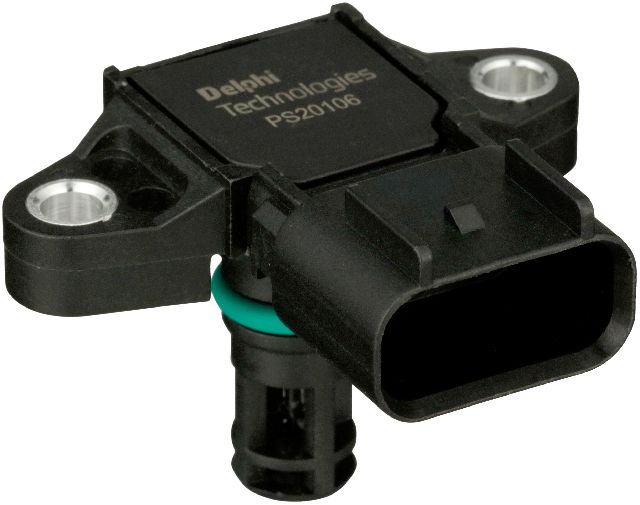
For a 2018-2019 Ford FLEX with the 3.5L EcoBoost engine, code P0108 is almost always caused by a faulty Manifold Absolute Pressure and Temperature (MAPT) sensor. Ford issued Technical Service Bulletins (TSB 19-2183, later superseded by 19-2212) for this exact problem. Replacing the sensor is a straightforward DIY fix, with the part (OEM # AA5Z-9F479-E) costing between $90 and $190.
- P0108 on a 2018-2019 Ford Flex 3.5L EcoBoost is almost certainly a bad MAP sensor.
- Ford has officially documented this issue in Technical Service Bulletins 19-2183 and 19-2212, which also apply to the Explorer, Taurus, and MKT.
- Symptoms are serious and affect drivability, including a major loss of power and multiple dashboard warnings like the 'Wrench Light'.
- This is an easy and inexpensive DIY repair that requires minimal tools (T20 Torx) and can be completed in under 30 minutes.
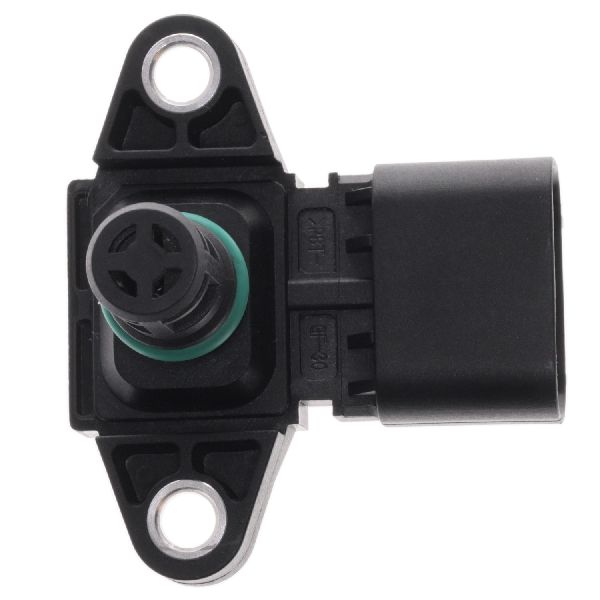
- The correct replacement part is the MAPT sensor, Ford part number AA5Z-9F479-E.
What's Unique About the 2018-2019 Ford FLEX
On this specific vehicle and engine, the P0108 code is very well-documented. Ford issued Technical Service Bulletins (TSB 19-2183 and 19-2212) for the 2018-2019 Flex, Explorer, Taurus, and Lincoln MKT with the 3.5L EcoBoost engine. The TSBs acknowledge that a faulty Manifold Absolute Pressure and Temperature (MAPT) sensor is the likely cause for this code, often appearing alongside P0107 and P0109. This makes diagnosis more direct than on other vehicles, where the cause could just as easily be a vacuum leak or wiring issue.
Diagnostic Flowchart
Tap your situation to follow the diagnostic path that matches what you're seeing on this vehicle.
Symptoms You May Notice
- Check Engine Light (Malfunction Indicator Lamp) is on
- Powertrain Malfunction (Wrench) light is on. This light specifically indicates a powertrain fault detected by the onboard computer, which may not be readable by all basic OBD-II scanners.
- "Service AdvanceTrac" message
- "Hill Start Assist Not Available" message
- Significant lack of power or sluggish acceleration, may feel like a transmission issue.
- Rough or unstable idle.
- Poor fuel economy.
- Hesitation or stalling, especially when trying to accelerate from a stop. 🎬 See how to fix the common EcoBoost acceleration stutter.
- Replacing the throttle body
- Assuming a major vacuum leak (a vacuum leak would typically cause a low pressure reading, triggering a P0107 code, not P0108)
- Replacing other pressure sensors (e.g., fuel rail pressure sensor) without confirming the MAP sensor is the one with the errant reading.
Most Likely Causes
- Faulty Manifold Absolute Pressure and Temperature (MAPT) Sensor 🔴 High Probability Ford issued TSB 19-2183 and 19-2212 specifically identifying a faulty MAPT sensor as the cause for this code on this vehicle and engine combination. This is a widely known failure point.
How to confirm: Use a scan tool to monitor PIDs with the Key On, Engine Off. TSB 19-2183 specifies comparing the MAP (PRESS) PID to the BARO (PRESS), TCBP (PRESS), and TURBO INLET (PRESS) PIDs. If the MAP (PRESS) value reads more than 10.35 kPa (1.5 psi) different from the other sensors, the MAPT sensor is faulty and should be replaced. With the engine off, the MAP and BARO readings should be nearly identical.
Typical fix: Replace the MAPT sensor. It is located on the top of the intake manifold and held in by a single T20 Torx screw. The engine cover must be removed for access. 🎬 Watch this step-by-step Ford Flex MAP sensor replacement walkthrough. Lubricating the new sensor's O-ring with a small amount of clean engine oil can make installation easier.
Est. part cost: $90-$190 - Wiring or Connector Issue 🟡 Medium Probability While less common than sensor failure on this platform, wiring can become brittle from heat cycles or damaged during other maintenance.
How to confirm: Visually inspect the wiring harness and connector going to the MAP sensor for any signs of damage, corrosion, or loose pins. Use a multimeter to check for the correct reference voltage (typically 5V), ground, and signal wire integrity. A tug test on the wires at the connector can sometimes reveal a break inside the insulation.
Typical fix: Repair the damaged section of the wiring harness or replace the connector pigtail.
Est. part cost: $15-$50 for a pigtail connector
Rare But Worth Checking
- Clogged Catalytic Converter: A severely restricted exhaust can cause pressure to build up in the intake manifold, leading to a P0108 code. This is less common but possible if the vehicle has high mileage and has been running poorly for a long time.
- Faulty Powertrain Control Module (PCM): This is extremely rare. The PCM should only be considered after all other possibilities, including the sensor and wiring, have been exhaustively tested and ruled out.
Diagnosis Steps
- Connect an OBD-II scanner and confirm the presence of the P0108 code. Note any other codes present, especially P0107 or P0109.
- With the Key On and Engine Off (KOEO), use the scanner's live data function to view the MAP (PRESS) PID and the Barometric Pressure (BARO) PID. Per TSB 19-2183, also monitor TCBP (PRESS) and TURBO INLET (PRESS) if available.
- Compare the readings. If the MAP (PRESS) reading is more than 10.35 kPa (1.5 psi) different from the others, the sensor is confirmed to be faulty.
- If the readings are inconclusive, turn off the vehicle and locate the MAP sensor on the top of the intake manifold.
- Inspect the sensor's electrical connector and wiring for any visible damage, corrosion, or looseness. Perform a wiggle test on the connector while monitoring live data to see if the reading changes.
- Given the high probability established by Ford's TSBs, if the visual inspection is clear, the most likely cause is a failed MAP sensor.
- Replace the MAP sensor. The part is held by one T20 Torx screw.
- Clear the codes with the scanner and perform a test drive to ensure the issue is resolved and the code does not return.
Parts You'll Likely Need
- Manifold Absolute Pressure and Temperature (MAPT) Sensor
(OEM #AA5Z-9F479-E)— This is the specific part identified by Ford in TSB 19-2183 and 19-2212 as the cause of the problem.
Trusted brands: Motorcraft, Bosch, NTK
OEM price range: $100-$160
Aftermarket price range: $80-$140
Related Codes That Often Appear With This One
- P0107 — This code for 'MAP Circuit Low Input' can appear with P0108 if the sensor is failing intermittently, sending both high and low erratic signals. The TSB specifically mentions this code as a possible companion.
- P0109 — This code for 'MAP Circuit Intermittent' is also mentioned in the TSB and points to an erratic sensor or connection, which is consistent with a failing MAP sensor.
Technical Service Bulletins (TSBs) & Recalls
- TSB 19-2212: Supersedes 19-2183, updating the service procedure. Confirms the issue on 2018-2019 Explorer/Flex/Taurus/MKT with 3.5L EcoBoost engines for DTCs P0107, P0108, P0109 due to a faulty MAPT sensor.
- TSB 19-2183: The original widely-circulated TSB that provides the detailed diagnostic procedure, including monitoring specific PIDs (MAP, BARO, TCBP, TURBO INLET) and the 10.35 kPa (1.5 psi) variance threshold for diagnosis.
Platform-Specific Known Issues
- Official Ford TSBs: TSB 19-2183, later superseded by TSB 19-2212, was issued by Ford for 2018-2019 Ford Flex, Explorer, Taurus, and Lincoln MKT models with the 3.5L EcoBoost engine due to a high failure rate of the MAPT sensor, causing DTCs P0107, P0108, and/or P0109.
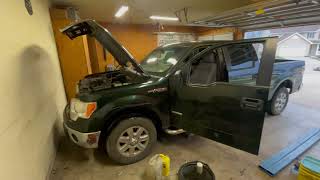
- Owner Repair Story: A video from a mechanic on YouTube demonstrates the repair on a 3.5L EcoBoost, confirming the symptoms of sluggishness and lack of power from a stop. The video walks through the simple replacement process, which involves removing the engine cover and a single T20 Torx screw, confirming the ease of the DIY fix.
Mechanic-Grade Diagnostic Values
- MAP Sensor 5V Reference Wire Voltage — expected: 4.8V to 5.2V with key on, engine off (KOEO).. Failure: Voltage outside this range indicates a wiring or PCM issue, not a sensor failure.
- MAP Sensor Signal Wire Voltage (KOEO) — expected: Approximately 4.5V to 5.0V.. Failure: A significantly lower voltage may indicate a faulty sensor or wiring issue.
- MAP Sensor Signal Wire Voltage (Engine Idling) — expected: For turbocharged engines like the 3.5L EcoBoost, voltage should drop to between 2.0V and 2.5V.. Failure: Voltage remaining high (near 5V) at idle confirms a 'Circuit High' condition.
- MAP Sensor Signal Frequency (KOEO, for frequency-based sensors) — expected: Approximately 158 Hz at sea level.. Failure: While the 2018-2019 Flex uses a voltage-based sensor, this value is critical for diagnosing older Ford models that may be confused with it.
Scan Tool Commands That Help
- Ford IDS (or equivalent professional scanner): Graphing MAP, BARO, TCBP, and TURBO INLET PIDs simultaneously — This is the primary diagnostic method outlined in Ford's TSB. It allows for a direct comparison of all intake pressure sensors to isolate the faulty one. A MAP reading that is static or deviates by more than 1.5 psi from the others at KOEO confirms the failure. [TSB-2212]
- Professional Scan Tool with Bidirectional Controls: Component Swap Test — On EcoBoost engines with multiple, identical pressure sensors, you can swap the MAP sensor with the Turbocharger Boost Pressure (TCBP) sensor. After swapping, clear codes and re-scan. If the P0108 code is replaced by a TCBP-related code, it confirms the sensor itself is faulty.
Wiring & Ground Locations
- G101 (or equivalent) — Typically located on the lower front of the engine block.. This ground point often serves the Engine Control Module (ECM) and critical sensors, including the Mass Airflow and MAP sensors. A corroded or loose connection here can cause erratic sensor readings, including a high voltage fault.
- G103 / G104 — Located on the cowl in the engine compartment, often near the brake booster or on the passenger side near the hood prop.. These grounds serve the Body Control Module (BCM) and Data Link Connector (DLC). While not a direct cause, a poor ground here can interfere with scanner communication and diagnostics.
- MAP Sensor Connector Pins — On the sensor itself.. Testing requires identifying the 5V reference, ground, and signal wires. Typically, one wire will have 5V (KOEO), one will have continuity to ground, and the third is the signal wire whose voltage changes with pressure.
Real Owner Repair Stories
- YouTube channel 'Ford Tech Makuloco' (paraphrased from similar TSB-based repairs) (2018 Ford Explorer 3.5L EcoBoost (platform mate to Flex)) — Sluggish acceleration from a stop, wrench light, Service AdvanceTrac message, and codes P0107, P0108, P0109.
❌ Tried (didn't work) Customer was concerned it was a transmission issue due to the severe hesitation.
✅ What actually fixed it Following Ford TSB 19-2212, the technician replaced the MAPT sensor (Part No. AA5Z-9F479-E). The repair took less than 15 minutes and completely resolved all symptoms and codes.
OEM Part Supersession History
2R3Z-9F479-AA→AA5Z-9F479-A— Initial part number used on earlier Ford models.AA5Z-9F479-A→AA5Z-9F479-E— Ford revised the part to address the high failure rate identified in TSBs 19-2183 and 19-2212. The -E revision is the current, more robust part.
Heads up: While older revisions may physically fit, using anything other than the latest AA5Z-9F479-E part is not recommended as the failure is likely to reoccur.
Helpful Videos


We Have This Part in Stock




The information in this article is provided for general reference and educational purposes only. Vehicle specifications, procedures, and part compatibility can vary by production date, trim level, and region. Always consult your vehicle's factory service manual and verify part numbers before purchasing or performing repairs. Safety-critical components such as airbags, seat belts, and braking systems should be installed by a qualified professional.
- Ford FLEX:
- 🎬 Helpful Videos
- 🛍️ Shop This Part
- What's Unique About the 2018-2019 Ford FLEX
- Diagnostic Flowchart
- Symptoms You May Notice
- Most Likely Causes
- Rare But Worth Checking
- Diagnosis Steps
- Parts You'll Likely Need
- Related Codes That Often Appear With This One
- Technical Service Bulletins (TSBs) & Recalls
- Platform-Specific Known Issues
- Mechanic-Grade Diagnostic Values
- Scan Tool Commands That Help
- Wiring & Ground Locations
- Real Owner Repair Stories
- OEM Part Supersession History
- 🎟️ Get 5% Off