

P0108 on 2018-2019 Ford Explorer: MAP Sensor Circuit High Causes & Fixes
For a 2018-2019 Ford Explorer, especially with the 3.5L EcoBoost engine, the P0108 code is most often caused by a faulty Manifold Absolute Pressure and Temperature (MAPT) sensor. This is a known issue confirmed by Ford Technical Service Bulletin 19-2212, which supersedes TSB 19-2183. Replacing the sensor (Part No. AA5Z-9F479-E) is a simple, low-cost DIY fix that usually resolves the issue.
- P0108 on a 2018-2019 Explorer with the 3.5L EcoBoost is almost certainly a bad MAPT sensor.
- Ford has issued a Technical Service Bulletin (TSB 19-2212) confirming this known issue for the Explorer, Flex, Taurus, and MKT.
- Symptoms include a check engine light, wrench light, lack of power, and messages like "Service AdvanceTrac".
- The repair involves replacing a single sensor (Part #AA5Z-9F479-E) on the intake manifold, which is very accessible and easy for a DIYer.
- While rare, a faulty PCM can also cause this code, so it's a possibility if a new sensor doesn't solve the problem.
What's Unique About the 2018-2019 Ford EXPLORER
On this specific generation and year range of the Ford Explorer with the 3.5L EcoBoost engine, the P0108 code is strongly linked to a known issue. Ford issued Technical Service Bulletin TSB 19-2212 (which superseded TSB 19-2183) acknowledging that the Manifold Absolute Pressure and Temperature (MAPT) sensor itself is prone to failure. This TSB explicitly covers the 2018-2019 Explorer, Flex, Taurus, and Lincoln MKT with the 3.5L EcoBoost. The failure causes this code along with a lack of power and various warning messages, making a faulty sensor the most probable cause, far more so than typical wiring or vacuum leak issues on other vehicles.
Diagnostic Flowchart
Tap your situation to follow the diagnostic path that matches what you're seeing on this vehicle.
Symptoms You May Notice
- Lack of power or sluggishness, especially from a stop.
- Illuminated Malfunction Indicator Lamp (Check Engine Light).
- Powertrain Malfunction (Wrench) Lamp illuminated.
- "Service AdvanceTrac" message on the dashboard.
- "Hill Start Assist Not Available" message.
- Rough or unstable idle.
- Hesitation during acceleration.
- Reduced fuel economy.
- Black exhaust smoke from a rich fuel condition.
- Stalling.
- Replacing the Mass Airflow (MAF) sensor. The 3.5L EcoBoost uses a speed-density system with multiple pressure sensors (MAP sensors) instead of a MAF sensor.
- Assuming a transmission problem due to the sluggish acceleration and hard shifts that can accompany the fault.
Most Likely Causes
- Faulty Manifold Absolute Pressure and Temperature (MAPT) Sensor 🔴 High Probability This is a known issue acknowledged by Ford in TSB 19-2212 (supersedes 19-2183) for 2018-2019 Explorers with the 3.5L EcoBoost. The sensor can become contaminated by oil and fuel vapors from the Positive Crankcase Ventilation (PCV) system, a common issue in direct-injection turbocharged engines, leading to incorrect readings or outright failure.
How to confirm: The official Ford TSB 19-2183 diagnostic step is to use a scan tool with the Key On, Engine Off (KOEO) and compare the MAP (PRESS) PID value to the BARO (PRESS), TCBP (PRESS), and TURBO INLET (PRESS) PIDs. If the MAP value is not within 10.35 kPa (1.5 psi) of the other sensors, the MAPT sensor is faulty and should be replaced. A simpler check is to observe the MAP sensor voltage; a reading at or above 4.4-4.5 volts with the engine running indicates a problem.
Typical fix: Replace the MAPT sensor. It is located on the top of the intake manifold, secured by a single Torx screw (often a T20), making it very accessible.
Est. part cost: $80-$140 - Wiring or Connector Issue ⚪ Low Probability
How to confirm: Visually inspect the MAPT sensor's electrical connector and wiring harness for any signs of damage, corrosion, melting, or loose pins. A short to voltage in the signal wire can cause a constant high reading. With the connector unplugged and key on, use a multimeter to verify you have a 5-volt reference on one pin and a good ground on another.
Typical fix: Repair the damaged section of the wiring harness or replace the connector pigtail.
Est. part cost: $15-$40
Rare But Worth Checking
- Faulty Powertrain Control Module (PCM): This is extremely rare, but has been documented by owners. In one case for a 2018 Explorer Sport, a new MAP sensor did not fix the P0108 and related codes; the issue was ultimately a faulty PCM that may have been damaged by water intrusion. The PCM should only be suspected after the sensor and wiring have been definitively ruled out.
- Clogged Catalytic Converter: A severe exhaust restriction can cause pressure to build up in the intake manifold, which could lead to a high MAP sensor reading. This is uncommon and would typically be accompanied by other exhaust-related codes, a rotten egg smell, and more severe, progressive performance loss.
Diagnosis Steps
- Connect an OBD-II scanner to confirm the P0108 code and check for any other related codes like P0107 or P0109.
- Review the freeze frame data to see the engine conditions when the code was set.
- With the Key On, Engine Off (KOEO), use the scanner's live data function to view the MAP, BARO, TCBP, and TURBO INLET pressure PIDs. The MAP reading should be within 1.5 PSI (10.35 kPa) of the others. If not, the sensor is bad.
- If your scanner lacks these PIDs, start the engine. At idle, the MAP sensor voltage should drop significantly, typically to around 1.0-1.8 volts. If the voltage remains high (near 4.5-5.0V), 🎬 See how to diagnose MAP sensor codes using a multimeter. the sensor or its circuit is faulty.
- Turn off the engine and visually inspect the MAPT sensor's wiring harness and connector for any damage, corrosion, or loose connections.
- If the wiring appears intact and the diagnostic tests point to the sensor, the most probable cause is a failed MAPT sensor, as indicated by Ford's TSB 19-2212.
- Replace the MAPT sensor. It is held by one T20 Torx screw. 🎬 Watch: Step-by-step MAP sensor replacement for the 3.5L EcoBoost.
- Clear the codes with the scanner and perform a test drive to ensure the problem is resolved.
Parts You'll Likely Need
- Manifold Absolute Pressure and Temperature (MAPT) Sensor
(OEM #AA5Z-9F479-E)— This is the specific part identified by Ford in TSB 19-2183 and 19-2212 as the cause for P0108 on the 3.5L EcoBoost engine. It may also be referred to by engineering number cx2619 and supersedes older part numbers AA5Z-9F479-A and 2R3Z-9F479-AA.
Trusted brands: Motorcraft (OEM), Bosch, Delphi, NTK/NGK
OEM price range: $80-$140
Aftermarket price range: $50-$100
Related Codes That Often Appear With This One
- P0107 — This code for 'MAP Circuit Low Input' can appear with P0108 if the sensor is failing intermittently or has an internal short. The official Ford TSB lists P0107, P0108, and P0109 together as symptoms of the same faulty sensor.
- P0109 — This code for 'MAP Circuit Intermittent' is also mentioned in the Ford TSB and points to an erratic sensor or wiring connection.
- U0401, U0415, U0418 — These communication codes ('Invalid Data Received From... ') can appear alongside the P0108 code, especially if the underlying cause is more severe, such as a failing PCM. They indicate that modules like the ABS and PSCM are receiving implausible data from the engine computer.
Technical Service Bulletins (TSBs) & Recalls
- TSB 19-2212: Supersedes TSB 19-2183. It simplifies the service procedure, stating to replace the MAPT sensor if the vehicle presents with the specified symptoms and DTCs, removing the previous requirement to compare PID values.
- TSB 19-2183: The original bulletin that identified the faulty MAPT sensor as the cause for DTCs P0107, P0108, and/or P0109. It listed symptoms and provided the specific OEM part number (AA5Z-9F479-E) and a detailed diagnostic procedure involving PID comparison.
Platform-Specific Known Issues
- A Ford Technical Service Bulletin (TSB 19-2212, which supersedes 19-2183) was issued for 2018-2019 Ford Explorers with the 3.5L EcoBoost engine that may exhibit a lack of power, various warning lights, and DTCs P0107, P0108, and/or P0109 due to a faulty MAPT sensor.
- Owners on forums have confirmed that replacing this sensor is the common fix, with one user on explorerforum.com noting the TSB and the successful repair on their 2018 Sport.
Mechanic-Grade Diagnostic Values
- MAP Sensor Signal Voltage (Key On, Engine Off) — expected: ~4.5 V (at sea level, should match BARO reading). Failure: Voltage significantly different from BARO sensor reading, or not holding steady.
- MAP Sensor Signal Voltage (Engine at Idle) — expected: 1.0 - 1.8 V. Failure: Voltage remains high, at or above 4.4 V, indicating a 'Circuit High' fault.
- MAP Sensor 5V Reference Voltage (VREF) — expected: 4.8 - 5.2 V. Failure: Voltage is low or absent, indicating a wiring or PCM issue, not a sensor failure.
- MAP Sensor Ground Circuit Voltage — expected: Close to 0 V (e.g., < 0.03 V). Failure: Any significant voltage reading indicates a bad ground, which can cause incorrect sensor readings.
- Ford-Specific PID Comparison (KOEO) — expected: MAP (PRESS) PID should be within 10.35 kPa (1.5 psi) of BARO (PRESS), TCBP (PRESS), and TURBO INLET (PRESS) PIDs.. Failure: If the MAP (PRESS) PID value is outside this range, TSB 19-2183 indicates a faulty MAPT sensor.
Hidden / Shadow Codes Worth Checking
- Mode 6, Test ID $53 (on some models): On many Ford vehicles, Mode 6 Test ID $53 provides misfire data counts per cylinder before a DTC is set. While P0108 is not a misfire code, severe performance issues from a bad MAP sensor can sometimes lead to misfires. A technician might check this data to assess overall engine health. (see via A scan tool capable of reading generic OBD-II Mode 6 data.)
Wiring & Ground Locations
- MAPT Sensor Connector (C139) — On the MAPT sensor itself, located on the top rear of the intake manifold.. This is the primary connection point for the sensor. Damage, corrosion, or loose pins in this 4-pin connector can directly cause P0108. The connector pigtail is available as a replacement part (e.g., Standard Motor Products S-2033, Motorcraft WPT-1339).
- MAPT Sensor Pinout (Typical 4-wire) — At the sensor connector.. The 4 wires are typically: Pin 1: Signal Ground, Pin 2: 5V Reference (VREF), Pin 3: MAP Signal, Pin 4: Intake Air Temp (IAT) Signal. A short to power on the MAP signal wire (Pin 3) will cause a P0108 code. Testing for 5V at Pin 2 and good ground at Pin 1 is a key diagnostic step.
- Powertrain Control Module (PCM) Fuses — In the under-hood fuse box (Power Distribution Box). Check fuses for 'Powertrain control module power' and 'Powertrain control module relay'.. While a blown fuse is unlikely to cause a 'high voltage' code (it usually causes a 'no signal' or 'low voltage' code), checking PCM-related fuses is a basic step when diagnosing any engine control sensor issue.
OEM Part Supersession History
AA5Z-9F479-A, 2R3Z-9F479-AA→AA5Z-9F479-E (also Motorcraft CX-2619)— Part revision to improve reliability and address the failures noted in TSB 19-2183 and TSB 19-2212.
Helpful Videos

We Have This Part in Stock


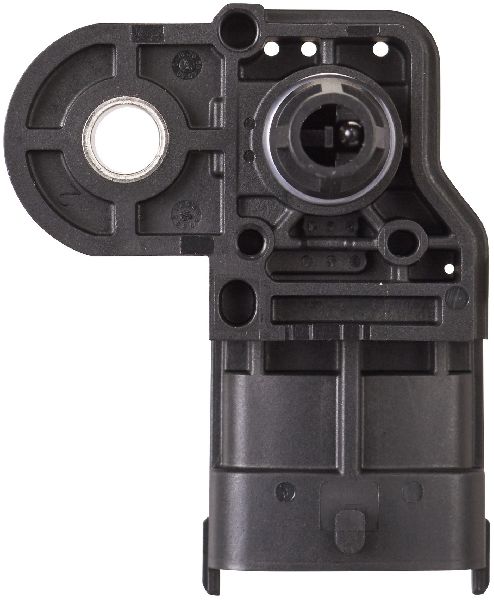

The information in this article is provided for general reference and educational purposes only. Vehicle specifications, procedures, and part compatibility can vary by production date, trim level, and region. Always consult your vehicle's factory service manual and verify part numbers before purchasing or performing repairs. Safety-critical components such as airbags, seat belts, and braking systems should be installed by a qualified professional.
- Ford EXPLORER:
- 🎬 Helpful Videos
- 🛍️ Shop This Part
- What's Unique About the 2018-2019 Ford EXPLORER
- Diagnostic Flowchart
- Symptoms You May Notice
- Most Likely Causes
- Rare But Worth Checking
- Diagnosis Steps
- Parts You'll Likely Need
- Related Codes That Often Appear With This One
- Technical Service Bulletins (TSBs) & Recalls
- Platform-Specific Known Issues
- Mechanic-Grade Diagnostic Values
- Hidden / Shadow Codes Worth Checking
- Wiring & Ground Locations
- OEM Part Supersession History
- 🎟️ Get 5% Off