

P0108 on 2011-2013 Dodge Journey: MAP Sensor Fault or Software Glitch?
On a 2011-2013 Dodge Journey with the 3.6L V6, code P0108 is frequently caused by outdated Powertrain Control Module (PCM) software. Before replacing the MAP sensor, check if your vehicle needs a software update from a Dodge dealer, as this is a widely documented fix confirmed by multiple Technical Service Bulletins (TSBs).
- For a 2011-2013 Dodge Journey, especially a 2012 3.6L, P0108 is very likely a software issue.
- Always check for TSBs or ask a dealer to check for software updates before buying parts.
- If the software is up to date, the next most likely cause is a failed MAP sensor.
- Replacing the MAP sensor is a very simple DIY job that takes only a few minutes and requires no special tools.
What's Unique About the 2011-2013 Dodge JOURNEY
For this generation of Dodge Journey with the 3.6L V6 engine, the P0108 code is uniquely and frequently linked to software issues within the Powertrain Control Module (PCM). Dodge released multiple Technical Service Bulletins (TSBs) to address this specific problem, indicating that a simple PCM reflash (a software update) at a dealership is often the correct fix, rather than a physical part replacement. This is a crucial distinction from many other vehicles where P0108 almost always points directly to a failed MAP sensor or a significant vacuum issue.
Diagnostic Flowchart
Tap your situation to follow the diagnostic path that matches what you're seeing on this vehicle.
Symptoms You May Notice
- Check Engine Light is on.
- Rough or unstable idle, especially when cold.
- Poor engine performance and sluggish acceleration.
- Increased fuel consumption or running rich.
- Black smoke from the exhaust.
- Engine may hesitate or stall, particularly at idle.
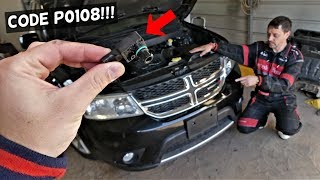
- Replacing the MAP sensor when the actual problem is the PCM software needing an update. Given the numerous TSBs, this is the most common misdiagnosis for this specific vehicle 🎬 Watch: Understanding why P0108 often requires a software update. and leads to the code returning.
- Assuming the new MAP sensor is faulty when the code reappears, without first checking for the required PCM software flash.
Most Likely Causes
- Outdated Powertrain Control Module (PCM) Software 🔴 High Probability Dodge issued multiple TSBs specifically to correct false P0108 codes via a software update, especially for the 2012 model year with the 3.6L engine. This is the most common and well-documented cause for this specific vehicle.
How to confirm: A Dodge dealership or a properly equipped independent shop can check your vehicle's current software version against available TSBs using a tool like wiTECH. They can look up your VIN for applicable service bulletins.
Typical fix: Reprogramming (flashing) the PCM with the latest software version. This is a dealer or specialty shop-level repair.
Est. part cost: $0 - Faulty Manifold Absolute Pressure (MAP) Sensor 🟡 Medium Probability After software issues, the sensor itself is the next most likely culprit. It's a common failure point that can fail internally, sending a constant high voltage signal (typically stuck near 5 volts).
How to confirm: Using a scan tool, check the live data from the MAP sensor with the key on, engine off (KOEO). The reading should be close to barometric pressure (approx. 29.9 in-Hg at sea level). Start the engine; the reading should drop significantly at idle (high vacuum) and change instantly when you rev the engine. If the reading is stuck high (e.g., 33+ in-Hg) and doesn't change, the sensor is likely bad. You can also test the sensor's three wires for a 5V reference, a good ground, and a variable signal voltage.
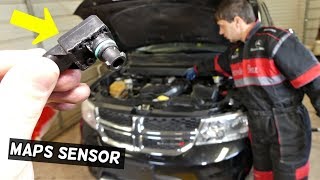
Typical fix: Replace the MAP sensor. It is located on top of the intake manifold, under the plastic engine cover, and is held in by a twist-lock mechanism. 🎬 Watch: A quick walkthrough of the MAP sensor replacement process.
Est. part cost: $35-$95 - Wiring or Connector Issue ⚪ Low Probability
How to confirm: Visually inspect the MAP sensor's wiring harness and connector for any signs of damage, corrosion, or loose connections. Pay close attention to the red safety clip on the connector, which can become brittle. Use a multimeter to test for proper voltage (typically a 5V reference), ground, and signal continuity between the sensor and the PCM. 🎬 See this guide on how to test and replace the sensor.
Typical fix: Repair the damaged wiring or clean/replace the connector pigtail.
Est. part cost: $5-$50
Rare But Worth Checking
- Clogged Catalytic Converter: A severely restricted exhaust can increase pressure in the intake manifold, potentially leading to a P0108 code. This is usually accompanied by other symptoms like a significant loss of power, especially at high RPMs, and potentially a sulfur or 'rotten egg' smell.
- Dirty Throttle Body: A throttle body heavily caked with carbon can fail to close properly, slightly reducing manifold vacuum at idle and potentially contributing to inaccurate MAP sensor readings. This is usually a contributing factor rather than the sole cause.
- Intake Manifold Vacuum Leak: While more likely to cause a low pressure code (P0106/P0107), a significant vacuum leak could, in some circumstances, disrupt sensor readings and cause the computer to log an implausible high voltage code. This is often considered a misdiagnosis for P0108.
Diagnosis Steps
- Check for Technical Service Bulletins (TSBs): Before any other step, this is critical. Check if your vehicle's VIN has an open TSB related to P0108. The most likely fix is a software update. The relevant TSBs are #18-050-16 REV. A, #18-066-15, #18-085-15, #18-033-12, and #18-008-13.
- Scan and Check Live Data: Use an OBD-II scanner to view live data from the MAP sensor. With the key on and engine off, the reading should be close to the barometric pressure. Start the engine; the reading should drop at idle and change instantly as you press the accelerator. A stuck high value points to a sensor or circuit issue.
- Inspect Sensor and Connector: Turn off the vehicle. Remove the plastic engine cover by pulling it straight up. The MAP sensor is on top of the intake manifold. Check its electrical connector for a secure fit and look for any corrosion or damaged pins. Ensure the red locking tab is present and engaged.
- Test the Circuit: If the wiring looks good, use a multimeter to check for a 5-volt reference signal and a good ground at the connector with the key on.
- Test/Replace the MAP Sensor: If live data was stuck high and the circuit tests are good, the sensor has likely failed. To replace, disconnect the electrical plug, rotate the sensor counter-clockwise (about 45 degrees to the '3 o'clock' or '4 o'clock' position), and pull it straight out. Ensure the old O-ring comes out with the sensor. Lubricate the new O-ring with a bit of engine oil before installation.
- Perform PCM Reflash: If a new sensor does not fix the issue, or if a TSB is indicated from step 1, the vehicle must be taken to a dealer or qualified shop to have the Powertrain Control Module (PCM) reprogrammed.
Parts You'll Likely Need
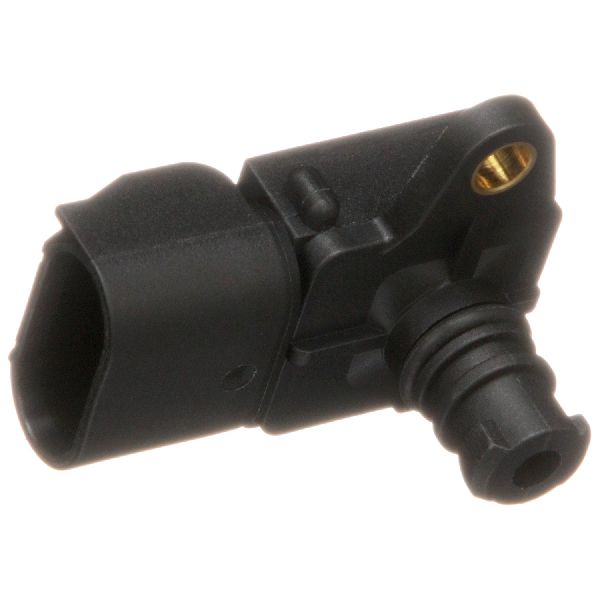
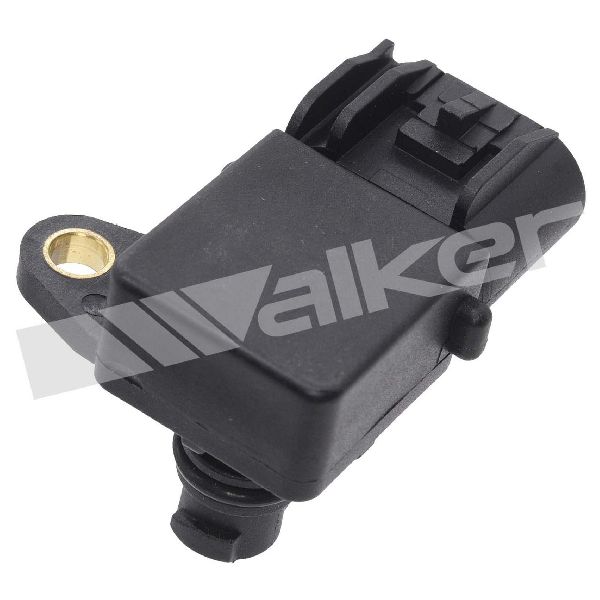
- Manifold Absolute Pressure (MAP) Sensor
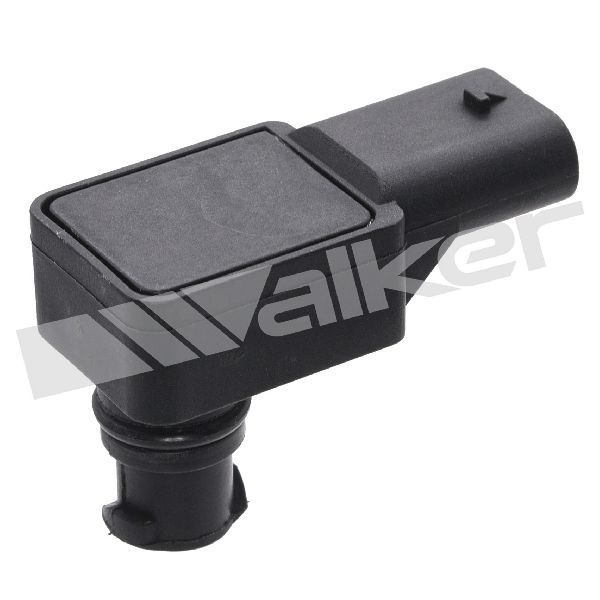
(OEM #68371847AB)— This is the most common hardware failure for a P0108 code, after software issues have been ruled out. It directly measures manifold pressure and can fail internally.
Trusted brands: Mopar, Delphi, NGK, Standard Motor Products (SMP)
OEM price range: $60-$95
Aftermarket price range: $35-$70
Related Codes That Often Appear With This One
- U0140 — This code for 'Lost Communication With Body Control Module' is mentioned alongside P0108 in TSB #18-050-16 REV. A, suggesting a broader software issue that a PCM flash can resolve.
- P0456 — Also mentioned in TSB #18-050-16 REV. A, this 'EVAP System Small Leak' code can be part of the same software glitch addressed by a PCM update.
- P06DD — TSB #18-085-15 lists this 'Engine Oil Pressure Control Circuit Stuck Off' code as another issue resolved by the same software update that fixes P0108.
- P0123 / P0222 — These throttle position sensor codes can appear with P0108 if work has been done on the intake manifold and a connector was left loose or damaged, creating multiple simultaneous sensor circuit faults.
Technical Service Bulletins (TSBs) & Recalls
- 18-050-16 REV. A: Flash update for P0108 (2012 MY only) and other codes.
- 18-066-15: Addresses MIL illumination for P0108 on 3.6L engines with a software update.
- 18-085-15: Includes P0108 in a list of codes fixed by a PCM software update for 2011 models.
- 18-033-12: Specifically calls for a PCM flash to resolve P0108.
- 18-008-13 / 18-024-12 REV. A: A PCM reflash for P0108 that also includes transmission shift improvements.
Platform-Specific Known Issues
- A primary issue for the 2012 Dodge Journey 3.6L is a false P0108 code caused by a software glitch, requiring a PCM reflash as detailed in multiple TSBs, including #18-066-15 and #18-033-12.
- TSB #18-008-13 and its successor #18-024-12 REV. A indicate a PCM flash for P0108 that simultaneously addresses transmission shift improvements, linking this engine code to driveline behavior.
- TSBs #18-050-16 REV. A and #18-085-15 bundle the P0108 fix with software updates for a wide range of other unrelated engine and communication codes, highlighting a comprehensive software problem in some vehicles.
Mechanic-Grade Diagnostic Values
- MAP Sensor Signal Voltage (KOEO) — expected: ~4.5 - 4.8 V at sea level (corresponds to barometric pressure). Failure: Stuck at or above 5.0V. The PCM triggers P0108 when the signal is over the expected maximum.
- MAP Sensor Signal Voltage (Engine Idling) — expected: ~1.0 - 1.5 V (high manifold vacuum). Failure: Voltage remains high (near KOEO reading) and does not drop when the engine starts, indicating the sensor is not reading vacuum.
- Scan Tool Live Data (Engine Idling) — expected: Reading should drop significantly from atmospheric pressure (e.g., to 10-15 in-Hg).. Failure: Reading remains high, near atmospheric pressure (e.g., 29-33 in-Hg), and does not change when revving the engine.
- Battery Voltage During PCM Flash — expected: Must be maintained between 13.2 V and 13.5 V.. Failure: Dropping below 13.2V or climbing above 13.5V can cause the reflash procedure to fail or be aborted.
Scan Tool Commands That Help
- wiTECH Diagnostic Application: PCM Reprogramming / Flash ECU — This is the dealer-level procedure required to apply the software updates specified in TSBs #18-033-12, #18-066-15, etc., which is the most common fix for a false P0108 code on this vehicle.
- wiTECH Diagnostic Application: Clear All DTCs — After a successful PCM reflash, the wiTECH software automatically presents this function to clear codes that may have been set in other modules during the programming process.
Wiring & Ground Locations
- G903 (3.6L) — Top of the transmission.. A poor engine/transmission ground can affect the reference for multiple sensors, including the MAP sensor, potentially causing erratic or high voltage readings.
- G901 — Left rear of the engine compartment.. This is a primary engine bay ground point. Corrosion or a loose connection here can cause widespread electrical issues, including sensor faults.
- G200 / G913 — Left kick panel, inside the cabin.. Interior grounds are crucial for the PCM and Body Control Module. A bad ground here could contribute to communication codes (like U0140) that are sometimes seen with P0108.
- Main Battery Ground Stud — Driver's side strut tower.. This is the central return path for the entire vehicle's electrical system. The Journey is noted for having a weak ground system, and ensuring this connection is clean and tight is a critical first step in diagnosing any electrical fault.
Real Owner Repair Stories
- YouTube channel 'World Mechanics' (2012 Dodge Journey 3.6L V6) — Check Engine Light with code P0108.
❌ Tried (didn't work) The video proceeds directly to diagnosis, no other parts were mentioned as being replaced.
✅ What actually fixed it Diagnosed a faulty MAP sensor by observing a stuck, high reading on a scan tool's live data graph. The reading did not change when the engine was revved. Replacing the MAP sensor with a new one resolved the issue, with the live data graph showing a responsive reading post-repair. - YouTube channel 'Adventure of Link' (2013 Dodge Journey Crew 3.6L V6) — Preventative maintenance, but also mentioned it can fix poor gas mileage.
✅ What actually fixed it The video demonstrates cleaning and replacing the MAP sensor. A key mechanic's tip was that on his 2013 model, the sensor had to be rotated to the '4 o'clock' position to be removed, not the '3 o'clock' position as is commonly reported. This small detail can prevent a user from struggling with or breaking the sensor during removal.
When the Usual Fixes Don't Work
- While multiple TSBs point to a software reflash as the primary solution, numerous owner-documented repairs show that a straightforward MAP sensor replacement can and does fix the P0108 code. This indicates that while the software issue is a unique and common problem for this platform, traditional hardware failure of the sensor itself remains a frequent root cause. A technician should not assume the problem is software without first performing basic live data checks on the sensor's output.
OEM Part Supersession History
5149174AA→5149174AB, then 68371847AA, then 68371847AB— Standard part revision and improvement by the manufacturer.
Heads up: No known incompatibilities; all parts are considered direct replacements for the specified vehicle range.
Model Year Variations Within This Range
- 2012 Only: The software glitch causing a false P0108 is most prominently documented for the 2012 model year, as specified in TSBs #18-050-16 REV. A and #18-024-12 REV. A.
- 2011: The 2011 model year also has a specific TSB (#18-085-15) to address P0108 via a software update, though it is cited less frequently than the 2012 model year issue.
Helpful Videos

We Have This Part in Stock


The information in this article is provided for general reference and educational purposes only. Vehicle specifications, procedures, and part compatibility can vary by production date, trim level, and region. Always consult your vehicle's factory service manual and verify part numbers before purchasing or performing repairs. Safety-critical components such as airbags, seat belts, and braking systems should be installed by a qualified professional.
- Dodge JOURNEY:
- 🎬 Helpful Videos
- 🛍️ Shop This Part
- What's Unique About the 2011-2013 Dodge JOURNEY
- Diagnostic Flowchart
- Symptoms You May Notice
- Most Likely Causes
- Rare But Worth Checking
- Diagnosis Steps
- Parts You'll Likely Need
- Related Codes That Often Appear With This One
- Technical Service Bulletins (TSBs) & Recalls
- Platform-Specific Known Issues
- Mechanic-Grade Diagnostic Values
- Scan Tool Commands That Help
- Wiring & Ground Locations
- Real Owner Repair Stories
- When the Usual Fixes Don't Work
- OEM Part Supersession History
- Model Year Variations Within This Range
- 🎟️ Get 5% Off