

P0108 on 2011-2012 Dodge Charger: MAP Sensor Circuit High Causes & Fixes
On a 2011-2012 Dodge Charger with the 3.6L engine, code P0108 most often points to a faulty Manifold Absolute Pressure (MAP) sensor or outdated Powertrain Control Module (PCM) software. A simple sensor replacement (Mopar part #68371847AB) costs about $60-$90 for the part, but always check if your vehicle needs the software update specified in TSB #18-031-12 REV. A, which requires a dealer visit and can cost $100-$200.
- For a 2011-2012 Charger, P0108 is frequently caused by a software issue, not a bad part. Check for TSB #18-031-12 REV. A before buying anything.
- If the software is up-to-date, the most likely culprit is a failed MAP sensor, which is a relatively inexpensive and easy part to replace for a DIYer.
- Symptoms include rough idle, poor acceleration, and bad gas mileage.
- Always inspect the sensor's wiring and connector for damage before replacing the sensor itself.
- The PCM reflash must be done by a Dodge dealer or a shop with specialized wiTECH equipment.
What's Unique About the 2011-2012 Dodge CHARGER
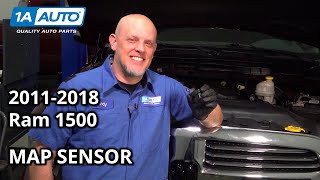
For the 2011-2012 Dodge Charger and other Chrysler vehicles of the era with the 3.6L Pentastar V6, P0108 is not always a simple case 🎬 Watch: Troubleshooting the P0108 code on a Dodge Charger of a bad sensor. Chrysler issued Technical Service Bulletin (TSB) #18-031-12 REV. A specifically for this code, indicating that the root cause is often a software sensitivity issue in the Powertrain Control Module (PCM). This bulletin explicitly applies to the Charger, Challenger, and Chrysler 300 with the 3.6L engine built before June 25, 2012. Before replacing any parts, it's critical to determine if this software update has been performed, as it is often the correct and only fix.
Diagnostic Flowchart
Tap your situation to follow the diagnostic path that matches what you're seeing on this vehicle.
Symptoms You May Notice
- Check Engine Light is on
- Rough or unstable idle
- Hesitation or sluggish acceleration
- Poor fuel economy
- Engine stalling, especially when coming to a stop or under heavy acceleration.
- Black smoke from the exhaust (due to a rich fuel condition)
- Engine backfiring on heavy acceleration.
- Replacing the MAP sensor when the actual problem is the PCM software needing an update as per TSB #18-031-12 REV. A.
- Assuming a vacuum leak is the cause. While vacuum leaks can cause MAP sensor codes, they typically trigger range/performance (P0106) or low input (P0107) codes, not a circuit high code.
Most Likely Causes
- Outdated Powertrain Control Module (PCM) Software 🔴 High Probability Manufacturer TSB #18-031-12 REV. A directly calls out a software issue that can falsely trigger the P0108 code on 2011-2012 Chargers with the 3.6L engine. This is a well-documented issue for this specific platform.
How to confirm: A Dodge dealership or a qualified shop with a wiTECH scan tool can check the current software calibration ID on your PCM and determine if it's eligible for the update specified in the TSB.
Typical fix: Reprogramming (flashing) the PCM with the updated software. This must be done by a dealer or a properly equipped independent shop. The labor time is typically billed at 0.2 to 0.5 hours. Some owners report dealer costs ranging from $100 to $200 for this service.
Est. part cost: $0 - Faulty Manifold Absolute Pressure (MAP) Sensor 🔴 High Probability The MAP sensor is an electronic component operating in a high-heat engine bay that can fail over time, causing its signal to get stuck high. Even with the known TSB, direct sensor failure is still a very common cause.
How to confirm: With the key on and engine off (KOEO), use a scan tool to compare the MAP sensor reading to the Barometric Pressure (BARO) reading. They should be nearly identical. A significant difference, or a MAP reading stuck near 5 volts, points to a bad sensor. You can also test the sensor's signal wire with a multimeter; it should not be stuck at 5 volts.
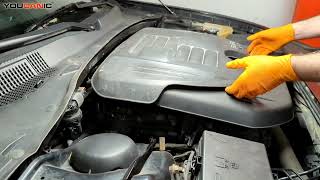
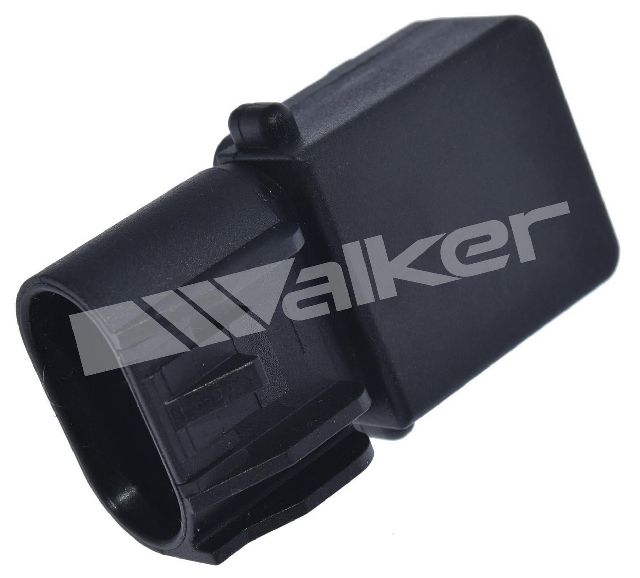
Typical fix: Replace the MAP sensor. It is located on top of the intake manifold and is easily accessible after removing the plastic engine cover. It is held by one screw and twists to release.
Est. part cost: $60-$90 - Wiring or Connector Issue 🟡 Medium Probability Engine vibration and heat can cause wires in the harness to fray or the pins in the 3-pin connector to become loose or corroded.
How to confirm: Visually inspect the MAP sensor's wiring harness and connector for any signs of damage, melting, or looseness. Ensure the red locking tab on the connector is secure. Use a multimeter to backprobe the connector (with it plugged in and KOEO) to check for a stable 5-volt reference, a good ground, and a signal voltage that is not stuck high.
Typical fix: Repair the damaged section of wiring or clean/replace the connector pigtail.
Est. part cost: $10-$30
Rare But Worth Checking
- Clogged Catalytic Converter: A severe exhaust restriction can cause pressure to build in the intake manifold, leading to abnormal MAP sensor readings. This would typically be accompanied by other symptoms like a sulfur ('rotten egg') smell and a major loss of power, especially at higher RPMs.
- Faulty Powertrain Control Module (PCM): In very rare cases, the PCM itself can fail internally. This should only be considered after all other possibilities, including the software reflash and thorough wiring checks, have been exhausted.
Diagnosis Steps
- Check for TSBs: First, have a Dodge dealership or qualified shop check your VIN for applicability of TSB #18-031-12 REV. A. If the update has not been performed, this is the most probable fix.
- Scan Tool Live Data: Connect a scan tool and observe the MAP sensor voltage with the Key On, Engine Off (KOEO). The voltage should be around 4.5V (depending on altitude) and should correspond to the BARO reading. It should NOT be stuck at a full 5.0 volts. Start the engine; at idle, the voltage should drop to 1.0-1.8V. Revving the engine should cause the voltage to fluctuate instantly. If it's stuck high, proceed to circuit testing.
- Inspect Wiring: Turn off the engine. Visually inspect the MAP sensor connector and its wiring harness for any signs of damage, melting, corrosion, or loose connections. Ensure the connector is fully seated and the red lock tab is engaged.
- Test the Sensor Circuit: With the key on, disconnect the sensor and test the connector terminals. You should find a 5-volt reference wire, a ground wire with good continuity to the chassis, and a signal wire. If the reference voltage or ground is missing, the problem is in the wiring or PCM.
- Test the Sensor: If the circuit is good, the sensor is the prime suspect. If live data showed a stuck high reading, the sensor has failed. You can confirm by replacing it, as it's a relatively inexpensive part.
- Replace the MAP Sensor: If the sensor fails tests and the PCM software is up to date, replace the MAP sensor. It is held by one screw on the intake manifold. After removing the screw, twist the sensor counter-clockwise to remove it.
- Final Check: After the repair, clear the codes with a scan tool and perform a test drive to ensure the P0108 code does not return.
Parts You'll Likely Need
- Manifold Absolute Pressure (MAP) Sensor
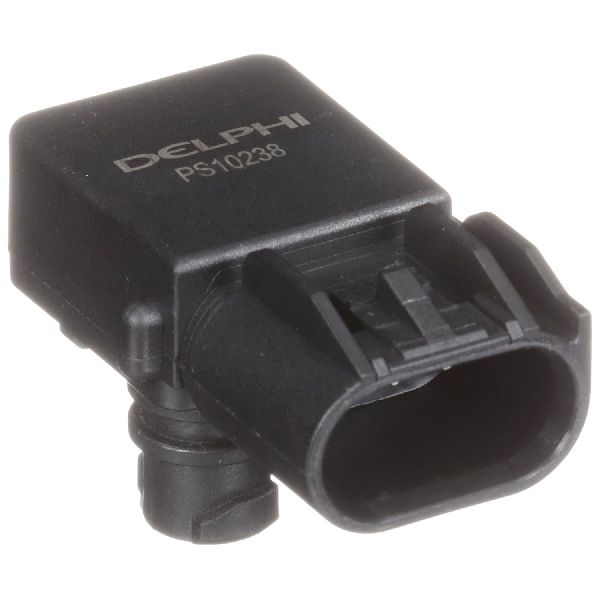
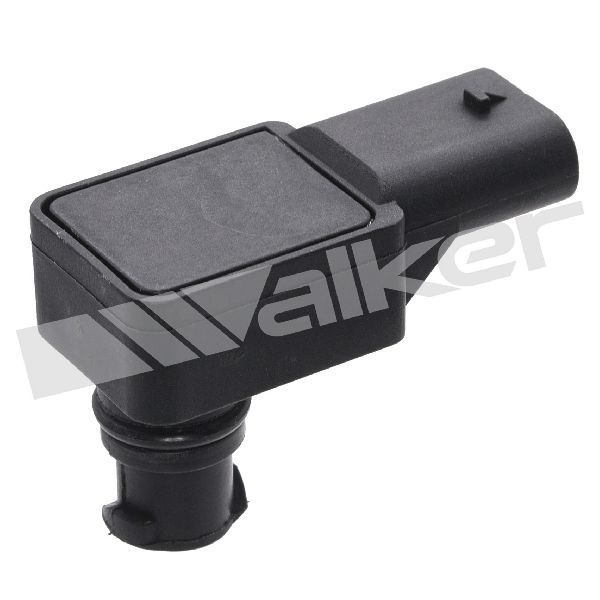
(OEM #68371847AB (supersedes 5149174AA, 5149174AB, 68371847AA))— This sensor is the most common hardware failure for code P0108. Its internal electronics can fail, causing a constant high voltage signal.
Trusted brands: Mopar, Standard Motor Products, Delphi, NGK/NTK
OEM price range: $63-$92
Aftermarket price range: $25-$70
Related Codes That Often Appear With This One
- P0106 — This code for 'MAP/Barometric Pressure Circuit Range/Performance' often appears with other MAP sensor codes as it indicates the sensor's signal is not correlating correctly with other engine sensors, like the throttle position sensor.
- P0107 — This code for 'MAP Circuit Low Input' can sometimes appear intermittently with P0108 if there is a wiring issue causing the signal to short to ground and then to power.
- P06DD — TSB #18-085-15 lists P0108 along with P06DD ('Engine Oil Pressure Control Circuit Stuck Off') and other electrical codes, suggesting a potential shared electrical or module-related problem on 2011 models that is resolved with a comprehensive PCM reflash.
Technical Service Bulletins (TSBs) & Recalls
- 18-031-12 REV. A: Flash: MIL Illumination P0108 - Manifold Absolute Pressure Sensor Circuit High. States the fix is to selectively erase and reprogram the Powertrain Control Module (PCM) with new software. Applies to 2011-2012 Charger, Challenger, and 300 with the 3.6L engine.
- 18-085-15: Lists P0108 as one of several codes that can be addressed with a PCM software update on 2011 models with the 3.6L engine, often related to other communication or sensor codes.
Platform-Specific Known Issues
- A primary issue for the 2011-2012 Charger is the necessity of a PCM software update as detailed in TSB #18-031-12 REV. A. This bulletin was specifically created to address false P0108 codes caused by software sensitivity on the 3.6L engine.
- TSB #18-085-15 also lists P0108 among a host of other potential DTCs for 2011 models with the 3.6L engine, suggesting that in some cases, the code may be part of a broader electrical issue that also requires a PCM reflash to resolve. These other codes include U0140 (Lost Communication with BCM) and P06DD (Engine Oil Pressure Control Circuit Stuck Off).
Mechanic-Grade Diagnostic Values
- MAP Sensor Voltage (Key On, Engine Off) — expected: ~4.5V, should match BARO reading. Failure: Stuck at 5.0V, or a difference of more than 0.5V from the BARO reading.
- MAP Sensor Voltage (Engine at Idle) — expected: 1.0V - 1.8V. Failure: Voltage remains high (near 4.5V) or does not respond to throttle changes.
- MAP Sensor 5V Reference Wire (at connector) — expected: 5 Volts. Failure: No voltage or significantly lower voltage indicates a wiring or PCM issue.
- MAP Sensor Ground Wire (at connector) — expected: Good continuity to chassis ground (<1 ohm). Failure: High resistance or no continuity indicates a bad ground connection.
Scan Tool Commands That Help
- wiTECH: Read PCM Calibration ID / Flash PCM — This is the primary tool used by dealers to check if the vehicle's PCM software is outdated and to perform the reflash procedure specified in TSB #18-031-12 REV. A. The wiTECH software must be release 13.03 or higher.
Wiring & Ground Locations
- MAP Sensor Connector (C2 on PCM) — The MAP sensor is on the top of the intake manifold. Its wiring goes to the C2 (black) connector of the Powertrain Control Module (PCM).. Knowing the pin locations is critical for testing. Pin 45 is the MAP Signal (Violet/Brown wire), Pin 67 is the 5 Volt Supply (Pink/Yellow wire), and Pin 66 is the Sensor Ground (Dark Blue/Dark Green wire).
- Engine Harness Chafe Points — On Charger and related platforms, inspect the main engine harness where it may rub against the driver's side shock tower, upper control arm, or brackets for the ECM/TCM.. A short in the wiring harness can cause the MAP sensor signal wire to contact a power source, leading directly to a P0108 'Circuit High' code. This can be an intermittent and hard-to-find issue.
- Engine Ground Strap — A key ground strap connects from the engine block to the chassis, often near the motor mounts. On the driver's side, a ground strap is attached to a stud on the motor mount heat shield.. While less common for a 'Circuit High' code, a poor engine ground can cause erratic behavior in multiple sensors. A bad ground can cause voltage to float, potentially contributing to incorrect sensor readings.
OEM Part Supersession History
5149174AA, 5149174AB, 68371847AA→68371847AB— Standard part evolution for improved reliability or manufacturing process.
Heads up: All listed part numbers are interchangeable for this application.
Model Year Variations Within This Range
- 2011 vs 2012: The 2011 Charger 3.6L came standard with a 5-speed automatic transmission. For the 2012 model year, the 3.6L was upgraded to a new 8-speed ZF automatic transmission, which improved acceleration and fuel economy. While this does not directly affect the P0108 code's cause, it is a significant mechanical difference between the two model years.
Helpful Videos

We Have This Part in Stock


The information in this article is provided for general reference and educational purposes only. Vehicle specifications, procedures, and part compatibility can vary by production date, trim level, and region. Always consult your vehicle's factory service manual and verify part numbers before purchasing or performing repairs. Safety-critical components such as airbags, seat belts, and braking systems should be installed by a qualified professional.
- Dodge CHARGER:
- 🎬 Helpful Videos
- 🛍️ Shop This Part
- What's Unique About the 2011-2012 Dodge CHARGER
- Diagnostic Flowchart
- Symptoms You May Notice
- Most Likely Causes
- Rare But Worth Checking
- Diagnosis Steps
- Parts You'll Likely Need
- Related Codes That Often Appear With This One
- Technical Service Bulletins (TSBs) & Recalls
- Platform-Specific Known Issues
- Mechanic-Grade Diagnostic Values
- Scan Tool Commands That Help
- Wiring & Ground Locations
- OEM Part Supersession History
- Model Year Variations Within This Range
- 🎟️ Get 5% Off