

P0107 on 2018-2019 Ford Explorer: MAP Sensor Circuit Low Causes and Fixes
On a 2018-2019 Ford Explorer with the 3.5L EcoBoost engine, code P0107 is almost always caused by a faulty Manifold Absolute Pressure and Temperature (MAPT) sensor. This is a known issue documented in Ford Technical Service Bulletin TSB 19-2212. Replacing the sensor is a simple DIY fix costing between $50 and $120 for the part.
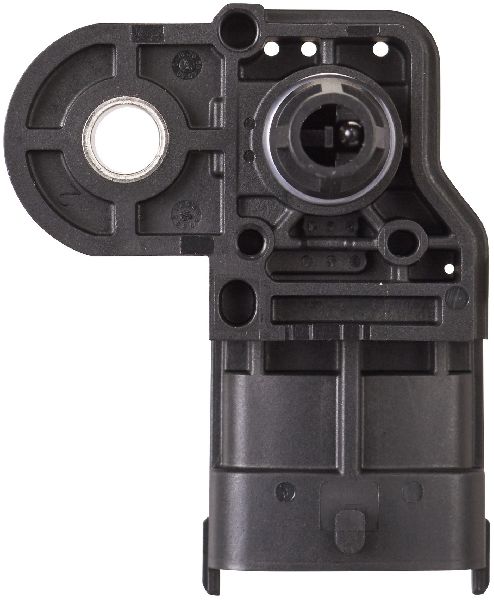
- For a 2018-2019 Explorer 3.5L EcoBoost, P0107 almost certainly means you need a new MAPT sensor (Part No. AA5Z-9F479-E).
- This issue is dangerous; the vehicle can stall unexpectedly. Do not continue to drive with these symptoms.
What's Unique About the 2018-2019 Ford EXPLORER
For the 2018-2019 Explorer equipped with the 3.5L EcoBoost engine, this code is not a random electrical fault; it's a well-documented pattern failure. Ford issued Technical Service Bulletin TSB 19-2212 acknowledging that the original Manifold Absolute Pressure and Temperature (MAPT) sensor is prone to failure, causing P0107 along with other related codes. This makes diagnosis unusually straightforward, as the sensor itself is the culprit in the vast majority of cases, rather than wiring or other potential issues.
Diagnostic Flowchart
Tap your situation to follow the diagnostic path that matches what you're seeing on this vehicle.
Symptoms You May Notice
- Sudden loss of engine power
- Vehicle stalling, potentially while driving
- Check Engine Light and/or Wrench Light illuminated
- "Service AdvanceTrac" message on the dashboard
- "Hill Start Assist Not Available" me 🎬 Learn what the 'Service AdvanceTrac' warning means for your Ford.ssage
- Rough or hesitant acceleration from a stop.
- Rough idle
- Poor fuel economy.
- Black smoke from the exhaust.
- Cruise control may not engage.
- Replacing the Mass Air Flow (MAF) sensor. The MAF sensor is a different part located on the air intake tube after the air filter, whereas the MAPT sensor is on the intake manifold itself.
- Replacing the Throttle Body. While throttle body issues can cause similar symptoms like the 'Service AdvanceTrac' message, they typically set different trouble codes. Given the TSB for P0107, the MAPT sensor should be the primary suspect.
Most Likely Causes
- Faulty Manifold Absolute Pressure and Temperature (MAPT) Sensor 🔴 High Probability This is a known failure part for the 3.5L EcoBoost engine, as documented by Ford in Technical Service Bulletin TSB 19-2212. The sensor can become contaminated with oil and carbon buildup from the PCV system, leading to incorrect readings.
How to confirm: With the key on and engine off, use an OBD-II scanner to compare the MAP sensor pressure reading to the Barometric Pressure (BARO) reading. If they differ by more than 10.35 kPa (1.5 psi) as per TSB guidelines, the sensor is faulty. A healthy sensor should send a signal between 1 and 4.5 volts; a P0107 code is typically triggered when the voltage is below 0.5V.
Typical fix: Replace the MAPT sensor located on top of the intake manifold. It is held in by a single Torx screw (often a T20) or a 7mm bolt.
Est. part cost: $50-$120 - Damaged Wiring or Poor Connection ⚪ Low Probability
How to confirm: Visually inspect the MAPT sensor connector and wiring harness for any signs of corrosion, chafing, or loose pins. Use a multimeter to check for a 5-volt reference signal at the connector with the key on. A break in the wiring will cause the same symptoms as a failed sensor.
Typical fix: Repair the damaged section of the wiring harness or clean/replace the connector.
Est. part cost: $5-$50
Rare But Worth Checking
- Powertrain Control Module (PCM) Fault: This is extremely rare. Before condemning the PCM, all other possibilities, especially the MAPT sensor and its wiring, must be exhaustively ruled out. In one documented case on a forum, a user with persistent MAP-related codes (P0106, P0107, P0108, P0109) that were not resolved by a new sensor ultimately found the PCM was at fault, possibly due to water intrusion after the vehicle sat without a hood at a dealership.
- Major Vacuum Leak: A significant leak in the intake manifold or a disconnected vacuum hose could theoretically cause the pressure to drop low enough to trigger P0107, though this is less common than a sensor failure. This would likely be accompanied by a loud hissing sound from the engine bay.
Diagnosis Steps
- Connect an OBD-II scanner and confirm that P0107 is present. Check for P0108 or P0109 as well, as they are all symptoms of the same TSB.
- Access the live data stream on the scanner. With the Key On, Engine Off (KOEO), compare the 'MAP' pressure reading to the 'BARO' (Barometric) pressure reading. They should be nearly identical.
- If the MAP reading is significantly lower than the BARO reading (by more than 1.5 psi), the MAPT sensor is defective and should be replaced. This aligns with the diagnostic procedure in Ford's TSB 19-2183, which was superseded by 19-2212.
- If the readings are plausible, visually inspect the MAPT sensor's electrical connector and nearby wiring for any obvious damage, corrosion, or looseness.
- If using a multimeter, probe the sensor connector with the key on. You should find a 5V reference wire, a ground wire, and a signal wire. A signal wire reading below 0.5V at idle points to a faulty sensor or circuit.
- Given the high failure rate documented by Ford, if no wiring issue is found, the most probable cause remains the MAPT sensor itself.
Parts You'll Likely Need
- Manifold Absolute Pressure and Temperature (MAPT) Sensor
(OEM #AA5Z-9F479-E)— This is the specific part identified by Ford in TSB 19-2212 as the cause of P0107 on the 3.5L EcoBoost engine.
Trusted brands: Motorcraft, Bosch, Standard Motor Products, Delphi
OEM price range: $80-$120
Aftermarket price range: $50-$90
Related Codes That Often Appear With This One
- P0108 — This code indicates 'MAP/BARO Circuit High Input.' Both P0107 and P0108 are cited in the same Ford TSB as symptoms of a failing MAPT sensor, which can send erratic signals that are either too low or too high.
- P0109 — This code indicates 'MAP/BARO Circuit Intermittent.' It is also listed in TSB 19-2212 as a common companion code caused by the same faulty MAPT sensor.
Technical Service Bulletins (TSBs) & Recalls
- TSB 19-2212: Supersedes TSB 19-2183. Identifies a faulty Manifold Absolute Pressure and Temperature (MAPT) sensor as the cause for DTCs P0107, P0108, and/or P0109, leading to a lack of power and various warning messages on 2018-2019 Explorer, Flex, Taurus, and Lincoln MKT with the 3.5L EcoBoost engine.
- TSB 19-2183: The earlier version of the bulletin with the same core information, providing a diagnostic step to compare MAP and BARO PID values.
Platform-Specific Known Issues
- A Ford Technical Service Bulletin (TSB 19-2212) was issued for 2018-2019 Explorers with the 3.5L EcoBoost engine that exhibit P0107, P0108, and/or P0109. The bulletin states this is likely due to a faulty MAPT sensor and advises replacement. This TSB superseded an earlier version, TSB 19-2183.
- An owner complaint filed with the NHTSA (ODI #11351923) for a 2018 model describes the exact symptoms from the TSB, including the vehicle stalling in the middle of an intersection after displaying the 'Service AdvanceTrac' message and code P0107.
- Owners on forums describe the repair as very simple, requiring only a T20 Torx driver or a 7mm socket to remove one bolt, and taking less than 15 minutes to complete. 🎬 Watch this quick walkthrough to replace your MAP sensor.
Mechanic-Grade Diagnostic Values
- MAP Sensor Signal Voltage (Key On, Engine Off) — expected: ~4.5 V (at sea level, should match BARO). Failure: Voltage significantly different from BARO reading, or below 0.5V. TSB failure threshold is a pressure difference > 1.5 psi (10.35 kPa).
- MAP Sensor Signal Voltage (Engine Idling) — expected: 1.0 - 2.0 V (dependent on engine vacuum). Failure: Voltage below 0.5V, triggering the P0107 code. 🎬 See a detailed explanation of MAP sensor low voltage codes.
- 5V Reference Wire Voltage (at sensor connector) — expected: ~5.0 V. Failure: No voltage or significantly low voltage, indicating a wiring or PCM issue.
- Ground Wire Integrity (at sensor connector) — expected: < 0.5 Ω resistance to chassis ground, or < 0.1 V. Failure: High resistance or voltage reading above 0.1V indicates a poor ground connection.
Scan Tool Commands That Help
- FORScan: Live Data PID Monitoring (MAP, BARO, MGP) — Use to diagnose the P0107 code by comparing the Manifold Absolute Pressure (MAP) PID to the Barometric Pressure (BARO) PID with Key On, Engine Off, as per the TSB. For EcoBoost models, also monitor Manifold Gauge Pressure (MGP) to differentiate atmospheric pressure from turbo boost.
- Ford IDS (or equivalent): Retrieve and Clear DTCs, Monitor PIDs — This is the dealer-level tool used to perform the official diagnostic procedure outlined in TSB 19-2212, which involves retrieving codes and monitoring the MAP and BARO PIDs.
Wiring & Ground Locations
- G104 / G105 — On the 2011-2019 Explorer platform, key engine grounds are located on the left and right front corners of the engine compartment, on or near the fender aprons.. A corroded or loose engine ground can cause floating or incorrect voltage readings on various sensors, including the MAPT sensor, potentially triggering a P0107 code even if the sensor and its immediate wiring are good.
- MAPT Sensor Connector — On top of the intake manifold, towards the rear/passenger side of the engine on the 3.5L EcoBoost.. This is the primary point of failure for wiring issues. Wires can become brittle from heat or damaged during other engine service. A tug test on the wires at the connector can reveal an internal break that isn't visually apparent.
Real Owner Repair Stories
- Ford F150 Forum (2011 Ford F-150 3.5L EcoBoost (Same engine family and similar issue)) — Uneven running at wide-open throttle, eventually throwing P0106, P0108, and other MAP-related codes.
❌ Tried (didn't work) Replacing spark plugs and coil packs., Replacing the MAF sensor., Replacing the top MAP sensor (which triggered the codes)., Replacing the second MAP sensor on the intake tube.
✅ What actually fixed it The owner found frayed wires on the Turbocharger Boost Control Solenoid (TCV) connector and replaced the connector pigtail. Although not the MAP sensor itself, the wiring fault in a related system was causing the MAP codes. A final step of replacing the MAP sensor connector pigtail was also performed as a precaution.
OEM Part Supersession History
AA5Z-9F479-A/B/D→AA5Z-9F479-E— Ford often revises parts to improve reliability or address known failure modes. The -E revision is the part specified in the TSB to fix the P0107/P0108/P0109 issue.
Heads up: While earlier revisions may physically fit, using the latest specified part (AA5Z-9F479-E) is critical to ensure the fix is permanent, as the TSB was created to address the failure of the earlier parts.
Helpful Videos

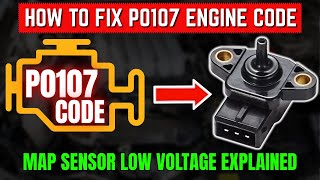

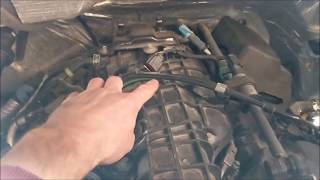
We Have This Part in Stock



The information in this article is provided for general reference and educational purposes only. Vehicle specifications, procedures, and part compatibility can vary by production date, trim level, and region. Always consult your vehicle's factory service manual and verify part numbers before purchasing or performing repairs. Safety-critical components such as airbags, seat belts, and braking systems should be installed by a qualified professional.
- Ford EXPLORER:
- 🎬 Helpful Videos
- 🛍️ Shop This Part
- What's Unique About the 2018-2019 Ford EXPLORER
- Diagnostic Flowchart
- Symptoms You May Notice
- Most Likely Causes
- Rare But Worth Checking
- Diagnosis Steps
- Parts You'll Likely Need
- Related Codes That Often Appear With This One
- Technical Service Bulletins (TSBs) & Recalls
- Platform-Specific Known Issues
- Mechanic-Grade Diagnostic Values
- Scan Tool Commands That Help
- Wiring & Ground Locations
- Real Owner Repair Stories
- OEM Part Supersession History
- 🎟️ Get 5% Off