

P0106 on 2019-2020 Ram 3500: MAP Sensor Performance Causes and Fixes
On a 2019-2020 Ram 3500, P0106 is often caused by a software issue, especially in cold weather, which requires a dealer PCM update per official bulletins. If not software, the next most likely cause is a faulty or dirty Manifold Absolute Pressure (MAP) sensor, which is a common failure point on the 6.7L Cummins due to soot contamination.
- If you get a P0106 code on a 2019-2020 Ram 3500, especially during cold weather, your first step should be to check with a dealer for a software update.
- The second most likely cause is a faulty or dirty MAP sensor, which is a relatively inexpensive part and is accessible for DIY replacement.
- Symptoms to watch for include rough idle, poor acceleration, and a drop in fuel economy.
- Do not ignore this code, as it can lead to poor engine performance and potentially affect other emissions components.
What's Unique About the 2019-2020 Ram 3500

For the 2019-2020 Ram 3500, this code has a well-documented, platform-specific cause. Ram has issued multiple Technical Service Bulletins (TSBs), including 18-019-20, stating that P0106 can be triggered by 'extreme cold ambient temperatures'. This indicates the vehicle's original engine software may be too sensitive, falsely setting the code in cold weather. In many cases, the root cause is not a faulty part but rather a need for a software update from a Ram dealer to correct the calibration. On the 6.7L Cummins, the MAP sensor is also highly susceptible to contamination from soot and oil from the crankcase ventilation system, leading to premature failure.
Diagnostic Flowchart

Tap your situation to follow the diagnostic path that matches what you're seeing on this vehicle.
Symptoms You May Notice
- Check Engine Light is on
- Electronic Throttle Control (ETC) or 'lightning bolt' light may also illuminate.
- Rough or unstable idle
- Hesitation or stumbling during acceleration
- Reduced engine power or going into 'limp mode'
- Decreased fuel economy
- Black smoke from the exhaust (more common on 6.7L Cummins)
- Difficulty starting
- Replacing the MAP sensor without checking for software updates first, especially if the problem only occurs in cold weather.
- Using cheap, aftermarket MAP sensors. Owners on forums report that non-OEM sensors often cause more issues or fail quickly, leading to repeat repairs.
Most Likely Causes

- Powertrain Control Module (PCM) Software Calibration 🔴 High Probability Multiple manufacturer TSBs (#1800824, #1800724, #18-056-22, #18-019-20) specifically link this code to performance in extreme cold, indicating a known software sensitivity.
How to confirm: Check with a Ram dealer if your vehicle's VIN has an open campaign or a pending software update. The issue will often appear only in cold weather. Owners on forums often report the dealer reflash as the definitive fix for cold-related P0106 codes.
Typical fix: Reprogramming the PCM with the latest software at a dealership using their wiTECH tool.
Est. part cost: $0-$200 - Faulty or Dirty Manifold Absolute Pressure (MAP) Sensor 🟡 Medium Probability On the 6.7L Cummins, the sensor is exposed to soot and oil vapor from the crankcase ventilation system, which can cause it to become covered in a layer of 'greasy crud' and fail. On all engines, sensors can simply fail with age and heat cycles.
How to confirm: With a scan tool, compare the MAP sensor reading to the BARO reading with the key on, engine off; they should be nearly identical. If the readings are off or do not change with engine RPM, the sensor is likely faulty. Visual inspection of the sensor on a Cummins will often reveal heavy soot and oil contamination.
Typical fix: Replace the MAP sensor. Cleaning with a dedicated sensor cleaner is sometimes a temporary fix, but replacement with a quality OEM part is recommended, especially if the sensor is heavily contaminated.
Est. part cost: $50-$150 - Vacuum or Intake Air Leak ⚪ Low Probability Hoses and gaskets can become brittle over time, leading to cracks and leaks. This is a common issue on all vehicles, not specific to this platform.
How to confirm: Perform a smoke test on the intake system to visually identify the source of any leaks. Listen for hissing sounds around the intake manifold with the engine running.
Typical fix: Replace the cracked hose or faulty gasket.
Est. part cost: $10-$100 - Wiring or Connector Issue ⚪ Low Probability
How to confirm: Visually inspect the wiring harness and connector for the MAP sensor for any signs of damage, corrosion, or loose pins. Use a multimeter to check for a 5-volt reference, a good ground, and a changing signal voltage at the connector.
Typical fix: Repair the damaged wiring or clean/replace the connector.
Est. part cost: $5-$50
Rare But Worth Checking
- Restricted Air Intake or Exhaust: A severely clogged engine air filter or a restricted Diesel Particulate Filter (DPF)/catalytic converter can alter intake manifold pressure enough to set this code.
- Faulty Powertrain Control Module (PCM): This is very rare, but if all other possibilities have been exhausted, the PCM itself could be the source of the problem.
- Faulty Turbocharger Speed Sensor: On some Cummins platforms, a failing turbo speed sensor has been known to cause a P0106 code because it shares a communication line with the MAP sensor, causing irrational readings.
Diagnosis Steps
- Check for TSBs: Contact a Ram dealer with your VIN to see if TSBs #1800824, #1800724, #18-056-22, or #18-019-20 apply and if a software update is available. This is the most critical first step for this specific vehicle and code.
- Scan for other codes: Check for any other codes that may provide more context, such as those listed in the 'Often Seen With' section.
- Inspect Wiring: Visually inspect the MAP sensor connector and wiring harness for any signs of damage, corrosion, or looseness. The MAP sensor on the 6.7L Cummins is located on the intake manifold, near the fuel rail. On the 6.4L Hemi, it is typically on the top rear of the intake manifold.
- Check Sensor Data (KOEO): With a scan tool, turn the key on but leave the engine off. Compare the MAP sensor pressure reading to the Barometric Pressure (BARO) reading. At sea level, both should read around 101 kPa or 14.7 psi. They should be within a very small margin of each other. A significant difference points to a faulty sensor.
- Check Sensor Data (Engine Running): Start the engine. The MAP sensor reading should drop significantly at idle (indicating high vacuum, e.g., 30-45 kPa) and increase smoothly toward the BARO reading as you apply the throttle. Erratic jumps or no change indicates a problem.
- Inspect for Leaks: If sensor readings seem plausible, inspect all intake and vacuum hoses for cracks or loose connections. A smoke test is the most effective way to find hidden intake leaks.
- Inspect the Sensor: Remove the MAP sensor and inspect it. On a 6.7L Cummins, it is very likely to be covered in soot or oil. Cleaning it with a dedicated sensor cleaner may be a temporary fix, but if it's heavily contaminated or readings were incorrect, replacement is the best option.
- If all else fails and a software update has been performed, consider testing the sensor's circuit for the 5V reference supply, ground, and signal integrity before condemning the PCM.
Parts You'll Likely Need
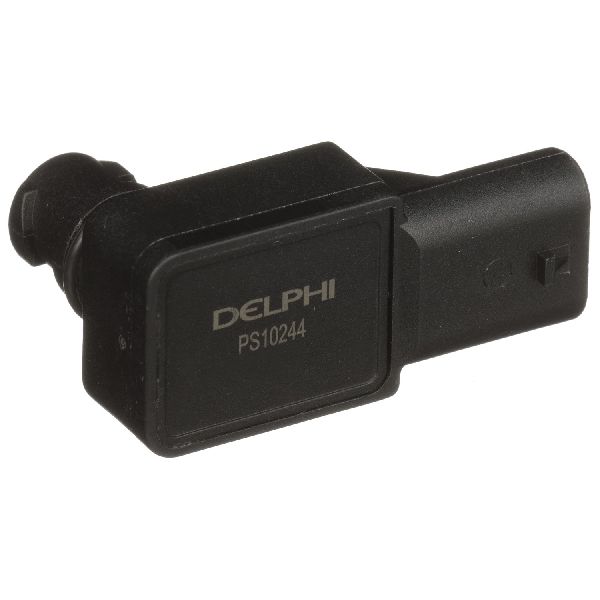
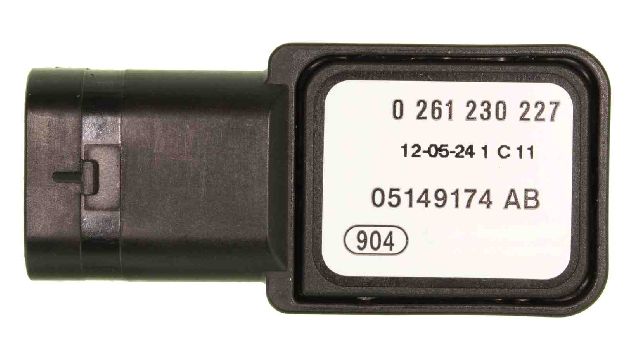
- Manifold Absolute Pressure (MAP) Sensor (6.7L Cummins)
(OEM #2897334 / 5698456)— This sensor is the primary component related to the code and is a common failure point due to heavy soot and oil contamination from the CCV system.
Trusted brands: Mopar, Cummins, Bosch, NTK
OEM price range: $90-$140
Aftermarket price range: $50-$100 - Manifold Absolute Pressure (MAP) Sensor (6.4L Hemi)
(OEM #68271094AB / 68371847AB)— This is the corresponding sensor for the gas engine. While less prone to contamination than the diesel version, it can still fail electronically over time.
Trusted brands: Mopar, Standard Motor Products, Walker, Holstein
OEM price range: $50-$80
Aftermarket price range: $30-$60
Related Codes That Often Appear With This One
- P0116 — Engine Coolant Temperature Sensor Performance. This code is listed in the same TSBs as P0106, suggesting the software update addresses both. [Bulletin #1800824, #18-019-20]
- P061A — Internal Control Module Torque Calculation Performance. Also listed in the same TSBs, indicating a related software calibration issue. [Bulletin #1800724, #18-019-20]
- P0420 — Catalyst System Efficiency Below Threshold. This can be seen alongside P0106 because incorrect MAP readings lead to improper air/fuel mixtures, which can affect catalyst performance. It is also listed in TSB #18-019-20.
- P226C — Turbocharger Boost Control “A” Slow Response. This is another code mentioned in TSB #18-019-20 as being related to cold weather performance and fixed by a software update.
Technical Service Bulletins (TSBs) & Recalls
- Bulletin #1800824 (2024-01-25): Mentions P0106 - Manifold Absolute Pressure Sensor Performance (In extreme cold ambient temperatures).
- Bulletin #1800724 (2024-01-25): Mentions P0106 - Manifold Absolute Pressure Sensor Performance (In extreme cold ambient temperatures).
- Bulletin #18-056-22 (2022-05-24): Mentions P0106 - Manifold Absolute Pressure Sensor Performance (In extreme cold ambient temperatures).
- Bulletin #18-019-20 (2020-03-04): A comprehensive PCM update bulletin that lists P0106 (Manifold Absolute Pressure Sensor Performance (In extreme cold ambient temperatures)) among many other codes addressed by the software reflash.
Platform-Specific Known Issues
- A known software calibration issue can cause this code to set in extremely cold ambient temperatures. This is documented in TSBs #1800824, #1800724, #18-056-22, and #18-019-20. The primary fix in these cases is a PCM reflash performed by a dealer.
- On the 6.7L Cummins engine, the MAP sensor is frequently contaminated by soot and oil from the crankcase ventilation (PCV) and exhaust gas recirculation (EGR) systems. This buildup can clog the sensor port and cause inaccurate readings. Aftermarket relocation kits are available to move the sensor out of the direct path of these contaminants.
Mechanic-Grade Diagnostic Values
- MAP Sensor 5V Reference Supply — expected: ~5.0 Volts. Failure: Voltage significantly lower than 5.0V or 0V indicates a wiring issue or faulty PCM.
- MAP Sensor Ground Circuit — expected: Close to 0 Volts. Failure: Any significant voltage reading indicates a poor ground connection.
- MAP Sensor Signal Voltage (Key On, Engine Off) — expected: ~4.5 Volts (at sea level). Failure: A voltage that is significantly different from the expected value for the current atmospheric pressure indicates a faulty sensor.
- MAP Sensor Signal Voltage (Engine Idling) — expected: 1.0 to 1.5 Volts. Failure: A voltage that does not drop to this range at idle suggests a vacuum leak, a clogged sensor port, or a faulty sensor.
Wiring & Ground Locations
- MAP Sensor (6.7L Cummins) — On the driver's side of the intake manifold.. This is the primary component for the P0106 code. Knowing its location is essential for inspection, cleaning, testing, and replacement.
- MAP Sensor Connector (6.7L Cummins) — Plugs directly into the MAP sensor on the intake manifold; typically has a grey tab that must be depressed to unplug.. The connector and its wiring are common points of failure due to heat, vibration, and potential corrosion. The plastic locking tabs can become brittle.
Real Owner Repair Stories
- General Diesel Engines Forum User (2013 Ram 5500 with 6.7L Cummins (behavior is applicable to 2019-2020 models)) — Low power, P0106 for MAP sensor performance, and P2580 for turbo speed sensor.
❌ Tried (didn't work) Initial diagnosis pointed towards the MAP sensor, but other codes were present.
✅ What actually fixed it The root cause was a faulty inlet pressure/temperature sensor located in the clean side of the airbox. Replacing this sensor restored proper boost pressure and resolved the performance issues. The P0106 was likely a secondary code triggered by the irrational readings from the primary failed sensor. - YouTube User Comment/Video (Dodge Ram with 6.7L Cummins) — P0106 code present, even after replacing the MAP sensor.
❌ Tried (didn't work) Replacing the MAP sensor did not fix the problem.
✅ What actually fixed it The actual problem was a faulty turbo speed sensor. The computer was seeing zero RPM from the turbo speed sensor and high pressure from the MAP sensor, which was an illogical combination, causing it to flag the MAP sensor performance. Replacing the turbo speed sensor resolved the P0106 code.
OEM Part Supersession History
68371847AA→68371847AB— Standard part revision or manufacturer change.
Heads up: The new part number is a direct replacement for the old one for the 6.4L Hemi engine.2897334→2897334NX— The 'NX' suffix often denotes a remanufactured or revised part from Cummins.
Heads up: This is the MAP sensor for the 6.7L Cummins. It is also cross-referenced with part numbers 2872784 and 5698456.
Model Year Variations Within This Range
- 2019-2020: While the base 6.4L Hemi and standard output 6.7L Cummins engines were largely consistent, the high-output 6.7L Cummins available in the 3500 received updates. The 2019 model year high-output produced 1,000 lb-ft of torque, which was a significant benchmark. These engines are paired with different transmissions (Aisin for high-output, 68RFE for standard output), but this does not directly affect the P0106 cause, which is more related to software and sensor contamination common to both 6.7L variants.
Helpful Videos
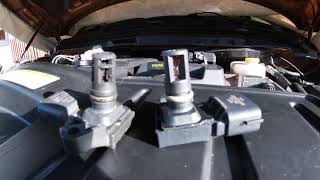

We Have This Part in Stock

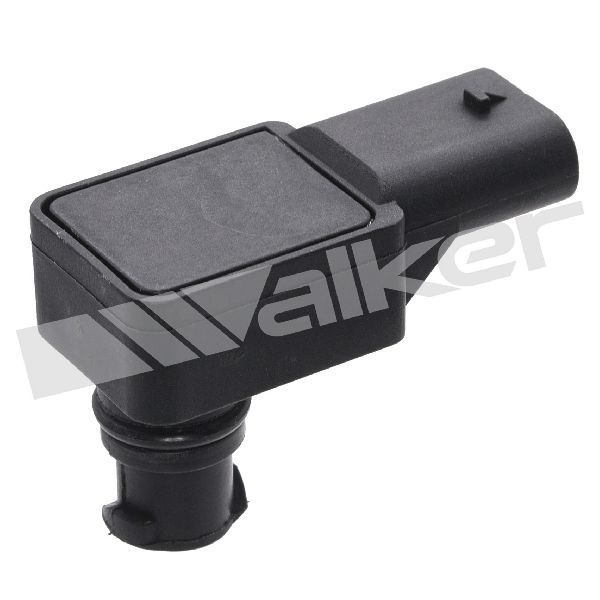
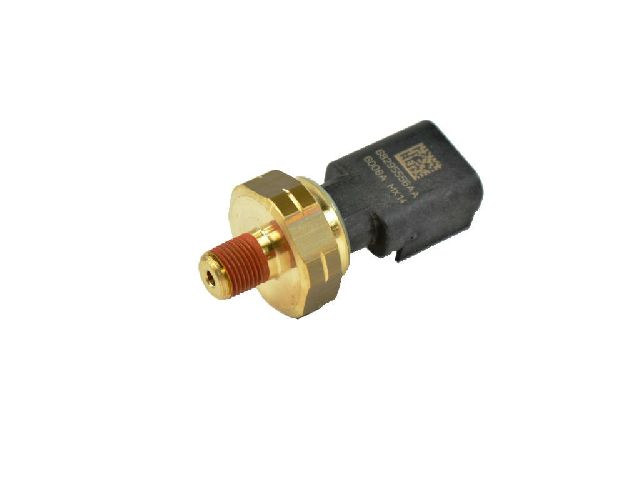

The information in this article is provided for general reference and educational purposes only. Vehicle specifications, procedures, and part compatibility can vary by production date, trim level, and region. Always consult your vehicle's factory service manual and verify part numbers before purchasing or performing repairs. Safety-critical components such as airbags, seat belts, and braking systems should be installed by a qualified professional.
- Ram 3500:
- 🎬 Helpful Videos
- 🛍️ Shop This Part
- What's Unique About the 2019-2020 Ram 3500
- Diagnostic Flowchart
- Symptoms You May Notice
- Most Likely Causes
- Rare But Worth Checking
- Diagnosis Steps
- Parts You'll Likely Need
- Related Codes That Often Appear With This One
- Technical Service Bulletins (TSBs) & Recalls
- Platform-Specific Known Issues
- Mechanic-Grade Diagnostic Values
- Wiring & Ground Locations
- Real Owner Repair Stories
- OEM Part Supersession History
- Model Year Variations Within This Range
- 🎟️ Get 5% Off