

P0106 on 2019 Ram 2500 6.7L Cummins: MAP Sensor Performance Causes and Fixes
On a 2019 Ram 2500 with the 6.7L Cummins, P0106 is frequently caused by a software issue, especially in cold weather, requiring a dealer PCM update per TSB #18-059-20. This TSB addresses a sensitive calibration that falsely triggers the code in extreme cold. If software is ruled out, the next most likely cause is a faulty or soot-contaminated Manifold Absolute Pressure (MAP) sensor, an approximately $100 part (OEM #2897334) that is easy to replace.
- For a 2019 Ram 2500 6.7L, P0106 is very often a software issue, not a bad part, especially if it appears during cold weather.
- Before buying parts, check with a Ram dealer about TSB #18-059-20.
- If hardware is the cause, the most likely culprit is a soot-contaminated MAP sensor, which is a relatively easy and inexpensive DIY replacement.
- Always inspect the intake system for air leaks before replacing sensors.
- This code is almost exclusively related to the 6.7L Cummins diesel engine, not the gasoline V8.
What's Unique About the 2019-2019 Ram 2500
For the 2019 Ram 2500 with the 6.7L Cummins engine, this code has a well-documented, platform-specific cause. Ram issued Technical Service Bulletin (TSB) #18-059-20, which states that P0106 can be triggered by 'extreme cold ambient temperatures'. This indicates the original engine software may be too sensitive, falsely setting the code in cold weather. This TSB is a comprehensive software update that also addresses numerous other potential DTCs and drivability issues, such as idle fluctuation and DEF system messages. In many cases, the root cause is not a faulty part but a need for a software update from a Ram dealer to correct the PCM calibration.
Diagnostic Flowchart
Tap your situation to follow the diagnostic path that matches what you're seeing on this vehicle.
Symptoms You May Notice
- Check Engine Light is on
- Rough or unstable idle
- Poor acceleration or hesitation
- Decreased fuel economy
- Black smoke from the exhaust
- Difficulty starting the engine
- Engine stalling
- Engine surge felt while driving
- Tachometer bouncing at idle with no actual change in engine RPM
- Replacing the MAP sensor when a PCM software update is the actual required fix, especially if the problem only occurs in cold weather.
- Replacing the MAP sensor when the root cause is a faulty turbo speed sensor sending conflicting data to the PCM.
- Using cheap, non-OEM MAP sensors from online marketplaces, which some owners report caused more issues or failed immediately.
Most Likely Causes
- Outdated Powertrain Control Module (PCM) Software 🔴 High Probability TSB #18-059-20 specifically calls out P0106 occurring in extreme cold, indicating a factory software calibration issue that is too sensitive. This update also includes fixes for dozens of other potential codes and drivability enhancements, making it a crucial first step.
How to confirm: Check with a Ram dealership to see if your vehicle's VIN has an open campaign or is eligible for the software update mentioned in TSB 18-059-20 or a superseding version. The dealer can check this in their system.
Typical fix: A Ram dealer needs to reprogram the PCM with the latest available software using their wiTECH diagnostic tool. Some owners report this fully resolves the issue.
Est. part cost: $0-$250 - Faulty or Dirty Manifold Absolute Pressure (MAP) Sensor 🔴 High Probability The MAP sensor on the 6.7L Cummins is located on the intake manifold, where it is exposed to soot and oily vapor from the EGR and crankcase ventilation systems. This 'greasy crud' can clog the sensor's port, leading to slow or inaccurate readings. Aftermarket relocation kits exist specifically to move the sensor out of the direct path of these contaminants.
How to confirm: Remove the sensor (located on the driver's side of the intake manifold, held by a T15 Torx screw) and visually inspect it for heavy soot or oil contamination. With a scan tool, monitor the MAP sensor data at idle and under load to see if it responds correctly and reads within specification. At key-on, engine-off, its reading should be nearly identical to the BARO sensor reading.
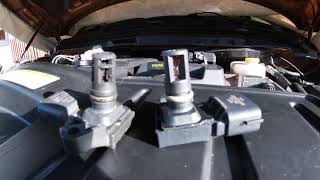
Typical fix: Cleaning the sensor with a dedicated mass airflow or electrical parts cleaner can be a temporary fix. However, replacement is often the permanent solution if the sensor is internally fouled or has failed. It is a simple, 10-minute job. 🎬 Watch: How to clean and maintain your 6.7L Cummins TMAP sensor.
Est. part cost: $80-$125 - Vacuum or Intake Air Leak 🟡 Medium Probability Cracked hoses or loose connections in the complex air intake system of a turbocharged diesel can lead to pressure readings that don't match what the PCM expects. The intercooler boots are a common area to check for tears or loose clamps.
How to confirm: Perform a visual inspection of all intake hoses and connections between the air filter and the intake manifold. A smoke test is the most effective way to find small, hard-to-see leaks. You may also hear a hissing sound.
Typical fix: Tighten loose clamps or replace cracked or damaged intake hoses/boots.
Est. part cost: $20-$150 - Damaged Wiring or Poor Connection ⚪ Low Probability
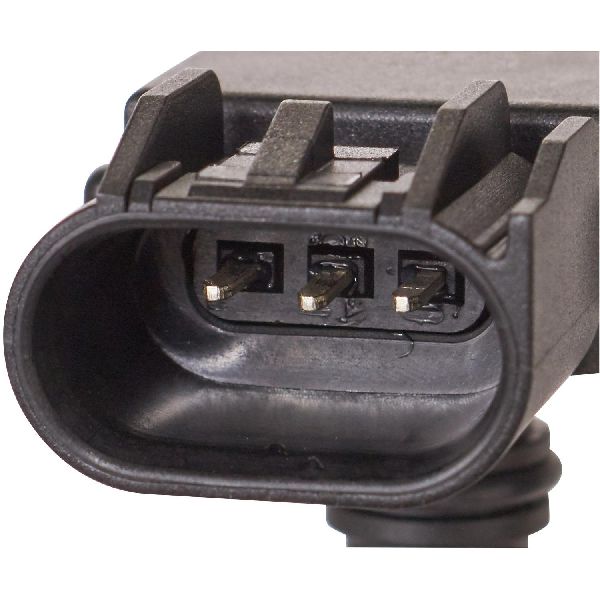
How to confirm: Visually inspect the MAP sensor connector and wiring harness for signs of damage, corrosion, or loose pins. The connector has a red locking tab that must be disengaged. Use a multimeter to check for a stable 5-volt reference, a good ground, and a changing signal voltage at the connector.
Typical fix: Repair the damaged wiring or clean/replace the sensor connector.
Est. part cost: $10-$100
Rare But Worth Checking
- Faulty Turbocharger Speed Sensor: In some cases, a failing turbo speed sensor has been reported to trigger a P0106 code, even after the MAP sensor was replaced. Forum users report that because the sensors may share a communication line, an illogical turbo speed reading can cause the PCM to flag the MAP sensor's plausible reading as a performance error. TSB #18-059-20 also lists DTC P2579 (Turbocharger Speed Sensor Circuit) as being addressed by the same software update.
- Restricted Diesel Particulate Filter (DPF): A severely clogged DPF can create excessive exhaust backpressure, which can indirectly affect the pressure readings in the intake manifold and trigger a P0106 code. This would typically be accompanied by other DPF-related codes like P2463 or P242F, which are also mentioned in TSB #18-059-20.
- Faulty Powertrain Control Module (PCM): This is extremely rare. The PCM should only be considered after all other possibilities, including software updates, sensors, wiring, and air leaks, have been thoroughly ruled out.
Diagnosis Steps
- Check for Technical Service Bulletins (TSBs): Your first step should be to contact a Ram dealer with your VIN. Inquire about TSB #18-059-20 or any newer superseding bulletins. This is the most common fix for cold-weather related P0106.
- Scan for Other Codes: Use an OBD-II scanner to see if other codes are present. Codes related to the DPF (P2463), turbo speed sensor (P2579), or EGR can provide valuable diagnostic clues and may point towards the TSB as the solution.
- Inspect the MAP Sensor and Connector: Locate the MAP sensor on the driver's side of the intake manifold. Disconnect it and inspect the sensor's port for soot/oil buildup. Check its electrical connector for corrosion or loose pins.
- Analyze Live Data: Use a scan tool to monitor the MAP sensor's live data. Check the pressure reading at key-on, engine-off (it should be close to the BARO reading, typically ~14.7 PSI or 101 kPa at sea level) and observe how it changes as you apply and release the throttle. An unresponsive or slow-to-respond sensor is likely faulty.
- Check for Intake Leaks: Visually inspect all intake boots and hoses for cracks or loose clamps, paying close attention to the connections at the intercooler. For a more thorough check, use a smoke machine to pressurize the intake system and identify any leaks.
- Test Sensor Wiring: If the sensor appears to be working intermittently, test the wiring harness. Check for a stable 5-volt reference, a good ground, and continuity on the signal wire back to the PCM.
- Replace the MAP Sensor: If the sensor fails inspection or testing, and a software update is not applicable or has already been performed, replace the MAP sensor with a quality OEM or equivalent part.
Parts You'll Likely Need
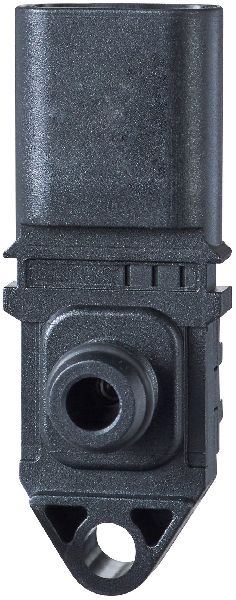
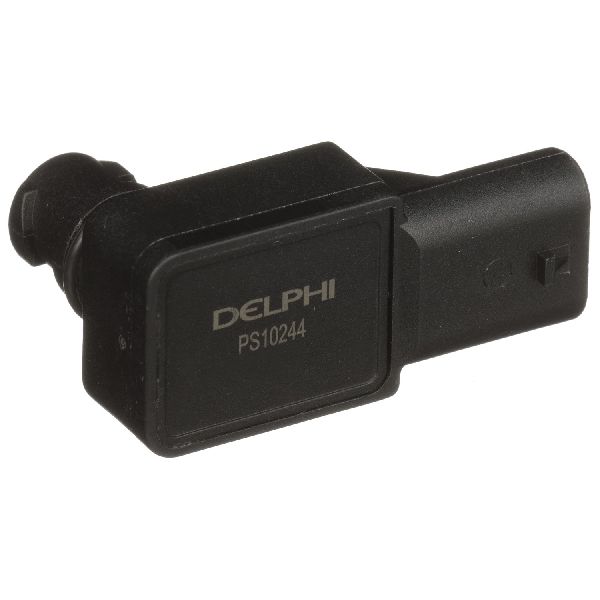
- Manifold Absolute Pressure (MAP) Sensor
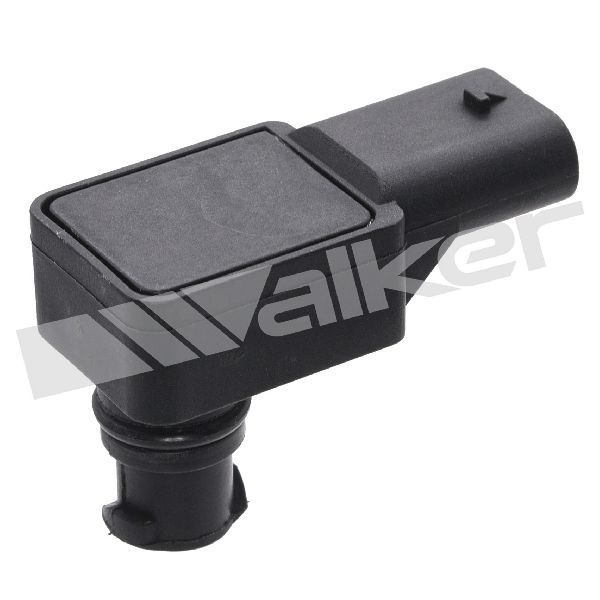
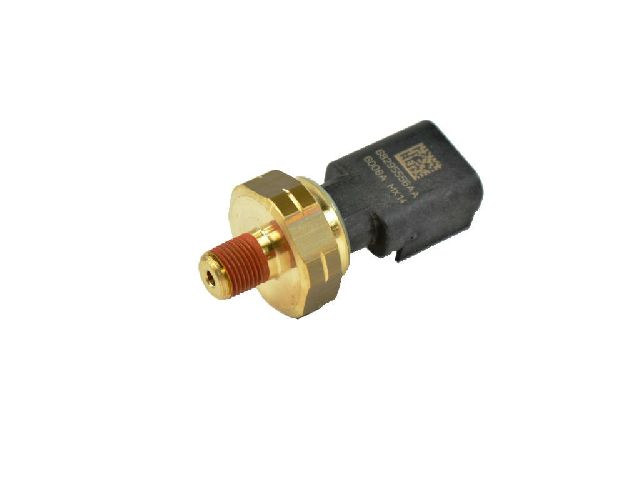
(OEM #2897334)— This sensor is the most common hardware failure for P0106. It is a combined pressure and temperature sensor that gets contaminated with soot on the 6.7L Cummins, leading to incorrect readings.
Related Codes That Often Appear With This One
- U3017 — Both P0106 and U3017 (Control Module Timer/Clock Performance) are mentioned in Ram TSB #18-059-20 as being triggered by cold ambient temperatures and resolved by a PCM software update.
- P0116 — TSB #18-059-20, which addresses P0106, also lists P0116 (Engine Coolant Temperature Sensor Performance), indicating they are related to the same software calibration issue.
- P1507 — This code for 'Crankcase Filter Restriction' is also listed in TSB #18-059-20 alongside P0106, suggesting a common software fix.
- U02A3 — Lost communication with the Particulate Matter (PM) sensor is another code addressed by the same software update in TSB #18-059-20.
- P2579 — This code for the Turbocharger Speed Sensor circuit is also addressed in TSB #18-059-20 and can be linked to P0106 if the PCM sees conflicting data between the two sensors.
Technical Service Bulletins (TSBs) & Recalls
- 18-059-20: Addresses P0106 - Manifold Absolute Pressure Sensor Performance specifically when it occurs in extreme cold ambient temperatures, and recommends a PCM software update as the fix. This TSB supersedes 18-052-19 REV. A and covers a wide range of other DTCs and performance enhancements.
- 18-019-20: A similar TSB for the 2019 Ram 3500/4500/5500 Cab Chassis models that also lists P0106 in extreme cold as a condition fixed by a PCM software update.
Platform-Specific Known Issues
- TSB #18-059-20 documents that P0106 can be falsely triggered in extreme cold weather. The official fix is a comprehensive PCM software update performed by a dealer, which also resolves many other potential DTCs and improves overall engine and transmission performance.
- Soot contamination of the MAP sensor is a very common mechanical failure point on the 6.7L Cummins due to the EGR and CCV systems routing soot and oil vapor directly past the sensor.
Mechanic-Grade Diagnostic Values
- MAP Sensor 5V Reference Supply — expected: ~5.0 Volts. Failure: Voltage significantly lower than 5.0V or 0V indicates a wiring issue or a faulty PCM.
- MAP Sensor Ground Circuit — expected: Close to 0 Volts. Failure: Any significant voltage reading indicates a poor ground connection.
- MAP Sensor Signal Voltage (Key On, Engine Off) — expected: ~4.5 Volts (at sea level). Failure: A voltage that is significantly different from the expected value for the current atmospheric pressure indicates a faulty sensor.
- MAP Sensor Signal Voltage (Engine Idling) — expected: 1.0 to 1.5 Volts. Failure: Voltage outside this range at idle suggests a sensor or system problem.
- MAP Sensor Signal Circuit Resistance to Ground — expected: Infinite resistance (OL). Failure: Any continuity to ground indicates a short in the signal wire.
Scan Tool Commands That Help
- wiTECH: ECU Flash / Reprogramming — Used by dealers to apply software updates like TSB #18-059-20, which is a primary cause for P0106 in cold weather. The wiTECH application is required to flash the PCM with new calibration files.
- wiTECH: View Network Topology — The color-coded topology view quickly shows which ECUs have DTCs, are responsive, or are offline, providing an immediate, high-level overview of the vehicle's network health before diving into specific diagnostics.
- wiTECH: Clear All DTCs — After a PCM flash or repair, the wiTECH application allows the technician to clear any codes that may have been set in other modules as a result of the reprogramming process.
Wiring & Ground Locations
- MAP Sensor Connector — On the driver's side of the intake manifold.. This is the primary connection point for the sensor. It should be inspected for damage, corrosion, or pushed-out pins. The connector has a red locking tab that must be disengaged for removal.
- Engine/Chassis Grounds — Key grounds are located near the battery negative terminal, on the passenger side wheel well/fender near the alternator, and to the right of the steering column inside the cab.. A poor ground connection for the PCM or sensor circuits can cause erratic voltage readings and trigger performance codes like P0106. Verifying these grounds are clean and tight is a critical step in diagnosing electrical faults.
- MAP Sensor Signal Circuit (K37) — This wire runs from the MAP sensor connector to the PCM C1 harness connector.. An open or short in this specific wire will directly cause MAP sensor codes P0106, P0107, or P0108. Diagnostic procedures involve checking for continuity (less than 5.0 Ohms) and for shorts to ground or voltage on this circuit.
Real Owner Repair Stories
- Turbo Diesel Register user 'Dieselnerd' (4th Generation Ram (assumed 2010-2018, but behavior is identical to 2019)) — Intermittent P0106 code, usually on the second start of the day. The Check Engine Light would clear itself after 3-4 restarts.
❌ Tried (didn't work) Initially considered a faulty turbo speed sensor but decided to follow the DTC.
✅ What actually fixed it The owner replaced the MAP sensor. Upon removal, the old sensor was found to be 'covered in a layer of greasy crud.' After replacement, the code did not return.
Helpful Videos
We Have This Part in Stock


The information in this article is provided for general reference and educational purposes only. Vehicle specifications, procedures, and part compatibility can vary by production date, trim level, and region. Always consult your vehicle's factory service manual and verify part numbers before purchasing or performing repairs. Safety-critical components such as airbags, seat belts, and braking systems should be installed by a qualified professional.
- Ram 2500:
- 🎬 Helpful Videos
- 🛍️ Shop This Part
- What's Unique About the 2019-2019 Ram 2500
- Diagnostic Flowchart
- Symptoms You May Notice
- Most Likely Causes
- Rare But Worth Checking
- Diagnosis Steps
- Parts You'll Likely Need
- Related Codes That Often Appear With This One
- Technical Service Bulletins (TSBs) & Recalls
- Platform-Specific Known Issues
- Mechanic-Grade Diagnostic Values
- Scan Tool Commands That Help
- Wiring & Ground Locations
- Real Owner Repair Stories
- 🎟️ Get 5% Off