

P0106 on 2008-2017 Mitsubishi Lancer: MAP Sensor Performance Causes and Fixes
This code usually means there's a vacuum leak or a faulty Manifold Absolute Pressure (MAP) sensor. Before buying a new sensor, carefully check all vacuum hoses connected to the intake manifold for cracks or disconnections, as this is a very common and cheaper fix. A smoke test is the most definitive way to find elusive leaks.
- P0106 on a 2008-2017 Lancer points to a problem with the MAP sensor's performance, meaning its reading is out of the expected range.
- Always check for vacuum leaks first. A cracked or disconnected hose is a very common cause and much cheaper to fix than replacing the sensor. A smoke test is the best method.
- Also, inspect and clean the MAP sensor port on the intake manifold, as it can get clogged with carbon.
- Symptoms typically include a rough idle, hesitation, poor gas mileage, and possible stalling.
- If no leaks or blockages are found, the MAP sensor itself is the next most likely culprit. The OEM part number is 1865A052.
- The repair is DIY-friendly for those with basic tools, with the sensor being easily accessible on the intake manifold.
What's Unique About the 2008-2017 Mitsubishi Lancer
On the 2008-2017 Lancer platform (and its relatives like the Outlander and Dodge Caliber), the P0106 code is highly sensitive to vacuum integrity. Many owner reports indicate the code appears after installing aftermarket parts that tap into a vacuum source, like a boost gauge or an aftermarket intake, suggesting that even a small, undetected leak can trigger the fault. While the MAP sensor itself can fail, it's crucial for owners to rule out simple vacuum leaks before spending money on a new sensor. In some cases, the port on the intake manifold leading to the sensor can become clogged with carbon, which also causes an incorrect reading.
Symptoms You May Notice
- Check Engine Light is on
- Rough or erratic idle
- Hesitation or stumbling during acceleration
- Reduced engine power
- Poor fuel economy
- Black smoke from the exhaust
- Engine stalling, especially at idle or when coming to a stop
- Engine backfiring
- Replacing the MAP sensor when the actual cause is a small, undetected vacuum leak.
- Replacing the throttle body or other sensors without first verifying the MAP sensor's operation and checking for vacuum leaks.
- Ignoring a clogged MAP sensor port on the intake manifold and only replacing the sensor.
Most Likely Causes
- Vacuum Leak 🔴 High Probability The plastic and rubber vacuum lines can become brittle and crack over time. The issue is also frequently induced by incorrectly installing aftermarket parts that tap into vacuum lines. A leak in the intake manifold gasket itself can also be the culprit.
How to confirm: Visually inspect all vacuum hoses connected to the intake manifold for cracks, loose fittings, or disconnections. Listen for a hissing sound at idle. A smoke test is the most effective way to find hard-to-see leaks.
Typical fix: Replace the cracked or broken vacuum hose(s). Ensure all connections are secure. If the gasket is leaking, it will need to be replaced.
Est. part cost: $5-$50 - Faulty MAP Sensor 🟡 Medium Probability While not excessively prone to failure, it's a common point of failure on higher mileage vehicles. Aftermarket sensors, especially cheaper ones, have a higher failure rate according to forum discussions.
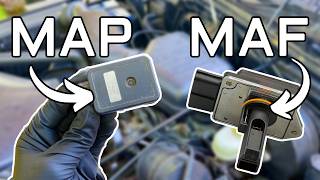
How to confirm: With the engine running, use a scan tool to monitor the MAP sensor voltage/pressure reading. At idle, voltage should be around 1-1.5V, and at wide-open throttle, it should be near 4.5V. The reading should change smoothly and quickly as you apply and release the throttle. You can also test the sensor's output voltage with a multimeter to ensure it's within the specifications found in the service manual. 🎬 Watch: How to test the MAP sensor and circuit
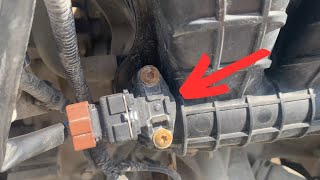
Typical fix: Replace the MAP sensor. It is typically located directly on the intake manifold and secured with one or two bolts. 🎬 See this Lancer MAP sensor location and replacement walkthrough
Est. part cost: $50-$250 - Clogged MAP Sensor Port or Hose ⚪ Low Probability On direct-injection or higher-mileage engines, carbon buildup from the EGR and PCV systems can clog the small port on the intake manifold where the MAP sensor or its vacuum line connects.
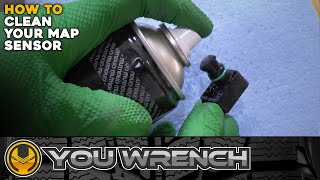
How to confirm: Remove the vacuum hose leading to the MAP sensor and the sensor itself. Inspect the hose and the port on the intake manifold for any carbon buildup or debris that could cause a blockage. A small drill bit or pick can be used to gently clean the port. 🎬 Watch: How to safely clean your MAP sensor and port
Typical fix: Carefully clean the port and hose to ensure a clear passage for air pressure. A video on a Mitsubishi Shogun (Pajero) demonstrates this exact issue and fix.
Est. part cost: $0 - Damaged Wiring or Connector ⚪ Low Probability
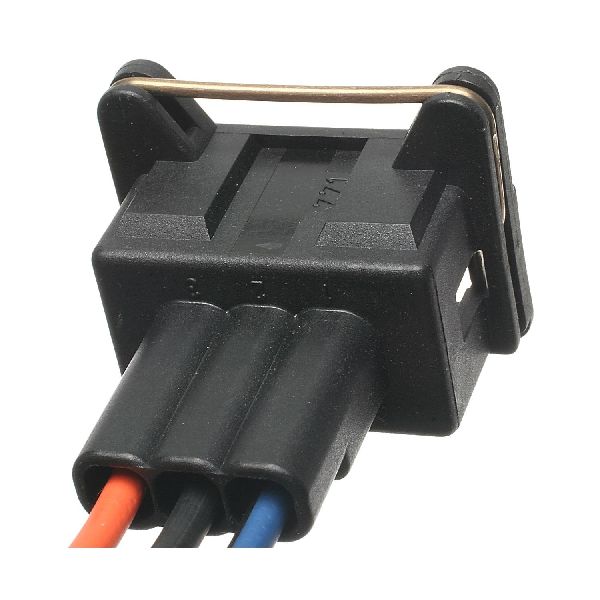
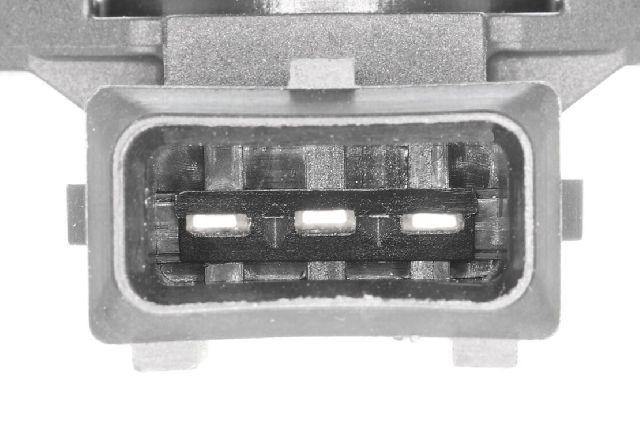
How to confirm: Visually inspect the MAP sensor's electrical connector for corrosion, bent pins, or loose wires. Check the wiring harness for any signs of damage, fraying, or melting, especially where it might rub against other components.
Typical fix: Repair the damaged section of the wiring harness or replace the connector pigtail.
Est. part cost: $15-$50
Rare But Worth Checking
- Failed Engine Control Module (ECM): This is very uncommon. All other possibilities, especially vacuum leaks and the sensor itself, should be exhaustively ruled out before considering the ECM as the cause.
- Clogged Catalytic Converter: A severely clogged catalytic converter can create excessive backpressure, affecting manifold pressure and potentially triggering a P0106 code. This is usually accompanied by other codes and a significant loss of power.
Diagnosis Steps
- Read the code using an OBD-II scanner and check for any other stored codes. Note the freeze frame data.
- With the engine off (Key On, Engine Off), check the MAP sensor reading on the scan tool. It should be close to the current barometric pressure (BARO) reading. A significant difference points to a sensor issue.
- Start the engine. The MAP reading should drop significantly at idle (indicating high vacuum, typically 1-1.5V).
- Thoroughly inspect all vacuum hoses connected to the intake manifold for any cracks, loose fittings, or signs of wear. Pay close attention to the hose that connects directly to the MAP sensor, if applicable.
- If a visual inspection reveals no obvious leaks, perform a smoke test to definitively identify any leaks in the intake system. This is the most reliable method.
- Inspect the MAP sensor's electrical connector for damage, corrosion, or a loose connection.
- Remove the MAP sensor and inspect its port on the intake manifold for carbon buildup or debris. Clean it carefully with a pick or small tool if clogged.
- If no leaks or blockages are found, test the MAP sensor itself. Using a multimeter, backprobe the signal wire and verify the voltage is between 4.9-5.1V on the reference wire and that the signal voltage changes correctly as vacuum is applied with a hand pump or by revving the engine.
- If the sensor tests bad or if all other possibilities have been eliminated, replace the MAP sensor. Using an OEM or high-quality aftermarket part is recommended.
Parts You'll Likely Need
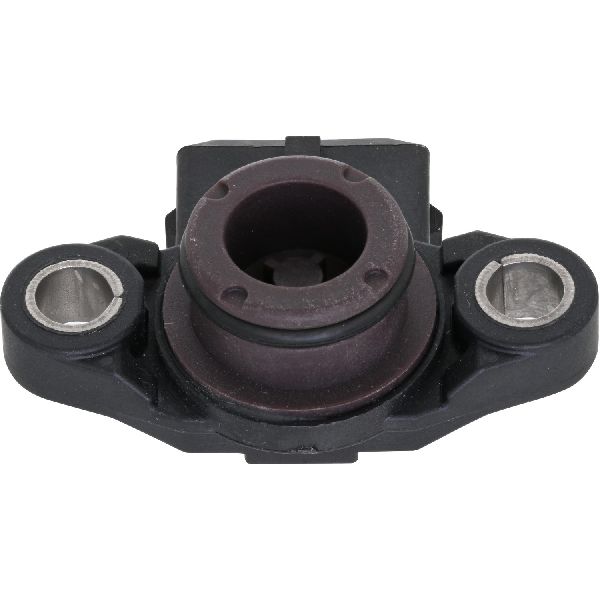
- Manifold Absolute Pressure (MAP) Sensor
(OEM #1865A052)— This sensor is the most common component to fail that will set this code, after vacuum leaks have been ruled out. It is also used on the Lancer Evolution X model.
Trusted brands: Mitsubishi Electric (OEM), Standard Motor Products, Delphi, Denso
OEM price range: $220-$315
Aftermarket price range: $30-$150 - Vacuum Hose — Rubber and plastic hoses become brittle with age and exposure to engine heat, leading to cracks that cause vacuum leaks—a primary trigger for P0106.
Trusted brands: Continental, Gates
OEM price range: $10-$40
Aftermarket price range: $5-$20
Related Codes That Often Appear With This One
- P0107 — This code indicates the MAP sensor circuit input is low, which can be caused by the same vacuum leaks or sensor failures that trigger P0106.
- P0108 — This code indicates the MAP sensor circuit input is high, which points to a related failure in the same system.
- P0069 — This code relates to 'MAP/Baro Pressure Correlation' and is often seen with P0106, indicating a conflict between the MAP sensor reading and the barometric pressure sensor reading at startup.
Technical Service Bulletins (TSBs) & Recalls
- While no direct TSB for the Lancer and P0106 was found, a TSB for other manufacturers (V011423 for VW) shows that sometimes the ECU monitoring strategy is too sensitive and requires a software update to fix an erroneous P0106. This highlights that in rare cases, it could be a software issue.
Platform-Specific Known Issues
- Aftermarket Intake/Sensor Issues: Owners on forums frequently report triggering P0106 after installing aftermarket parts, such as an upgraded MAP sensor (e.g., Omni 4-bar) without proper ECU tuning, or an aftermarket intake that creates a small vacuum leak.
- Clogged Manifold Port: A known issue, though less common than vacuum leaks, is the small port on the intake manifold for the MAP sensor getting clogged with carbon. This prevents the sensor from reading pressure changes correctly and will set a P0106. The fix is to mechanically clean the port.
Diagnostic Flowchart
Other Known Issues on This Vehicle
Issues unrelated to this code that are worth knowing about as an owner of this generation:
- CVT Transmission Unreliability and Overheating 🔴 High — Common, especially on earlier models (2008-2012) and vehicles with over 60k-80k miles. Can manifest as hesitation, whining, or a 'Slow Down' warning on the dash. (Ref: Multiple TSBs exist for software updates and fluid level check procedures, as incorrect fluid levels were a common issue.)
- Clear Coat / Paint Peeling 🟡 Low — Widespread cosmetic issue, particularly on horizontal surfaces like the roof and trunk. Appears as the clear coat flaking or peeling, especially on darker colored cars. (Ref: No recall, generally considered wear and tear by the manufacturer, leaving owners to pay for repainting.)
- Front Subframe/Crossmember Corrosion 🔴 High — Affects earlier models (approx. 2008-2012) most severely, especially in regions that use road salt. Can lead to severe structural rust. (Ref: A recall was issued for some model years in specific regions (e.g., Canada and northern US states) to inspect, treat, or replace the front crossmember.)
- Engine Stalling at Idle 🟠 Medium — Reported fairly often across various model years. Can be caused by a dirty throttle body, vacuum leaks, or faulty sensors (including the MAP sensor, which also causes P0106).
Real Owner Stories
Aggregated from forums and TSBs cited above. Mileages and costs reflect what owners reported in those sources.
Mitsubishi Lancer with Omni 4-bar MAP sensor
Symptoms: The P0106 code appeared immediately after installing an upgraded MAP sensor.
What fixed it: The issue was identified as a tuning or compatibility requirement for the aftermarket sensor.
Source hint: EvolutionM.net thread titled 'P0106 code after installing omni 4-bar'
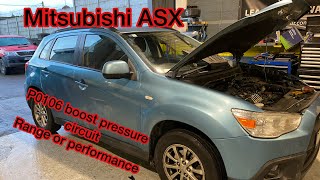
Mitsubishi ASX (Lancer platform mate)
Symptoms: P0106 code present; diagnostic showed the sensor itself was not faulty.
What fixed it: Mechanically cleaning a completely blocked MAP sensor port on the intake manifold.
Source hint: YouTube/Kennedy's garage: A detailed diagnostic video on a Mitsubishi ASX
Related OBD-II Codes
Frequently Asked Questions
I just installed an Omni 4-bar MAP sensor on my Lancer and now I have a P0106 code. Is the sensor defective?
Could my Lancer's P0106 code be caused by my aftermarket intake?
Is there a TSB for the Mitsubishi Lancer regarding a software update for P0106?
I heard the MAP sensor port can get clogged on Mitsubishis. How do I fix this on my Lancer?
My Lancer is also having CVT transmission issues; could this be related to P0106?
Helpful Videos

We Have This Part in Stock


The information in this article is provided for general reference and educational purposes only. Vehicle specifications, procedures, and part compatibility can vary by production date, trim level, and region. Always consult your vehicle's factory service manual and verify part numbers before purchasing or performing repairs. Safety-critical components such as airbags, seat belts, and braking systems should be installed by a qualified professional.
- Mitsubishi Lancer:
- 🎬 Helpful Videos
- 🛍️ Shop This Part
- What's Unique About the 2008-2017 Mitsubishi Lancer
- Symptoms You May Notice
- Most Likely Causes
- Rare But Worth Checking
- Diagnosis Steps
- Parts You'll Likely Need
- Related Codes That Often Appear With This One
- Technical Service Bulletins (TSBs) & Recalls
- Platform-Specific Known Issues
- Diagnostic Flowchart
- Other Known Issues on This Vehicle
- Real Owner Stories
- Mitsubishi Lancer with Omni 4-bar MAP sensor
- Mitsubishi ASX (Lancer platform mate)
- Related OBD-II Codes
- Frequently Asked Questions
- 🎟️ Get 5% Off