

P0106 on 2019-2020 Kia Forte: MAP Sensor and ECU Update Guide
On a 2019-2020 Kia Forte, code P0106 is often caused by a faulty Manifold Absolute Pressure (MAP) sensor or the need for an engine computer (ECU) software update. A Kia Technical Service Bulletin (TSB_FUE047) specifically addresses this code and may be resolved by a dealer-installed software update. Before replacing parts, verify if this TSB applies, as the update is the intended fix for a software logic flaw.
- First, check for TSB_FUE047. The official fix for P0106 on your 2019-2020 Forte might be a simple software update from a Kia dealer.
- If a software update isn't the fix, the most likely culprits are a faulty MAP sensor or a dirty throttle body causing incorrect sensor correlation.
- Don't immediately replace the MAP sensor without testing it and checking for the TSB, as this is a common misdiagnosis.
What's Unique About the 2019-2020 Kia FORTE

For this specific generation of Kia Forte with the 2.0L MPI Atkinson engine, the P0106 code is the subject of a manufacturer's Technical Service Bulletin (TSB). This TSB indicates that the root cause may not be a faulty part, but rather the engine control software itself. Before replacing any parts, it's critical to be aware that a simple software update performed by a Kia dealer might be the official and correct fix. This same issue is documented for its platform-mate, the Hyundai Elantra, which has its own TSB for the same codes.
Diagnostic Flowchart
Tap your situation to follow the diagnostic path that matches what you're seeing on this vehicle.
Symptoms You May Notice
- Check Engine Light is on
- Rough or unstable idle
- Hesitation, stumbling, or surging during acceleration
- Engine stalling, especially at stops or when idling
- Reduced fuel economy
- Black smoke from the exhaust
- Sluggish performance and reduced engine power
- Hard starting
- Replacing the MAP sensor when the actual issue is the need for an ECM software update as per TSB_FUE047.
- Replacing the throttle body assembly when it only needs to be cleaned.
- Replacing oxygen sensors, which are not directly related to this MAP sensor performance code.
Most Likely Causes

- Engine Control Module (ECM) Software Update Needed 🔴 High Probability A specific Technical Service Bulletin (TSB_FUE047) was issued by Kia for 2019-2020 Forte models with the 2.0L MPI Atkinson engine, indicating a software logic issue can trigger P0106, P0101, and/or P0068. Hyundai also issued a TSB for the same engine in the Elantra for the same codes.
How to confirm: A Kia dealership or a qualified shop with access to Kia's diagnostic system (KDS) can check if the TSB applies to your vehicle's VIN and if the software update has been performed.
Typical fix: Reprogramming the ECM with the updated software provided by Kia. The related Hyundai TSB references this as event #602. 🎬 Watch: Diagnosing P0106 on the Elantra's shared engine platform.
Est. part cost: $0 - Faulty Manifold Absolute Pressure (MAP) Sensor 🟡 Medium Probability The MAP sensor is a critical electronic component that can fail over time. Given its role in measuring manifold pressure, any internal failure will directly lead to a P0106 code.
How to confirm: With the engine off, use a scan tool to compare the MAP sensor reading to the barometric pressure (BARO) reading; they should be nearly identical. You can also test the sensor's voltage output with a multimeter while applying vacuum with a hand pump to see if the voltage changes smoothly.
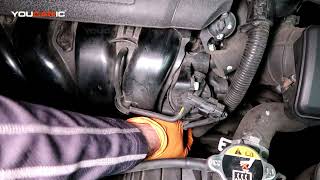
Typical fix: Replace the MAP sensor. The sensor is located on the intake manifold. 🎬 Watch: How to replace the MAP sensor on your Forte.
Est. part cost: $40-$120 - Vacuum Leak ⚪ Low Probability
How to confirm: Visually inspect all vacuum hoses connected to the intake manifold for cracks, brittleness, or loose connections. A smoke test is the most effective way to find hard-to-see leaks. A leak will cause the MAP sensor readings to be inaccurate, triggering the code.
Typical fix: Replace the cracked or disconnected vacuum hose.
Est. part cost: $5-$30 - Wiring or Connector Issue ⚪ Low Probability
How to confirm: Inspect the MAP sensor's electrical connector for corrosion, moisture, or loose pins. Check the wiring harness for any signs of damage, fraying, or breaks, particularly where it might rub against other components.
Typical fix: Clean the connector terminals or repair/replace the damaged section of the wiring harness.
Est. part cost: $5-$50
Rare But Worth Checking
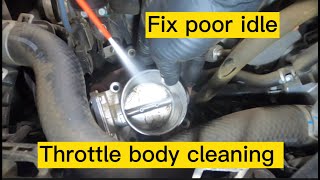
- Clogged or Dirty Throttle Body: Carbon buildup can restrict airflow and cause the throttle plate to not close properly. This can cause an irrational reading between the throttle position sensor and the MAP sensor, triggering a P0106 code even if the MAP sensor is good. Cleaning the throttle body is a known fix in some cases. 🎬 See this guide on cleaning a Kia drive-by-wire throttle body.
- Faulty Powertrain Control Module (PCM): This is very rare, but if all other possibilities have been exhausted, the PCM itself could be the source of the problem.
- Recent Battery Replacement: In some cases, disconnecting the battery can cause the ECU to lose its idle calibration, leading to rough running and a P0106 code shortly after. A throttle body cleaning and an idle relearn procedure may be required.
Diagnosis Steps

- Check for Technical Service Bulletins (TSBs). Specifically, see if TSB_FUE047 applies to your vehicle's VIN. This should always be the first step for this specific vehicle and code.
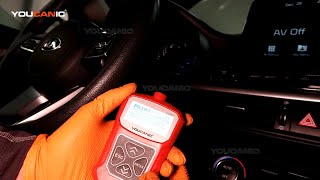
- Use an OBD-II scanner to check for any other accompanying codes, such as P0101 or P0068.
- Perform a thorough visual inspection of the air intake system, including the air filter and all vacuum lines, looking for cracks, loose connections, or blockages.
- Inspect the MAP sensor's electrical connector and wiring for any signs of damage, corrosion, or moisture.
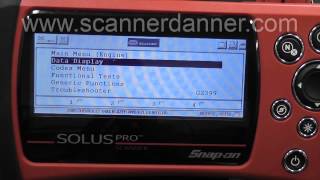
- With the key on and engine off, use a scan tool to view live data. The MAP sensor reading should be close to the Barometric Pressure (BARO) reading.
- Inspect and clean the throttle body. Carbon buildup can cause incorrect airflow at idle, leading to a correlation fault with the MAP sensor.
- If the sensor passes the initial checks, test its function by monitoring its voltage while applying and releasing vacuum with a hand-held vacuum pump. The voltage should change smoothly.
- If all parts and wiring test good, the most likely cause is the software issue identified in TSB_FUE047. Contact a Kia dealership to have the ECM software updated.
Parts You'll Likely Need

- Manifold Absolute Pressure (MAP) Sensor
(OEM #39300-2E600)— This is the primary sensor that triggers the code. If it fails its diagnostic tests, it is the most common hardware component to be replaced.
Trusted brands: Kia (Genuine OEM), Bosch, Delphi, NGK
OEM price range: $96
Aftermarket price range: $40-$120
Related Codes That Often Appear With This One
- P0101 — This code for the Mass Air Flow (MAF) sensor is explicitly mentioned in TSB_FUE047 as appearing with P0106 due to the same software logic issue.
- P0068 — This code indicates a correlation problem between the MAP/MAF sensors and the throttle position. It is also listed in TSB_FUE047 as a companion code to P0106.
- P0107 — Indicates the MAP sensor circuit voltage is too low, which can be a more specific version of the performance issue seen in P0106.
- P0108 — Indicates the MAP sensor circuit voltage is too high, which is another specific fault related to the general P0106 performance code.
Technical Service Bulletins (TSBs) & Recalls
- TSB_FUE047: Addresses MIL on with DTC P0101, P0106, and/or P0068 on 2019-2020 Forte (BDm) vehicles with the NU 2.0L MPI Atkinson engine, recommending a potential ECM software update.
- Hyundai Service Campaign T4A / TSB 20-FL-005H: For the 2020 Hyundai Elantra (ADa) with the same 2.0L engine, this TSB provides an ECM update to revise the logic for DTCs P0068, P0101, and P0106. The update is listed as Event #602.
Platform-Specific Known Issues
- Kia issued Technical Service Bulletin TSB_FUE047 for some 2019-2020 Forte vehicles with the 2.0L MPI Atkinson engine that may exhibit a Malfunction Indicator Lamp (MIL) with DTC P0106. The recommended fix is often an update to the engine control software.
- Its platform-mate, the 2020 Hyundai Elantra, has a similar TSB (Event #602) to correct the ECU logic for the same set of codes (P0101, P0106, P0068), confirming it's a known software issue across the shared engine platform.
Mechanic-Grade Diagnostic Values
- MAP Sensor 5V Reference Wire — expected: ~5.0 Volts DC with Key On, Engine Off (KOEO). Failure: Voltage significantly lower than 5.0V or 0V indicates a wiring issue or a problem with the ECU.
- MAP Sensor Ground Wire — expected: Less than 0.10V (100mV) when tested against a known good ground.. Failure: Higher voltage indicates a poor ground connection, which can skew sensor readings.
- MAP Sensor Signal Wire (KOEO) — expected: ~4.5 Volts DC (at sea level, should be close to BARO reading).. Failure: Voltage that is significantly different from the expected BARO reading indicates a faulty sensor.
- MAP Sensor Signal Wire (At Idle) — expected: 1.0V to 1.5V DC once the engine is warm and idling smoothly.. Failure: Voltage that is stuck high (closer to 5V) or does not respond when the throttle is snapped open suggests a bad sensor or a vacuum leak.
Scan Tool Commands That Help
- Manual Procedure: Idle Relearn Procedure — After disconnecting the battery or cleaning the throttle body to fix a P0106 code. The ECU may lose its idle calibration, causing this code to appear. The procedure involves disconnecting the battery negative terminal, cleaning the throttle body, reconnecting everything, and letting the vehicle idle for 10 minutes without touching the accelerator pedal to allow the computer to relearn the idle position.
Wiring & Ground Locations
- GC402 — On the left rear of the engine compartment.. This is a main ground point for the engine control system. A corroded or loose connection here can cause erratic sensor readings, including from the MAP sensor, leading to a P0106 code.
- MAP Sensor Connector — On the MAP sensor, which is mounted to the plastic intake manifold.. The 3-pin connector provides the sensor with power, ground, and a path for the signal to the ECU. Corrosion or damage to the pins (Gray for 5V ref, Orange/Black for ground, Light Green for signal, on some models) can directly cause P0106.
Real Owner Repair Stories
- The Automotive Technician (YouTube Channel) (Kia Cerato (Forte) with 2.0L engine) — Check Engine Light with code P0106.
❌ Tried (didn't work) The video warns against immediately replacing the MAP sensor or chasing circuit faults.
✅ What actually fixed it The root cause was a dirty throttle body. Carbon buildup caused the throttle plate angle at idle to be incorrect for the airflow measured by the MAP sensor, creating a 'Range/Performance' error. The fix was to clean the throttle body thoroughly and verify the fix by noting the change in the Throttle Position Sensor (TPS) percentage on a scan tool at idle. - Reddit user in /r/MechanicAdvice (Vehicle that had its battery die.) — Check Engine Light with P0106, incredibly hard idling, and stalling immediately after battery replacement.
❌ Tried (didn't work) Clearing the code and disconnecting the battery for a short period did not permanently resolve the issue.
✅ What actually fixed it The confirmed fix described by others in the thread was to perform a throttle body cleaning and an idle relearn procedure. The loss of power from the battery replacement caused the ECU to lose its learned idle position, and carbon buildup prevented it from relearning correctly, triggering the P0106 code. - YouTube Mechanic Video (Hindi/Urdu) (2015 Kia Cerato (Forte)) — Check Engine Light with codes P0106 and P2188 (System Too Rich at Idle). Engine continued running after the ignition was turned off.
❌ Tried (didn't work) The mechanic notes that this is a common issue he has seen many times.
✅ What actually fixed it The problem was a faulty Purge Control Solenoid Valve (PCSV). The valve was stuck open, creating a constant vacuum leak from the fuel tank into the intake manifold. This caused the MAP sensor to read incorrectly (P0106) and the engine to run rich (P2188). Replacing the PCSV resolved all issues.
"I Checked Everything" — The Actual Cause
- A common scenario for P0106 on this vehicle is passing a smoke test (no vacuum leaks found) and testing the MAP sensor, only for the code to persist. The actual cause is frequently a dirty throttle body. The carbon buildup restricts airflow in a way that doesn't create a traditional vacuum leak but causes the ECU to see a mismatch between the expected and actual MAP sensor readings for a given throttle angle, triggering the 'performance' code.
When the Usual Fixes Don't Work
- While the official TSB points to an ECU software update and many guides suggest replacing the MAP sensor, significant field evidence from technicians and owners indicates that a dirty throttle body is a primary mechanical cause of P0106 on these vehicles. Before replacing the sensor or even going to the dealer for the TSB, a thorough throttle body cleaning and idle relearn procedure should be performed. This is often misdiagnosed because the MAP sensor itself is functioning correctly, but it is reporting an air pressure value that the ECU considers irrational for the given throttle position, which is skewed by the carbon buildup. This highlights a 'correlation' fault rather than a 'component' fault.
OEM Part Supersession History
39300-2E600→N/A— No supersession information found. This part number appears to be stable and is used across multiple model years (2017-2023) and vehicles, including the Forte, Niro, and Optima Hybrid.
Helpful Videos
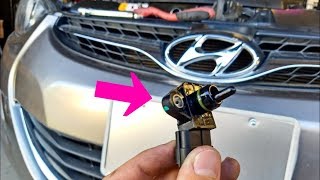
We Have This Part in Stock
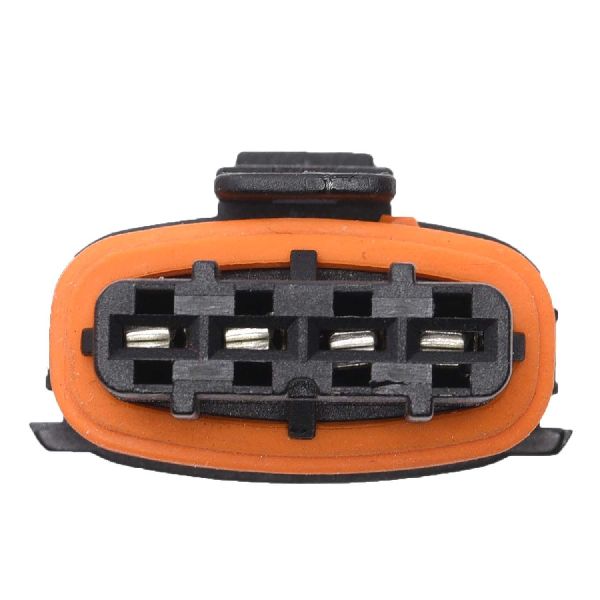
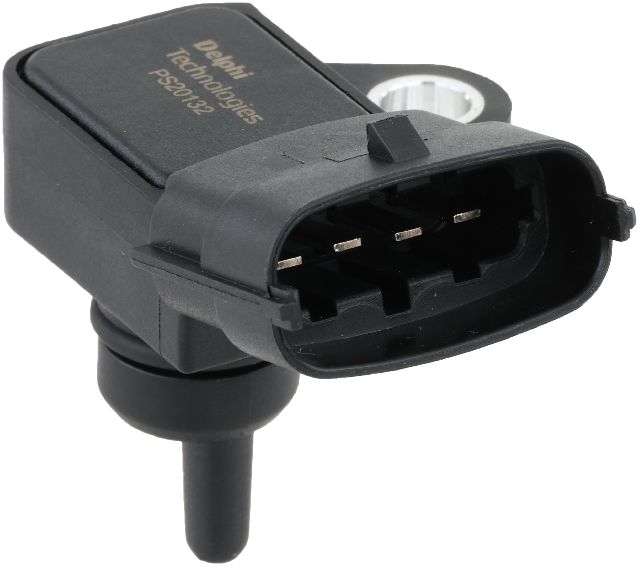

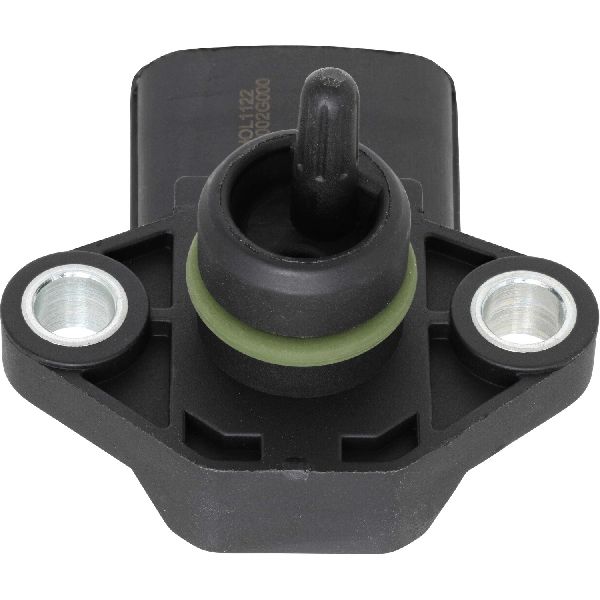

The information in this article is provided for general reference and educational purposes only. Vehicle specifications, procedures, and part compatibility can vary by production date, trim level, and region. Always consult your vehicle's factory service manual and verify part numbers before purchasing or performing repairs. Safety-critical components such as airbags, seat belts, and braking systems should be installed by a qualified professional.
- Kia FORTE:
- 🎬 Helpful Videos
- 🛍️ Shop This Part
- What's Unique About the 2019-2020 Kia FORTE
- Diagnostic Flowchart
- Symptoms You May Notice
- Most Likely Causes
- Rare But Worth Checking
- Diagnosis Steps
- Parts You'll Likely Need
- Related Codes That Often Appear With This One
- Technical Service Bulletins (TSBs) & Recalls
- Platform-Specific Known Issues
- Mechanic-Grade Diagnostic Values
- Scan Tool Commands That Help
- Wiring & Ground Locations
- Real Owner Repair Stories
- "I Checked Everything" — The Actual Cause
- When the Usual Fixes Don't Work
- OEM Part Supersession History
- 🎟️ Get 5% Off