

P0106 on 2016-2018 Infiniti Q50: MAP Sensor vs. Failing Turbochargers
On the 2016-2018 Q50 3.0t, P0106 is most often a symptom of failing turbochargers causing oil to leak into the intake and contaminate the MAP sensor. While the sensor itself can fail, always check for signs of turbo failure (white smoke, oil loss) first, as this is a common and very expensive repair covered by a warranty extension.
- On a 2016-2018 Infiniti Q50 3.0t, P0106 is a serious warning sign that should be investigated immediately.
- Do not simply replace the MAP sensor. First, inspect for signs of turbocharger failure, such as white smoke from the exhaust and oil in the intake system.
- Check with an Infiniti dealer to see if your vehicle is covered under the 10-year/120,000-mile turbocharger warranty extension, as this repair is extremely expensive otherwise.
- Continued driving can lead to complete engine failure.
What's Unique About the 2016-2018 Infiniti Q50

On the Infiniti Q50 with the 3.0L twin-turbo V6 (VR30DDTT), code P0106 is not just a simple sensor issue. It is explicitly cited in Infiniti's own Technical Service Bulletins as a primary diagnostic trouble code associated with premature turbocharger failure. Internal oil seals on the turbos can fail due to premature bearing wear, leaking oil into the intake system. This oil then contaminates or damages the MAP sensors, triggering the code. This makes the diagnosis much more critical than on a typical vehicle, as it can be an early warning of a catastrophic and costly turbo failure.
Diagnostic Flowchart

Tap your situation to follow the diagnostic path that matches what you're seeing on this vehicle.
Symptoms You May Notice

- Excessive white or bluish-gray smoke from the exhaust, especially at idle or after idling.
- Significant loss of engine power, poor acceleration, or entering 'limp mode'.
- Increased oil consumption, requiring frequent top-offs.
- Engine stalling or rough, unsteady idle.
- High-pitched whining, rattling, or metallic clicking noise from the engine bay, indicative of turbo bearing failure.
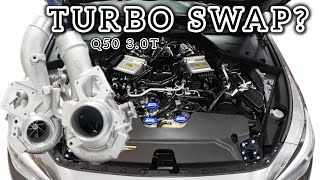
- Check Engine Light (MIL) illuminated. 🎬 Watch: A quick overview of diagnosing code P0106 on this engine.
- Replacing only the MAP sensor(s) without checking for turbocharger oil leaks. The code will likely return as the new sensor becomes contaminated.
- Replacing the turbochargers but failing to clean out the intercoolers and charge pipes, leading to a recurring P0106 from residual oil.
Most Likely Causes

- Failing Turbocharger(s) 🔴 High Probability Early production VR30DDTT engines (2016-2018) are known for premature turbocharger bearing and oil seal failure. Infiniti acknowledged this with a warranty extension program (TSB P4A05/P4A06), covering the issue for 10 years or 120,000 miles.
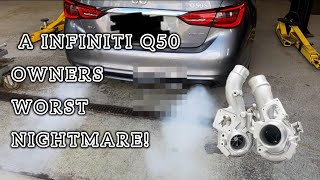
How to confirm: Check for excessive white smoke from the exhaust. Inspect the intake piping, intercoolers, and throttle bodies for significant oil residue. Listen for whining or rattling noises from the turbos. 🎬 See what a blown turbo sounds like on a Q50. An official diagnosis by an Infiniti technician is required for warranty claims.
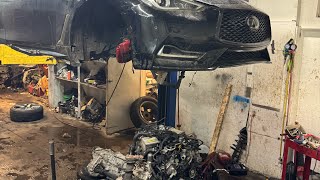
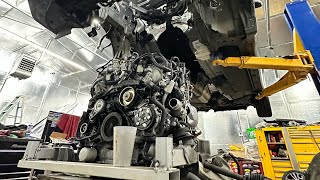
Typical fix: Replacement of one or both turbochargers. This is a major, engine-out service that can take 15-24 labor hours. 🎬 Watch: A walkthrough of the turbo removal process at home. The entire intake system must be cleaned to prevent residual oil from damaging new sensors.
Est. part cost: $1200-$3000 - Oil-Contaminated MAP Sensor(s) 🟡 Medium Probability This is a direct consequence of the common turbocharger failure, which leaks oil into the intake tract where the two MAP sensors are located.
How to confirm: Remove the two MAP sensors from the top of the intake manifold and inspect their tips for oil contamination. If they are wet with oil, the root cause is almost certainly an oil leak upstream (the turbos).
Typical fix: Replace the MAP sensors. However, this is a temporary fix. The code will return if the underlying oil leak from the turbo(s) is not also fixed, as the new sensors will become contaminated again.
Est. part cost: $150-$260 per sensor - Residual Oil Contamination After Turbo Replacement 🟡 Medium Probability If the turbochargers were replaced but the intercoolers and intake piping were not thoroughly cleaned, pooled oil can get sucked into the intake and foul the new MAP sensors, causing P0106 to reappear.
How to confirm: If turbos were recently replaced and P0106 returns, re-inspect the MAP sensors for new oil contamination. An inspection of the intercoolers will likely show residual oil.
Typical fix: Remove and thoroughly clean the intercoolers, all charge pipes, and throttle bodies to remove all traces of oil. Replace the MAP sensors if they are fouled again.
Est. part cost: $0 (if cleaning only) to $500+ (if sensors need replacement again) - Faulty MAP Sensor ⚪ Low Probability
How to confirm: If the sensors are clean and there are no signs of turbo failure (no smoke, no oil consumption), test the sensor's voltage output with a multimeter. With the key on and engine off, the voltage should correspond to atmospheric pressure. Compare readings to a known-good sensor.
Typical fix: Replace the MAP sensor(s).
Est. part cost: $150-$260 per sensor
Rare But Worth Checking
- Vacuum Leak: A cracked or disconnected vacuum hose connected to the intake manifold can cause an irrational pressure reading, but this is far less common than the platform-specific turbo issues.
- Wiring Harness or Connector Issue: Damage to the wires leading to a MAP sensor can cause an erratic signal. Check for frayed wires or loose connections at the sensor.
- Faulty PCV Valve: While not a widely reported cause on this specific platform, a failing PCV system can, on some vehicles, contribute to oil being introduced into the intake manifold, potentially fouling the MAP sensor.
Diagnosis Steps
- Check for primary symptoms of turbo failure: Is there excessive white/blue smoke from the exhaust, especially after idling? Is the engine consuming oil?
- Scan for other trouble codes. Codes like P0101, P010B, or P0299 are often related.
- Remove both MAP sensors located on the top-front of the intake manifold. Inspect the tips for oil. Oil on the sensors is a very strong indicator of turbo seal failure.
- If sensors are oily, the turbos are the likely root cause. Contact an Infiniti dealer to check eligibility for the warranty extension (TSB P4A05/P4A06).
- If sensors are clean, inspect all vacuum lines and charge pipes connected to the intake manifold for cracks, brittleness, or loose connections.
- If no vacuum leaks are found, the issue could be electrical. Test the MAP sensor's circuit. Check for proper voltage and ground at the connector. Test the signal wire to ensure its reading changes with engine vacuum.
- If turbos have been recently replaced and the code returns, assume residual oil contamination. The intercoolers and all intake piping must be removed and cleaned thoroughly.
- A definitive turbo inspection involves checking for shaft play and oil leakage in the compressor housings, which requires partial disassembly and is best left to a professional.
Parts You'll Likely Need
- Turbocharger Assembly
(OEM #14411-5CA2D (Superseded by 14411-5CA7D, 14411-5CA6B, etc.))— This is the most common root cause of P0106 on this vehicle due to premature failure of the internal oil seals on early models.
Trusted brands: Garrett (OEM), Mitsubishi (OEM)
OEM price range: $1200-$1800 per turbo
Aftermarket price range: $600-$1100 per turbo - Manifold Absolute Pressure (MAP) Sensor
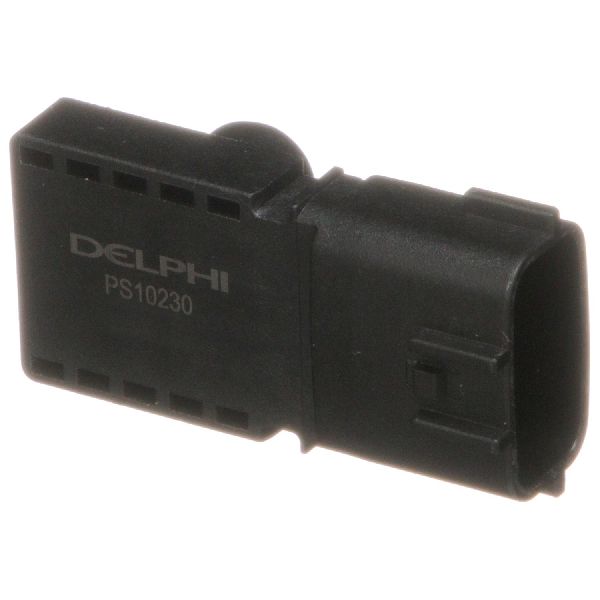
(OEM #22365-1KC0C (Supersedes 22365-1KC0A))— This sensor triggers the code, often due to oil contamination from failing turbos or, less commonly, its own electronic failure. The VR30DDTT uses two of these sensors.
Trusted brands: Infiniti (OEM), Hitachi, Bosch
OEM price range: $250-$360
Aftermarket price range: $80-$150
Related Codes That Often Appear With This One
- P0101 — Mass Airflow (MAF) Sensor Performance. Mentioned in TSB ITB17-017a alongside P0106, indicating a general issue with the engine's air measurement system, often triggered by the same root causes like oil contamination or intake leaks.
- P010B — Mass Air Flow (MAF) Sensor 'B' Circuit Range/Performance. Also mentioned in TSB ITB17-017a, pointing to a correlated problem with the air intake sensors on the second engine bank.
- P0299 — Turbocharger/Supercharger Underboost. This code can appear if the turbocharger is mechanically failing and not producing the expected amount of boost.
Technical Service Bulletins (TSBs) & Recalls

- Bulletin #P4A05 / P4A06: Directly links DTC P0106 with excessive smoke and oil in the intake system from a failing turbocharger, outlining the conditions for the warranty extension.
- Bulletin #ITB17-017a / ITB17-017: Groups DTC P0106 with P0101 and P010B, indicating a broader issue with the air/pressure measurement system on twin-turbo V6 models.
Platform-Specific Known Issues
- Infiniti issued a limited emission warranty extension for the turbochargers on 2016-2018 Q50 and 2017-2018 Q60 models to 10 years or 120,000 miles. To be eligible, the failure must be diagnosed by an Infiniti dealer and present with specific symptoms like excessive white smoke and DTC P0106.
- An owner complaint filed with the NHTSA (ODI #11649920) for a 2018 model describes a classic failure scenario: white smoke, oil loss, stalling, poor acceleration, and engine noise, all accompanied by code P0106.
- Even after turbo replacement under warranty, some owners report the P0106 code returning. This is often caused by residual oil left in the intercoolers and intake tract that was not cleaned during the repair, which then fouls the new MAP sensors.
Mechanic-Grade Diagnostic Values
- MAP Sensor Signal Voltage (Key On, Engine Off) — expected: ~4.5 - 5.0 Volts. Failure: Voltage significantly lower than 4.5V or no voltage.
- MAP Sensor Signal Voltage (Engine Idling) — expected: ~1.0 - 2.0 Volts. Failure: Voltage remains high (near KOEO value) or is erratic. Indicates the sensor is not correctly reading engine vacuum.
- MAP Sensor 5V Reference Voltage — expected: ~5.0 Volts. Failure: Voltage is significantly lower or absent, indicating a problem with the ECM or wiring.
- Electronic Wastegate Actuator Voltage (for adjustment) — expected: 1.0V (± 0.05V). Failure: Voltage outside this range indicates the wastegate rod length needs adjustment.
Scan Tool Commands That Help
- Infiniti CONSULT or compatible professional scan tool: Idle Air Volume Learn (IAVL) — Required after cleaning or replacing the throttle bodies, or disconnecting the battery. Failure to perform this can cause rough idle and may trigger related codes like P0106.
- Infiniti CONSULT or compatible professional scan tool: Throttle Valve Closed Position Learning — Performed before the IAVL to ensure the ECU knows the throttle plate's baseline closed position.
- Infiniti CONSULT or compatible professional scan tool: Accelerator Pedal Released Position Learning — A preliminary step in the relearn sequence to calibrate the pedal's zero position.
- Infiniti CONSULT or compatible professional scan tool: Turbocharger Wastegate Actuator Relearn/Calibration — This is critical after replacing a turbocharger. The ECU must learn the electronic wastegate's full range of motion to control boost properly. Failure to do so can result in performance issues or fault codes.
Wiring & Ground Locations
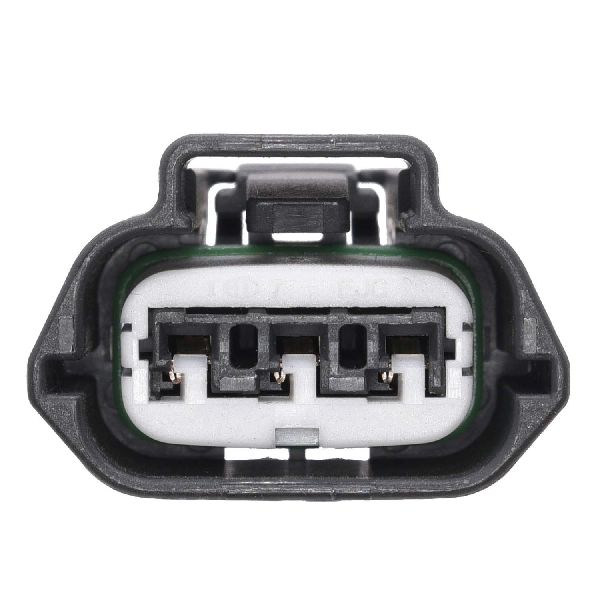
- MAP Sensor Connector — On the sensor itself, located on the front right of the upper intake plenum.. The VR30DDTT uses two MAP sensors. The connector is a 3-pin rectangular female connector. Pin A is typically ground, Pin B is the signal wire, and Pin C is the 5V reference supply. Checking for voltage and continuity at these pins is a key diagnostic step.
- ECM (Engine Control Module) — A 2014 Q50 diagram shows the ECM located under the right end of the dash, though this may vary slightly by year.. The ECM supplies the 5V reference and ground to the MAP sensors and interprets the signal voltage. All sensor wiring terminates here.
Real Owner Repair Stories
- YouTube user 'estrada.v37' (2018 Infiniti Q50) — Check Engine Light with code P0106.
❌ Tried (didn't work) Replacing the MAP sensor(s).
✅ What actually fixed it Replacing the Mass Air Flow (MAF) sensors resolved the P0106 code.
OEM Part Supersession History
22365-1KC0A→22365-1KC0C— Standard part revision by the manufacturer.
Heads up: The parts are interchangeable, with 22365-1KC0C being the current replacement.
Model Year Variations Within This Range
- 2016+: The 3.0L twin-turbo V6 (VR30DDTT) engine was all-new for the 2016 model year, replacing the previous 3.7L V6 (VQ37VHR). This new engine introduced direct injection, twin electronic wastegates, and water-to-air intercoolers, making it significantly more complex and bringing about new failure points, such as the turbo seal issue that is strongly linked to P0106.
Helpful Videos



Used OEM Parts in Stock


New Aftermarket Parts Available




The information in this article is provided for general reference and educational purposes only. Vehicle specifications, procedures, and part compatibility can vary by production date, trim level, and region. Always consult your vehicle's factory service manual and verify part numbers before purchasing or performing repairs. Safety-critical components such as airbags, seat belts, and braking systems should be installed by a qualified professional.
- Infiniti Q50:
- 🎬 Helpful Videos
- 🛍️ Shop This Part
- What's Unique About the 2016-2018 Infiniti Q50
- Diagnostic Flowchart
- Symptoms You May Notice
- Most Likely Causes
- Rare But Worth Checking
- Diagnosis Steps
- Parts You'll Likely Need
- Related Codes That Often Appear With This One
- Technical Service Bulletins (TSBs) & Recalls
- Platform-Specific Known Issues
- Mechanic-Grade Diagnostic Values
- Scan Tool Commands That Help
- Wiring & Ground Locations
- Real Owner Repair Stories
- OEM Part Supersession History
- Model Year Variations Within This Range
- 🎟️ Get 5% Off