

P0106 on 2020 Hyundai Elantra: MAP Sensor Faults and Critical IVT Transmission Link
On a 2020 Hyundai Elantra, code P0106 usually points to a faulty Manifold Absolute Pressure (MAP) sensor, which is a simple DIY fix costing about $80. However, this code is also linked to a serious Technical Service Bulletin (TSB) for a potential Intelligent Variable Transmission (IVT) failure, which requires professional diagnosis. Checking for accompanying transmission codes is critical before replacing any parts.
- P0106 on a 2020 Elantra most often means the MAP sensor has failed and needs replacement, which is an easy DIY job.
- Before replacing any parts, check for other trouble codes. If you see transmission codes (like P0730, P0741), see a dealer immediately as your vehicle may fall under a service campaign for a new transmission.
- A simple ECM software update at the dealership might fix the problem, as noted in TSB #21-01-041H.
- Always check for simple issues first, like cracked vacuum hoses or a loose sensor connector, before buying parts.
What's Unique About the 2020-2020 Hyundai ELANTRA

For the 2020 Elantra with the 2.0L Nu engine and IVT, P0106 is not just a simple sensor code. Hyundai issued specific Technical Service Bulletins (TSBs) linking P0106, along with codes P0068 and P0101, to a serious condition requiring the potential replacement of the Intelligent Variable Transmission (IVT). The diagnostic procedure in TSB #20-01-028H dictates that if specific transmission codes (like P0730) are present, the transmission must be replaced. Another TSB (#21-01-041H) addresses the code being triggered by overly sensitive software, which can be fixed with an ECM update. This makes it crucial to perform a full system scan for both engine and transmission codes before assuming the MAP sensor is the sole cause.
🎬 Watch: Understanding the P0106 code on your HyundaiDiagnostic Flowchart
Tap your situation to follow the diagnostic path that matches what you're seeing on this vehicle.
Symptoms You May Notice
- Check Engine Light is on
- Rough or unstable idle
- Poor fuel economy
- Hesitation or lack of power during acceleration
- Engine stalling, especially at idle
- Black smoke from the exhaust
- Hissing or whistling noise from the engine bay
- Replacing the Mass Air Flow (MAF) sensor. The 2020 Elantra with the 2.0L MPI engine does not use a MAF sensor; it relies on a MAP sensor (speed-density system).
- Replacing the MAP sensor without first checking for TSBs and associated transmission codes. This can lead to wasted money and a failure to address the root cause, which could be a software update or a failing IVT.
Most Likely Causes

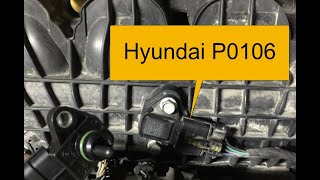
- Faulty Manifold Absolute Pressure (MAP) Sensor 🔴 High Probability Sensors can fail over time due to heat cycles and internal electronic degradation. Some owners report that aftermarket sensors can fail prematurely, making an OEM part a more reliable choice. The sensor is located on the back of the intake manifold and can be tricky to access without removing other components.
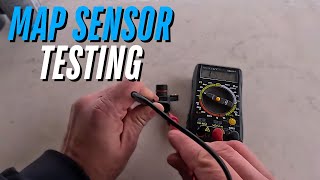
How to confirm: Test the sensor's voltage output with a multimeter or use a scan tool to observe its readings. The signal should change smoothly with engine vacuum. However, given its low cost and accessibility challenges for testing, many DIYers opt to replace it as a primary diagnostic step.
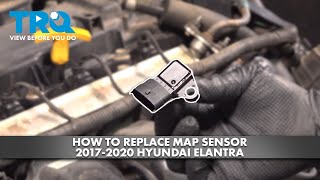
Typical fix: Replace the MAP sensor. It is located on the intake manifold and secured by a single 10mm bolt. A small amount of oil on the new sensor's O-ring will help it seat properly.
Est. part cost: $60-$100 - Engine Control Module (ECM) Software Update Needed 🟡 Medium Probability Hyundai released TSB #21-01-041H (Campaign T5S) specifically for the 2020 Elantra 2.0L engine to revise the diagnostic logic for codes P0106, P0068, and P0101, indicating the code could be triggered erroneously by sensitive software parameters.
How to confirm: A Hyundai dealership or a qualified shop with a GDS (Global Diagnostic System) tool can check if your vehicle's VIN is affected by this campaign and if the software is up to date.
Typical fix: Update the ECM software to the latest version. This is a dealer-level procedure and is often performed free of charge under the service campaign.
Est. part cost: $0 - Vacuum Leak 🟡 Medium Probability Cracked or disconnected vacuum hoses in the intake system can allow unmetered air to enter the engine, which throws off the MAP sensor's readings. Common failure points on Hyundai engines include the PCV valve hose and the lines connected to the purge control solenoid, which can become brittle from heat. A cracked air intake duct between the air filter and throttle body is also a possibility.
How to confirm: Visually inspect all vacuum lines connected to the intake manifold for cracks or loose connections. A smoke test is the most effective way to find hard-to-see leaks. Alternatively, spraying carb cleaner near suspected areas while the engine is idling can reveal a leak if the engine RPM changes.
Typical fix: Replace the cracked hose or re-secure the loose connection.
Est. part cost: $5-$30 - Wiring or Connector Issue ⚪ Low Probability
How to confirm: Inspect the electrical connector and wiring going to the MAP sensor for any signs of damage, corrosion, or a loose connection. The connector tab can be difficult to release and may require a small screwdriver to depress.
Typical fix: Repair the damaged wire or clean/replace the connector.
Est. part cost: $10-$50
Rare But Worth Checking
- Internal Intelligent Variable Transmission (IVT) Failure: This is a very serious issue documented by Hyundai in TSB #20-01-028H (Campaign T5B). If P0106 appears alongside transmission codes like P0730, P0731, P0741, or P0867, the diagnostic procedure requires the replacement of the transmission assembly.
- Faulty Powertrain Control Module (PCM): In very rare cases, the engine computer itself can be the source of the problem, but this should only be considered after all other possibilities, including software updates, have been exhausted.
- MAP Sensor Icing: In regions with freezing temperatures, it's possible for ice to form on the MAP sensor during long drives, causing temporary erratic readings and setting a P0106 code. The issue often resolves itself after the engine warms up in the next key cycle. This is a known issue on other platforms and is plausible here.
Diagnosis Steps

- Scan for Codes: Use an OBD-II scanner to confirm P0106. Crucially, perform a full system scan to check for any Transmission Control Unit (TCU) codes. The presence of codes like P0730, P0741, etc., is a critical data point.
- Check for TSBs: Contact a Hyundai dealer with your VIN or search online to check for open campaigns. Specifically, ask about Service Campaign T5B (TSB #20-01-028H for IVT replacement logic) and Campaign T5S (TSB #21-01-041H for an ECM update).
- Follow TSB #20-01-028H Logic: If any TCU DTCs (P0730, P0731, P0741, P0867) are present, the official repair procedure is to replace the IVT. If no TCU codes are present, proceed with diagnosing the P0106 code.
- Inspect Vacuum System: Visually inspect all vacuum lines connected to the intake manifold, especially the PCV hose and purge valve lines, for obvious cracks, disconnections, or brittleness. Also inspect the main air intake boot for cracks.
- Inspect MAP Sensor and Connector: Locate the MAP sensor on the rear of the intake manifold. Check its electrical connector for corrosion or damage and ensure it's plugged in securely.
- Check Live Data: With a capable scan tool, monitor the MAP sensor voltage/pressure reading at idle and while revving the engine. The reading should change smoothly and logically. Compare the Key On, Engine Off (KOEO) reading to the current barometric pressure; they should be nearly identical.
- Perform Smoke Test: If a vacuum leak is suspected but not visible, a smoke test is the most definitive way to pinpoint its location.
- Replace MAP Sensor: If no TSBs apply, no transmission codes are present, and no vacuum leaks are found, replacing the MAP sensor is the next logical step.
Parts You'll Likely Need
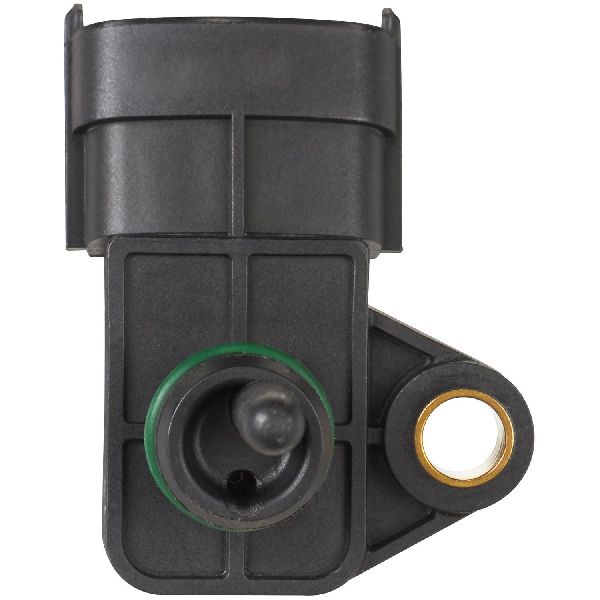
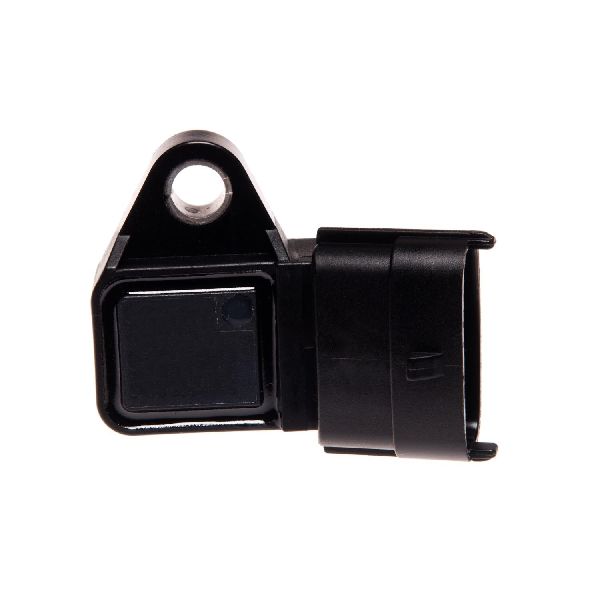
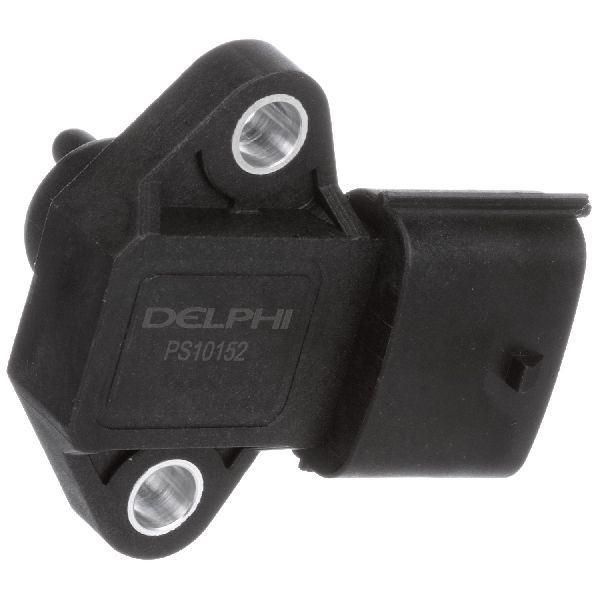
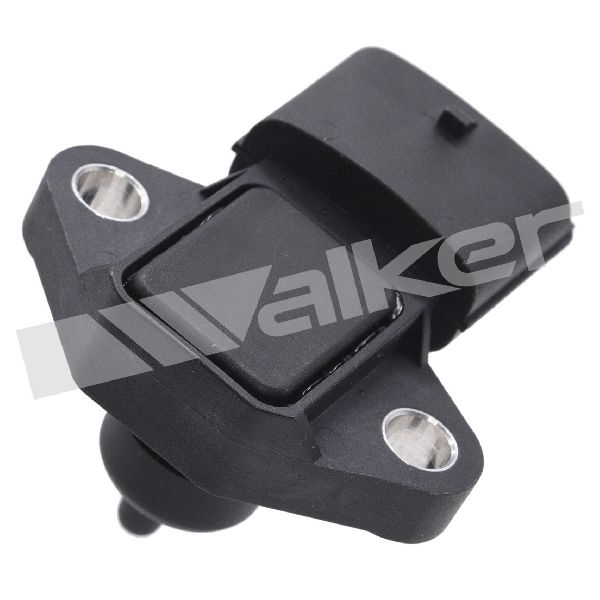
- Manifold Absolute Pressure (MAP) Sensor
(OEM #39300-2E600)— This is the most common component to fail, directly causing the P0106 code when its readings become erratic.
Trusted brands: Hyundai (OEM), Delphi, NGK
OEM price range: $80-$110
Aftermarket price range: $50-$85
Related Codes That Often Appear With This One
- P0068 — This code for MAP/MAF - Throttle Position Correlation is often listed with P0106 in the same Hyundai TSBs, indicating a conflict between sensor readings that can be fixed with a software update.
- P0101 — This code is also mentioned in TSB #21-01-041H alongside P0106, pointing to a general issue with the air intake measurement system logic that a software update addresses.
- P0730, P0731, P0741, P0867 — The presence of these transmission-related DTCs alongside P0106 is a strong indicator of the serious IVT issue described in TSB #20-01-028H. The TSB explicitly states that if these TCU codes are found, the IVT should be replaced.
- P0017 — A Crankshaft/Camshaft correlation code can appear with P0106 if a severe mechanical issue, such as running the engine extremely low on oil, has occurred. This can cause timing to be off, which in turn creates an irrational vacuum signal for the MAP sensor.
Technical Service Bulletins (TSBs) & Recalls

- 21-01-041H: ECM software update to revise logic for P0106, P0101, and P0068.
- 20-01-028H: Service campaign to perform ECU/TCU update and, if necessary, replace the IVT when certain engine and transmission DTCs are present together.
- Campaign T5B Dea: The service campaign name associated with TSB 20-01-028H for the IVT replacement.
Platform-Specific Known Issues
- TSB #20-01-028H / Campaign T5B: Links ECU codes P0106, P0068, and P0101 with TCU codes (P0730, P0731, etc.) indicating a condition that may require replacement of the Intelligent Variable Transmission (IVT). The procedure is to check for TCU codes first; if present, replace the IVT.
- TSB #21-01-041H / Campaign T5S: Notes that for some 2020 Elantras with the 2.0L engine, an ECM software update is available to revise the diagnostic logic for P0106, suggesting the code can be triggered by software sensitivity rather than a hardware fault.
Mechanic-Grade Diagnostic Values
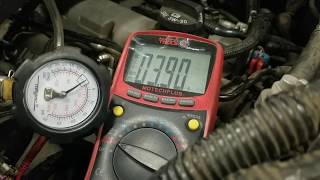
- MAP Sensor Signal Voltage — expected: 1.0V to 4.5V, changing smoothly with engine load/throttle input. At idle, it should be low (approx. 1.0-1.5V). At wide-open throttle, it should be high (approx. 4.5V).. Failure: Voltage is stuck, erratic, or does not respond to changes in engine vacuum.
- MAP Sensor Circuit Test (KOEO - Key On, Engine Off) — expected: Using a multimeter, you should find: one wire with 5V (reference voltage from PCM), one wire with 0V (ground), and one signal wire showing a voltage that corresponds to atmospheric pressure (typically high, near 4.5V).. Failure: Missing 5V reference or ground indicates a wiring or PCM issue. An incorrect signal voltage points towards a faulty sensor.
Wiring & Ground Locations
- Engine Compartment Fuse Box — Located on the left side of the engine bay.. Contains fuses and relays that supply power to engine management components, including potentially the circuit for the PCM which powers the MAP sensor.
- Instrument Panel Fuse Box — Located behind a cover on the driver's side of the dashboard.. Provides power to various in-cabin electronics and control modules which could be relevant if other electrical symptoms are present.
- MAP Sensor Connector — On the MAP sensor itself, located on the intake manifold.. This 3-wire connector provides the sensor with power, ground, and a path for the signal to return to the PCM. The pins are typically: 1) 5V Reference, 2) Ground, 3) Signal. A poor connection here is a common cause of failure.
Real Owner Repair Stories
- Reddit user comment on r/MechanicAdvice (Hyundai (model not specified, but general advice)) — P0106 code appeared immediately after the battery died and was replaced. The car was idling incredibly hard and stalling.
❌ Tried (didn't work) Replacing the MAP sensor, Clearing the code (it returned)
✅ What actually fixed it The issue was a lost idle position calibration. The fix was to thoroughly clean the throttle body with throttle body cleaner, reconnect the battery, and let the vehicle idle for 10 minutes to perform an idle relearn procedure. - Reddit user post on r/Justrolledintotheshop (Not specified, but relevant to P0106 diagnosis) — Vehicle ran poorly, had vacuum assist issues with the brakes, and a P0106 code.
❌ Tried (didn't work) Customer replaced the MAP sensor.
✅ What actually fixed it A severe internal mechanical engine problem was the cause. An intake valve was hung open, which destroyed the normal manifold vacuum and caused the MAP sensor to send irrational readings. This is a case where the sensor was reporting the problem correctly, but was not the cause. - Reddit user post on r/MechanicAdvice (2017 Hyundai Elantra) — Rough idling with codes P0106 and P0017 (Crank/Cam correlation). The issue became severe after the engine was found to be nearly empty of oil.
❌ Tried (didn't work) Previous sensor replacements for other codes.
✅ What actually fixed it The root cause was not the MAP sensor itself, but a severe mechanical timing issue indicated by P0017, likely caused by running the engine with extremely low oil. The P0106 code was a symptom of the incorrect engine timing affecting manifold vacuum.
"I Checked Everything" — The Actual Cause
- A common diagnostic step for P0106 is a smoke test to find vacuum leaks. However, in some documented cases, the test comes back clean because the cause is not an external leak. One real-world fix was cleaning a dirty throttle body and performing an idle relearn after a battery replacement, which a smoke test would not identify.
- In another case, the code was caused by an intake valve not seating correctly. This creates a significant internal vacuum problem that a smoke test would miss, leading a technician to wrongly condemn the sensor or wiring.
- Mechanical timing issues, such as a stretched timing chain or problems from low oil pressure (which can set a P0017 code), will also trigger P0106 by creating incorrect vacuum signals. This mechanical fault would not be found with a smoke test.
Helpful Videos
We Have This Part in Stock


The information in this article is provided for general reference and educational purposes only. Vehicle specifications, procedures, and part compatibility can vary by production date, trim level, and region. Always consult your vehicle's factory service manual and verify part numbers before purchasing or performing repairs. Safety-critical components such as airbags, seat belts, and braking systems should be installed by a qualified professional.
- Hyundai ELANTRA:
- 🎬 Helpful Videos
- 🛍️ Shop This Part
- What's Unique About the 2020-2020 Hyundai ELANTRA
- Diagnostic Flowchart
- Symptoms You May Notice
- Most Likely Causes
- Rare But Worth Checking
- Diagnosis Steps
- Parts You'll Likely Need
- Related Codes That Often Appear With This One
- Technical Service Bulletins (TSBs) & Recalls
- Platform-Specific Known Issues
- Mechanic-Grade Diagnostic Values
- Wiring & Ground Locations
- Real Owner Repair Stories
- "I Checked Everything" — The Actual Cause
- 🎟️ Get 5% Off