

P0106 on 2005-2009 GMC Envoy: MAP Sensor vs. Cam Solenoid Causes and Fixes
P0106 on a GMC Envoy, especially with the 4.2L engine, often points to a faulty MAP sensor, which is an easy 15-minute DIY fix. However, if you also have a rough idle and codes P0014 or P0017, the true cause is likely a dirty or failed Camshaft Actuator Solenoid, a known issue on this platform. Cleaning or replacing this solenoid, along with an oil change, is the correct fix in this scenario.
- P0106 on a 2005-2009 Envoy indicates a MAP sensor performance issue.
- Before replacing the MAP sensor, check for codes P0014 or P0017. If they are present with a rough idle, the Camshaft Actuator Solenoid is the most likely culprit, especially on the 4.2L engine.
- The MAP sensor itself is a common failure, inexpensive, and very easy to replace (less than 15 minutes) for a DIYer.
- Always inspect for simple issues like cracked vacuum hoses before buying parts.
- Cleaning the Camshaft Actuator Solenoid screens is a valid first step before replacing it.
What's Unique About the 2005-2009 Gmc ENVOY
On the GMC Envoy and its platform-mates (like the Chevy Trailblazer), particularly models with the 4.2L I6 engine, P0106 is frequently a 'symptom' code, not the root cause. A well-documented issue, confirmed by GM Technical Service Bulletin #PIP3694F, shows that a malfunctioning Camshaft Actuator Solenoid (part of the Variable Valve Timing system) can cause a rough idle. This erratic engine operation creates fluctuating pressure in the intake manifold, which the ECM incorrectly flags as a MAP sensor performance problem, setting the P0106 code. Many owners mistakenly replace the MAP sensor when the actual problem is the VVT solenoid, which often just needs cleaning.
Diagnostic Flowchart
Tap your situation to follow the diagnostic path that matches what you're seeing on this vehicle.
Symptoms You May Notice
- Check Engine Light is on
- Rough or erratic idle
- Poor acceleration and lack of power
- Reduced fuel economy
- Engine stalling, especially at stops
- Black smoke from the exhaust
- Hesitation when pressing the gas pedal
- Engine backfire
- Replacing the MAP sensor when the true cause is a faulty Camshaft Actuator Solenoid. If a rough idle is the primary symptom, especially with codes P0014/P0017, the solenoid should be inspected first.
- Replacing the MAP sensor when the actual issue is a dirty throttle body causing incorrect idle airflow.
Most Likely Causes
- Faulty Manifold Absolute Pressure (MAP) Sensor 🔴 High Probability The sensor is a common failure point due to age and heat cycles. It's also the most direct cause of a P0106 code when no other codes are present. It is often the first part replaced, though it may not be the root cause.
How to confirm: With the engine off, use a scan tool to check if the MAP sensor reading matches the BARO (barometric pressure) reading. They should be nearly identical. You can also test the sensor's voltage output with a multimeter while applying vacuum with a hand pump; the voltage should change smoothly from about 4.5V at 0 inches of vacuum to around 1.0V at 21 inches of vacuum.
Typical fix: Replace the MAP sensor. It is located on top of the intake manifold and held by a small clip, making for a very simple replacement that can be done in under 15 minutes.
Est. part cost: $25-$60 - Dirty or Faulty Camshaft Actuator Solenoid 🔴 High Probability This is a known issue, especially on the 4.2L LL8 engine, and is cited in GM TSB #PIP3694F. Debris from infrequent oil changes can clog the fine mesh screens on the solenoid, or the solenoid itself can fail, causing incorrect camshaft timing. This leads to a rough idle, which in turn causes the P0106 code.
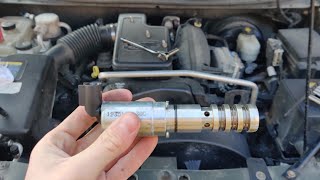
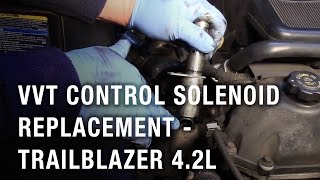
How to confirm: Check for accompanying codes P0014 or P0017. Remove the solenoid from the side of the cylinder head (requires moving the power steering pump for access). 🎬 See this easy walkthrough for replacing the VVT solenoid. Inspect its three screens for metal shavings, sludge, or missing screens. You can also test the solenoid's resistance with a multimeter; it should be between 6 and 12 Ohms. If oil is found inside the electrical connector, replacement is recommended.
Typical fix: First, try cleaning the solenoid and its screens thoroughly with brake or carburetor cleaner. If cleaning doesn't work, the screens are damaged, or oil is found in the electrical connector, replace the Camshaft Actuator Solenoid. Always perform an oil and filter change 🎬 Watch: Step-by-step VVT control solenoid replacement guide. when servicing this part.
Est. part cost: $30-$70 - Vacuum Leak 🟡 Medium Probability Rubber vacuum hoses and intake gaskets become brittle and crack over time, allowing unmetered air to enter the intake manifold, which disrupts the MAP sensor's readings and can trigger the code.
How to confirm: Visually inspect all vacuum lines connected to the intake manifold for cracks or loose connections. With the engine running, listen for hissing sounds. You can also spray short bursts of brake cleaner or starter fluid around suspected leak areas (like the intake manifold gasket); an RPM change indicates a leak.
Typical fix: Replace the cracked hose or faulty gasket.
Est. part cost: $5-$50 - Dirty Throttle Body 🟡 Medium Probability Carbon buildup around the throttle plate can restrict airflow at idle. This causes the ECM to see a MAP reading that is inconsistent with the throttle position, which can falsely trigger a P0106 code. This is a known issue on these vehicles.
How to confirm: Remove the air intake tube and inspect the throttle body bore and plate for a thick layer of black carbon, especially around the edges where the plate closes.
Typical fix: Clean the throttle body bore and plate thoroughly with a dedicated throttle body cleaner and a soft cloth or brush. Afterwards, a throttle body relearn procedure is required.
Est. part cost: $5-$10 for cleaner
Rare But Worth Checking
- Clogged Catalytic Converter: A clogged exhaust creates backpressure in the engine, which can affect the intake manifold pressure and trigger a P0106 code. This is usually accompanied by a severe loss of power, especially at higher RPMs, and potentially a sulfur-like smell.
- Corroded ECM Ground Wire: GM has noted that a corroded ground terminal (G103), often located on the cylinder head, can cause various erratic sensor readings and codes, including P0106.
- Internal Engine Mechanical Problems: In rare cases, incorrect camshaft timing due to a stretched timing chain or excessive crankshaft end play can cause this code, as noted in TSB #PIP3694F. Crankshaft end play should be between 0.0044 and 0.0153 inches; more than this indicates worn thrust bearings requiring major engine repair.
Diagnosis Steps
- Scan for Codes: Use an OBD-II scanner to confirm P0106 and check for any other codes, especially P0014, P0017, or P0300. Record the freeze-frame data.
- Check for TSBs: Be aware of TSB #PIP3694F, which directly links P0106 to the camshaft actuator solenoid on the 4.2L engine when P0014/P0017 are also present.
- Inspect the Camshaft Actuator Solenoid: If a rough idle is present (especially with P0014/P0017), this is the prime suspect. Remove the power steering pump to gain access. Remove the solenoid, inspect its screens for debris or damage, and check for oil in the electrical connector.
- Clean or Replace Solenoid: Clean the solenoid screens with brake cleaner. If screens are damaged or missing, replace the solenoid. Perform an oil and filter change.
- Inspect and Clean Throttle Body: Check for heavy carbon buildup inside the throttle body, as this is a common cause. Clean it thoroughly if dirty and perform a throttle body relearn procedure.
- Inspect for Vacuum Leaks: If no other codes are present, visually inspect all vacuum hoses and the intake manifold for obvious cracks or damage. Listen for hissing sounds with the engine running.
- Test the MAP Sensor: If the solenoid and throttle body are clean and the problem persists, test the MAP sensor's signal with a scan tool or multimeter to confirm if it's faulty before replacing it.
- Clear Codes and Test Drive: After any repair, clear the codes and perform a test drive to ensure the issue is resolved.
Parts You'll Likely Need
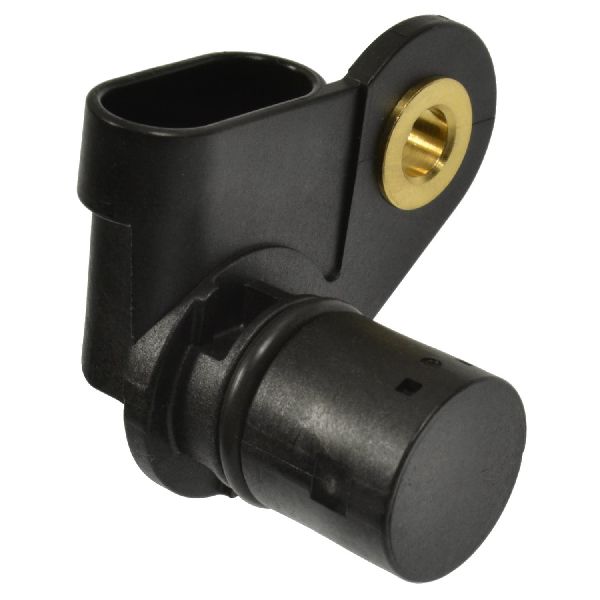
- Manifold Absolute Pressure (MAP) Sensor
(OEM #12594942)— This is the most direct cause of the code and a common failure item. It's often replaced first due to its low cost and ease of access.
Trusted brands: ACDelco, Bosch, Delphi, Standard Motor Products
OEM price range: $45-$70
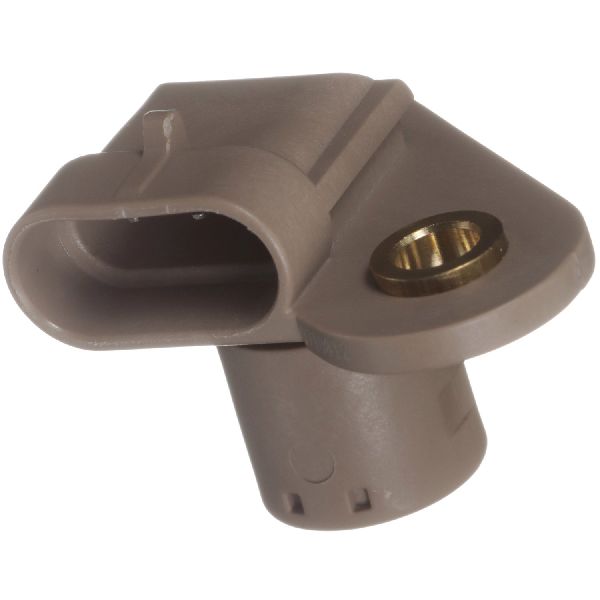
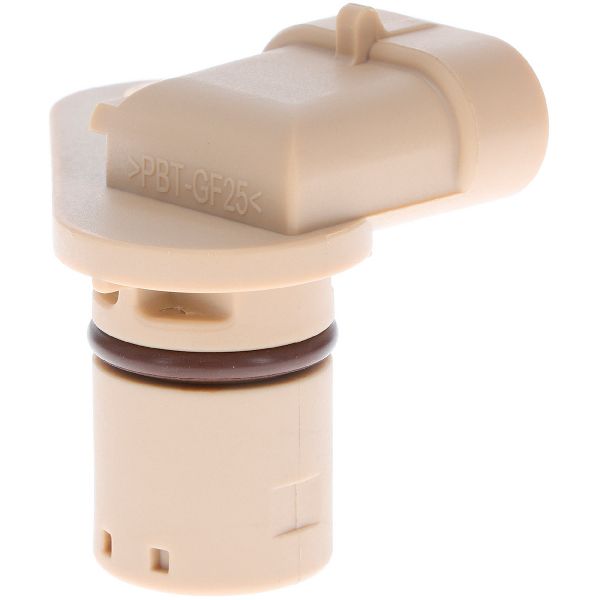
Aftermarket price range: $25-$50 - Camshaft Position Actuator Solenoid (VVT Solenoid)
(OEM #12615873 (replaces older part numbers like 12602516))— A known issue on the 4.2L engine where a faulty solenoid causes a rough idle that triggers the P0106 code. It is a very common root cause that is often misdiagnosed as a bad MAP sensor.
Trusted brands: ACDelco, Dorman, Delphi
OEM price range: $45-$70
Aftermarket price range: $30-$50
Related Codes That Often Appear With This One
- P0014 — Indicates 'B' Camshaft Position - Timing Over-Advanced. This code, along with a rough idle, strongly points to the Camshaft Actuator Solenoid being the root cause of the chain of events that leads to P0106.
- P0017 — Indicates Crankshaft Position - Camshaft Position Correlation. Like P0014, this points to a timing issue often caused by the VVT system, which in turn triggers P0106.
- P0107 — Indicates MAP/BARO Circuit Low Input. This may appear with P0106 if there is a wiring issue or a completely failed sensor.
- P0300 — Indicates a Random/Multiple Cylinder Misfire. The rough idle caused by a faulty VVT solenoid or a major vacuum leak can be severe enough to be registered as a misfire, often accompanying P0106 and P0014/P0017.
Technical Service Bulletins (TSBs) & Recalls
- PIP3694F: Notes that a rough idle may cause a P0106 to be stored along with P0014/P0017, and advises inspecting the camshaft actuator solenoid screens for debris or damage. It also mentions checking for excessive crankshaft end play as a rare but possible cause.
- PIP3693B: A similar, older bulletin that also links P0106 with P0014/P0017 due to debris in the camshaft actuator system on 2005-2006 models with the 4.2L engine.
Platform-Specific Known Issues
- TSB #PIP3694F specifically calls out that a rough idle caused by a malfunctioning Camshaft Actuator Solenoid can trigger a P0106 code on the 4.2L engine, often with P0014/P0017. The primary fix is often to clean or replace the solenoid, not the MAP sensor.
- A dirty electronic throttle body is another common cause of a false P0106 on this platform, as carbon buildup disrupts expected airflow at idle.
Mechanic-Grade Diagnostic Values
- Camshaft Actuator Solenoid (VVT Solenoid) Resistance — expected: 6 to 12 Ohms between the two terminals.. Failure: A reading of 0 Ohms (short circuit) or infinite/OL (open circuit) indicates a failed solenoid.
- MAP Sensor Signal Voltage (Key On, Engine Off) — expected: ~4.5 Volts (at sea level).. Failure: Voltage significantly lower than atmospheric pressure reading, or no voltage.
- MAP Sensor Signal Voltage (Engine Idling) — expected: 1.0 to 1.5 Volts.. Failure: Voltage remains high (near 4.5V) or does not respond smoothly to throttle changes.
- MAP Sensor 5V Reference Circuit — expected: 4.8 to 5.2 Volts with key on.. Failure: Voltage is low or absent, indicating a wiring or ECM issue.
- MAP Sensor Ground Circuit Resistance — expected: Less than 5 Ohms to a known good ground.. Failure: High resistance indicates a poor ground connection, which can skew sensor readings.
- Crankshaft End Play — expected: 0.0044 to 0.0153 inches.. Failure: Movement greater than 0.0153 inches, measured with a dial indicator on the crankshaft pulley, points to worn thrust bearings.
Scan Tool Commands That Help
- Tech2 / GDS2 or equivalent professional scan tool: Throttle Body Relearn / Reset Idle Learn — This is critical after cleaning or replacing the throttle body. A dirty throttle body is a common cause of a false P0106, and simply cleaning it without performing the relearn can cause persistent idle issues.
- Tech2 / GDS2 or equivalent professional scan tool: Camshaft Position Actuator (CPAS) Solenoid Control — When P0014 or P0017 are present with P0106, this bidirectional command allows a technician to manually activate the solenoid to see if it responds, helping to confirm if the solenoid is stuck or electrically failed without removing it first.
Wiring & Ground Locations
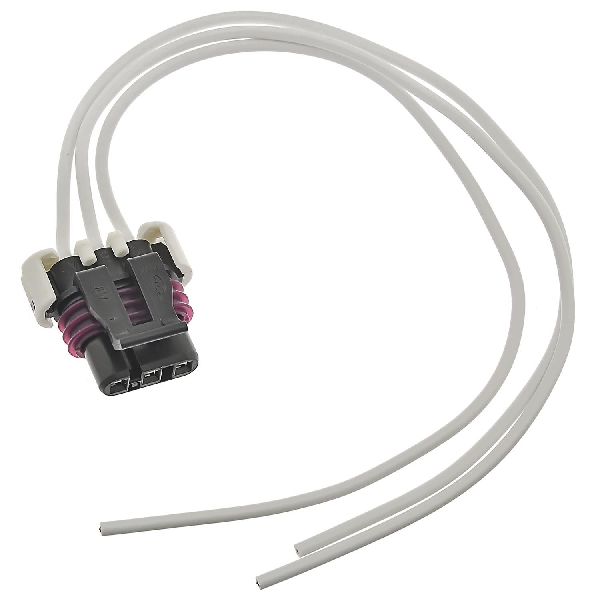
- MAP Sensor Connector — On the MAP sensor, which is located on the top of the intake manifold.. Testing the three wires is essential. For the 4.2L, the typical pinout is: Gray (5V Reference), Light Green (Signal), and Orange/Black (Ground). Verifying power, ground, and signal integrity at this connector is a primary diagnostic step.
- G103 — Typically located on the cylinder head or engine block near the front of the engine.. This is a major engine and ECM ground point. Corrosion or a loose connection at G103 is a known GM issue that can cause erratic behavior and false codes from multiple sensors, including the MAP sensor.
Real Owner Repair Stories
- ScannerDanner YouTube Channel (2005 Chevrolet Trailblazer (same GMT360 platform and 4.2L engine)) — Check Engine Light with code P0106.
❌ Tried (didn't work) The technician did not replace any parts initially, but used scan tool data to diagnose the issue.
✅ What actually fixed it The root cause was a severely dirty throttle body. Carbon buildup restricted idle airflow, causing the MAP sensor reading to be out of the range predicted by the ECM for a given throttle position and RPM. Cleaning the throttle body and performing a relearn procedure resolved the code. - GMTNation Forum (2004 Trailblazer 4.2L) — Check Engine Light with code P0014 (often accompanies P0106), hesitation at 50 MPH.
❌ Tried (didn't work) Replaced coil pack on cylinder 3 and all 6 spark plugs, which fixed the hesitation but not the P0014 code.
✅ What actually fixed it The user found oil completely drenching the #2 spark plug and inside the VVT solenoid electrical connector. The confirmed fix was to replace the Camshaft Position Actuator Solenoid (CPAS/VVT Solenoid) due to the internal oil leak.
"I Checked Everything" — The Actual Cause
- A common scenario for a false P0106 on this platform is a dirty throttle body. A technician may perform a smoke test to check for vacuum leaks and find none. The code persists because the problem isn't unmetered air entering the system (a leak), but rather a restriction of metered air at the throttle plate due to carbon buildup. This causes the actual manifold pressure at idle to be different from what the ECM predicts based on throttle angle, triggering the performance code.
OEM Part Supersession History
12568078, 12576768, 12597025, 12602516→12615873— GM regularly updates service parts to integrate new materials, improve durability, or consolidate part numbers.
Heads up: Using one of the older, superseded part numbers is not recommended as the newest version (12615873) is the most revised and reliable option.
Model Year Variations Within This Range
- 2005-2009 (5.3L V8 only): In 2005, the 5.3L V8 engine option was updated with Displacement on Demand (later called Active Fuel Management - AFM). This system can develop its own set of issues (lifter failure, oil consumption) that could potentially influence engine vacuum and related codes, though P0106 is more strongly tied to the 4.2L's VVT system.
Helpful Videos


We Have This Part in Stock


The information in this article is provided for general reference and educational purposes only. Vehicle specifications, procedures, and part compatibility can vary by production date, trim level, and region. Always consult your vehicle's factory service manual and verify part numbers before purchasing or performing repairs. Safety-critical components such as airbags, seat belts, and braking systems should be installed by a qualified professional.
- Gmc ENVOY:
- 🎬 Helpful Videos
- 🛍️ Shop This Part
- What's Unique About the 2005-2009 Gmc ENVOY
- Diagnostic Flowchart
- Symptoms You May Notice
- Most Likely Causes
- Rare But Worth Checking
- Diagnosis Steps
- Parts You'll Likely Need
- Related Codes That Often Appear With This One
- Technical Service Bulletins (TSBs) & Recalls
- Platform-Specific Known Issues
- Mechanic-Grade Diagnostic Values
- Scan Tool Commands That Help
- Wiring & Ground Locations
- Real Owner Repair Stories
- "I Checked Everything" — The Actual Cause
- OEM Part Supersession History
- Model Year Variations Within This Range
- 🎟️ Get 5% Off