

P0106 on 2013-2018 Ford Focus ST: MAP Sensor Causes, Recall Info, and Fixes
On a 2013-2018 Focus ST, code P0106 is most often caused by a faulty MAP sensor on the intake manifold or the T-MAP sensor on the charge pipe, often due to oil contamination. For 2013-2014 models, a wiring harness recall (14S17) is a primary suspect. Cleaning or replacing a sensor costs ~$40-$120 for the part and is a 2/5 DIY difficulty.
- For 2013-2014 models, first check if Ford's wiring recall 14S17 was performed. This is the most likely cause.
- The Focus ST has two pressure sensors (one on the intake manifold, one on the charge pipe) that can cause P0106. Both are prone to oil contamination.
- A common and effective first step is to remove and clean both sensors with electronics cleaner.
- If cleaning doesn't work, use a scan tool to watch live data from both sensors to determine which one is faulty before buying parts.
- Symptoms can include serious drivability issues like hesitation and stalling, so addressing this code promptly is important for safety.
What's Unique About the 2013-2018 Ford Focus ST

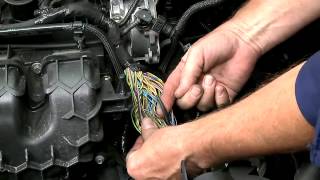
The 2.0L EcoBoost engine in the Focus ST uses two key pressure sensors that can trigger this code: a traditional MAP sensor on the intake manifold and a Temperature/Manifold Absolute Pressure (T-MAP) sensor on the charge pipe before the throttle body. A major issue for 2013-2014 models is Ford's safety recall 14S17, 🎬 Watch: Overview of the 14S17 wiring harness recall which addressed poorly crimped wiring harness splices that directly caused erroneous MAP sensor signals, leading to stalling and hesitation. Even on post-recall vehicles or later model years, oil contamination of the sensors from the PCV system is a frequent failure point, with the T-MAP sensor on the charge pipe being particularly vulnerable. NHTSA ODI #11597495 highlights that even on later models not covered by the original recall, owners have reported stalling while accelerating into traffic accompanied by the P0106 code and a "hill start assist" failure message.
Symptoms You May Notice

- Check Engine Light is on
- "Engine Fault, Service Now" message on the dashboard.
- "Hill Start Not Available" warning message may appear simultaneously.
- Rough or unstable idle.
- Hesitation, bogging, or stumbling during acceleration.
- Noticeable loss of power or turbo boost, sometimes described as 'limp mode'.
- Engine stalling, sometimes without warning, particularly after a warm start.
- Decreased fuel economy.
- Erratic turbo spooling sounds not related to throttle input.
- Struggling to start, requiring more throttle than usual.
- Replacing only one of the two pressure sensors without diagnosing which one is faulty.
- Replacing sensors when the root cause is the wiring harness splice issue on 2013-2014 models.
- Replacing the throttle body when the issue is a sensor or vacuum leak.
- Assuming the recall 14S17 repair is permanent; many owners have had to re-repair the splices.
Most Likely Causes

- Defective Wiring Harness Splice (Recall 14S17) 🔴 High Probability Affects 2013-2014 models built between Feb 14, 2012, and Oct 14, 2013. The factory splices for the MAP sensor circuit were often insufficiently crimped, causing high resistance and incorrect signals. The key splices are S133 (Yellow/Violet wires) and S132 (Yellow/Green wires).
How to confirm: Check vehicle VIN for recall status on Ford's official site or with a dealer. Visually inspect the wiring harness near the transmission for evidence of the recall repair (often heat-shrunk butt connectors). Some owners report the dealer repair (which sometimes used excessive solder) failing and have had to re-do the splices themselves using butt connectors for a more reliable fix.
Typical fix: If the recall has not been performed, a Ford dealer will repair the splices at no charge. If it has been done but is suspect, the splices (S133 and S132) must be cut out and redone using quality, sealed butt connectors. 🎬 See the official Ford wiring harness repair procedure
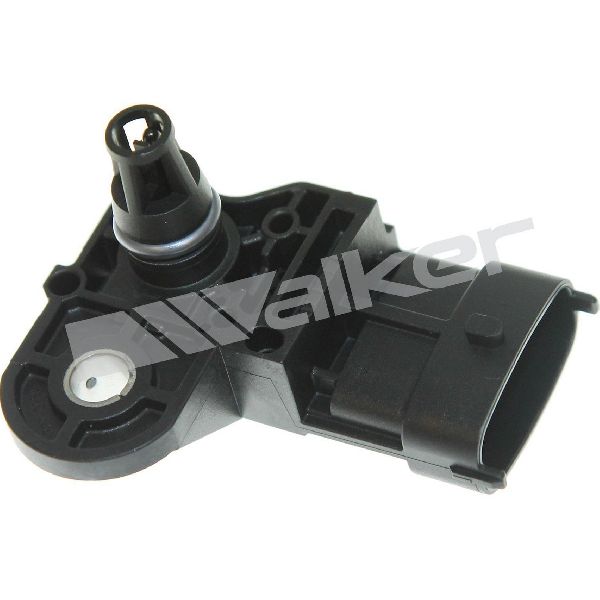
Est. part cost: $0 (recall) - $15 (DIY connectors) - Contaminated or Faulty T-MAP/Boost Sensor 🔴 High Probability This 4-pin sensor is located on the cold-side charge pipe before the throttle body. Its position makes it highly susceptible to oil contamination from the PCV system, which is common on direct-injection turbo engines. The oil coats the sensing element and causes incorrect readings.
How to confirm: Remove the sensor from the charge pipe and inspect for a film of oil. With a scan tool, monitor the 'Boost Pressure' or 'Throttle Inlet Pressure' PID with the key on, engine off. The reading should be close to atmospheric pressure (approx. 14.7 PSI / 101 kPa at sea level). If the reading is stuck or irrational, the sensor is likely faulty.
Typical fix: First, try cleaning the sensor carefully with electronics or MAF sensor cleaner; do not touch the element. If cleaning doesn't resolve the issue or the fault returns quickly, replace the sensor. Many owners find replacement is the only long-term solution.
Est. part cost: $70-$120 - Contaminated or Faulty Intake Manifold MAP Sensor 🟡 Medium Probability Like the T-MAP sensor, the 3-pin MAP sensor on the intake manifold can also become contaminated by oil vapors from the PCV system, though it's often less severe than the pre-throttle sensor.
How to confirm: Remove the sensor from the intake manifold and inspect for oil. With a scan tool, monitor the 'Manifold Absolute Pressure' PID. The reading should be close to atmospheric pressure with the key on, engine off, and drop to a vacuum reading (e.g., 8-12 PSI or ~28-32 kPa) at idle. If it fails to read vacuum at idle or is stuck, it's a strong candidate for replacement.
Typical fix: Clean the sensor with an appropriate electronics cleaner. If the problem persists, replace the sensor. Some owners replace it as a pair with the T-MAP sensor.
Est. part cost: $60-$95 - Vacuum or Boost Leak ⚪ Low Probability Cracked vacuum lines, loose intercooler piping, a leaking blow-off valve, or a failed intake manifold gasket can cause pressure readings that the PCM deems irrational. The plastic intake manifold itself can develop hairline cracks. NHTSA ODI #10967364 describes a similar scenario where plastic tubing failed by "disintegrating" in the vicinity of engine components, leading to a P0106 code.
How to confirm: Visually inspect all vacuum hoses and charge pipes for cracks or loose connections. A smoke test is the most effective way to find leaks in the intake and charge pipe system. Listen for hissing sounds around the intake manifold.
Typical fix: Replace the cracked hose, tighten the loose clamp, or replace the faulty gasket/manifold.
Est. part cost: $10-$150
Rare But Worth Checking
- Faulty Powertrain Control Module (PCM): This is extremely rare. The PCM should only be considered after all other possibilities, including sensors, wiring, and leaks, have been definitively ruled out.
- Dirty Throttle Body: In some cases, especially after a battery disconnect, a dirty throttle body can cause idle relearn issues that may trigger a P0106 code. Cleaning the throttle body may be required.
- Contamination from Other Components: NHTSA ODI #11035325 reports an unusual case where grease from a failing axle was thrown onto engine sensors, causing a P0106 among several other codes.
Diagnosis Steps

- Check for Recalls: If you have a 2013-2014 model, use your VIN to check for open safety recall 14S17 on the NHTSA or Ford owner website. This is a primary cause and the repair is free at a dealer.
- Scan for Codes & Live Data: Use an OBD-II scanner to confirm P0106 and note any other codes. Access live data.
- Live Data Analysis (Key On, Engine Off): Monitor both 'Manifold Absolute Pressure' and 'Boost Pressure' (or 'Throttle Inlet Pressure'). Both should read close to the current atmospheric pressure (e.g., ~14.7 PSI at sea level). If one is significantly off, it is the likely culprit.
- Live Data Analysis (Engine Idling): Start the engine. The 'Manifold Absolute Pressure' reading should drop to show vacuum (e.g., 8-12 PSI / 28-32 kPa). The 'Boost Pressure' sensor should still read near atmospheric pressure. If the manifold sensor doesn't show vacuum, it's likely bad.
- Visual Inspection: Inspect the wiring harnesses for both the intake manifold MAP sensor and the charge pipe T-MAP sensor. Look for chafing, corrosion, or signs of a poor recall repair (e.g., bulky, poorly-sealed solder joints).
- Inspect and Clean Sensors: Remove the T-MAP sensor from the charge pipe (pre-throttle body) and the MAP sensor from the intake manifold. Inspect both for oil contamination. Clean gently with MAF sensor cleaner and allow to dry completely. 🎬 Watch: How to clean or replace your MAP sensor
- Check for Leaks: Visually inspect all vacuum lines and intercooler connections. For hard-to-find leaks, perform a smoke test on the intake system.
- Re-evaluate & Repair: After cleaning the sensors and clearing the code, drive the vehicle. If the code returns, and live data pointed to a specific sensor, replace that sensor. If the wiring is suspect (especially on 2013-2014 models), re-do the splices using sealed butt connectors.
Parts You'll Likely Need
- Turbocharger Boost / Temperature Sensor (T-MAP)
(OEM #BV6Z-9F479-A)— This 4-wire sensor on the charge pipe is highly prone to oil contamination from the PCV system, causing erratic readings. It is often the primary culprit.
Trusted brands: Motorcraft, Bosch
OEM price range: $80-$120
Aftermarket price range: $40-$80 - Intake Manifold Absolute Pressure Sensor (MAP)
(OEM #AG9Z-9F479-B (Motorcraft CX-2522))— This 3-wire sensor on the intake manifold can also get contaminated with oil, or fail electronically, leading to incorrect pressure readings post-throttle body.
Related Codes That Often Appear With This One
- P0107 — Indicates MAP/BARO Circuit Low Input, pointing to the same sensor or wiring faults.
- P0108 — Indicates MAP/BARO Circuit High Input, also pointing to the same sensor or wiring faults.
- P0236 — Often appears alongside P0106; manufacturer service bulletins TSB-13-9-8 and TSB-13-5-29 (cited in NHTSA ODI #10787972) note that these codes together can cause hesitation, loss of idle RPM, and lack of power.
- P2227 — Indicates a Barometric Pressure (BARO) Sensor Performance issue. The BARO sensor is often integrated into one of the MAP sensors or is a separate third sensor, and a fault here can trigger P0106 as the PCM compares their readings.
Technical Service Bulletins (TSBs) & Recalls

- 14S17 - Engine Wiring Splice Repair: A safety recall to repair faulty wiring splices that affect engine sensor circuits, including the MAP sensor.
- 13-09-07 - This TSB was the precursor to the 14S17 recall, addressing the same drivability issues caused by the wiring harness.
- TSB #13-9-8 and TSB #13-5-29 - These bulletins address P0106 and P0236, noting that vehicles may experience hesitation, loss of idle RPM, difficulty starting, and a lack of power (NHTSA ODI #10787972).
Platform-Specific Known Issues
- Failed Recall Repair: A user on focusst.org with a 2013 ST3 experienced P0106, stalling, and erratic turbo behavior despite the 14S17 recall having been performed. The dealer's repair used a large amount of solder, which may have increased resistance. The owner cut out the splices and replaced them with butt connectors, which permanently resolved the issue and even resulted in a noticeable increase in boost pressure.
- Cleaning vs. Replacing Sensors: On Reddit, a user with a 2013 ST got a P0106 code and 'Engine Fault' message. They removed and cleaned all three pressure sensors (intake manifold, charge pipe, and intercooler) with MAF cleaner as a first step. The intake manifold sensor was noted to be oily. This is a common first attempt before resorting to part replacement.
- Intermittent Fault and 'Limp Mode': An owner of a 2013 Ford Escape (platform mate) on Reddit described a frustrating, intermittent P0106 fault that would put the vehicle into 'limp mode'. Cleaning the sensors provided a temporary fix for a few days before the issue returned. Replacing both sensors also did not immediately solve the problem, highlighting how wiring or vacuum leaks can be the underlying cause even when sensors seem to be the issue.
Mechanic-Grade Diagnostic Values
- MAP Sensor Signal Voltage (Key On, Engine Off) — expected: ~4.5V (at sea level). Failure: Voltage is significantly different from the expected value, indicating a faulty sensor or wiring issue.
- MAP Sensor Signal Voltage (Engine Idling) — expected: 1.0V to 1.5V. Failure: A higher voltage can indicate a vacuum leak, while a lower voltage may suggest other engine problems.
- MAP Sensor Ground Circuit Resistance — expected: < 0.5 Ohms. Failure: Resistance greater than 1.0 Ohm points to a corroded or poor ground connection.
- MAP Sensor Reference Voltage — expected: 5V. Failure: Missing or intermittent reference voltage indicates a wiring or PCM issue, not a sensor failure.
Wiring & Ground Locations
- Splice S133 — In the engine wiring harness near the transmission, part of the 14S17 recall.. This splice involves the Yellow/Violet wires for the MAP sensor circuit. A poor factory crimp or a failed dealer repair here directly causes P0106.
- Splice S132 — In the engine wiring harness near the transmission, also part of the 14S17 recall.. This splice connects the Yellow/Green wires in the sensor circuit. Like S133, a failure here results in erratic signals and triggers the code.
- Chassis Ground Point — Underneath the airbox, in front of the battery, bolted to the chassis.. This is a primary ground point for engine bay components. Corrosion or looseness can create an unstable ground reference for the MAP sensors, leading to incorrect readings.
- Intake Manifold MAP Sensor Connector — On the intake manifold, a 3-pin connector.. Provides the +5V reference, ground, and signal return for the post-throttle MAP sensor. Testing voltages here can isolate a bad sensor from a wiring fault. For 2015+ models, the signal wire is solid blue.
- T-MAP Sensor Connector — On the cold-side charge pipe before the throttle body, a 4-pin connector.. Carries power, ground, and signal for both the pressure and temperature sensors. A fault in any of the four wires can trigger P0106.
Real Owner Repair Stories
- Reddit user /u/bizmackus1 (2013 Focus ST3, 55k miles) — "Engine fault: service now" and "Hill start not available" messages, stuttering, bogging, and erratic turbo spooling not related to throttle input.
❌ Tried (didn't work) Noting that the 14S17 wiring splice recall had already been performed by a dealer.
✅ What actually fixed it The owner re-did the dealer's splice repair, noting the dealer had used an excessive amount of solder. The owner cut out the old repair and used butt connectors instead. This resolved the code and also resulted in a noticeable increase in boost pressure. - Reddit user /u/throwawaySTaccount (2014 Focus ST, stock except for minor intake/exhaust mods) — Intermittent CEL with P0131 and pending P0106, rough idle, stalling when shifting to neutral, poor MPG (~20).
❌ Tried (didn't work) Replacing a MAP sensor., Replacing the purge valve assembly., Having a shop clear codes, which returned.
✅ What actually fixed it The owner discovered the 14S17 recall had been performed improperly; only one of the two required splices was repaired, and it was poorly crimped. The owner properly spliced and soldered both required connections (S132 and S133), which resolved all symptoms and restored normal fuel economy. - Reddit user /u/bizmackus1 (separate incident) (2013 ST3, 50k miles) — Pending P0106 code with "engine fault, service now" message after startup, which disappeared on restart.
❌ Tried (didn't work) Inspecting the intake manifold MAP sensor, which did not appear dirty.
✅ What actually fixed it The owner removed and cleaned all three pressure/air sensors (intake manifold MAP, charge pipe T-MAP, and a third sensor on the intercooler) with CRC MAF cleaner. The intake manifold sensor was noted to be slightly oily. This cleaning procedure resolved the issue. - NHTSA ODI #11123158 — An owner reported that their engine shut off unexpectedly while driving in live traffic. Although the MAP sensor was replaced after throwing a P0106 code, the vehicle stalled again the next day, which the owner noted pointed to a harness issue.
OEM Part Supersession History
N/A→BV6Z-9F479-A— This is the current OEM part number for the T-MAP (Turbocharger Boost) sensor.
Heads up: This part is also referred to by other names like Turbocharger Boost Sensor, Pressure Sensor, and the engineering number CX2391.
Model Year Variations Within This Range
- 2013-2014: These model years are subject to safety recall 14S17 for poorly crimped wiring harness splices (S132, S133) that directly cause P0106. The MAP sensor signal wire color is typically gray with a purple stripe.
- 2015-2018: These facelift models are not subject to the wiring recall. The wiring colors for the intake manifold MAP sensor changed; the signal wire to tap for diagnostics or auxiliary fuel controllers is solid blue.
Diagnostic Flowchart
Other Known Issues on This Vehicle
Issues unrelated to this code that are worth knowing about as an owner of this generation:
- Low-Speed Pre-Ignition (LSPI) 🔴 High — A risk for all direct-injection turbo engines, especially when lugging the engine (high gear, low RPM, high throttle). Can cause catastrophic engine failure. (Ref: Using API SN PLUS or newer certified oil is the primary mitigation strategy.)
- Failing EVAP Purge Valve 🟠 Medium — Common failure. Symptoms include rough idle/stalling immediately after refueling, and difficulty starting after fill-ups. (Ref: Ford issued recalls for some Focus models but not all STs, despite using similar parts.)
- Weak Rear Motor Mount (RMM) 🟠 Medium — The stock RMM is very soft, leading to excessive engine movement, wheel hop under acceleration, and harsh shifting. Most owners upgrade to a stiffer aftermarket mount or the one from the Focus Electric. (Ref: A TSB exists for related vibration issues on earlier Focus models.)
- Carbon Buildup on Intake Valves 🟠 Medium — Inherent to direct-injection engines. Over time (typically 50k-100k miles), buildup can restrict airflow, causing misfires and reduced performance. Requires manual cleaning (walnut blasting).
Used vs. New Parts: Buying Guide for This Vehicle
When a used part is the smart pick: For this specific repair, buying used sensors is generally not recommended. The failure mode is often contamination or electronic degradation, which is not always visible. The cost of a new, quality aftermarket sensor is low enough that the risk of getting a bad used part from a junkyard outweighs the potential savings.
Donor-vehicle mileage cap: roughly under 40000 miles for the part to have meaningful remaining life.
What to inspect on the donor part:
- If buying used is unavoidable, source from a low-mileage, front-end collision vehicle to reduce the chance of age-related failure.
- Visually inspect the sensing element for any signs of oil saturation or physical damage.
- Check the connector pins for any corrosion or damage.
OEM-only on this vehicle (don't cheap out):
- While not strictly 'OEM-only', using genuine Ford/Motorcraft sensors or a reputable OEM supplier like Bosch is highly recommended for reliability and correct calibration.
Aftermarket brands forum-validated for this vehicle:
- Bosch (OEM supplier)
- Motorcraft (Ford's own brand)
Brands owners have reported issues with on this vehicle:
- Unbranded, no-name sensors from online marketplaces should be avoided, as their calibration and longevity are often questionable and can cause persistent or new issues.
Real Owner Stories
Aggregated from forums and TSBs cited above. Mileages and costs reflect what owners reported in those sources.
2013 Ford Focus ST 2.0L EcoBoost
Symptoms: P0106 code at start-up, stalling, erratic turbo behavior, and 'no hill start assist' message despite having the 14S17 recall previously performed by a dealer.
What fixed it: The owner cut out the dealer's soldered splices and replaced them with butt connectors. This fixed the code and resulted in a noticeable increase in boost pressure.
Source hint: focusst.org thread titled 'p0106-at-start-up-and-no-hill-start-assist.46729/'
2013 Ford Focus ST 2.0L EcoBoost
Symptoms: P0106 code and 'Engine Fault' message.
What fixed it: Removed and cleaned all three pressure sensors (intake manifold, charge pipe, and intercooler) with MAF cleaner; the intake manifold sensor was found to be oily.
Source hint: Reddit r/FocusST post 'p0106'
2013 Ford Escape 2.0L EcoBoost
Symptoms: Intermittent P0106 fault that would put the vehicle into 'limp mode'. Cleaning sensors only provided a temporary fix for a few days.
What fixed it: The owner noted that replacing both sensors did not immediately solve the problem, suggesting underlying wiring or vacuum leak issues.
Source hint: Reddit r/Cartalk post '2013_ford_escape_sel_20_error_code_p0106'
Related OBD-II Codes
Frequently Asked Questions
My 2013 Focus ST already had the 14S17 recall performed, but I still have a P0106 code. What should I check?
Where are the sensors located that I need to clean for a P0106 on my 2.0L EcoBoost?
Why does my dashboard say 'Hill Start Not Available' when I have an engine code P0106?
Can I just clean the MAP sensors instead of replacing them?
What specific wiring splices are involved in the Ford recall for the 2013-2014 Focus ST?
Is there a TSB that preceded the 14S17 wiring recall?
Helpful Videos

Used OEM Parts in Stock


New Aftermarket Parts Available


The information in this article is provided for general reference and educational purposes only. Vehicle specifications, procedures, and part compatibility can vary by production date, trim level, and region. Always consult your vehicle's factory service manual and verify part numbers before purchasing or performing repairs. Safety-critical components such as airbags, seat belts, and braking systems should be installed by a qualified professional.
- Ford Focus ST:
- 🎬 Helpful Videos
- 🛍️ Shop This Part
- What's Unique About the 2013-2018 Ford Focus ST
- Symptoms You May Notice
- Most Likely Causes
- Rare But Worth Checking
- Diagnosis Steps
- Parts You'll Likely Need
- Related Codes That Often Appear With This One
- Technical Service Bulletins (TSBs) & Recalls
- Platform-Specific Known Issues
- Mechanic-Grade Diagnostic Values
- Wiring & Ground Locations
- Real Owner Repair Stories
- OEM Part Supersession History
- Model Year Variations Within This Range
- Diagnostic Flowchart
- Other Known Issues on This Vehicle
- Used vs. New Parts: Buying Guide for This Vehicle
- Real Owner Stories
- 2013 Ford Focus ST 2.0L EcoBoost
- 2013 Ford Focus ST 2.0L EcoBoost
- 2013 Ford Escape 2.0L EcoBoost
- Related OBD-II Codes
- Frequently Asked Questions
- 🎟️ Get 5% Off