

P0106 on 2007-2014 Chevrolet Silverado 1500: MAP Sensor, Causes, and Fixes
P0106 on a 2007-2014 Silverado often points to a faulty Manifold Absolute Pressure (MAP) sensor (OEM Part No. 12644228), a simple and affordable DIY fix. However, be aware of specific GM issues like intake manifold icing in cold climates (TSB PI1257) or, more seriously, a broken valve spring (TSB PIP5423B) that can also trigger this code, sometimes accompanied by a P0506.
- P0106 on a 2007-2014 Silverado usually points to a bad MAP sensor, which is an easy DIY replacement located on top of the intake manifold.
- Before replacing the sensor, always check for cracked vacuum hoses or damaged wiring, as these can cause the same code.
- Be aware of two specific GM TSBs for this truck: one for intake icing in cold weather (PI1257) and a more serious one for broken valve springs (PIP5423B).
- Do not replace other sensors like the MAF or the entire throttle body without first performing a proper diagnosis for the P0106 code.
What's Unique About the 2007-2014 Chevrolet SILVERADO 1500

While a faulty MAP sensor is a common cause for P0106 on any vehicle, the 2007-2014 Silverado and its platform mates (GMC Sierra, Tahoe, Suburban) are prone to unique issues. GM issued a Technical Service Bulletin (TSB PI1257) for a redesigned intake manifold to prevent ice buildup on the MAP sensor in cold climates, which causes false readings. Another critical TSB (PIP5423B) links this code, especially when paired with P0506, to a much more serious issue: a broken valve spring. This failure can cause exhaust gases to push back into the intake, melting the plastic intake runner and creating a significant internal vacuum leak. These platform-specific problems mean you shouldn't automatically assume the MAP sensor is the only culprit.
Diagnostic Flowchart
Tap your situation to follow the diagnostic path that matches what you're seeing on this vehicle.
Generation note: The 2007-2014 year range covers two generations of the Silverado 1500: the GMT900 (2007-2013) and the K2XX (2014). The MAP sensor location and general causes are similar across these model years. The provided TSBs apply to vehicles across this entire date range, indicating the potential for these issues in both generations.
Symptoms You May Notice
- Check Engine Light is on
- Rough or high idle.
- Hesitation or lack of power during acceleration.
- Poor fuel economy.
- Engine stalling, especially at stops.
- Black smoke from the exhaust.
- Backfiring from the engine.
- Replacing the Mass Airflow (MAF) sensor. A user on Reddit reported replacing the MAF sensor for a P0106 code without success, as P0106 is specific to the MAP sensor circuit.
- Replacing the throttle body. While throttle body issues can cause similar symptoms, they typically set different codes. A Reddit user replaced the throttle body for P0106, but it did not solve the problem.
- Ignoring aftermarket parts. A forum user with a 2024 ZR2 reported a persistent P0106 that the dealer attributed to an aftermarket S&B cold air intake, which can alter airflow characteristics enough to confuse the ECM.
Most Likely Causes

- Faulty or Dirty MAP Sensor 🔴 High Probability The MAP sensor is a common failure point on many vehicles, including the Silverado. Contamination from oil, carbon, or moisture can affect its reading over time.
How to confirm: Inspect the sensor for contamination. Test the sensor's voltage output with a multimeter or monitor its readings on a scan tool. The signal should change smoothly with engine vacuum. 🎬 See how to perform a quick vacuum test on your sensor. A YouTube video for an '09 Silverado shows the replacement process, which solved the code.
Typical fix: Replace the MAP sensor. Cleaning is generally not recommended as the internal components are delicate and can be easily damaged.
Est. part cost: $25-$75 - Vacuum Leak 🟡 Medium Probability Vacuum hoses, especially the PCV hose, can become brittle and crack over time due to engine heat and age. Intake manifold gaskets are also a common source of leaks.
How to confirm: Perform a visual inspection of all vacuum lines connected to the intake manifold. Use a smoke machine to pressurize the intake system and look for leaks. Alternatively, carefully spray carburetor cleaner around suspected leak points with the engine running and listen for a change in idle speed.
Typical fix: Replace the cracked vacuum hose or faulty gasket.
Est. part cost: $10-$100 - Intake Manifold Icing ⚪ Low Probability Specifically noted in TSB PI1257 for these vehicles, moisture can freeze on or near the MAP sensor during long drives in freezing temperatures (below 24F / -5C), causing incorrect readings and potentially a reduced power message.
How to confirm: This issue typically occurs in freezing temperatures and may resolve itself as the engine warms up after being shut off, though the MIL will remain on. Inspection may reveal moisture or ice on the sensor.
Typical fix: Per TSB PI1257, the fix is to install a redesigned upper intake manifold and relocate the MAP sensor. For later models, a winter grille cover is sometimes recommended to reduce the occurrence.
Est. part cost: $200-$500+ - Wiring or Connector Issue ⚪ Low Probability Engine bay heat can cause wiring to become brittle, and connectors can loosen or corrode over time, leading to intermittent signal loss. The plastic locking tabs on the connectors can also become brittle and break.
How to confirm: Visually inspect the wiring harness and connector for the MAP sensor. Check for damage, corrosion, or loose pins. Test for 5V reference, a good ground, and a signal wire back to the ECM using a multimeter.
Typical fix: Repair the damaged wire or replace the connector pigtail.
Est. part cost: $15-$50
Rare But Worth Checking
- Broken Valve Spring: While less common, this is a known and serious issue documented in TSB PIP5423B. It can cause erratic manifold pressure, triggering P0106 along with P0506 (Idle Air Control System RPM Lower Than Expected) and P0300 (Random Misfire). A technician on a Chevrolet forum shared an experience where a broken spring on a 2015 Silverado caused a P0106 and a no-start condition. The broken spring can also lead to a melted intake manifold runner due to exhaust gas reversion.
- Faulty Engine Control Module (ECM): This is extremely rare. The ECM should only be considered after all other possible causes, including mechanical ones like valve springs and vacuum leaks, have been thoroughly ruled out by a professional.
- Clogged Catalytic Converter: A severely restricted exhaust can create backpressure that affects intake manifold readings, potentially triggering a P0106. This is usually accompanied by a severe loss of power and other exhaust-related codes.
Diagnosis Steps
- Check for other DTCs. If other codes are present, especially P0506, P0300, P0171, or P0174, they can provide valuable clues to the root cause.
- Visually inspect the MAP sensor, its electrical connector, and all vacuum hoses connected to the intake manifold. Look for obvious cracks, damage, or loose connections. Pay close attention to the PCV hoses.
- With a scan tool, observe the MAP sensor reading with the Key On, Engine Off (KOEO). The reading should be close to the current barometric pressure. Start the engine and observe the reading at idle (it should be low, indicating high vacuum) and then snap the throttle (it should rise quickly).
- If the sensor readings seem incorrect or don't change, test the sensor's wiring. Check for a 5V reference signal, a good ground (less than 5 ohms resistance), and a clean signal wire back to the ECM.
- If wiring is good, suspect the MAP sensor itself. It is the most common cause and a relatively inexpensive part to replace.
- If the sensor and wiring are good, test for vacuum leaks using a smoke machine. This is the most effective way to find small leaks in hoses or gaskets.
- If no vacuum leaks are found and the issue persists, especially in cold weather, consider the possibility of intake manifold icing as described in TSB PI1257.
- If you also have a P0506 or P0300 code and a persistent rough idle, consider the more serious possibility of a broken valve spring as described in TSB PIP5423B. This requires removing the valve cover for inspection and may require professional diagnosis.
Parts You'll Likely Need

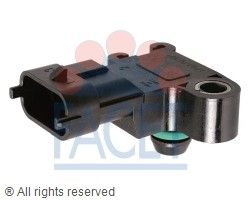
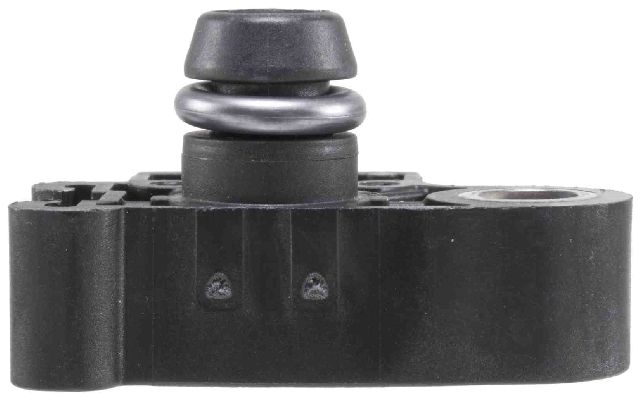
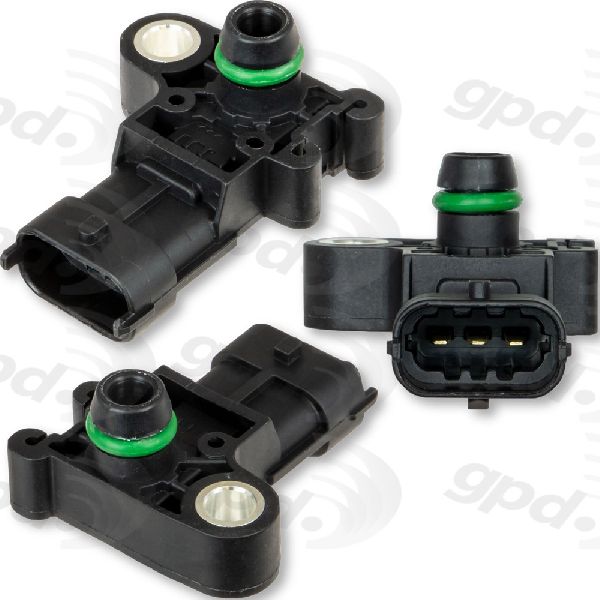
- Manifold Absolute Pressure (MAP) Sensor
(OEM #12644228)— This is the most frequent cause of P0106. The sensor fails internally or becomes contaminated, sending inaccurate data to the ECM.
Trusted brands: ACDelco, Delphi, Bosch
OEM price range: $40-$60
Aftermarket price range: $25-$45 - Vacuum Hose(s) — A cracked or disconnected vacuum hose, often a PCV hose, can cause a vacuum leak that triggers P0106.
Trusted brands: GM Genuine
Related Codes That Often Appear With This One
- P0506 — TSB PIP5423B explicitly links P0106 and P0506 (Idle Air Control System RPM Lower Than Expected) as strong indicators of a possible broken valve spring.
- P0171/P0174 — If the P0106 code is caused by a vacuum leak, the engine may also run lean, triggering System Too Lean codes for Bank 1 (P0171) and Bank 2 (P0174).
- P0300 — A broken valve spring will cause a cylinder to misfire, often logging a P0300 (Random/Multiple Cylinder Misfire Detected) code alongside P0106.
- P0107/P0108 — These codes indicate MAP sensor circuit low and high input, respectively. They can appear with P0106 if there is an electrical fault in the circuit or sensor.
Technical Service Bulletins (TSBs) & Recalls
- PIP5423B: Mentions that DTCs P0106 and P0506 can be caused by a broken valve spring and advises checking for a melted intake runner as secondary damage.
- PI1257: Describes a procedure to install a new design upper intake manifold to prevent ice buildup which can cause code P0106 in freezing temperatures.
Platform-Specific Known Issues

- TSB #PI1257: Some vehicles may experience ice buildup in the intake manifold near the MAP sensor during cold weather, leading to a P0106 code. The official fix involves installing a newly designed upper intake manifold where the MAP sensor is relocated.
- TSB #PIP5423B: A rough idle accompanied by codes P0106 and P0506 may indicate a broken valve spring. The TSB advises technicians to remove the valve cover to inspect. If a broken spring is found, it also advises inspecting the intake manifold for a collapsed/melted runner for that cylinder.
Mechanic-Grade Diagnostic Values
- MAP Sensor 5V Reference — expected: 4.8-5.2 Volts DC. Failure: Voltage below 4.8V or above 5.2V indicates an issue with the ECM or wiring.
- MAP Sensor Ground Circuit Resistance — expected: Less than 5 ohms. Failure: Resistance greater than 5 ohms indicates an open or high resistance in the low reference circuit.
- MAP Sensor Signal Voltage (Key On, Engine Off) — expected: 4.0-5.0 Volts. Failure: Voltage outside this range suggests a faulty sensor or wiring issue.
- MAP Sensor Signal Voltage (Engine Idling) — expected: 1.0-2.1 Volts. Failure: Voltage significantly higher than this at idle points to a vacuum leak or a faulty sensor not responding to vacuum.
- MAP Sensor Live Data (Scan Tool) — expected: Should match BARO reading with Key On, Engine Off. Should drop to a low value (e.g., 20-40 kPa) at idle.. Failure: MAP reading does not change with engine RPM/load, or does not match BARO at KOEO.
Scan Tool Commands That Help
- HP Tuners: Modify 'Calculated MAP Max' and 'Calculated MAP Min' tables. — This is a specific tuning adjustment for vehicles with aftermarket camshafts that cause the MAP sensor readings to go outside the stock expected range, falsely triggering a P0106. The fix involves increasing the max table and decreasing the min table by a percentage (e.g., 20%) to widen the acceptable range.
Wiring & Ground Locations
- G103 — On the front of the passenger side (right) cylinder head.. This is a primary engine ground. A loose or corroded G103 can cause erratic behavior in various engine sensors, including the MAP sensor, leading to incorrect readings and codes like P0106.
- G102 — On the lower front of the driver's side (left) cylinder head, often below a wiring harness attachment.. Similar to G103, this is another crucial engine ground. Poor connection here can disrupt sensor signals and cause intermittent, hard-to-diagnose electrical issues.
- MAP Sensor Connector — On the intake manifold, typically near the throttle body.. The connector has three pins: a 5-volt reference (Gray wire), a low reference/ground (Orange/Black wire), and the signal wire (Light Green wire). Testing voltage and continuity at these pins is a core diagnostic step.
Real Owner Repair Stories
- ChevroletForum.com user/technician (2015 Silverado 1500 5.3L (K2XX, but TSB and cause apply to GMT900)) — Hard start/no start, would only run for 5-10 seconds. The only DTC was P0106.
❌ Tried (didn't work) Replacing the broken exhaust valve spring on cylinder #5. This fixed the zero compression issue but did not fix the no-start or the P0106 code.
✅ What actually fixed it The intake manifold runner for cylinder #5 had been melted by hot exhaust gas pushing back from the broken spring. This created a massive, unmetered air leak. Replacing the entire intake manifold resolved the starting issue and cleared the P0106 code. - Reddit user 'RandomDnt' (2018 GMC Sierra 6.2L (platform mate)) — Persistent P0106 code, strange Active Fuel Management (AFM) behavior.
❌ Tried (didn't work) Cleaning the throttle body, Replacing the throttle body, Replacing the intake manifold
✅ What actually fixed it The Valve Lifter Oil Manifold (VLOM), which controls the AFM system, was failing. Its erratic operation caused unusual pressure fluctuations in the manifold that the ECM interpreted as a MAP sensor performance issue. Replacing the VLOM fixed the P0106 code.
"I Checked Everything" — The Actual Cause
- In a documented case on a 2015 Silverado with P0106, a smoke test on the intake manifold showed a massive leak. However, the root cause was not a typical cracked hose or bad gasket. The leak was from a hole in the intake runner that had been melted by hot exhaust gases due to a broken valve spring on the same cylinder. This highlights that even when a smoke test confirms a leak, the ultimate cause can be a serious internal engine mechanical failure.
OEM Part Supersession History
12644228→12711681— Standard part revision and update by the manufacturer.
Heads up: The new part number 12711681 is the direct replacement and is fully compatible. Other part numbers that have been used or cross-referenced for this application include 12592525, 12694725, and 12591290, but using the latest OEM supersession is recommended for correct calibration.
Model Year Variations Within This Range
- 2007-2013 (GMT900): These models primarily used the 4-speed (4L60-E) or 6-speed (6L80) automatic transmissions. The 5.3L engines in this era were known for Active Fuel Management (AFM) lifter issues, which can be an edge-case cause for P0106.
- 2014 (K2XX): The 2014 model year marked the transition to the new K2XX platform with direct-injected engines (L83 5.3L, L86 6.2L). While the P0106 causes are largely the same, the TSBs regarding broken valve springs (PIP5423B) are highly relevant to these newer engine designs as well.
Helpful Videos

We Have This Part in Stock


The information in this article is provided for general reference and educational purposes only. Vehicle specifications, procedures, and part compatibility can vary by production date, trim level, and region. Always consult your vehicle's factory service manual and verify part numbers before purchasing or performing repairs. Safety-critical components such as airbags, seat belts, and braking systems should be installed by a qualified professional.
- Chevrolet SILVERADO 1500:
- 🎬 Helpful Videos
- 🛍️ Shop This Part
- What's Unique About the 2007-2014 Chevrolet SILVERADO 1500
- Diagnostic Flowchart
- Symptoms You May Notice
- Most Likely Causes
- Rare But Worth Checking
- Diagnosis Steps
- Parts You'll Likely Need
- Related Codes That Often Appear With This One
- Technical Service Bulletins (TSBs) & Recalls
- Platform-Specific Known Issues
- Mechanic-Grade Diagnostic Values
- Scan Tool Commands That Help
- Wiring & Ground Locations
- Real Owner Repair Stories
- "I Checked Everything" — The Actual Cause
- OEM Part Supersession History
- Model Year Variations Within This Range
- 🎟️ Get 5% Off