

P0106 on 2014-2017 Chevrolet Impala: Causes for MAP Sensor Code and Fixes
On the 2014-2017 Impala, code P0106 is often caused by loose intake manifold bolts creating a vacuum leak. Before replacing the MAP sensor, check and tighten these bolts to the proper torque specification (89 lb-in) as recommended by GM's technical service bulletins. This issue is so common that GM issued TSB #PIP5529B to address it across multiple vehicles with similar engines.
- For a P0106 on a 2014-2017 Impala, always check for loose intake manifold bolts before buying any parts. This is a known issue covered by GM service bulletins.
- This code is frequently seen with other codes like P0068 (Throttle Position Correlation) and P0171 (System Lean), which strongly indicates a vacuum leak is the root cause.
- If the intake bolts are tight and no vacuum leaks are found, the next most likely cause is a failed MAP sensor (ACDelco part #12644228).
- The repair is generally DIY-friendly, with the most common fix (tightening bolts) costing nothing in parts and a MAP sensor replacement being relatively straightforward.
What's Unique About the 2014-2017 Chevrolet IMPALA

For this generation of Impala with the 2.5L and 3.6L engines, a very common cause for P0106—often accompanied by a host of other codes—is not a faulty sensor but loose intake manifold bolts. General Motors issued Technical Service Bulletins (TSBs) #PIP5529A and #PIP5529B specifically addressing this issue, where a vacuum leak at the intake manifold gasket triggers the code. This is a well-documented quirk, making a physical inspection of the manifold bolts a critical first step before purchasing parts. 🎬 Watch: Understanding P0106 causes and how to fix them. The TSB recommends removing each bolt one at a time, applying medium-strength threadlocker, and then torquing in sequence.
Diagnostic Flowchart

Tap your situation to follow the diagnostic path that matches what you're seeing on this vehicle.
Symptoms You May Notice
- Check Engine Light is on
- Rough or unstable idle
- Hesitation or stumbling during acceleration
- Reduced engine power
- Poor fuel economy
- Possible stalling at low speeds or when coming to a stop
- Black smoke from the exhaust (less common)
- Replacing the MAP sensor without first checking for vacuum leaks or loose intake manifold bolts. The TSBs strongly suggest the leak is a more common root cause than the sensor itself.
- Replacing the MAP sensor when the issue is a dirty throttle body or a different vacuum leak.
Most Likely Causes


- Loose Intake Manifold Bolts 🔴 High Probability As documented in GM TSBs PIP5529A and PIP5529B, the intake manifold bolts on the 2.5L LKW and other similar GM engines can loosen over time, causing a significant vacuum leak. This is the most widely reported cause for P0106 on this platform.
How to confirm: Physically inspect and attempt to tighten the intake manifold mounting bolts. If they are found to be loose, this is the likely cause. A smoke test can also confirm a leak in this area.
Typical fix: Torque the intake manifold bolts to the manufacturer's specification, which is 89 lb-in (about 10 Nm). TSB PIP5529B recommends removing one bolt at a time, applying medium strength threadlocker, reinstalling, and then torquing the bolts in the proper sequence. Gasket replacement is often not necessary unless the leak persists after tightening.
Est. part cost: $0 - $15 (for threadlocker) - Faulty Manifold Absolute Pressure (MAP) Sensor 🟡 Medium Probability The MAP sensor is an electronic component that can fail over time due to heat cycles and vibration. However, it is often replaced unnecessarily when the root cause is a vacuum leak.
How to confirm: With a scan tool, check the MAP sensor reading (usually in kPa or Volts) with the key on, engine off. It should be close to the barometric pressure reading (approx. 4.5V). The reading should drop significantly at idle to around 1.0-1.5V. If the reading is stuck or doesn't change with engine vacuum, inspect wiring and connectors before condemning the sensor.
Typical fix: Replace the MAP sensor. On the 2.5L LKW engine, it is located on the bottom rear of the intake manifold. On the 3.6L LFX engine, it is located at the back of the engine, underneath the upper intake plenum, requiring more disassembly to access. 🎬 See this guide to help locate your MAP sensor.
Est. part cost: $40-$90 - Vacuum Leak (Other than Intake Manifold) 🟡 Medium Probability Rubber and plastic hoses, such as the PCV hose or brake booster line, can become brittle and crack over time, creating unmetered air leaks.
How to confirm: Visually inspect all vacuum lines connected to the intake manifold for cracks or disconnection. A smoke test is the most effective method to pinpoint the source of a hard-to-find leak.
Typical fix: Replace the cracked or broken vacuum hose.
Est. part cost: $10-$50 - Dirty Throttle Body ⚪ Low Probability Carbon can build up around the throttle plate, restricting airflow at idle. This can cause the PCM to open the throttle wider than expected for a given idle RPM, creating a mismatch between throttle position and MAP sensor readings that can trigger P0106.
How to confirm: Visually inspect the throttle body bore and plate for significant carbon deposits.
Typical fix: Clean the throttle body plate and bore with a dedicated throttle body cleaner and a soft cloth. A throttle position relearn procedure may be required afterward.
Est. part cost: $10-$20
Rare But Worth Checking
- Wiring Harness Damage: Another GM TSB for similar engines (PI0631G) notes that the engine wiring harness can chafe against the transmission case, causing shorts or open circuits for various sensors, including the MAP sensor. While less common, it's worth a visual inspection if other diagnostics fail.
- Clogged Catalytic Converter: A severe exhaust restriction can cause abnormal pressure in the intake manifold, potentially triggering a P0106 code. This is usually accompanied by a significant loss of power, especially at higher RPMs.
- Faulty Powertrain Control Module (PCM): This is extremely rare, but the PCM can fail internally. This should only be considered after all other possibilities have been exhaustively ruled out, including testing the wiring harness directly at the PCM connector.
- Faulty Intake Rocker Arm Oil Control Valve: On the 2.5L LKW engine, GM has issued TSB #21-NA-274 and Special Coverage #N192289160 for a faulty intake rocker arm oil control valve that can cause rough running, misfires, and set a variety of codes, including P0106. The valve can fail internally or come apart, lodging debris in oil passages.
Diagnosis Steps
- Scan for all stored DTCs. Note if other codes like P0068, P0171, or P0101 are present, as this strongly suggests a vacuum leak.
- Following TSB PIP5529B, carefully check the torque on all intake manifold bolts. If loose, tighten them to the manufacturer's specification (89 lb-in or about 10 Nm). For a more robust repair, remove one bolt at a time, apply medium-strength threadlocker, and then torque in sequence. Clear codes and re-test.
- If bolts were tight, perform a thorough visual inspection of the air intake tube between the air filter and throttle body, and all vacuum hoses connected to the intake manifold for cracks or damage.
- With a scan tool, monitor the MAP sensor voltage with the Key On, Engine Off (KOEO). It should read approximately 4.5-5.0 volts, matching the barometric pressure. Start the engine; the MAP voltage should drop to around 1.0-1.5 volts at idle.
- If the MAP sensor signal is stuck or does not respond, inspect the sensor's wiring and connector for damage or corrosion before condemning the sensor. Check for 5V reference and good ground at the connector.
- If a leak is suspected but not visible, perform a smoke test to find the source of the unmetered air.
- Inspect and clean the throttle body if it appears dirty.
- For 2.5L engines, if misfires and other codes are present, inspect the intake rocker arm oil control valve per TSB #21-NA-274.
Parts You'll Likely Need
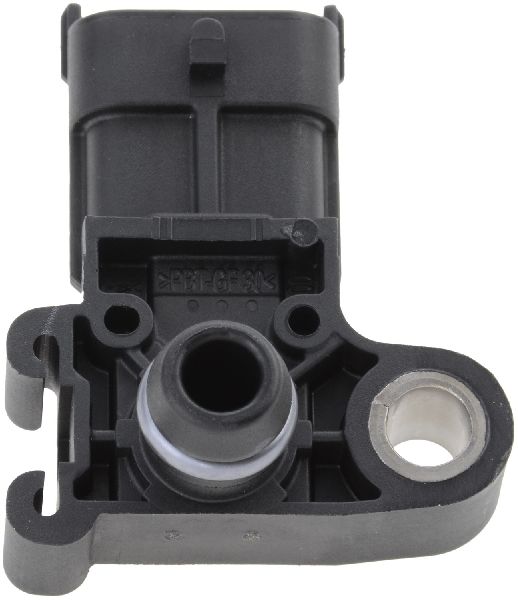
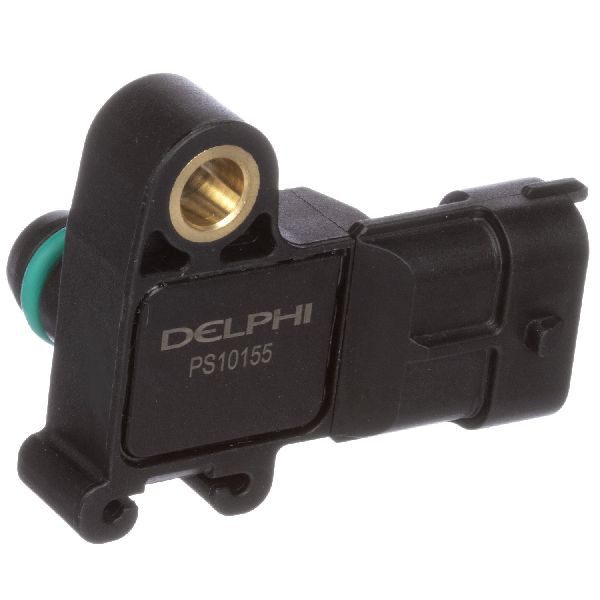
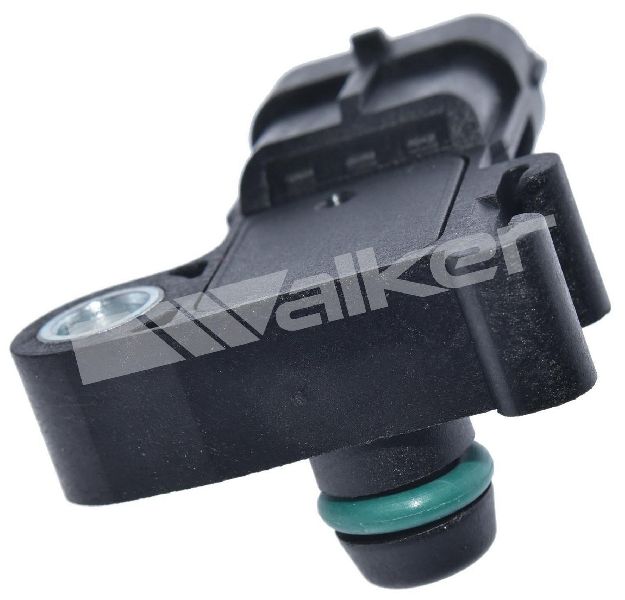
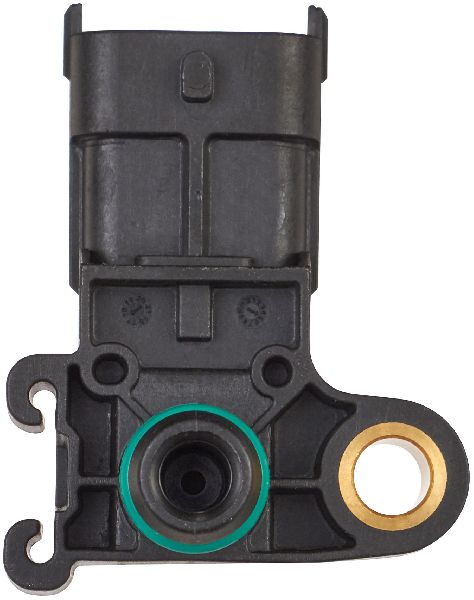
- Manifold Absolute Pressure (MAP) Sensor
(OEM #12644228)— If the sensor itself has failed electronically, it will need to be replaced. This is a common failure point after vacuum leaks have been ruled out. This part number is widely listed for both the 2.5L and 3.6L engines in this vehicle range.
Trusted brands: ACDelco, Delphi, NTK
OEM price range: $60-$90
Aftermarket price range: $35-$70 - Medium Strength Threadlocker — Recommended by TSB PIP5529B to prevent the intake manifold bolts from loosening again.
Trusted brands: Loctite, Permatex
OEM price range: $10-$15
Aftermarket price range: $8-$12
Related Codes That Often Appear With This One
- P0068 — This code indicates a correlation error between the MAP sensor, MAF sensor, and throttle position. A vacuum leak causing P0106 will directly cause this code to set.
- P0171 — This code means 'System Too Lean (Bank 1)'. A vacuum leak allows unmetered air into the engine, creating a lean condition that the oxygen sensors detect. This is frequently listed alongside P0106 in the GM TSBs.
- P0101 — This code indicates a performance issue with the Mass Airflow (MAF) sensor. A vacuum leak causes a discrepancy between the air measured by the MAF and the actual air entering the engine, triggering this code alongside P0106.
- P0506 — This code means 'Idle Air Control System RPM Lower Than Expected'. A vacuum leak can make it difficult for the PCM to control the idle speed properly, sometimes causing this code to appear with the others listed in TSB PIP5529.
Technical Service Bulletins (TSBs) & Recalls
- PIP5529B: Stall, Hesitation, or MIL with multiple codes (P0068, P0101, P0106, etc.) due to loose intake manifold bolts. Recommends adding threadlocker during re-torque.
- PIP5529A: An earlier version of the same bulletin, also pointing to loose intake manifold bolts as the cause for P0106 and other codes.
- 21-NA-274: For the 2.5L LKW engine, addresses driveability concerns including P0106 caused by a faulty intake rocker arm oil control valve.
- PI0631G: Notes potential for engine harness to chafe on the transmission case, causing various sensor codes including P0106.
Platform-Specific Known Issues
- TSB #PIP5529B and #PIP5529A: Address a cluster of codes including P0106, P0068, P0101, and P0171 caused by loose intake manifold bolts. The recommended fix is to re-torque the bolts with threadlocker.
Mechanic-Grade Diagnostic Values
- MAP Sensor Signal Voltage (Key On, Engine Off) — expected: ~4.5 Volts (at sea level, should match BARO). Failure: Voltage is significantly different from BARO reading or is stuck low.
- MAP Sensor Signal Voltage (Engine Idling) — expected: 1.0 - 1.5 Volts (for non-turbo engines). Failure: Voltage is high (closer to KOEO reading) or does not drop significantly, indicating a lack of vacuum or a faulty sensor.
- MAP Sensor 5V Reference Wire — expected: 4.5 - 5.0 Volts. Failure: Voltage is low or absent, indicating a wiring or PCM issue.
- MAP Sensor Ground Wire Resistance — expected: < 5 Ohms to chassis ground. Failure: High resistance indicates a poor ground connection, which can skew sensor readings.
Scan Tool Commands That Help
- GDS2 (GM Dealer Scan Tool): Reset All Learned Values — After replacing a component like a MAP sensor or cleaning a throttle body, the PCM may retain incorrect learned airflow values. Resetting these values forces the PCM to relearn, which can be necessary if the code returns after a fix.
Wiring & Ground Locations
- MAP Sensor Connector (3-wire) — On the MAP sensor, located on the intake manifold (rear/bottom for 2.5L, rear for 3.6L).. This is the primary point for testing. A typical GM pinout is Pin 1: 5V Reference (Gray), Pin 2: Low Reference/Ground (Orange/Black), Pin 3: Signal (Light Green). Verifying 5V, ground, and signal here is the first electrical check.
- G103 — Located at the left rear of the engine compartment on the cowl, above the brake booster.. This is a major ground point for the Body Control Module (BCM) and Instrument Panel Cluster (IPC). While not a direct engine ground, poor grounding here can cause a variety of bizarre electrical issues that could potentially be misdiagnosed.
Real Owner Repair Stories
- Mr. Mechanic on YouTube (2013-2015 Chevrolet Malibu (shares 2.5L engine and platform architecture)) — P0106 code, potentially with other codes, causing poor running.
❌ Tried (didn't work) The user advises against immediately buying or replacing the MAP sensor.
✅ What actually fixed it The intake manifold bolts were found to be very loose. After tightening the three accessible bolts, the code was resolved and the car ran fine. This strongly corroborates the official GM TSB.
OEM Part Supersession History
12644228→12711681— Standard part evolution; GM often updates part numbers for minor revisions or supplier changes.
Heads up: The new part number, 12711681, is the direct replacement and is fully compatible.
Model Year Variations Within This Range
- 2014-2020: The 2014 model launched with the 3.6L V6 as the primary engine. The 2.5L 4-cylinder was the base engine, and a 2.4L eAssist hybrid was available later. In 2016, Apple CarPlay was added, which required a different HMI module; this does not affect the P0106 diagnosis but is a notable electronic change within the generation.
Helpful Videos


We Have This Part in Stock


The information in this article is provided for general reference and educational purposes only. Vehicle specifications, procedures, and part compatibility can vary by production date, trim level, and region. Always consult your vehicle's factory service manual and verify part numbers before purchasing or performing repairs. Safety-critical components such as airbags, seat belts, and braking systems should be installed by a qualified professional.
- Chevrolet IMPALA:
- 🎬 Helpful Videos
- 🛍️ Shop This Part
- What's Unique About the 2014-2017 Chevrolet IMPALA
- Diagnostic Flowchart
- Symptoms You May Notice
- Most Likely Causes
- Rare But Worth Checking
- Diagnosis Steps
- Parts You'll Likely Need
- Related Codes That Often Appear With This One
- Technical Service Bulletins (TSBs) & Recalls
- Platform-Specific Known Issues
- Mechanic-Grade Diagnostic Values
- Scan Tool Commands That Help
- Wiring & Ground Locations
- Real Owner Repair Stories
- OEM Part Supersession History
- Model Year Variations Within This Range
- 🎟️ Get 5% Off